



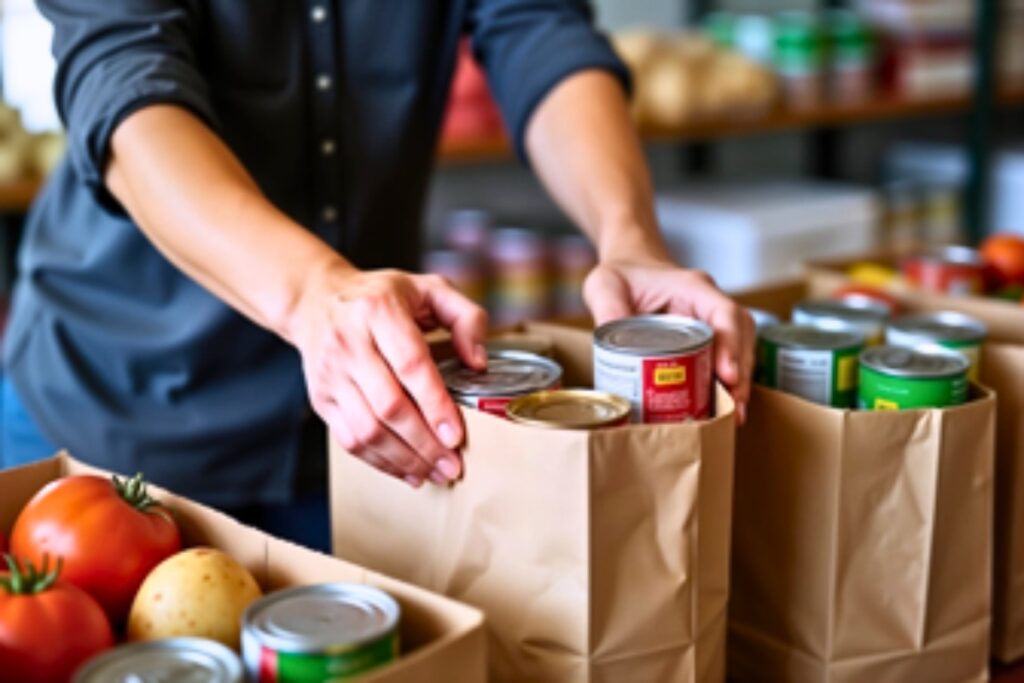
At the University of Florida’s Alan & Cathy Hitchcock Field & Fork Pantry, the youngest shoppers aren’t freshmen; they’re children. The pantry, in addition to feeding members of the UF community, serves student families facing food insecurity — a growing issue across Alachua County. During March, which is National Nutrition Month, UF researchers are doing everything they can to improve food and nutrition security for children from birth to age 2.
“Most of the guests that we see come into the pantry with young children are graduate students, and we usually see the same few families every week,” said Angela Habeck, the assistant director for basic needs for the UF Dean of Students Office.
Dr. Amy Mobley, an associate professor in the UF Department of Health Education and Behavior, is leading a five-year research-extension program to improve access to nutritious foods for these families with young children in Alachua and Leon counties.
The U.S. Department of Agriculture-funded study is also supported by Dr. Karla Shelnutt, a professor and associate dean of extension engagement in the UF Institute of Food and Agricultural Sciences, and Dr. JeeWon Cheong, an associate professor in the UF Department of Health Education and Behavior.
In the U.S., one in seven households with infants and toddlers experiences food insecurity, according to the Center on Budget and Policy Priorities. Feeding America confirms that Florida ranks among the top five states with the highest number of children living in food-insecure homes. Supplemental food programs help, but benefits aren’t enough, and applying can be cumbersome. When families with babies and toddlers struggle to access food, they often face difficult choices, such as diluting baby formula and using juice or water as substitutes.
“In the first year of life, there are a lot of added expenses — childcare costs, diaper costs, formula costs,” Mobley said. “Families are faced with the difficult decisions of choosing to pay bills, buy medications or buy food.”
The latest milestone in Mobley’s project included gathering input from pantry staff, parents, community partners like the Junior League of Gainesville and No Kid Hungry, and early childhood centers like Head Start. The feedback shaped a strategy toolkit with recommendations for improving food and nutrition security for families with infants and toddlers. Alachua and Leon counties were selected as intervention and comparison counties, respectively, based on comparable size and audience.
“We were very purposeful in making sure everyone had a voice,” Mobley said.
Food pantries emerged as a core focus. Common challenges include limited availability of baby-friendly foods, barriers related to accessing and traveling to pantry locations, and the added difficulty of transporting groceries while caring for infants and toddlers.
“We do occasionally get items that are donated that are intended for infants, like diapers and formula,” Habeck said. “Those items go quickly, within a day or two.”
To address barriers, the toolkit recommends that food pantries:
- Adopt delivery options through partners like DoorDash Project DASH
- Relocate or expand access near childcare centers and offices for the Special Supplemental Nutrition Program for Women, Infants, and Children, or WIC
- Teach caregivers how to prepare meals using available foods
- Create child-friendly spaces with supervision to reduce stress during shopping
- Expand hours to include evenings and weekends
The toolkit also suggests strategies beyond pantries, including building community gardens and partnering with mobile health units to offer food and nutrition education.
“After reviewing Dr. Mobley’s toolkit, I can see us easily implementing the education piece to the pantry,” Habeck said. “We could post recipes and ideas for students, staff or faculty who have infants and toddlers on how to prepare meals with pantry staples that we normally have available.”
As part of the project, Mobley’s team is awarding like-minded community groups between $100 and $5,000 to implement these strategies.
“Once we evaluate what happens as a result of this funding — what kind of improvements we are seeing, what seemed to work best — we can learn to further extrapolate that,” Mobley said.

Suggested Articles
No related articles found.
Who are the youngest shoppers at the University of Florida’s Alan & Cathy Hitchcock Field & Fork Pantry, and why is this significant?
It’s interesting that their repeat customers are grad students with children.