


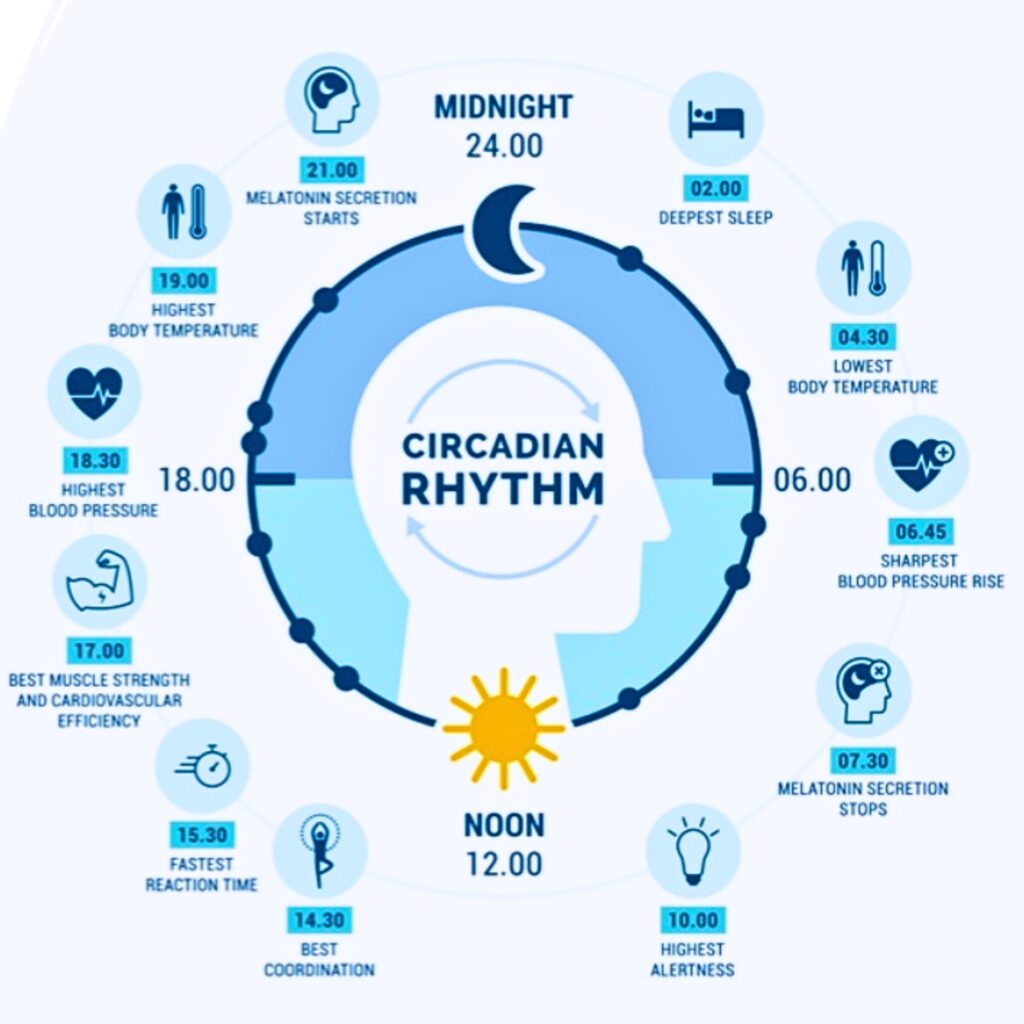
- Circadian rhythm is an internal 24-hour clock that regulates sleep, hormonal functions, immune system, and body temperature.
- Disrupted circadian rhythms primarily affect sleep quality, which is especially important for aging adults' brain and body maintenance.
- Older adults often experience sleep disorders like sleep apnea and restless leg syndrome, worsened by aging and neurological diseases.
- Good sleep hygiene, exposure to morning light, hydration, regular exercise, and medical guidance can improve sleep and circadian health.
The clock goes ticktock, but it’s not a clock that we hear – it’s the clock of circadian rhythm that governs the schedule of every living thing, especially us.
Circadian rhythm is our internal guide based on a 24-hour clock; in other words, it’s our body’s internal timepiece. But when it goes awry, so does our ability to get a good night’s sleep.
“Earth has a clock, a 24-hour clock, so this is something that is a part of our life on planet Earth,” said Dr. Karyn Esser, chair of the Department of Physiology and Aging at the University of Florida Medical School. “So, whether you’re a bacterium, a plant, a fish in the deep sea, a bird, or whether you’re a human, you have these clocks that run inside you that work on a 24-hour period.”
Our brain guides our circadian rhythm and tells us when to sleep and when to wake up. It also influences hormonal functions, the immune system, cognitive abilities, digestion, body temperature, and other routine biological activities that keep us going.
But when our circadian rhythm is out of sync, so are we, and what’s most impacted is sleep. “Sleep is really important, especially as we get older,” said Esser. “What happens during sleep is a very active process in our brains.
“I think about our body parts, as you would think about the engine of your car. And you must take care of maintenance, right? … So, what’s going on during sleep is helping to replenish and maintain the quality of all the things in our brain, as well as the rest of our body,” Esser said.
Researchers and physicians across the board agree about the essentiality of sleep and its role in psychological, mental, and physical well-being. All concur that a first step in achieving that is practicing good sleep hygiene, in other words, developing good sleep habits.
“I can say that sleep is important because we spend a third of our lives doing it,” said Dr. Christopher N. Kaufmann, an assistant professor in the Department of Health Outcomes and Biomedical Informatics at UF’s College of Medicine. “But we still don’t really know why we do it.
“We are still learning a lot about the benefits of it and the health consequences of poor sleep. It’s just such an important part of all our lives. And we do it throughout our entire life, therefore it has a pretty big impact on how we age. That’s one of the most important reasons why it’s important to have good sleep throughout one’s entire life,” Kaufmann said.
We’ve all experienced at least the occasional sleepless night, when slumber eludes us. But there is a method to the madness of sleep, particularly as we get older. But what happens when sleeplessness becomes a regular thing?
Sleep or the lack of it is a concern for older adults, something that was apparent when two workshops were held in March at The Village and the Senior Recreation Center to teach people about sleep disorders and how to overcome them.
For Sira Botes, founder of the Botes Memory Method, which helps people with dementia, a good night’s sleep begins when we get up in the morning.
“It continues with good, intentional decisions during our day so that we can rest at night. One of those things is getting started with early light in the morning, even if it’s just 10 minutes,” she said.
Botes told attendees at her workshop to stay hydrated throughout the day, after several of those present shared their problems about drinking enough water.
“Your cells need to be hydrated. Each of us needs to drink half of our body weight in (an equivalent number) of fluid ounces. “We need to start drinking that in the morning, and we need to be done by dinnertime,” she said.
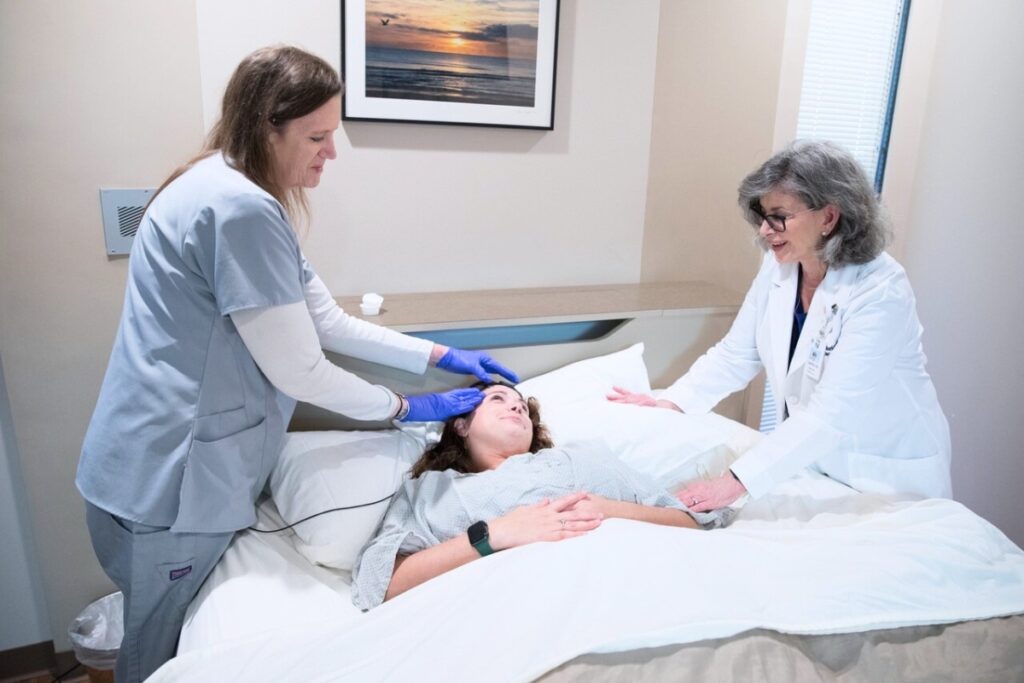
At the Village, another group gathered to hear from Carolyn Ivey, manager of the HCA Florida North Florida Hospital Sleep Center. Many in the audience nodded knowingly as Ivey spoke about all too familiar problems like sleep apnea, when breathing momentarily stops during sleep; restless leg syndrome, a movement disorder; insomnia, and other sleep disorders.
“Symptoms such as excessive daytime sleepiness, morning headaches, resistant hypertension, mood changes, loud snoring, disruptive breathing, and abnormal behavior during sleep would all be taken into consideration to decide about a sleep study and the type of sleep study a person might need,” Ivey said.
Dr. Jesse Cohen, assistant professor of neurology at the University of Florida in Jacksonville, who specializes in Parkinson’s Disease and movement disorders, sees elderly patients with sleep problems, like “sundowning,” a series of symptoms, often triggered by fatigue, low light or disrupted body clocks.
“Those gray areas weaken or degenerate with aging and more so with nerve-generated diseases like Alzheimer’s Disease and Parkinson’s Disease,” Cohen said. “As a consequence, people, as they get older, have more fragmented sleep, meaning they are waking up more during the night and sleeping more during the day, which seems to be more exaggerated with people with nerve-generated conditions.
“On the flip side, we know that sleep disruption, probably in mid-life, increases the risk for nerve-generated diseases like Alzheimer’s and Parkinson’s later. So, there’s this kind of chicken-and-egg problem feeding into each other.”
His colleague, Dr. Andrew J. Bryant, an associate professor at UF’s College of Medicine Division of Pulmonary, Critical Care & Sleep, said that solving the problem isn’t easy, because if it were, we would all be getting a good night’s sleep.
“On the one hand, the cards are stacked against all of us. Sleep deteriorates as we age,” Bryant said. “If there was one magic reason for it, we would fix it, but it’s multifactorial. So simply stating having good sleep hygiene isn’t going to fix the problem, but everyone should try, right?”
Esser, whose principal expertise is in physiology, says it all has to do with homeostasis, what our cells, tissues, and bodies do to hold the course.
“When that steady state is maintained, we’re healthy. When we lose that capacity to maintain a steady state, we see metabolic malfunctioning, like diabetes, and other chronic diseases,” Esser said. “The steady state isn’t necessarily a flat line. It’s a dynamic process. And that is what the clock is doing. It’s working to maintain the steady state by changing things, different things at different times of day.
“For example, while you’re sleeping, let’s say, in your muscle cells, what’s going on is repair and maintenance. Maybe you had an active day …and you did something that worked your muscles, you depleted some energy stores. That’s all going to get fixed while you’re sleeping,” she said.
So, what’s a person to do when seeking out what we all are after –a good night’s sleep, night after night after night? Here are a few suggestions from our specialists.
First and foremost, practice good sleep hygiene, which means developing healthy habits, establishing a regular sleep schedule, setting up a bedtime routine, and making your bedroom a place for sleep.
Get out and enjoy the sunshine, even if it’s just for a few minutes.
Also recommended is getting some exercise and regular physical activity during the day and avoiding late afternoon naps. Screens and bright light before bed should also be sidestepped, especially blue light that comes from electronic devices.
Finally, if you are a shift worker with an overnight schedule or have travel plans with a change in time zones, ask your doctor for suggestions as to how to minimize the impact on your circadian rhythms.
For some, sleep deprivation is a 21st-century problem, and that’s why a few of our experts jokingly blame Thomas Edison and his invention of electricity for our problems with getting enough sleep today. Before electricity, people were awake from sunrise to sunset and physically active during the day, and when it got dark outside, they slept. In fact, people probably got between 10 and 11 hours of sleep a night.
Yup, those were the good old days.
Editor’s note: This is the latest story in Mainstreet’s award-winning Aging Matters series. It was independently reported by Ronnie Lovler and underwritten by the University of Florida’s Institute on Aging.
Suggested Articles
No related articles found.