



- The Florida Museum of Natural History in Gainesville reopened its Butterfly Rainforest exhibit after a 20-month, $30 million renovation.
- The exhibit receives over 800 new pupae weekly from global butterfly farms, costing about $100,000 annually and making it the museum's only paid attraction.
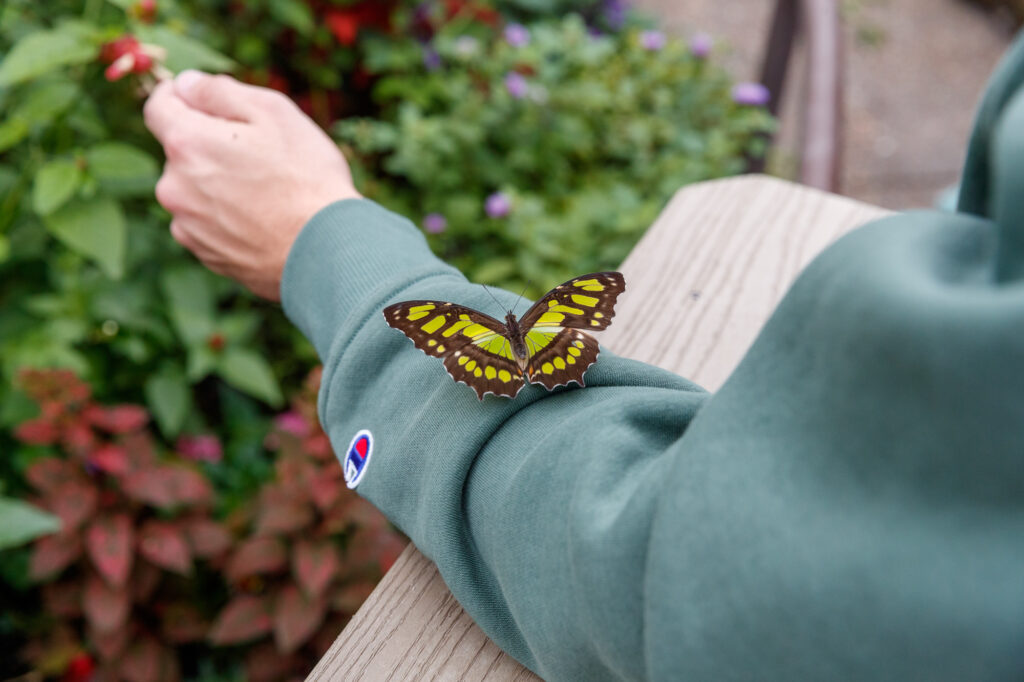
Intricately patterned butterflies and moths posed on heads and shoulders as visitors snapped memories once again in the Butterfly Rainforest as the exhibit emerged this week from a chrysalis of renovations in tandem with the entire Florida Museum of Natural History.
Community members of all ages wrapped around the building to partake in Monday’s festivities after waiting over a year and half for the museum to complete $30 million of projects after closing in March 2025.
The museum features new exhibits and amenities all next-door to the Harn Museum of Art, which also opened a new gallery this fall.
As the Florida Museum’s only living exhibit, closing and reopening the Butterfly Rainforest for the first time since it opened in 2004 took special planning and patience for a journey as metamorphic as the butterflies themselves.
But now, the butterflies and moths are back and greater in number than ever.
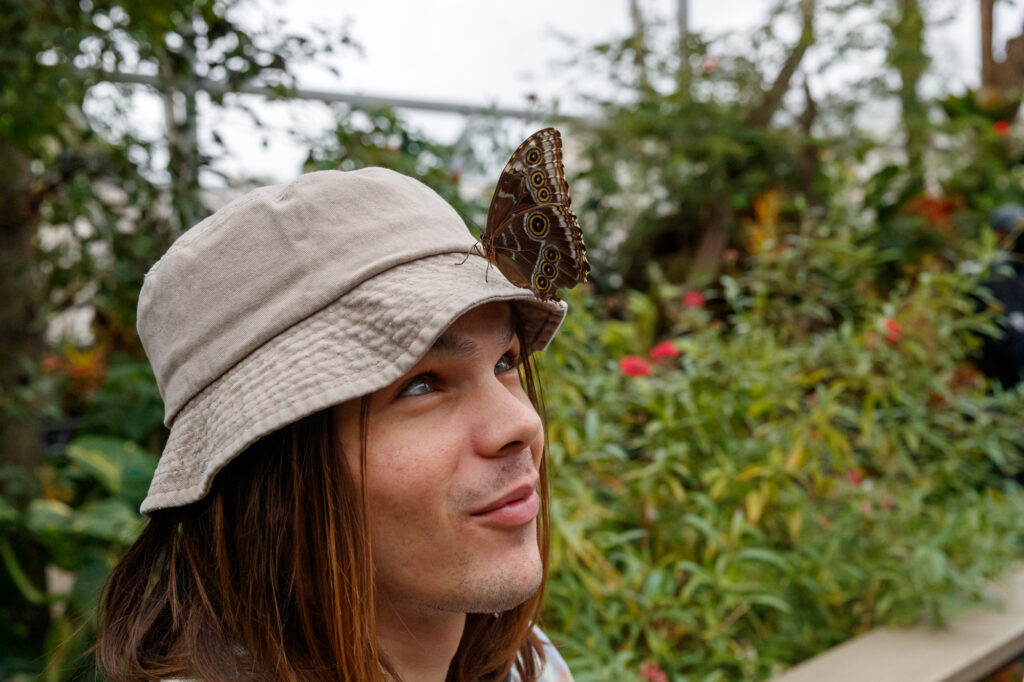
Curators released a wide variety of the turquoise, emerald and scarlet winged lepidoptera (an order of the insect kingdom) on opening day. Though the ectothermic fliers, dependent on sunshine for regulating body temperatures, were slightly hesitant to explore the new enclosure on the cloudy day.
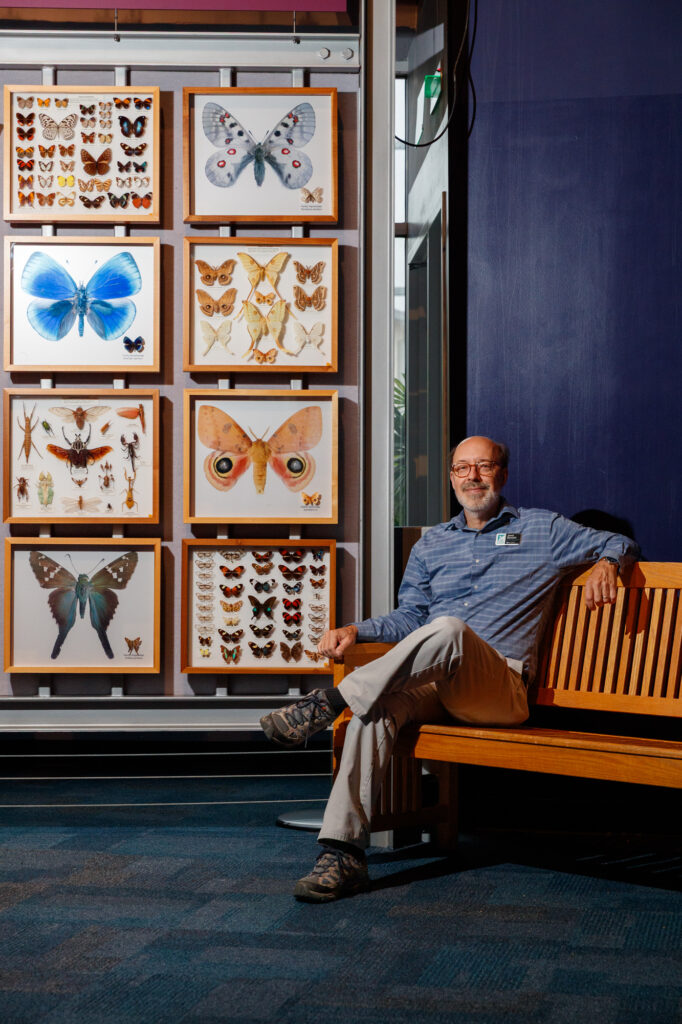
Jaret Daniels is the McGuire Center for Lepidoptera and Biodiversity’s curator and program director, specializing in winged insect research and conservation of rare and dwindling species, like the monarch butterfly.
Daniels said he’s looking forward to the revamped rainforest’s continued bridging of gaps between scientific research and public audiences, inviting the community into the mission of butterfly conservation.
“I’m most excited just to have people back in the building. It was a long closure, and the energy in the building was really lacking,” he said. “We do what we do because we have all the people coming into this building and just seeing happy faces, seeing people interacting with staff and having a great time out on the exhibit, it just reinforces why you do what you do. And, you know, as a researcher, I love showing off the research that we do, what the impact of it is.”
The rainforest renovations required years of preparation. Daniels called the 20-month closure a once-in-a-lifetime opportunity for staff to rethink how to make the outdoor exhibit better, especially after last winter’s freezing temperatures that damaged many of the plants.
The first step was removing all the creatures, be it insects, turtles, koi fish and birds.
Given that the butterflies and moths live anywhere from a few days to several weeks, staff let them die naturally before following the U.S. Department of Agriculture’s (USDA) strict containment guidelines for removing them.
The agency requires all plants and organisms leaving the exhibit to be destroyed with the goal of minimizing the chance of potential pests getting unleashed into the wild. So, the Florida Museum team double-bagged and froze everything for four days for disposal.
Then came the challenge of relocating the 352 birds coexisting with the butterflies and moths. The task turned into a multi-day ordeal described by the museum as a scene straight out of a cartoon.
“We actually had some of our ornithology curators and staff and students from Dickinson Hall come over and set up mist nets to help collect them,” Daniels said. “And then we had to find space on campus to house them safely. So, it was a lot more involved than you might think it would be.”
Once empty, crews deep cleaned and power washed the rainforest. Trees that had grown up to the ceiling were removed and replaced with new ones, each carefully selected to discourage the insects from laying their eggs on them and reproducing—another USDA stipulation.
With renovations across the museum finished, the first shipment arrived with dozens of pupae on the brink of transforming into new butterflies and moths. The department’s team of around seven members sorted and pinned each chrysalis for the insects to undergo their 10-to-15-day journey into full form.
By Monday’s opening, thousands of butterflies and moths fluttered throughout the renovated rainforest.
“It’s a very lush, immersive experience,” Daniels said. “I think people are just blown away by the fact that it is so enveloping and emotional; it literally surrounds you. So I think there’s no other type of experience like that, certainly here [at the museum]….It’s a good inspiration for people to pay attention to the life around them.”
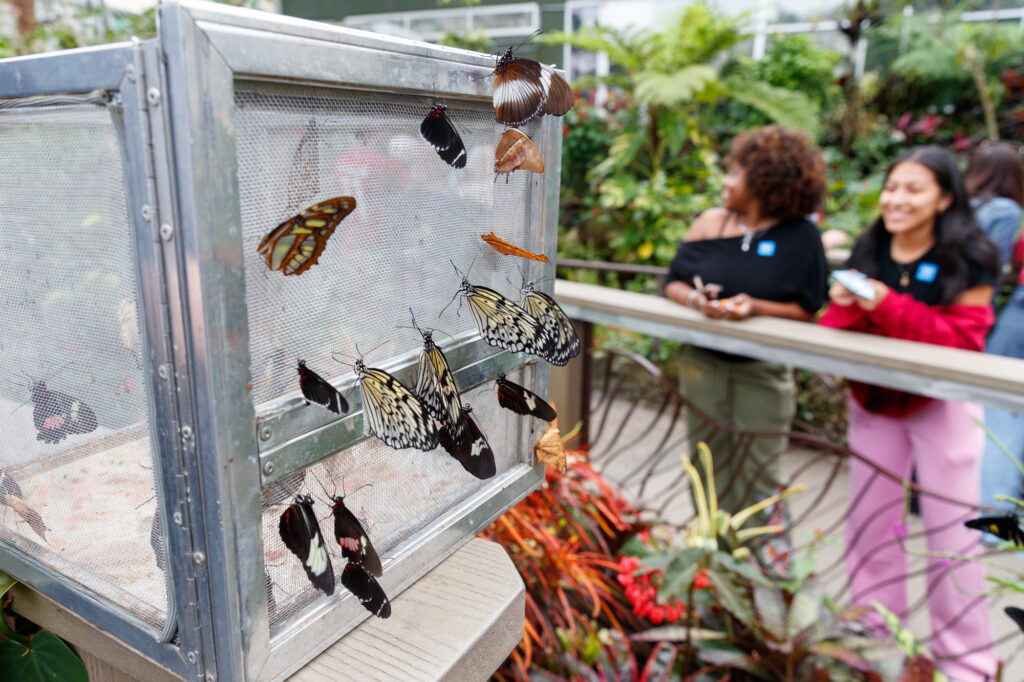
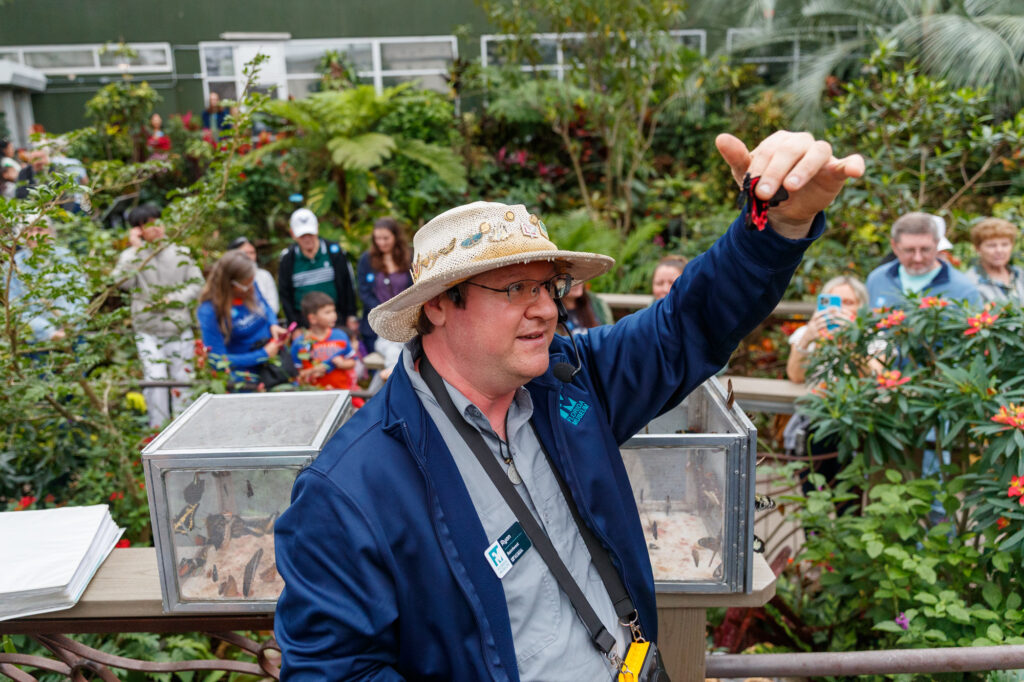
Now, life is back to status quo for the rainforest team. Operations Manager Ryan Fessenden, who led Monday’s butterfly release, said daily maintenance starts with sweeping the paths and watering and trimming the plants each morning.
The team gathers and freezes the dead butterflies, cleans their cases, and releases more.
Because of the insects’ ephemeral nature, Daniels said the museum receives upwards of 800 new pupae each week from family-operated butterfly farms in tropical countries around the world.
The shipments feature a variety of species that rotate seasonally; emerald swallowtails from South Asia, owl butterflies from South America, scarlet Mormons of the Philippines and Florida’s state butterfly, the zebra long wing, just to name a few.
Daniels said the weekly ritual racks up a $100,000 annual budget just for pupae, making the Butterfly Rainforest the museum’s only paid exhibit.
“This is the number one attraction in Gainesville. So it sort of feeds into why we do what we do to understand the study and collection of butterflies and moths,” he said. “This [rainforest] is a component of that, just to get people more excited about the natural world, butterflies and moths, and what they can do in their own landscape.”
Next, Daniels said the butterfly crew will look to revamp displays and signage in the hallways around the lab and rainforest, since that can be done without having to close the entire exhibit again.
He said he wants to have staff on hand educating visitors about the research so that they can learn about the role they play in butterfly conservation. Daniels encourages people to diversify their landscapes with more native plants and to follow along with monarch butterfly tracking on the free Project Monarch Science App.
But Daniels said just getting outside and enjoying nature—like in the museum rainforest—can have a butterfly effect that leads from nature appreciation to conservation.
“That’s the first step to understanding why nature is really important,” he said. “What the benefits of nature are, not just for conservation, but how it affects you, how it affects your life, your health, your interaction with your kids, and your landscape makes Florida a wonderful place to live.”