


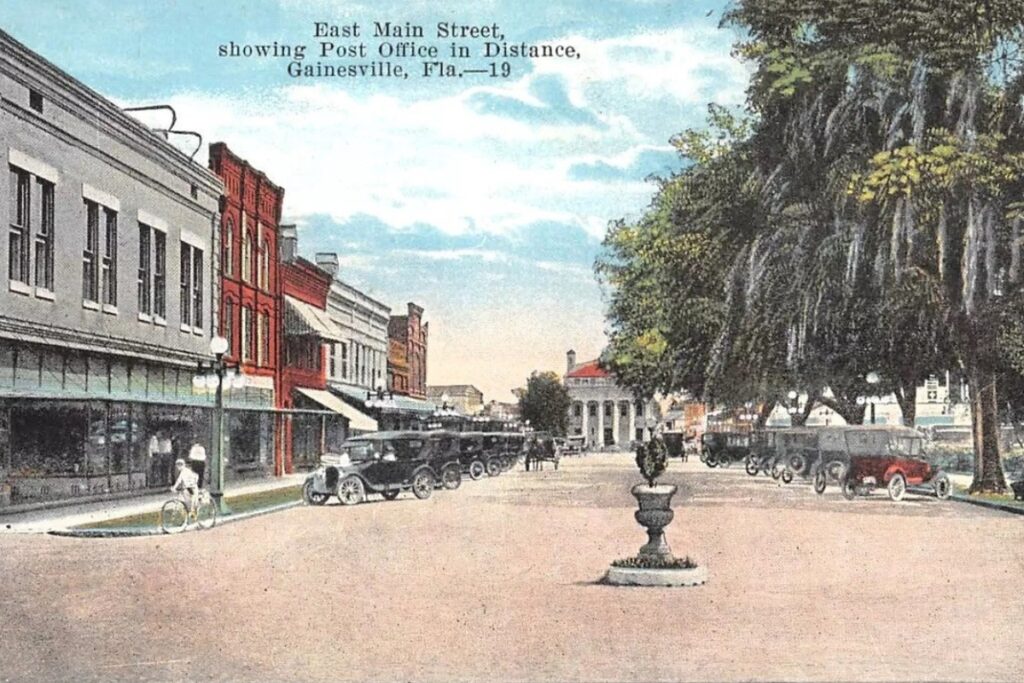
- Liz Coursen has collected vintage postcards documenting Florida's history for decades and shared them in a Gainesville talk on June 11.
- Postcards from early 1900s Florida reveal insights into tourism, segregated past, and changing societal values over time.
If there ever was a Florida find, this is it. Vintage postcards dating back to the previous turn of the century, the 1900s, documenting our state through the decades.
Liz Coursen collects postcards and has been doing so for decades in between her work as an author, editor and speaker. On June 11, she was talking about her passion for postcards and showing some of them off in a talk at the Senior Recreation Center in Gainesville.
“The first book I published was a history of my hometown and the college in it. And on the reverse of that, you see the first postcard I ever bought.” Coursen said. She got started when she went into an antique store and “met a handsome man” who handed her postcards about her hometown.
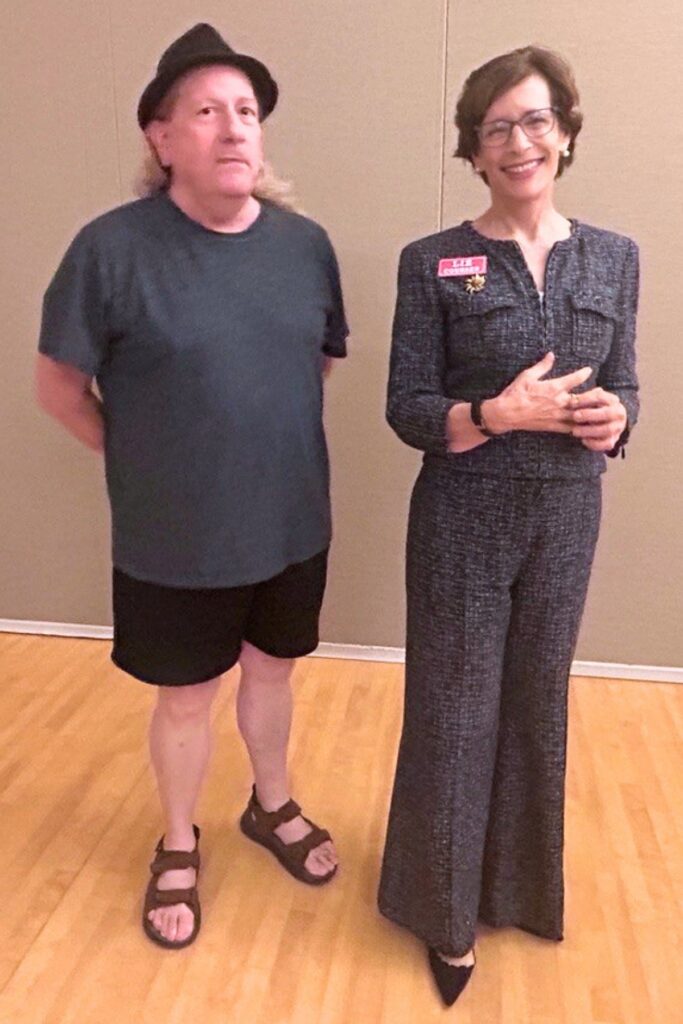
She described that encounter as “a pivotal moment” that ignited her infatuation with postcards and got her hooked. “We were friends for the next 30 years. We were friends until he died.”
The postcard book that grew out of that encounter is her book, “Brunswick and Bowdoin College” in the postcard history series, published in 2009.
Coursen gave a rundown of the history of postcards, starting from the early days, when there was no room to write a message on the back. Now, what would be the fun of sending a postcard if you couldn’t include the message “wish you were here.”
“In 1906, nearly three-quarters of a billion postcards were posted; by 1913, it was just shy of a billion,” she said.
For Coursen, Florida had a lot to do with the postcard tourism boom.
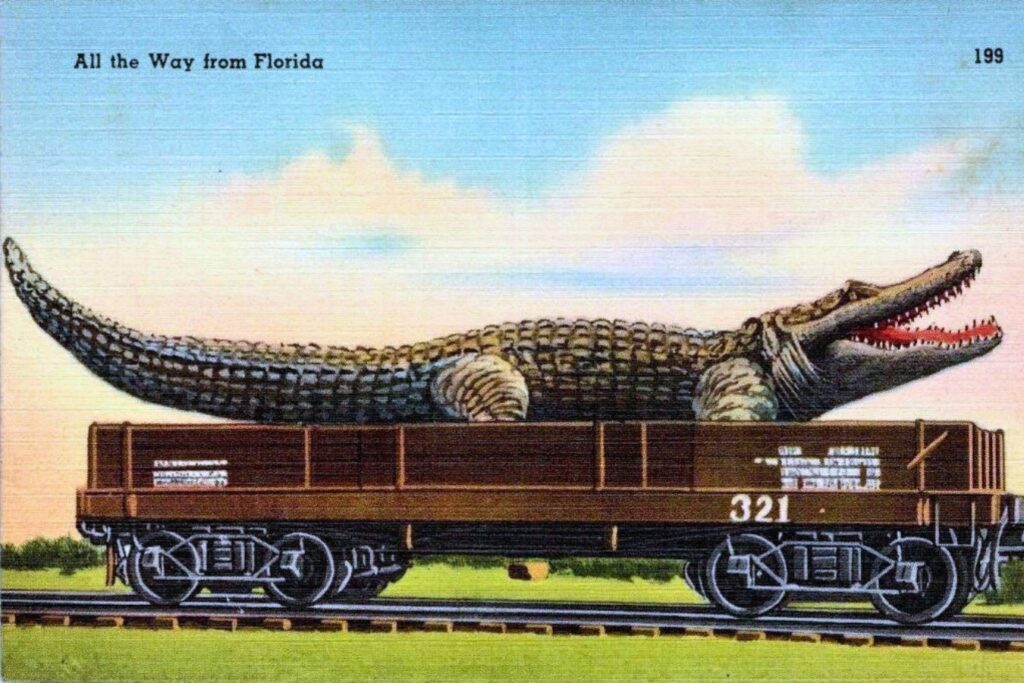
“Here is where everything starts. Certainly, the perimeter of Florida was well explored, but the interior of Florida remained inaccessible, and full of alligators … until the intrepid photographers started taking some pictures,” she said
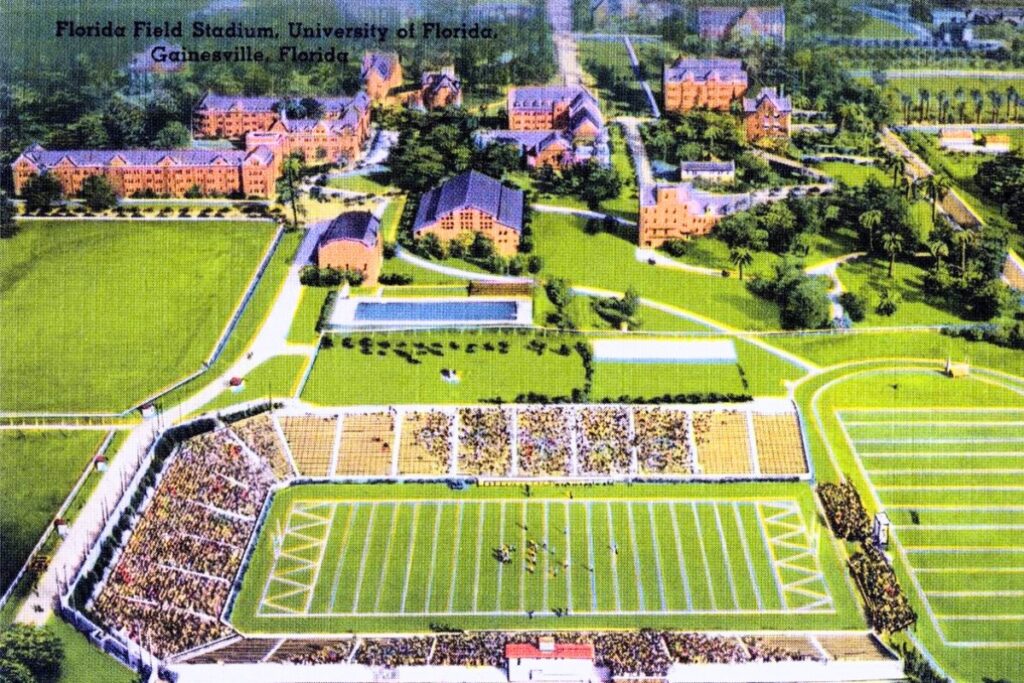
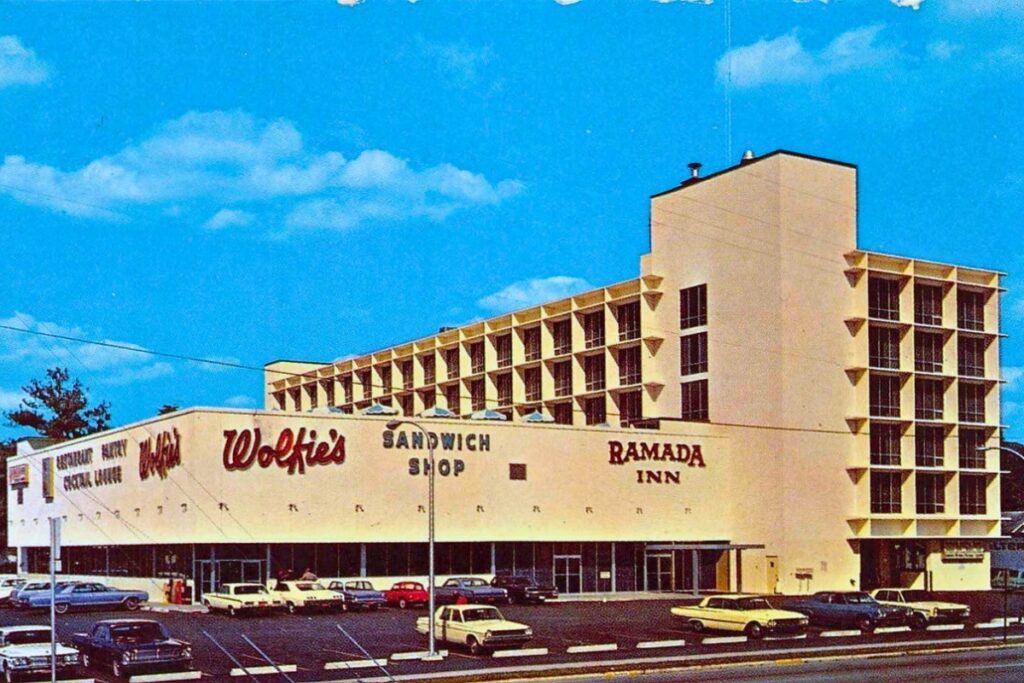
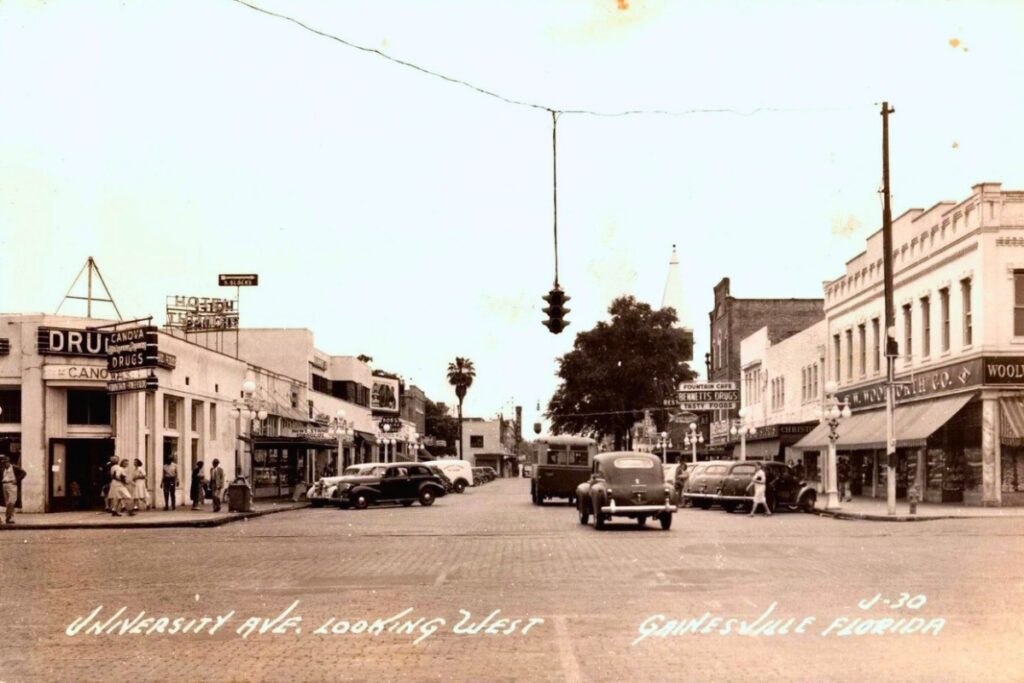
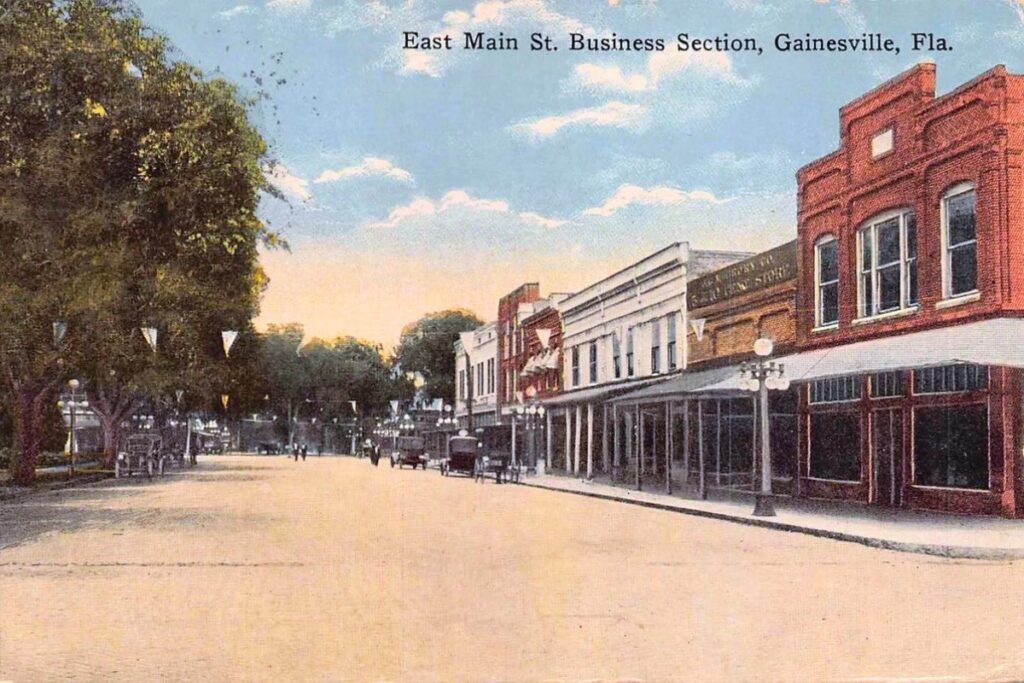
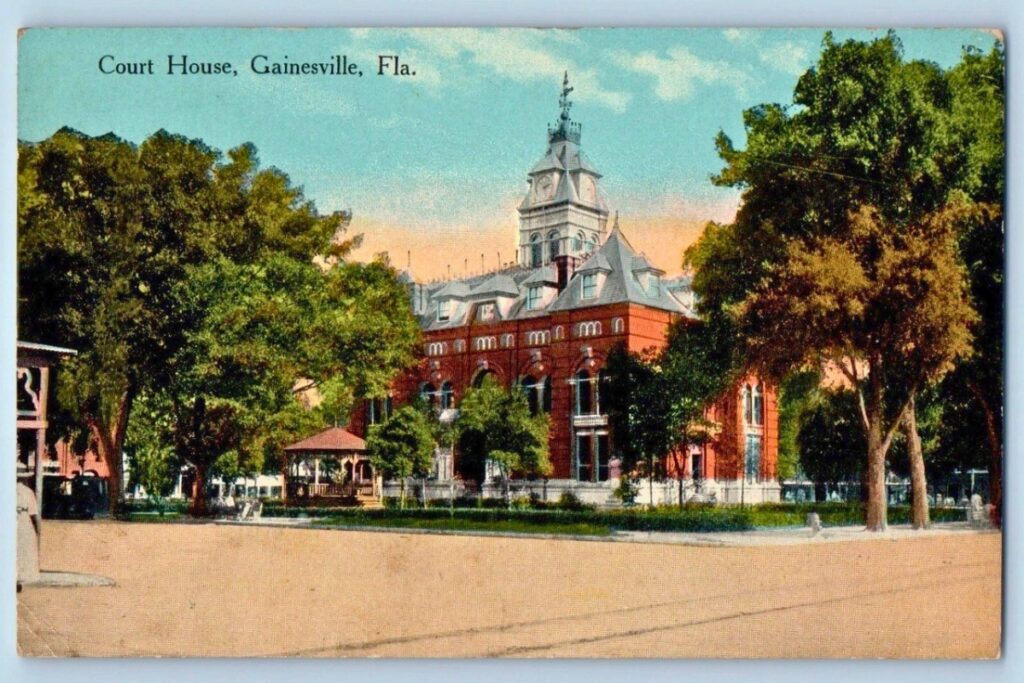
Coursen shared glimpses of postcards from across the United States and even international locations over the years. But she emphasized diverse spots in Florida, including Gainesville, with yesteryear views of downtown Main Street, the corner of 13th and University, and the University of Florida that bear no resemblance to what we see today.
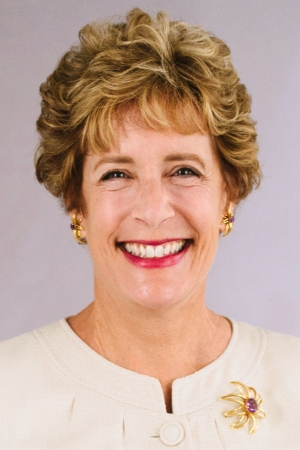
In her role as a historian and someone who has documented Florida’s segregated past, Coursen said postcards can tell a lot about the mores and values of the time. She has postcards with views of segregated beaches and segregated events at the University of Florida’s Florida Field.
“Postcards allow you to look into the past and see things you don’t remember in a way that you never imagined,” Coursen said. “You can evaluate how things were back then … and see how things have changed,” she said.
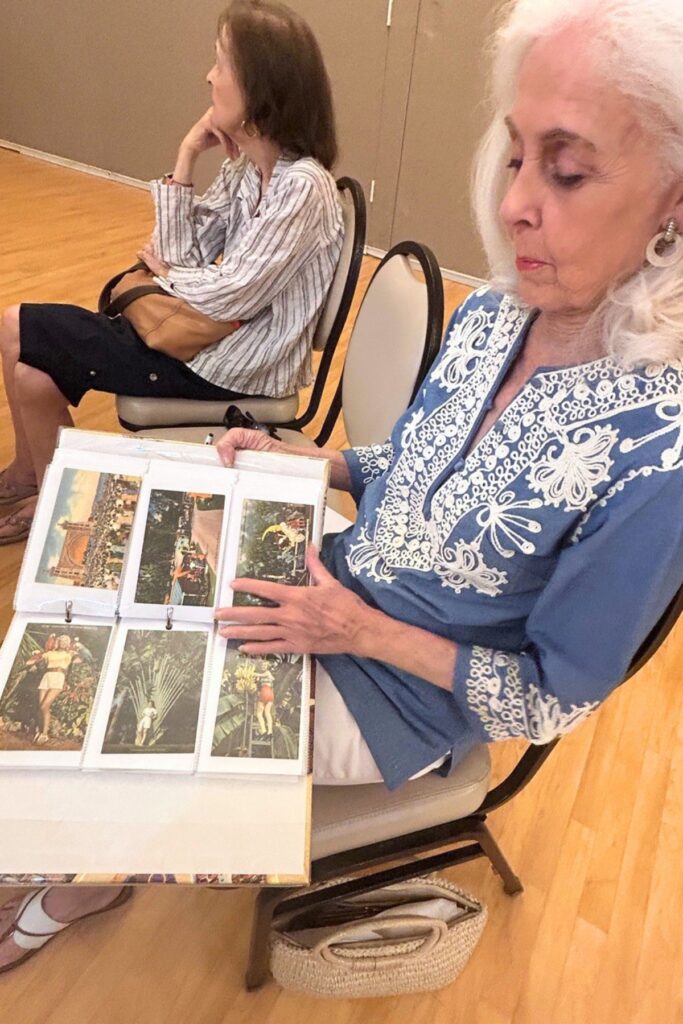
Some of those in the audience included Lorian Welsh, who came with her own collection of postcards bound in a huge album. She said she “inherited” her initial batch of postcards but now hunts down others in estate sales or from other collectors.
Glenn Fischer, a genealogist and another postcard enthusiast, said he has a postcard from his great-grandmother’s son, “who would be my grandmother’s brother, when he visited MGM Studios, which no longer exists, but he sent the postcard to his mother, my great-grandmother, and I have it on my refrigerator still.”
Coursen has her own ideas about what first attracted our forebears to postcards and what still makes us like to send and receive them.
“I think the brevity of the message, we see how people have switched to texting,” she said. “Here, we have a situation where people, Victorians, had written volumes of letters, letters, and letters, and pages, and pages. And now, a picture spoke a thousand words. Instead of talking about the glories of the mountains, you can send a postcard, and your friends could see the glories, and then you, on the flip side, say, ‘I’m having fun. I wish you were here.”
Suggested Articles
No related articles found.