



- Alachua County Public Schools launched the Future Ready initiative in November 2025 to address enrollment, capacity, facilities, and programming.
- Phase one gathered input from 2,297 respondents, collecting over 50,000 comments to form 12 guiding principles for planning.
- The second phase, starting February, will evaluate data on enrollment, capacity, and facilities to develop draft attendance boundary scenarios.
- Community input sessions will continue through February, with finalized plans expected for board approval by March 12, 2026.
The School Board of Alachua County (SBAC) received a summary of the community input gathered during the first phase of the Alachua County Public Schools’ (ACPS) “Our Schools – Future Ready” initiative and the proposed guiding principles formed from that feedback at a workshop on Monday.
The district launched the comprehensive, community-wide planning initiative in November 2025 to address key issues like enrollment and school capacity, facilities and educational programming.
A November 2025 ACPS release said the plan would “outline both short-term strategies for the start of the 2026-27 school year and a long-term roadmap to support strong schools across the district.”
ACPS is working with Gainesville-based engineering and planning firm JBrown Professional Group Inc., or JBPro, to implement the three-phase plan, which is expected to be finalized and approved by mid-March. Phase one of the initiative took place throughout November and December 2025 and focused on listening.
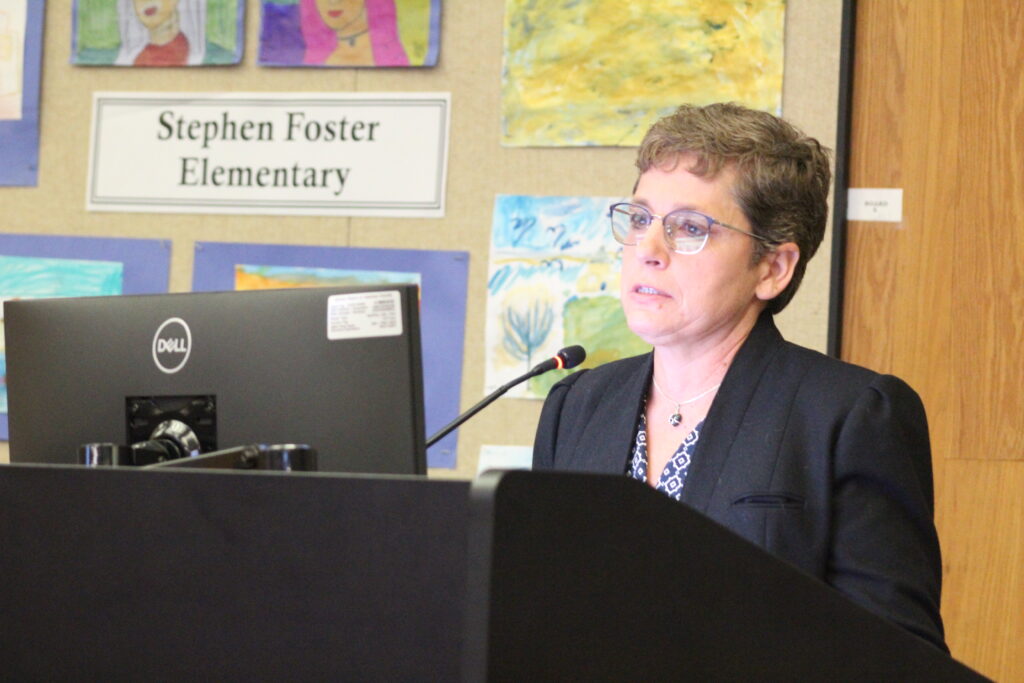
“Phase one established a shared understanding of goals, constraints and priorities through meetings with district staff and board members, along with comprehensive community engagement,” said Kathie Ebaugh, planning director for JBPro, who is also serving as the project manager for the ACPS comprehensive planning initiative.
Throughout the course of phase one, the district collected input from “2,297 unique respondents, representing students, families, staff and community members across Alachua County,” Ebaugh said
“Engagement incurred through multiple formats to reach people where they are, including in-person sessions and online tools that enabled broader community participation,” she said. “In total, the district collected more than 50,000 individual comments and responses, reflecting thoughtful feedback rather than simple survey participation.”
Ebaugh said the feedback gathered through the engagement process was “carefully analyzed and synthesized to identify shared values, priorities and themes which directly inform the development of the guiding principles.”
Board members were presented with 12 guiding principles from that input, which are seen below.
- Ensure clear, consistent and inclusive communication and engagement throughout the planning process.
- Strengthen, sustain and expand high-quality learning opportunities.
- Foster academic pathways that connect students to their interests and future goals.
- Provide for the success of teachers and staff districtwide.
- Support safe, welcoming and supportive learning environments.
- Ensure strong, accessible student supports and services.
- Foster community connection and belonging through schools.
- Invest in facilities that support learning, school pride and long-term needs.
- Support reliable, efficient and student-centered transportation.
- Approach attendance boundaries and enrollment decisions with community and opportunity in mind.
- Practice responsible, transparent fiscal management and stewardship.
- Protect the future of our public school system through thoughtful long-range planning.
According to Ebaugh’s presentation, the guiding principles “represent opinions and input from the community; impact the foundation for plans, drafts and boundaries; and align board policy with community input.”
The principles do not “represent predetermined plans or boundaries, represent final decisions or establish policy or require specific outcomes,” according to the presentation.
“The guiding principles provide a clear foundation for more detailed analysis that follows,” Ebaugh said. “The remaining [project] phases build on this foundation.”
With the creation of the guiding principles, the project now enters the second phase.
Ebaugh said this phase, which will continue throughout February, and will focus on moving from vision to evaluation.
“The project team and the district staff will complete a detailed review of data related to enrollment trends, school capacity, facilities, transportation, educational priorities – all guided by the principles established in phase one,” she said. “This work will include a conference analysis of current attendance boundaries and development of up to three draft boundary scenarios.”
Ebaugh emphasized that the scenarios are not decisions.
“They are tools to help understand all options and provide potential impacts,” she said.
Board Member Janine Plavac asked when the maps (draft scenarios) would be released to the community.
Ebaugh said the maps will be released on Feb. 2 at the first community input session. She noted earlier in the workshop that community involvement will remain “a key part” of phase two.
A total of eight additional community input sessions are planned for the month of February. The meeting on Feb. 2 will be held at Mebane Middle School (16401 NW County Road 241, Alachua).
All community input sessions will start at 5:30 p.m. A full schedule can be found here (www.alachuaschools.net/o/acps/page/ourschoolsfutureready).
Much of the discussion among board members centered on the plan’s timeline and making sure community input was adequately heard. Following some lengthy discussion, the board agreed on a plan moving forward to ensure citizens had as many opportunities to speak as possible.
This will start at the SBAC’s next meeting on Tuesday, Jan. 20, where community members will have the chance to weigh in on the 12 guiding principles presented at the workshop. This will also allow board members an opportunity to provide any additional feedback they may have after reviewing the data from community engagement in the first phase of the project.
A few board members noted in the workshop that they hadn’t seen the responses that were collected in the first round of engagement in December, only what was presented by project staff. That data has since been made public and can be found on the JBPro project website (jbpro-engagement.com/acps-our-schools-plan)
The SBAC will also hold a workshop in place of its regularly scheduled meeting on Tuesday, Feb. 17, to discuss the three draft scenarios that will be made available to the public on Feb. 2. That workshop will begin at 6 p.m.
The board will then hold a special meeting on Thursday, March 12, to vote on the finalized comprehensive plan.
Nick Anschultz is a Report for America corps member and writes about education for Mainstreet Daily News. This position is supported by local donations through the Community Catalyst for Local Journalism Fund at the Community Foundation of North Central Florida.
Suggested Articles
No related articles found.
Thanks for keeping up with information about our school system Nick, really appreciate it even if it seems mundane at times.