



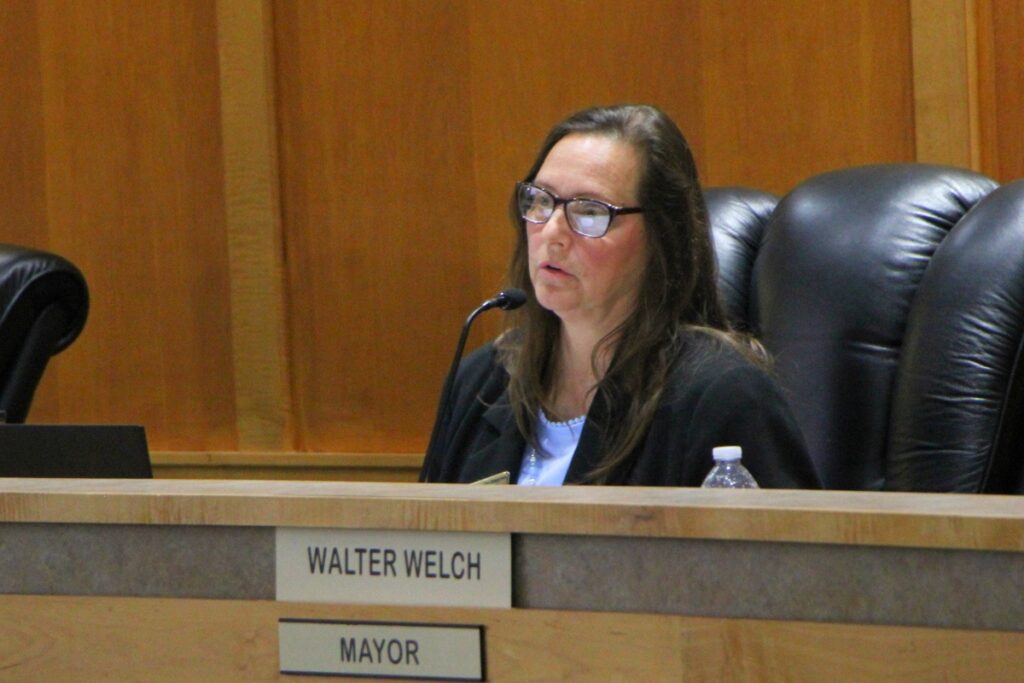
- The Alachua City Commission approved a resolution extending Planning and Zoning Board members' terms to align expirations with April 30 dates.
- The commission voted 3-2 to raise residential and commercial utility rates, increasing typical residential bills by about $53 annually.
- Utility fee hikes are the first since 2010 and aim to avoid sharper future spikes amid budget concerns and an upcoming power contract.
The Alachua City Commission split on several votes during its regular meeting Monday, including measures to revise Planning and Zoning Board (PZB) term cycles and raise utility rates.
The city’s charter currently grants the five PZB members staggered two- and three-year terms starting May 1 and ending April 30. If a member steps down, the City Commission appoints a replacement to finish the term.
Alachua Principal Planner Carson Crockett said the city hadn’t stuck to the spring start and end dates since 2002 and couldn’t figure out why or how it’d gotten off track.
He said current seat vacancies (most recently from Virginia Johns’ and Bill Menadier’s resignations) and upcoming expirations led staff to draft the resolution that extends all active PZB members’ terms either six or nine months to align with April 30 expirations.
The following adjustments will be made as the commission voted 3-2 in favor of the resolution:
- Seat 1: William Smith’s July 2028 expiration will change to April 30, 2029
- Seat 2: Matthew Webster’s July 2028 expiration will change to April 30, 2029
- Seat 3: Vacant; October 2027 expiration will change to April 30, 2028
- Seat 4: Danielle Judd’s October 2026 expiration will change to April 30, 2027
- Seat 5: Jenny Highlander’s October 2026 expiration will change to April 30, 2027
Commissioners Jackson Youmas and Jacob Fletcher voted against the change.
Although Crockett said extending the terms instead of shortening them would ensure the charter’s three-year term requirement would be met, Youmas and Fletcher said they didn’t want to vote for the longer terms they saw as charter violations.
Fletcher asked whether the City Commission could retroactively shorten the terms to reach the desired cycle if it later deemed it’d made a mistake. City Attorney Scott Walker said it could.
Youmas said the resolution perpetuated what he called a pattern in Alachua of operating outside guiding government documents like its charter and comprehensive plan.
“We keep bending and twisting and turning them and not doing what we’re supposed to be doing with them [for] the purpose that they’re there,” he said. “I cannot vote for this.”
Vice Mayor Jennifer Ringersen voted in favor of the resolution, but with hesitation. She asked Walker if it violated the charter and he said he didn’t believe so.
Ringersen said she had more questions about it and would ask City Manager Rodolfo Valladares about them during a future meeting.
“Mr. Walker, I’m hoping—I trust that you’re giving us the best information and continue to guide us to make sure when [we ask] are we okay, and are we doing the right thing. I thank you for that,” she said. “I’m definitely going to ask some more questions with Rodolfo in our meeting next week.”
Mayor Walter Welch said even if the measure was misaligned with the charter, it warranted a favorable vote because the charter doesn’t always get followed perfectly.
“I know you’re concerned about the charter,” Welch said. “But I will state, all of us ought to follow the charter, even [the public]. So, you know, we can’t have favoritism of which part of the charter we gonna follow. Because actually, many of us have violated some of the charter. So, I vote aye.”
Utility rate increases
The City Commission also voted 3-2 to raise residential and commercial utility rates, amounting to around $53 more per year for residential customers.
Valladares gave a presentation breaking down each utility’s monthly increase, which totaled $4.44 for typical residential customers from a 3% increase for water ($0.81), 2.5% for wastewater ($1.24) and electricity ($2.39).
The same percentages applied for non-residential, which would see a $4.08 monthly increase for 33,000 gallons of use and $2.21 increase for 11,000 gallons of irrigation.
Fees for building a new home would go up $218 with increased capital facility charges like meter installation rates. Capital facility charges based on meter size would increase around $3,700 for the largest 6-inch meters.
Dissenting Commissioners Youmas and Fletcher said they felt the increase would burden residents when the city could find the funds elsewhere in its budget.
Valladares said the water rate increases were within the Florida Public Service Commission’s 2.46% price index set to keep up with costs.
Alachua Finance and Administration Services Director Tyler Williams said it had been since 2010 since the city had increased its rates and not doing so now would negatively impact next year’s budget.
Williams said the commission also needed to consider a purchase power contract coming in December 2027, as it will likely bring more increases.
Ringersen said even though the extra charges wouldn’t be easy for everyone to cover, she said raising them now would prevent sharper spikes down the road.
“My fear with experience is if you don’t do something to stay at least in line, you’re going to put yourself in a situation that could be even more detrimental to people in the community if you wait and do something and go from $52 to $150,” she said before voting yes.
A second reading of the utility increases will be heard on Aug. 24.
Editor’s note: This story was underwritten by a grant from the Rural Reporting Initiative at the Community Foundation of North Central Florida.
Suggested Articles
No related articles found.
The statement by Mayor Welch “Because actually, many of us have violated some of the charter” is one of the most outrageous statements I have ever heard. The charter is The Law. No one can violate it, not the commission, the city manager, the staff, or the public. The city manager and city attorney are paid big bucks to follow and enforce the charter. If Welch can give examples of the charter being violated, that is grounds to fire the city manager and city attorney IMMEDIATELY. Following the law is job one.