



- The Alachua City Commission deferred a vote on land use changes for the Farmlands development to June 22 after nearly six hours of debate and public comments.
- The proposed plan reduces residences from 686 to 203 units and adds a commercial core, possibly including a Walmart on the 200-acre site.
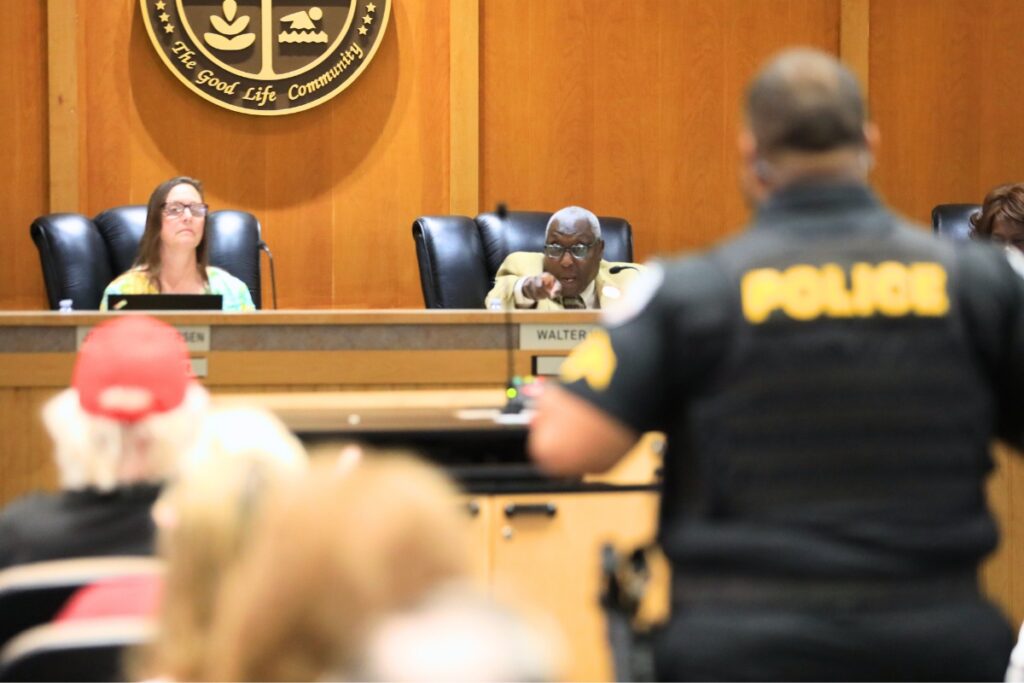
- Mayor Welch enforced strict meeting rules, removing a clapping resident and limiting commissioner comments to control the meeting's duration.
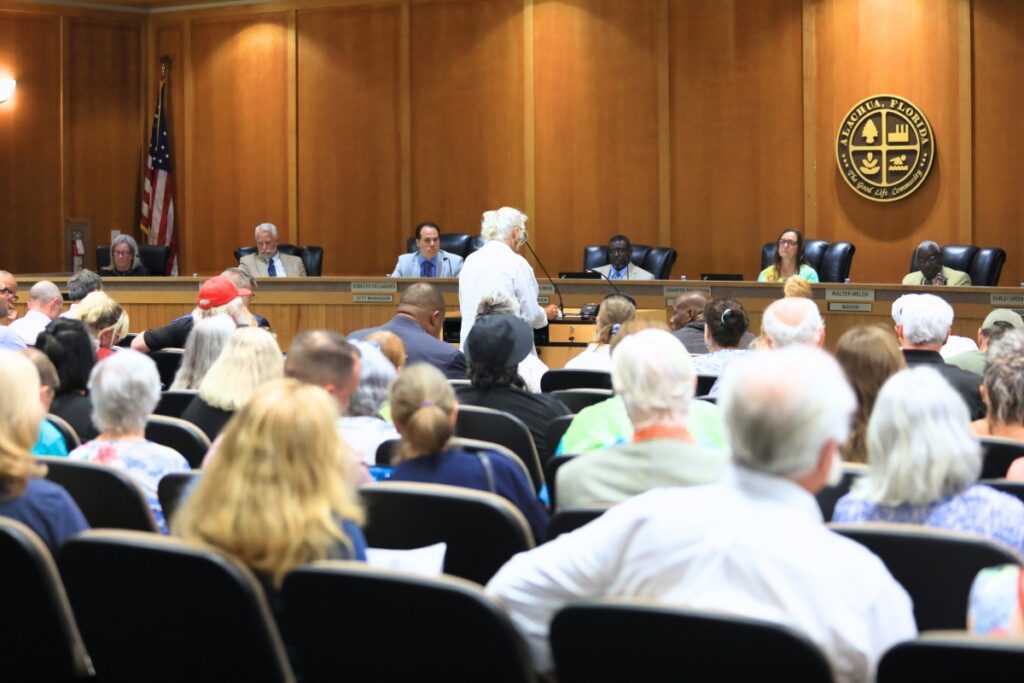
The Alachua City Commission deferred voting on land use changes for the Farmlands Commercial development to June 22 after almost six hours of deliberation pushed Monday’s regular meeting close to midnight.
Dozens of public commenters showed up to speak for, but mostly against, the commercial and moderate residential corridor proposed along U.S. Highway 441 east of Chick-fil-A.
The proposed land use changes for the more than 200 acres owned by JTFA LLC and represented by Clay Sweger of EDA Consultants and Gerry Dedenbach of NV5 are rumored to bring a Walmart to Alachua. The property is currently used mostly as a tree farm.
The commission already deferred the vote last month because the applicant failed to properly post signs advertising the proposed ordinances. Principal Planner Carson Crockett said staff found out the signs weren’t placed because the employee responsible for doing so was away on bereavement.
On Monday, the City Commission heard presentations from staff and the applicant, as a court reporter hired by the Sierra Club dictated the meeting.
Dedenbach said the biggest change from Farmlands’ original plans was decreasing the number of intended residences from 686 units to 203 by adding the commercial component. Crockett said in addition to general commercial uses, the designation would allow more highway-oriented agencies.
“In lieu of doing strict development, our goal is to create a commercial core inside the property,” Dedenbach said. “You will actually have a concentrated area with a transitional density buffer between the commercial and residential.”
More than halfway through the meeting, Vice Mayor Jennifer Ringersen’s motion to adopt Farmlands’ first ordinance for a small-scale land use change of 46 acres was seconded by Mayor Walter Welch, after he passed the gavel to vote. Ringersen then presided over the remainder of the meeting.
Concerns during public comment focused on increased traffic within the development, impacts on the environment and water supply and erasing Alachua’s rural feel.
Others supported the growth, saying more jobs were needed to keep young people from moving away.
In debating whether to extend the meeting a second time, Commissioner Shirley Green Brown motioned to continue the unfinished business at the next regular meeting. She said she wanted to ensure the applicant had a chance to respond to the citizens’ comments.
The motion passed 4-1 with Commissioner Jackson Youmas in dissent.
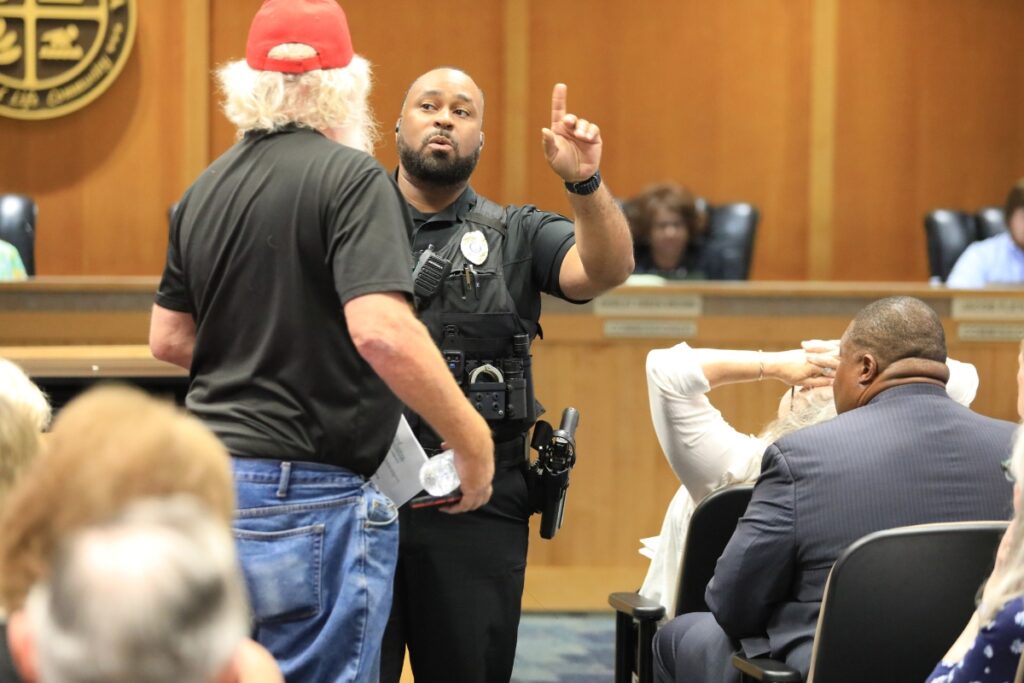
Quibbling over points of order and procedure amongst the dais and the audience compounded the duration of Monday’s meeting, which included Welch ordering a resident who clapped during public comment to be escorted out of City Hall by the police.
Welch prefaced the meeting by saying he wouldn’t tolerate outbursts, clapping, or personal comments. Eventually, he barred commissioners from making comments until he gave permission.
When Commissioner Jacob Fletcher asked to remove a turn lane request for bid off the consent agenda for more discussion at a later date, Welch interrupted him to say, “just approve the agenda, please.”
City Attorney Scott Walker confirmed Fletcher could make his request, which the rest of the commission agreed with.
Then, during the first public comment session, multiple speakers raised concerns about a May 21 workshop with the City Commission and Planning and Zoning Board at City Hall.
They said they felt the meeting should have given the public notice and that there were conflicts of interest since it involved city officials—except Fletcher—and the Farmlands applicant, Dedenbach.
Dedenbach’s wife, Laura, also attended as chair of the University of Florida’s Department of Urban and Regional Planning, along with the chair of the San Felasco chapter of the Florida Division of the American Planning Association (APA), former speaker of the Florida House Chuck Clemons and Alachua’s land use attorney Patrice Boyes.
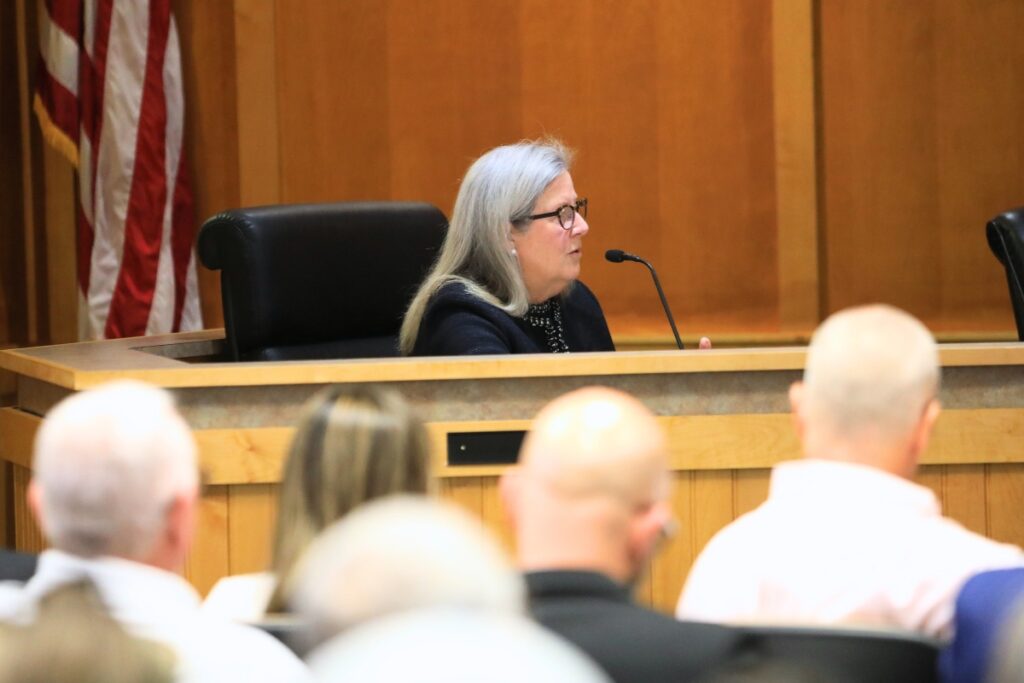
Boyes said the workshop was a training session sponsored by the APA on land use laws and how to conduct proper hearings. She said no votable projects were discussed and she deemed the meeting was not subject to Sunshine Law.
Although the educational materials from the workshop are public record, the concerned speakers found it troubling that no minutes or videos were recorded.
After resident Tamara Robbins called the workshop a casual lobbying session between the Farmlands applicant and the city, another audience member clapped. Welch had the police remove him from the meeting.
As attendees repeatedly asked Welch to give him a second chance, Brown likened the situation to when she taught children and said the man had his chance.
“I was an educator for 38 years. And in dealing with children, when you break the rules, you suffer the consequences,” she said.
As Youmas attempted to comment on bringing the man back to the meeting, Welch said he wasn’t going to accept comments from commissioners anymore. Youmas protested to the city attorney.
“Commissioner Fletcher made a comment, Commissioner Brown made a comment, and when I get ready to make a comment, [Welch] shuts me down every single time,” he said. “I’m not willing to tolerate that type of behavior from my mayor or any other fellow commissioners.”
Welch gave Youmas a chance to speak, but reasserted to the audience that he wanted to get through the agenda even if it meant kicking more people out. The attorneys confirmed Welch had the power to do so if he chose.
“I am the mayor. I do run this meeting. I don’t need none of the commissioners to tell me how I need to conduct it, and that’s final,” he said. “And if you don’t like that, no one is forcing you to be here. From now on, all commissioner comments, you can comment when on the agenda it’s right for you to comment. We are not going to prolong this meeting with comments and comments and comments. Now, is there any more public comments?”
Before leaving the meeting, an attendee named Jeff Zinc said at the podium, “This has been next to comical. Wow.”
Suggested Articles
No related articles found.
Mayberry unleashed.
Calling a civic-minded person a child for clapping reminds me why some teachers were disliked.
Florida governance at it’s finest!
It was both laughable and terrifying.
It was comical….The idiot activist that are against everything led by the Bully and unprofessional person in the room (Jacob Fletcher) encouraged everyone they knew to show up and speak out for their 3 minutes. So of course, time ran out. That is their plan, stall the vote.
The mayor did a good.
You have people like Tamara Robinson, Pam Bashitti and Soorya Lindberg who just get up and yell and complain about everything.
They are very uninformed or they are informed but rather spread a lot of misinformation.
Okay Road Rage
So Tamara makes a comment, someone applauds and the mayor kicks the applauder out of the meeting. Then he bears down on the other commissioners.
Astounding. Just astounding.
I hope the mayor realizes that the people coaching him (state senator, state rep) to act this way do not have the people of Alachua in mind. The mayor was so friendly when he started last year and hope he realizes he’s there for the people to works for the people – NOT be influenced developers and politicians.
Don’t hold your breath waiting on that hope.
Reducing the project from 686 homes to 203 while adding commercial space is a win for Alachua. Residents shouldn’t have to drive to Gainesville every time they need basic goods. More businesses mean more jobs, more local tax revenue, and less pressure on homeowners to carry the entire burden of funding local government. Keeping shopping dollars in Alachua makes sense.
How do shopping dollars stay in Alachua, Julie? That’s not how an economy works. Every dollar spent at a chain instead of a small business hurts locals. And those “Jobs” will never let someone afford a home here.
Property taxes keep rising, and local families are paying the price. Yet every time a city tries to attract businesses that could create jobs, increase services, and broaden the tax base, the professional protest crowd shows up to oppose it.
Many of these activists don’t have to live with the consequences of limited shopping, long commutes, or rising tax bills. Local residents do.
It’s easy to oppose everything. It’s harder to explain how homeowners are supposed to keep paying higher taxes while turning away economic opportunities that could help support the community. Local taxpayers deserve a voice too.