


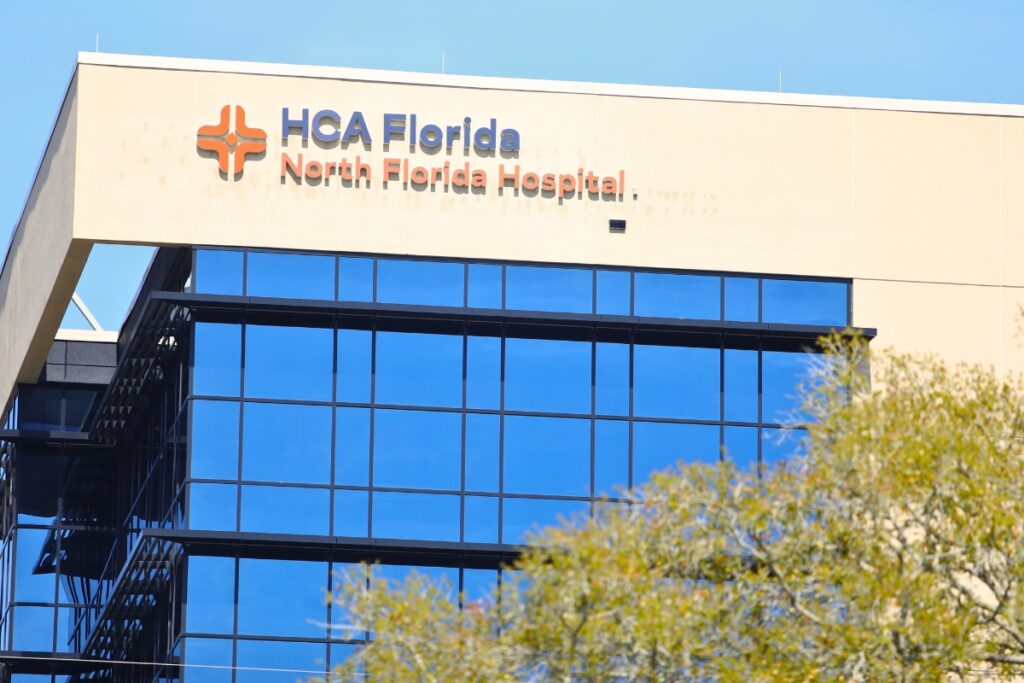
- HCA Florida North Florida Hospital will end its professional chaplain program on Aug. 18, shifting to a volunteer-based spiritual care model.
- The hospital states it will still provide pastoral care and connect patients with preferred clergy upon request after ending professional chaplain services.
- Professional chaplains offer certified expertise in spiritual and emotional support, unlike volunteer clergy, according to the Association of Professional Chaplains.
Terri Yousse was in the grip of an emotional crisis. She was feeling conflicted and guilty—second-guessing herself after making the decision to remove her brother from life support.
Unable to overcome profound feelings of doubt, she reached out to the professional chaplain she had met on the staff at HCA Florida North Florida Hospital.
“The chaplain helped me process my emotions over being the one who made the decision to let my brother go,” Yousse told Mainstreet. “I wouldn’t have been able to get through that without her.”
Yousse and her husband, James, were disturbed to recently learn that HCA is pulling the plug on the professional chaplain program at its 553-bed Gainesville hospital. Remembering her experience of 13 years ago, Yousse took to Facebook to appeal to the hospital for mercy. As of Tuesday, her post had generated more than 200 comments, most of them critical of the hospital’s decision.
“I’m not surprised,” one post said. “It’s all about money with corporations these days,” one poster said.
Some took a different view.
“Just ask your personal religious leader to come visit if you need it,” a commenter said. “Hospitals don’t need to be wasting their money on staffing priests.”
HCA Florida North Florida Hospital’s website makes no apparent mention of the termination of its chaplain program. In response to a request from Mainstreet, the hospital released a statement saying it is not discontinuing “pastoral care” but is moving to a “volunteer” program.
“Spiritual care will continue to be available through a volunteer-based model, like many hospitals,” the hospital said. “We will continue to help connect patients and families with pastoral support and, upon request, their preferred clergy or faith leader.”
In a memo to staff, obtained by Mainstreet, the hospital said its professional chaplain staff will end operations on Aug. 18. HCA did not respond to requests for more information, including how many staff positions will be eliminated, the reason for the program’s demise and whether the decision is company-wide or limited to the Gainesville hospital.
HCA Healthcare is the largest for-profit hospital owner in the nation. It operates some 50 hospitals in Florida alone, including two in Gainesville.
HCA’s new approach differs from other hospitals in Gainesville. Malcom Randall VA Medical Center offers professional chaplain services, and UF Health Shands Hospital has full-time chaplains on staff and available “24 hours a day,” according to the hospital’s website.
Kyle Christiansen, communications director for the Association of Professional Chaplains (APC), told Mainstreet that volunteer priests, rabbis and ministers from the local community sometimes don’t have the life-saving expertise of certified chaplains.
“Patients should be concerned, and people who work in the hospital should be concerned” when professional staff is replaced with volunteers, Christiansen said.
The APC has more than 4,000 members, accounting for some of the nearly 10,000 certified chaplains working in U.S. hospitals, Christiansen said.
“Chaplains not only care for patients and families, but they are also involved with in-house ethics and issues of moral injury,” Christiansen said. “They counsel nurses and doctors through very stressful times. When a patient gets worse or dies, caregivers can experience feelings of doubt or guilt and need skilled help in dealing with that.”
Christiansen said that, unlike some volunteer clergy, professional chaplains do not proselytize.
At Baptist Health South Florida, which also offers professional chaplain services, its website says spiritual care can provide significant improvement among patients suffering severe depression, among other illnesses.
“A large body of evidence points to how spiritual health can lead to physical and psychological well-being,” said Baptist’s assistant vice-president for pastoral care, Renato Santos.
Terri Yousse said a program that provides spiritual care “upon request” would not have helped her “live with herself” after her brother died.
“I’m not a religious person. I don’t go to church,” she said. “The chaplain came and introduced herself. If it was a volunteer arrangement like they’re going to, and I had to ask for help, it never would have come.”
Suggested Articles
No related articles found.
It’s all about the ” Benjamin’s ” .