



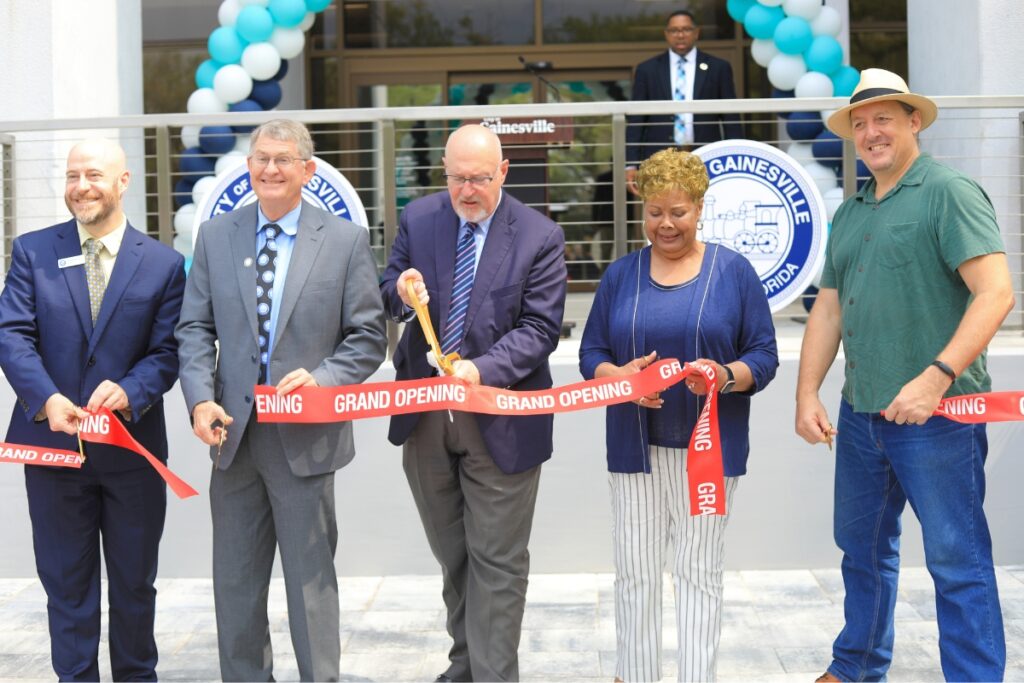
- Gainesville reopened its renovated City Hall Plaza after a $1.8 million upgrade funded by the Wild Spaces Public Places surtax.
- The plaza features a new open design, a speaker podium, a Sister Cities Monument Garden, and an MLK Jr. Memorial Garden.
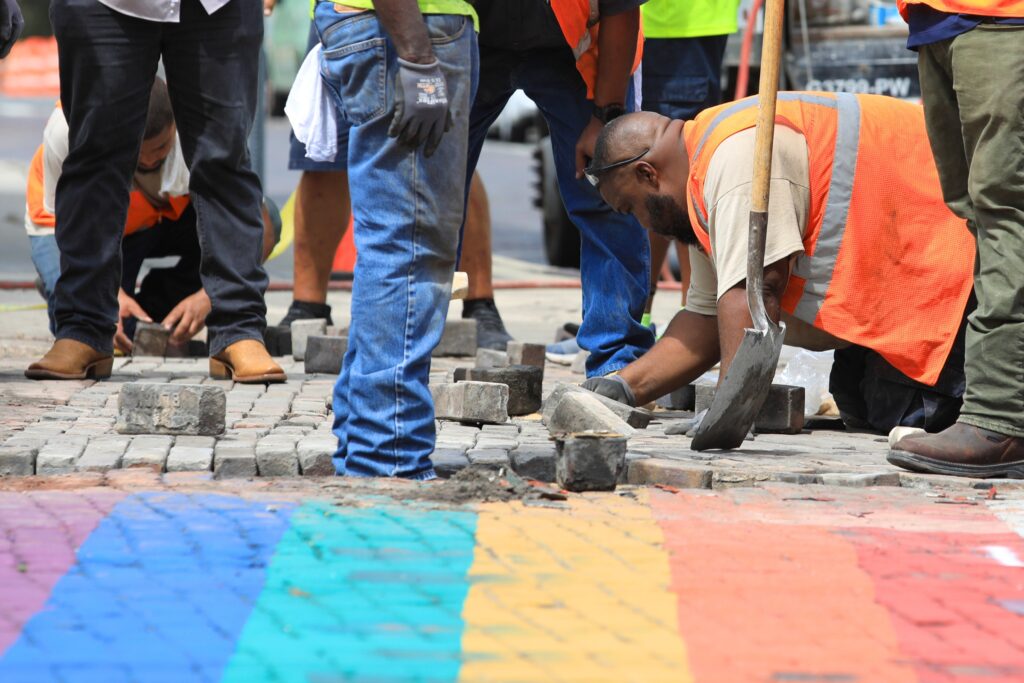
- Rainbow bricks from removed crosswalks were repurposed in the plaza despite state regulations barring rainbow road markings.
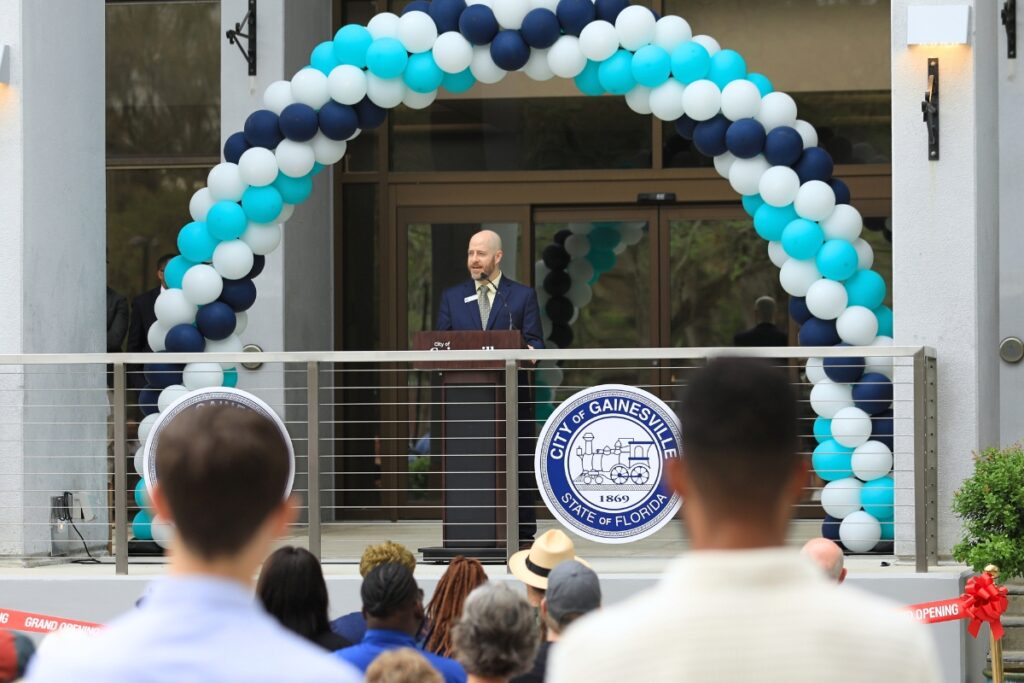
Gainesville leaders welcomed the community to the newly renovated City Hall Plaza on Friday for a ribbon-cutting centered on diversity with hints of defiance.
The renovation started in October and cost $1.8 million from the Wild Spaces Public Places (WSPP) infrastructure surtax and a 2019 city-issued revenue note for public projects. Besides an aesthetic upgrade, officials said the project was also a practical upgrade after years of paying for leaks and repairs with the fountains.
The plaza features a speaker’s podium raised at the entrance and an open design, improving safety compared with the previous plaza containing nooks and hidden areas. A new Sister Cities Monument Garden shows all the partnerships Gainesville has with cities around the world, and the Martin Luther King Jr. Hall of Fame Garden is open directly from the plaza instead of walking around on University Avenue.
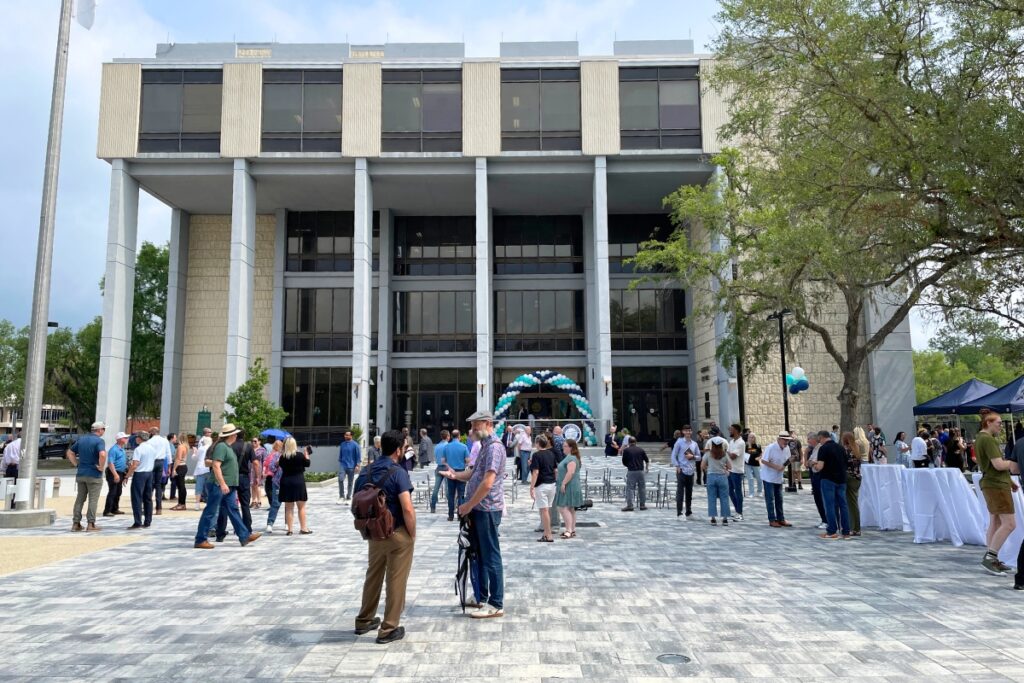
Mayor Harvey Ward said the plaza is a place residents can learn about Gainesville’s diversity—and not just the rainbow memorial. He said the first place is a plaque commemorating the Potano natives who lived here. Then a plaque about Spanish colonialization and one about the Civil War.
Residents can learn about the diverse cities Gainesville collaborates with through the Sister Cities program, Ward said, including Duhok, Iran; Kafar Sava, Israel; and Novorossiysk, Russia. Or he said the MLK Jr. Memorial Gardens serve to show that diversity and the locals who took up King’s march.
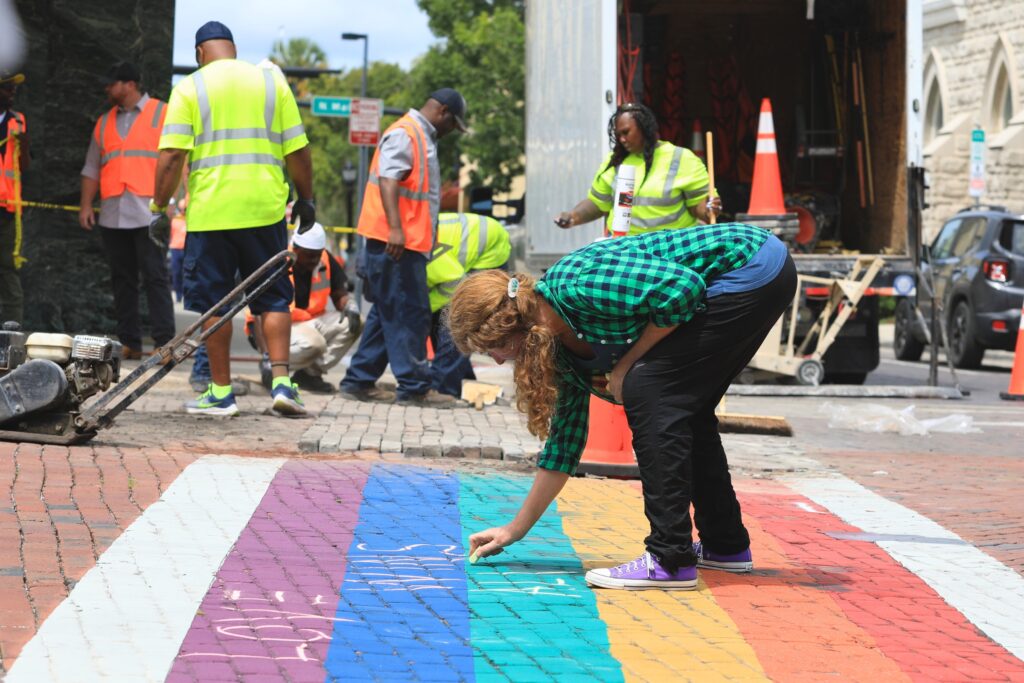
Perhaps the centerpiece for Friday’s attendees: a triangle of rainbow-colored bricks repurposed from when the city was forced to remove its rainbow crosswalks last year.
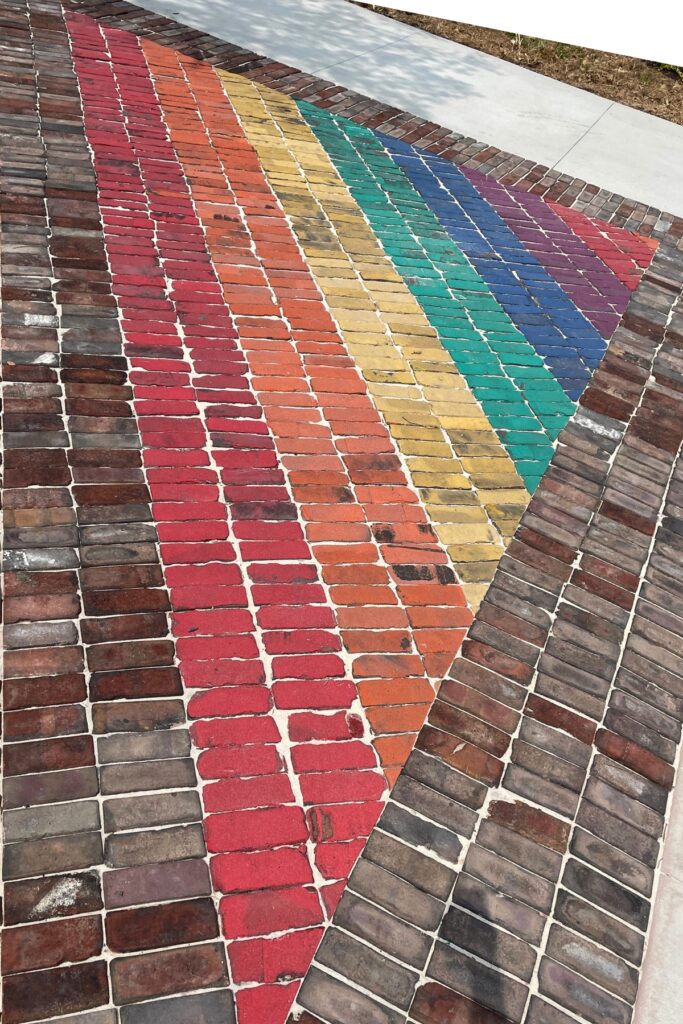
Gainesville and other cities in Florida were forced to remove rainbow sidewalks and other road installations following new guidance. If not, the municipalities risked losing funding. The regulations also required Gainesville to remove its green bicycle symbols on roads that marked Bike Boulevards.
Ward said the bricks aren’t in the sidewalk or roadway, so they don’t fall under the order. But even if the laws change and rainbow bricks must be removed from city hall plazas, too, Ward said Gainesville will find another way to use the bricks.
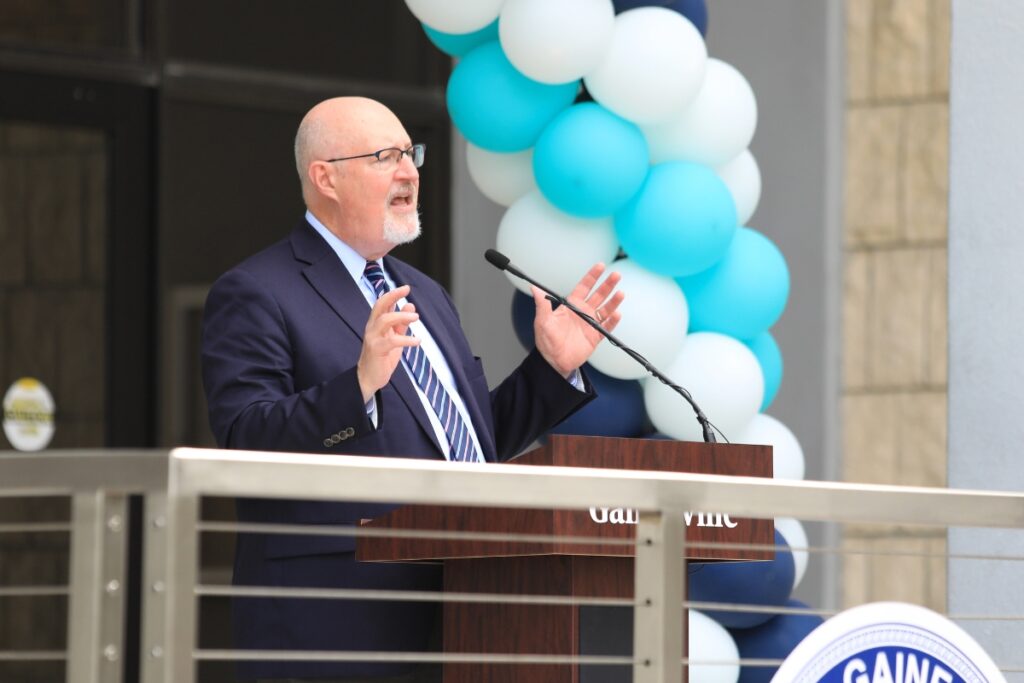
“We’ll find another way to continue to honor and celebrate everyone who lives, loves, learns, works, prays and celebrates in this community, or any part of those things,” Ward said. “If you’re here, we’re glad you’re here.”
He said Gainesville will keep using the bricks because the city is—despite the term falling out of favor recently—diverse.
Commissioner Casey Willits said public places carry stories, and he said the city looked for ways to preserve and carry forward the community’s history. Like the rainbow bricks driven over by cars and chipped with time, Willits said the journey of remembering our history will also show the wear and tear. But he said the history would continue.
“Gainesville is going to Gainesville,” Willits said. “We don’t back down here; we want to show our history.”
Phil Mann, special projects administrator, thanked residents for supporting the WSPP surtax that funded the plaza renovation and so many other infrastructure projects. Gainesville’s WSPP spent $5.2 million during the last fiscal year on construction, design and professional services for projects at 23 different locations in the city.
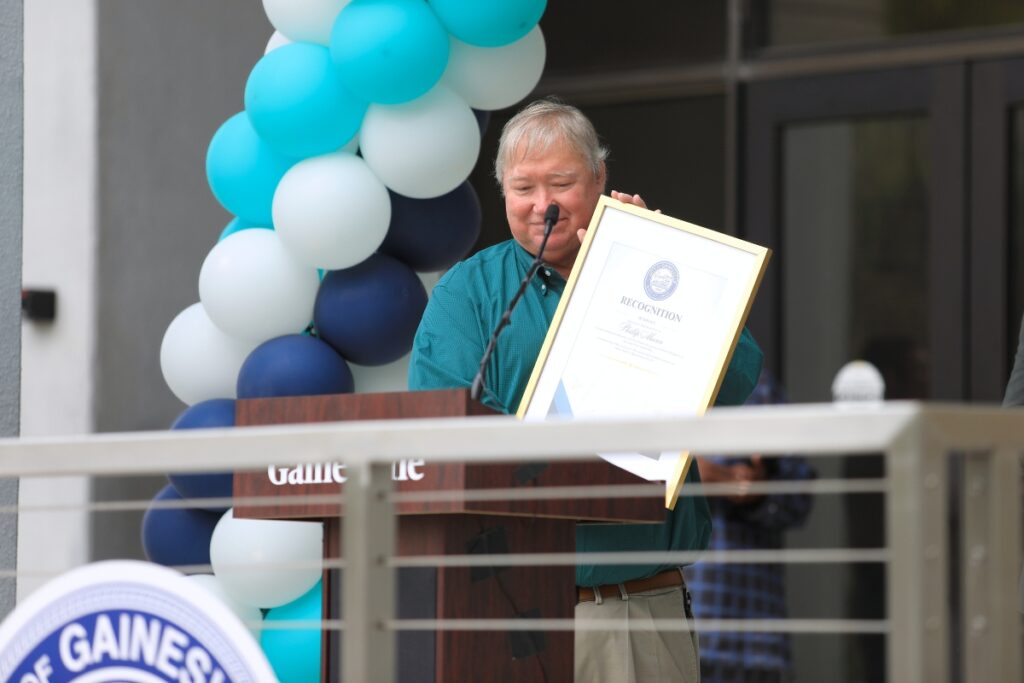
Mann has served with the city for 32 years, and Ward called his Gainesville “institutional memory.” For his work on the project, leadership and dedication, Ward gave him a recognition plaque.
Suggested Articles
No related articles found.
Where was Eastman? Duncan-Walker?
What a colossal waste of money.
Wow! We are the taxpayers, paid $1.8 million to re-purose rainbow bricks! I’m wondering where the next waste of money will go?
So true
Wild spades, public places? Thought that was for parks. One thing I have come to learn about Gnv city leaders is they don’t have a clue how to build a city. More money in their pockets.
Great job on the plaza! For those who think it was too much money, they obviously have never done any demolition or renovation or construction work done before. That is a huge area that was repurposed. Now it’s open, looks clean and safe. Before it looked terrible and had lots of spaces for cats, critters, and humans to hide. It was not safe. And they didn’t throw away those colorful bricks but were able to reuse them. Where is the harm in that?
Would have been cheaper to paint new bricks. Just clean up the old ones. But you made a big point and a silly show. WOW. Spend that money.