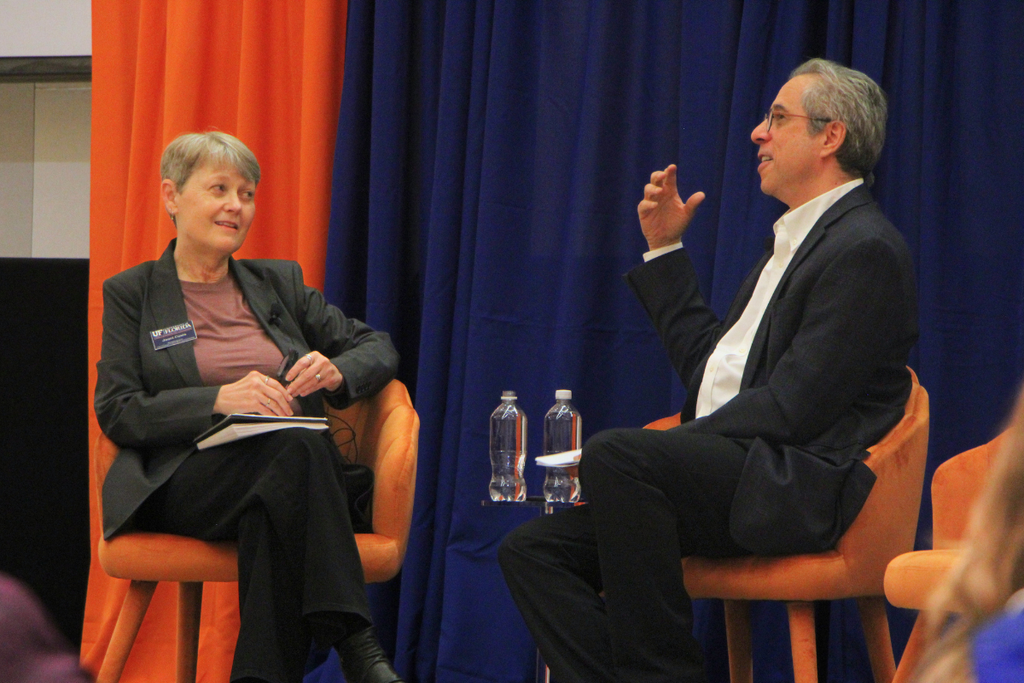



The Collier Prize for State Government Accountability’s second annual symposium on Tuesday brought together University of Florida students, faculty and community members to learn from this year’s prize-winning reporters and industry leaders about the craft of journalism and how to sustain it.
With $25,000 for first place, the award, launched in 2019 by local businessman and philanthropist Nathan Collier, is considered one of the largest for state-level journalism in the U.S. This year, Minnesota-based KARE 11 became the first television broadcast station to win, with a team that included UF intern Nicole Borman.
CalMatters took second place with $5,000, and a squad from the Tampa Bay Times and Miami Herald earned $2,500 in third. The awards were distributed in April at the White House Correspondents’ Association dinner.
As a UF alum, Collier partnered with the College of Journalism and Communications to launch the symposium last year. In his opening remarks Tuesday, Collier said he hopes his endowments honor his family’s muckraking roots and inspire the next generation of journalists at a time when investigative work is more important than ever.
“It is publicizing and letting the world know, letting politicians know that someone is watching,” he said. “You are the bulwark of democracy and freedom. Your work is vital to the flourishing of this republic we hold so dear.”
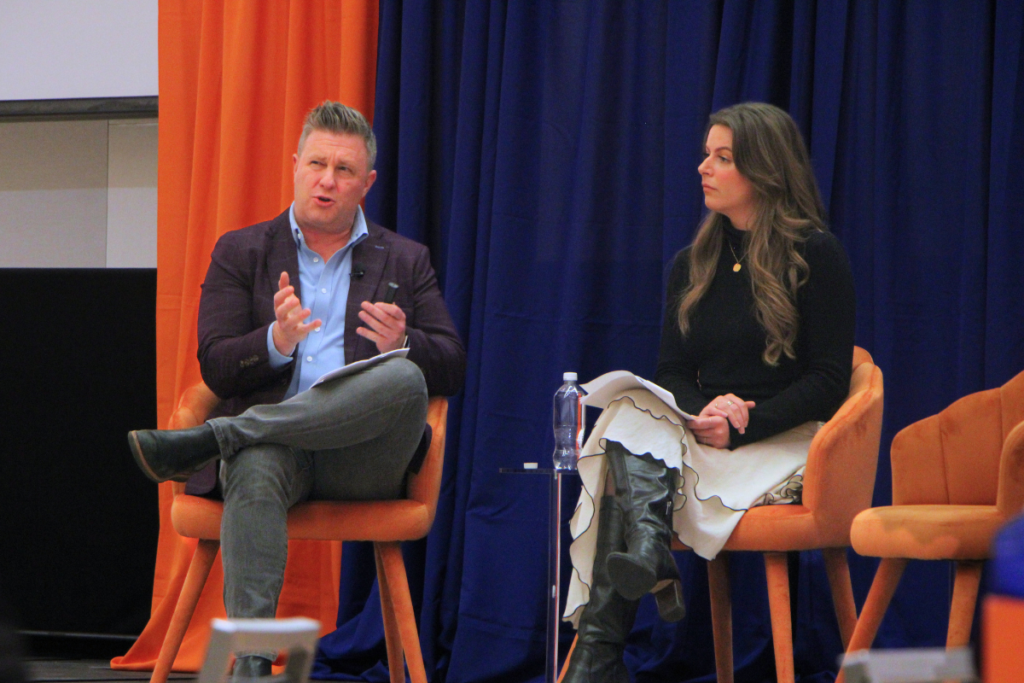
KARE 11 investigative reporter A.J. Lagoe and producer Kelly Dietz shared insights into their first-place investigation “Housing Hustle.” The series chronicled fraudulent Medicaid-funded housing services in Minneapolis, Minnesota, leading to indictments, resignations and convictions.
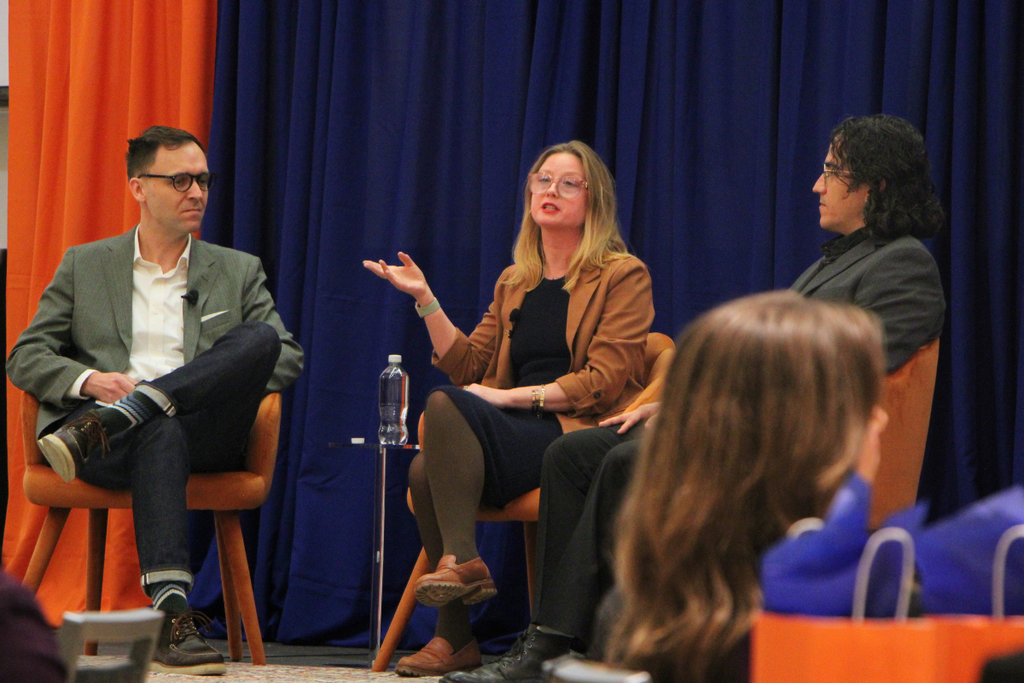
Lauren Hepler and Robert Lewis detailed how their “License to Kill” investigation for CalMatters uncovered California’s negligence in revoking driving privileges, despite dangerous driving histories, including while intoxicated and causing fatalities.
Lawrence Mower, Alexandra Glorioso and Justin Garcia recounted their Tampa Bay Times and Miami Herald investigation into a $10 million diversion of Medicaid funds by Florida officials to buy advertising about statewide amendments.
The Miami Herald’s Julie Brown was slated as the keynote speaker but was unable to attend due to a family emergency.
Rebuild Local News president and founder, Steve Waldman, pointed to each of the teams’ investigations as evidence for the need to bolster newsrooms and help them pursue government accountability.
Waldman also co-founded and served as president of Report for America, an organization that helps fund and place journalists in newsrooms around the country. Mainstreet Daily News’ staff includes two Report for America members, education reporter Nick Anschultz and photojournalist Walker Smith.
Rebuild Local News is a coalition that aims to increase the number of reporters on the ground by advocating policies and legislation facilitating government support of the work. Waldman said 12 states have passed such laws so far, like New Hampshire’s tax cuts to businesses that advertise in local news.
Waldman said a challenge for readers today is the “proximity paradox,” where the more local an issue is, the less people know about it. He said the presence of reporters is key to combating corruption, polarization, and lack of information—what he called threats to democracy.
Since 2002, Waldman said there’s been an 82% drop in the number of journalists in the U.S., and 3,500 newspapers have closed; an average of three every week. That same year there was an average of 40 local reporters for every 100,000 people. Now, Waldman said there’s eight, and that drops to six in Florida.
Although Waldman said government can’t be the main source of revenue for local news, he said it needs to be a piece of the puzzle to sustain news today.
“We’re here at a conference that celebrates the best examples of journalists holding government accountable,” he said. “So, it may seem insane that I’m going to argue that the government should actually provide money to local news outlets, and that it’s needed, and that it can be done safely.”
Entry for the 2027 Collier Prize will open soon on UF’s College of Journalism and Communications website. The next symposium is slated for November 2027.