


It’s Christmas Eve 1983 and thousands of sweet orange blossoms perfume the chilled air of Marion County’s northwest corner as Diane Huff frantically speaks to her father, O.D. “Buddy” Huff Jr., over a two-way radio.
Diane and her brother, Jim, radio Buddy from the orange fields of their family’s O.D. Huff Jr. Groves overlooking Orange Lake in McIntosh.
Buddy, 75, instructs Diane while watching from his bedroom window in the distance, gathering all the information he needs about the weather and what to do from the grove’s windmill.
Together, they orchestrate dozens of crews in a symphony of citrus preservation, lighting thousands of grove heaters as the trees fight for their lives during the coldest recorded December in American history.
These fruit trees in one of Florida’s northernmost groves were accustomed to freezes. After the “Great freeze of 1894 to 1895″, Diane said McIntosh residents transplanted citrus survivors to the grove’s highest hilltop for sanctuary from the cold, establishing what she called a potpourri of various grapefruit, tangerine and orange trees.
But now in 1983, it’d been almost two days straight with temperatures below 30 degrees. As Christmas Day dawned, the Huff family’s citrus legacy spanning over three decades faded.
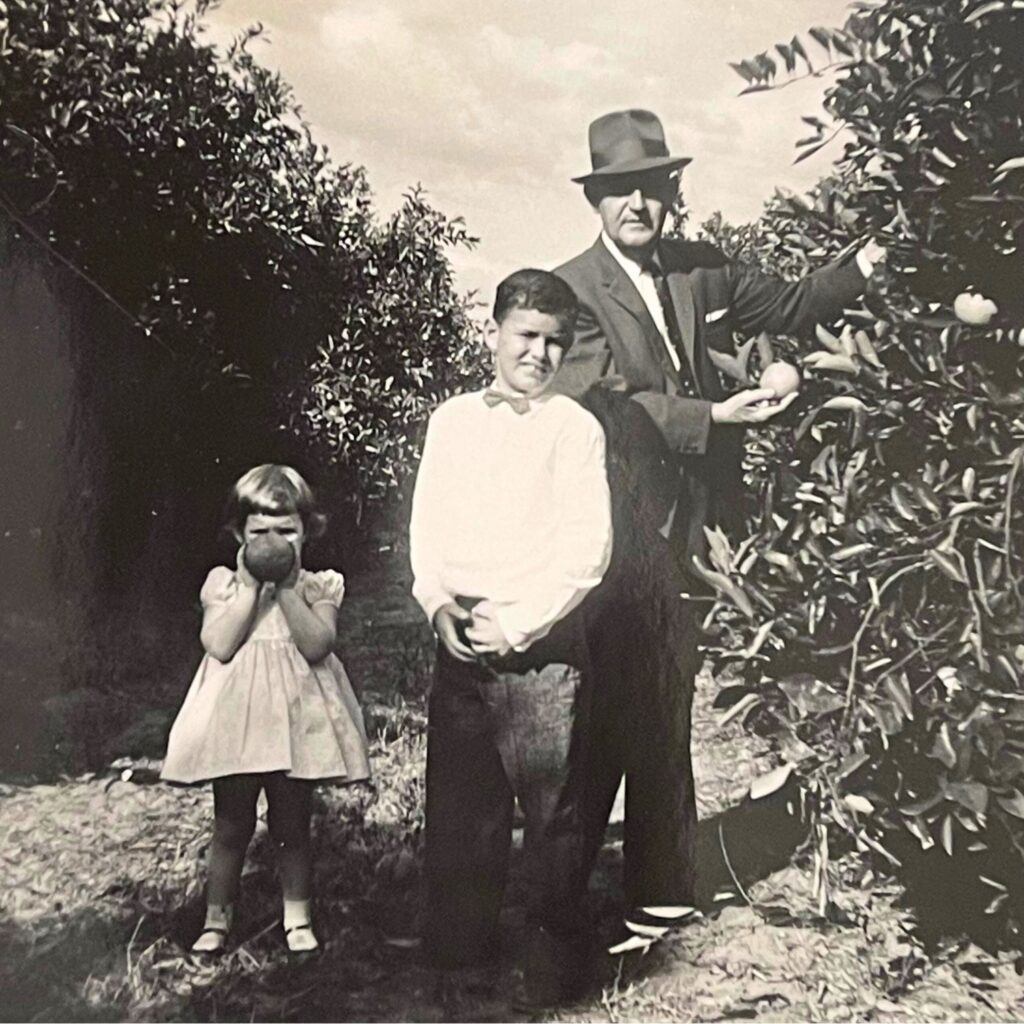
“We ended up bulldozing 400 acres,” Diane said. “Thank God I was young, because I just couldn’t do it. I couldn’t stand it now, you know? It was just awful.”
Diane said not a single Christmas passes without memories of the grove, so aromatic it was almost nauseating. It’s where Buddy proposed to Diane’s mother, Ollie, and where Diane dedicated years of her life to planting, growing and harvesting the fruit.
Florida’s leading orange production industry took a hit with the loss, as well as the locals and US Highway 441 travelers who knew the grove to be a slice of home where Ollie waited on them at her citrus shop with glasses of hand-squeezed orange juice.
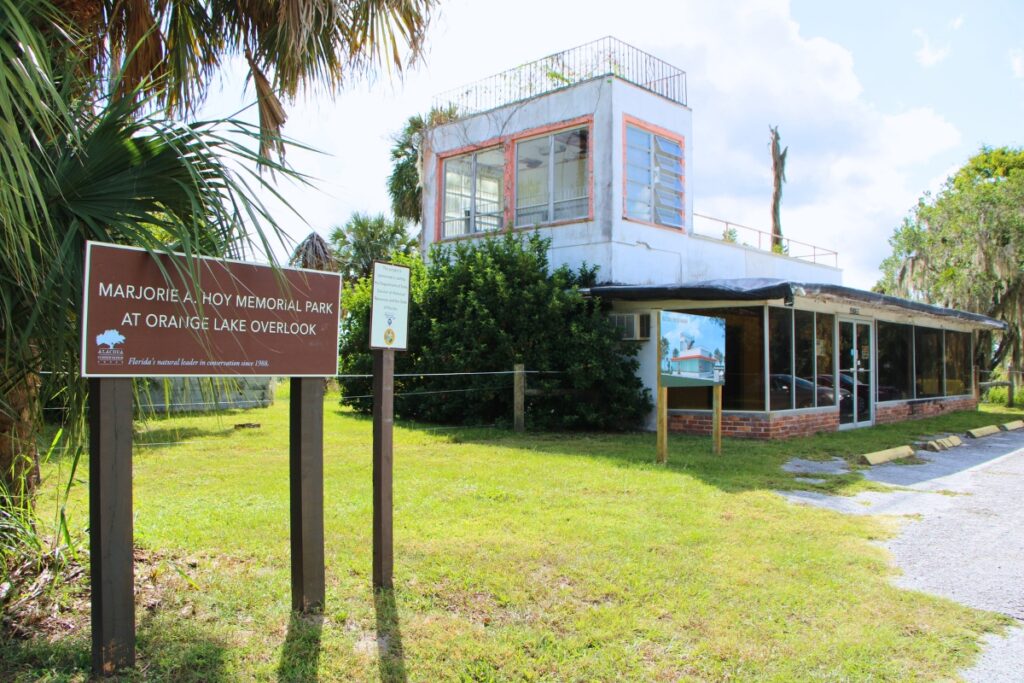
Unable to resurrect business after the freeze, the empty hilltop grove became a target for developers. Diane called the Alachua Conservation Trust’s (ACT) 2019 acquisition of the 71 acres from the property, now known as Orange Lake Overlook, a blessing.
Founded in 1988, ACT acquires and curates land in and around North Central Florida with a mission to protect natural, historic, scenic and recreational resources. The organization currently oversees around 20 preserves, including Orange Lake Overlook.
ACT’s Development Coordinator, Jeffrey Forbes, said the property is a unique opportunity for the organization to create a historical landmark of Old Florida by focusing on preservation of its past while also conserving the natural resources it offers visitors and wildlife now and for years to come.
“This is absolutely a crossroads between conservation and historic preservation. They’re not two individual, separate things, but they work hand in hand,” he said.
According to ACT’s Executive Director, Tom Kay, archeology sites operated by the University of Florida revealed that Timucuan tribes first inhabited Orange Lake Overlook long before the Huff family.
He said the property’s owners during the 1830’s grew sugar cane, which Seminole tribes burned during the Civil War.
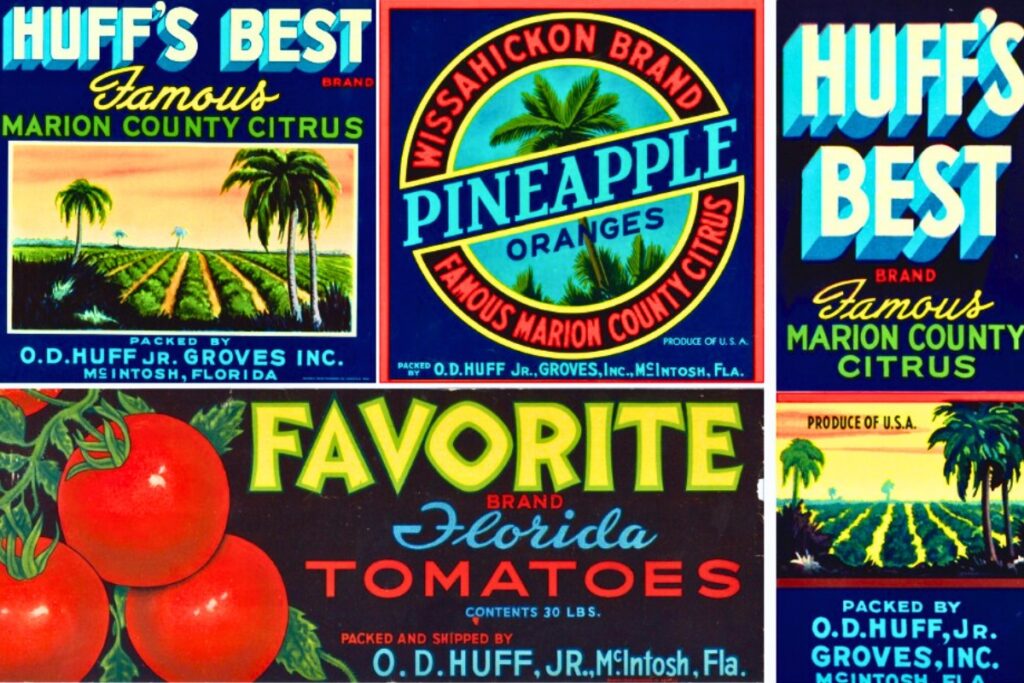
In 1941, a 33-year-old widow named Buddy Huff left the corporate produce world to start his own private operation, a risky decision in a country still healing from economic depression and for a part of Florida known for freezing.
But Diane said the risk of starting and sustaining the grove is exactly what excited her father.
In 1951, Buddy married Ollie Edwards, who served with the U.S. Army Nursing Corps in post-WWII Japan. He let her run the citrus shop at her request.
Without I-75, Kay said the pace of travel during the Huff grove days was much slower. Travelers often stopped to taste Ollie’s hand-squeezed orange juice and experience Buddy’s exclusive marketing strategy.
“He put a sign out on the road that said, ‘See the rare Florida red bats.’ So you’d pull off,” Kay said. “He had a walk that went out into the grove, and there in the grove sat a cage that had five or six baseball bats painted red.”
Diane said every day after school, she’d work in the shop, which featured a rooftop observation deck, for a few hours alongside her mother. Next door in the packing house, employees boxed fruit using crates typically made out of magnolia wood by McIntosh’s own Franklin Crate Company. A railroad downtown made for efficient exports.
At the end of the day, Diane would run home through the fragrant groves.
“It was such an idyllic childhood,” she said. “The only thing I don’t miss is the cold weather.”
Every year was a gamble for whether the grove would survive.
According to a Marion Sentinel article from 1964, Buddy kept around 12,000 diesel-powered grove heaters, known as “smudge pots,” on site to combat freezes. The lakeside grove was also susceptible to flooding.
But each year that the grove persevered, Diane said the memories and fruit only grew sweeter.
“[It had] that little touch of cold which fruit that was grown further south than ours just didn’t have,” she said. “I didn’t begrudge any of it. It was our family and everything.”
After the fatal freeze on Christmas Eve 1983, Diane said it was a blessing that her father passed away so soon the next year, so that he wouldn’t have to face the loss any longer. Ollie moved to Ocala after Buddy’s death, before passing away in 2012.
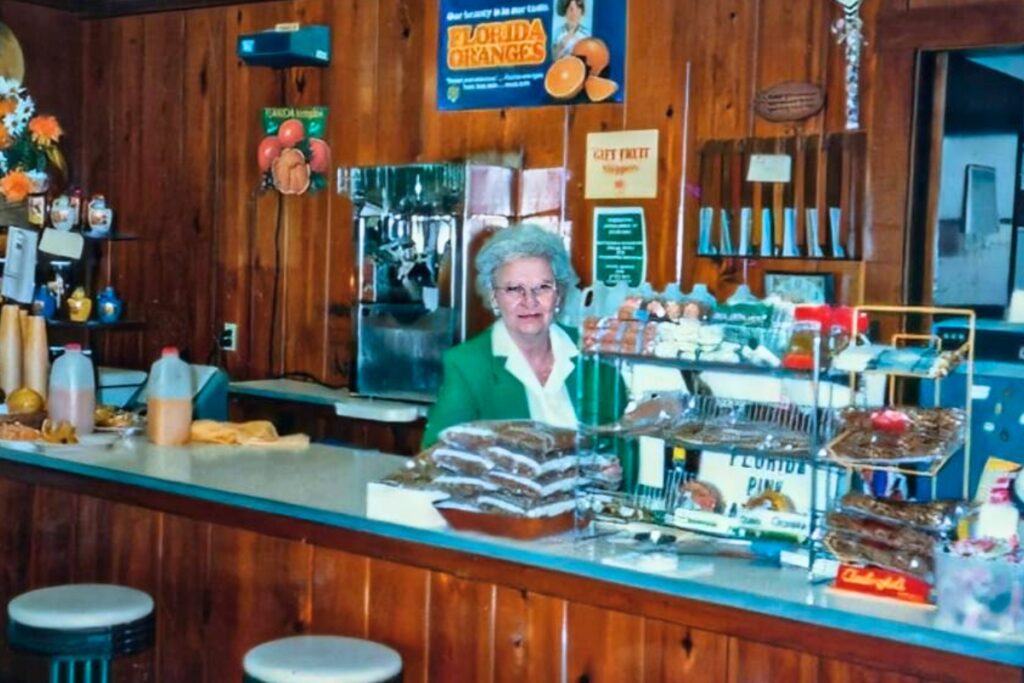
Kay said the family continued to lease the land to cattle farmers before ACT made its initial acquisition.
In 2023, ACT used donations and bridge loans to purchase 86 more acres to the north of the overlook from the Sawallis Family, bringing the preserve, named after UF professor Marjorie Hoy, up to 155 acres.
Orange Lake Overlook has grown a reputation as a wildlife sanctuary with its nearly three miles of lakeside trails.
The Alachua Audubon Society recorded 59 different bird species last year, making the preserve the fifth highest in Florida for most recorded species.
This month, the society installed a bald eagle sculpture, championed by Pulitzer Prize-winning author and UF professor Jack Davis and funded by Duke Energy, to honor the area’s role in preserving the species.
Local artists have leased the former citrus shop as studio space, with painter Jeff Ripple saying the property’s long view of dynamic interaction between sky and landscape fascinates him most about the overlook.
“Regardless of what I am anticipating from the sky, there are birds, wind, the arching palms, nodding wildflowers and a host of other subtle rewards that make the Orange Lake Overlook so special,” he said in an ACT newsletter.
Forbes said to date, Orange Lake Overlook has cost ACT around $1.3 million to acquire and care for.
Another $500,000 is needed to renovate the grove’s buildings, maintain the current property and acquire more. ACT received a $157,000 historic preservation grant for the project and raised $31,410 during its two-day Give4Marion campaign in September.
Forbes said the trust is in the permitting stages for the renovations.
“Obviously, it has a lot of conservation benefits,” Forbes said. “But it also has a lot of historical and cultural [significance]. It has a lot of nostalgia. Nostalgia for Old Florida.”
Editor’s note: This story was underwritten by a grant from the Rural Reporting Initiative at the Community Foundation of North Central Florida. To learn more or get involved, click here.
Suggested Articles
No related articles found.
Great story regarding this space. Bald eagle sculpture by local artist John Andrews is a solid anchor to the natural-art scene evolving with artists such as Jeff Ripple getting involved. We take our visitors around the Orange Lake perimeter and Micanopy to see the vestiges of Old Florida.
Wonderful story. Thank you.
It is very poetic to start the article with the smell of orange blossoms but that is impossible. They bloom in March and the fruit is ripe at Christmas. no blossoms in winter. We grow citrus on our land in Melrose. It is a lovely article but I would edit this. I do remember those beautiful groves at Orange Lake overlook tho! Love going there now to see the cranes fly overhead at dusk.
Probably written by a Yankee.
Citrus greening is taking my grove. I’ve lost 4,000 trees in the last 8 years.
Anyone interested in replanting one of the highest hills (26 acres) in SE Putnam should speak now or forever hold there peace. Top is 124 feet above sea level.
Very nice article about the more modern time history of the overlook. I remember in the early 1950s stopping there to get orange juice and to look out over the groves down to OL. One little comment, it is “smudge pot” not “sludge.”
Any photos Harry? Great memory! I’m local and trying to find period photos of the citrus shop. Thanks