



University of Florida neuroscientists have made a mechanistic discovery that paves the way to test immune-modulating medicines as a potential tool to break the cycle of methamphetamine addiction.
In a new preclinical study, a McKnight Brain Institute team led by Dr. Habibeh Khoshbouei examined the role of neuroinflammation in meth addiction to provide a deeper understanding of the mechanisms at work.
“Unlike alcohol or opioids, there currently is no medicinal therapeutic approach for methamphetamine addiction,” said Khoshbouei, a professor of neuroscience and psychiatry. “So this is an important societal issue.”
A highly addictive psychostimulant, meth causes feelings of pleasure and euphoria by increasing dopamine, a chemical released during pleasurable activities, and the potent drug is also infamous for causing inflammation and wound-healing problems such as “meth mouth,” or severe dental decay.
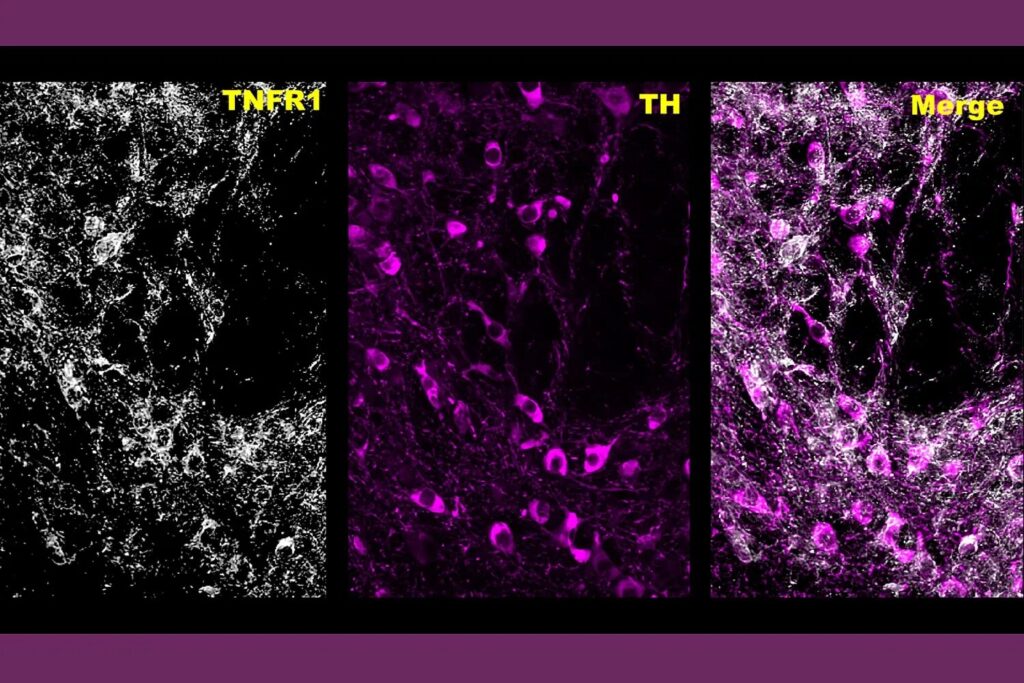
The findings, reported in Science Signaling, reveal a previously unknown sequence of reactions in the brain involving meth-induced spikes of dopamine and a key signaling protein, tumor necrosis factor-alpha (TNF), a regulator of both acute and chronic inflammation.
In mouse brain specimens, investigators uncovered a surprising dynamic interplay. Meth not only increased the release of dopamine but also unexpectedly stimulated TNF. The researchers then were able to mitigate these effects using a chemical compound to target either a protein called dopamine transporter or the signaling of TNF.
Using electrophysiological recordings, “we found that TNF increases firing activity of dopaminergic neurons,” Khoshbouei said. “And if you block the target of methamphetamine or the receptor for TNF, you block the effect of either methamphetamine or TNF.”
This is significant because there are Food and Drug Administration-approved medicines already on the market that can inhibit the effects of TNF, Khoshbouei said, such as those for autoimmune disorders like Crohn’s disease.
Co-author Dr. Marcelo Febo said while TNF is not typically associated with activating dopamine release, “in the case of methamphetamine, it seems like not only does meth increase inflammation, which involves the presence of immune cells and the release of TNF, but TNF itself evokes the release of dopamine, and that’s fascinating.”
The hope, said Febo, an associate professor of psychiatry, is that the findings could open the door to new treatment targets to reduce cravings and drug-seeking behavior as well as neuroinflammatory effects associated with meth use.
“This is a huge first step to show that there’s a dopaminergic target for TNF,” he said, adding that the results imply that modulating levels of dopamine could alleviate addictive properties. “Now the next steps will be to see how it controls different aspects of drug seeking.”
Suggested Articles
No related articles found.