



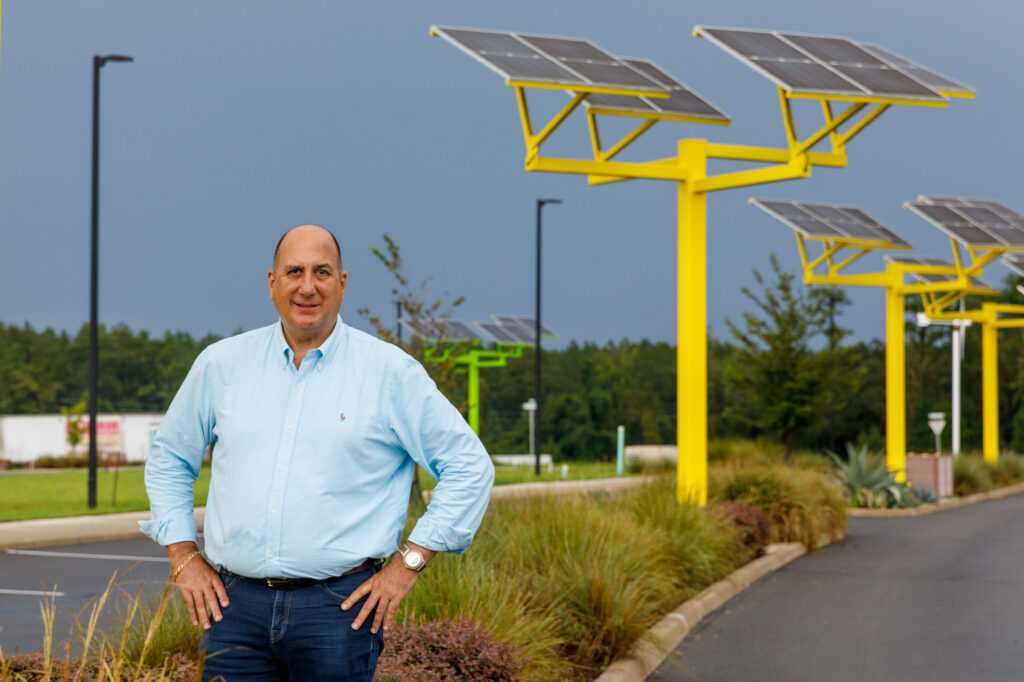
- San Felasco Tech City, launched in 2019, hosts 70 businesses on 82 acres powered by solar energy and is developing a sustainable fire station with Alachua County.
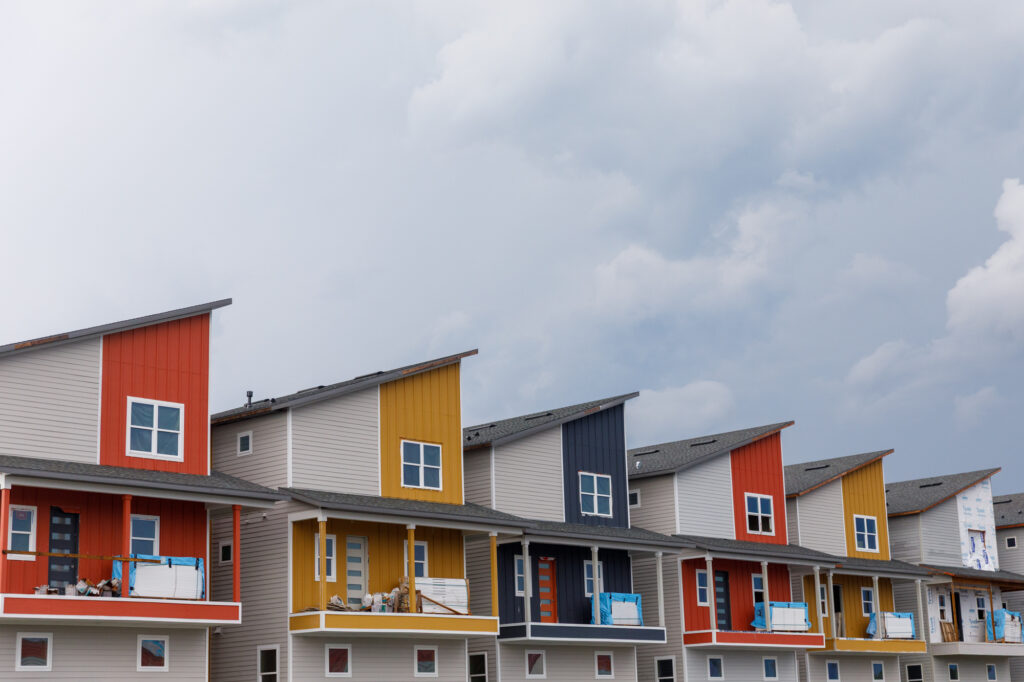
- Tech City has built 26 of 252 planned homes, with another 20 opening in early 2027, and offers rent discounts to incentivize employees to live on-site.
- San Felasco Tech City generates more solar energy than it consumes, producing 700,000 kilowatts last year with bifacial solar panels on site.
San Felasco Tech City launched in 2019 with a ribbon-cutting at the base of a sign displaying the sustainable Alachua community’s motto: We Built Tech City.
As it prepares for its eighth year, Tech City continues to fulfill its original vision by completing projects planned from the beginning while moving ahead with new ones, including what it hopes will be the nation’s most sustainable, eco-friendly fire station.
Tech City founder Mitch Glaeser said he has given over 5,000 tours of the 82-acre property, which is home to 70 local, regional and global businesses.
Glaeser, a self-proclaimed “serial entrepreneur” who owns 13 of his own businesses, said Tech City has become the fastest-growing and one of the most sustainable tech communities in Florida.
He believes Tech City is ideal for people who seek to combine innovation and entrepreneurship with sustainable energy, and he intends to keep the community growing.
“Tech City is a choice,” Glaeser said. “I don’t advocate that everybody come here. I just wanted it as a choice.”
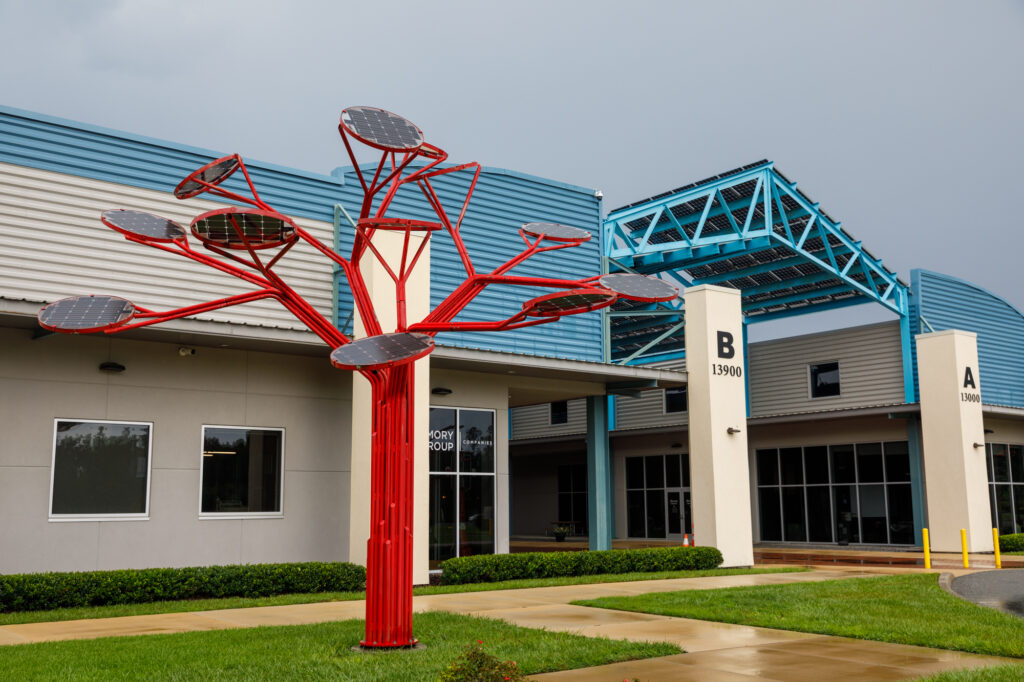
Glaeser said his team is in the middle of a four-phase process developing 270,000 square feet of business, office and residential space at Tech City—all run on solar power.
Glaeser said Tech City adds about one new company a month. Each one collaborates with him to customize spaces varying from small collaborative rooms to 15,000-square-foot factories.
Tech City’s businesses include Harvest Thyme Cafe, Daft Cow Brewery and Beaker and Flask wine bar, as well as manufacturers, medical technology companies, a children’s dance studio and Education Station & Preschool, Alachua County’s first preschool powered entirely by solar energy.
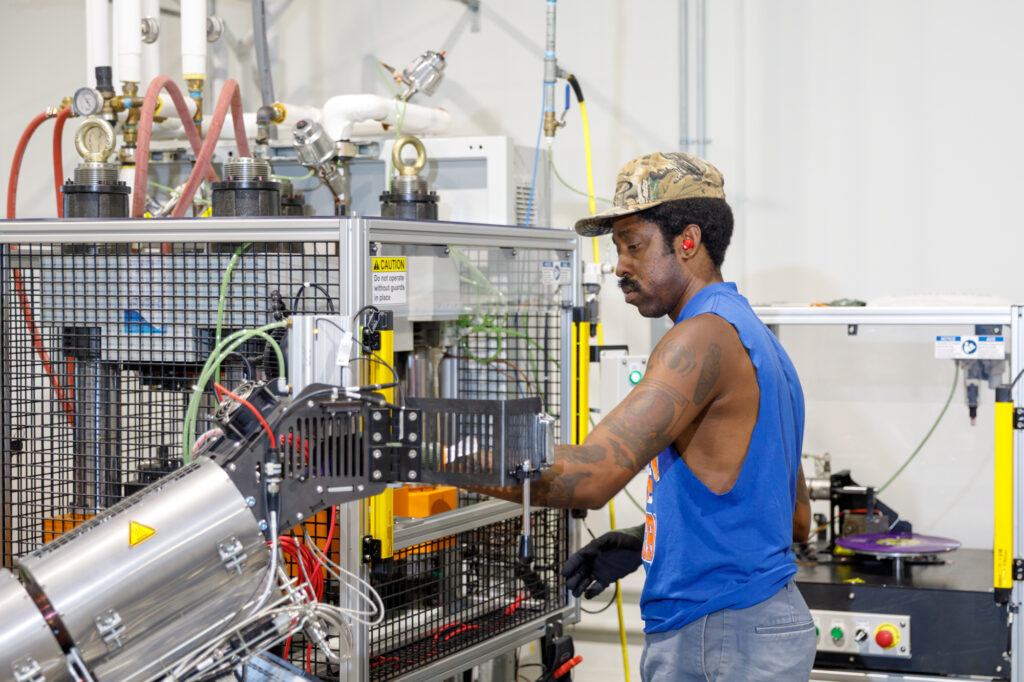
Audiodrome Record Pressing produces vinyl records, while Fracture prints photos on glass with almost no waste—an approach that reflects the sustainability goals shared by most Tech City tenants, Glaeser said.
Alachua Greens grows produce in hydroponic greenhouses and sells it at the Alachua County Farmers Market held at Tech City every Saturday. The event recently topped 100,000 visitors since moving to Tech City last year.
The women-owned ANAMAR Environmental Consulting tests for ocean pollutants, and the Silicon Valley-based anti-piracy company Vobile occupies a 10,000-square-foot office and combats digital content infringement for companies like Disney, Warner Brothers, Paramount and Netflix. Siemens, a Fortune 500 company and Europe’s largest engineering firm, opened in Tech City last year.
Tech City also houses several medical technology companies. Japan-based Neurotronics develops devices for treating sleep disorders, while NeXtGen Biologics uses axolotl skin to create treatments for patients with skin injuries worldwide.
Glaeser described one patient with a diabetic ulcer on his foot who benefited from the technology.
“They’re getting ready to amputate. They heard about [NeXtGen]; they went and put it on his foot,” Glaeser said. “He walked into my office. They saved his foot, and he’s able to walk like you and I. All with technology out of Tech City.”
One of the biggest projects on the community’s horizon is partnering with Alachua County Fire Rescue to build what Glaeser hopes to be the most sustainable fire station in the country. He announced on Facebook in July that Tech City already donated the property for the station to Alachua County.
He said a fire station for the community piqued his interest when Education Station opened. Glaeser said direct access to public safety in Tech City would likely be a draw for parents.
“[The businesses are] leaning in very hard on sustainability,” Glaeser said. “Every company out here sees that as a key choice. And so, when you compare that to what else is going on in the development world, it starts leading itself. All roads lead to Tech City.”
Glaeser said 22% of the people who work at Tech City also live there. Of the 252 one- to three-bedroom homes planned for the community, 26 are fully constructed, with another 20 expected to open in early 2027. Construction plans also account for future apartment complexes. Glaeser said the community’s average age is 35 and there’s a waiting list for the homes.
Tech City employees are incentivized to live on site with rent discounts. Tech City matches any discount, so if an employer gives $200 a month towards employee rent, Glaeser takes off another $200, with all utilities still included.
The community will soon have more amenities, with courts for volleyball, tennis, pickleball and basketball under construction. Glaeser said a swimming pool and clubhouse will open next spring, as well as a half-mile walking trail with workout stations to add to the current one-mile walking trail with gazebos and wildlife views.
He said Tech City aims to bring affordability to rural areas—where people are increasingly moving to escape high costs of living in Gainesville—by reducing infrastructure space so that both housing and accompanying utility costs go down.
“What I want to do is bring those dots closer together,” he said. “So less sidewalks, less buses, less paving, less water lines, less sewer lines, less fire hydrants. All of that could be reduced if you bring people and collapse them closer together.”
Glaeser said he decreases the infrastructure by running everything in Tech City on solar power.
Bifacial solar panels line Tech City’s streets, capturing both direct sunlight and energy reflected off the ground. Glaeser said the panels produce up to 130% more energy per square foot than traditional one-sided panels and contributed to the 700,000 kilowatts of solar power generated last year.
Glaeser said Tech City can be considered one of the world’s most sustainable communities because it generates more solar energy than it consumes. Although the community can meet its own energy needs, it remains connected to Duke Energy through a meter, as laws prohibit it from operating as its own utility.
Glaeser said Tech City is waiting to install battery technology for electric cars until batteries are light enough for the community’s own energy to cover. Tech City also recently installed windmills, but Glaeser said they’re more for decoration than energy production.
He said the fact that Tech City was built without any city, county or state funding proves sustainable communities can exist. He intends to keep the project going and growing for as long as he can continue creating spaces that help people better themselves.
“It might be as simple as companies being able to land in an environment where they’re welcome, and they have scalability and affordability, a dynamic place that offers the most sustainable community in the world,” Glaeser said. “You’re literally on campus of something unique to the entire globe.”
All those solar panel trees are nice. How about stringing out some extension cords to let the vendors at the farmer’s market and the food trucks at Daft Cow plug into all that solar power, instead of running noisy smelly gas generators?