



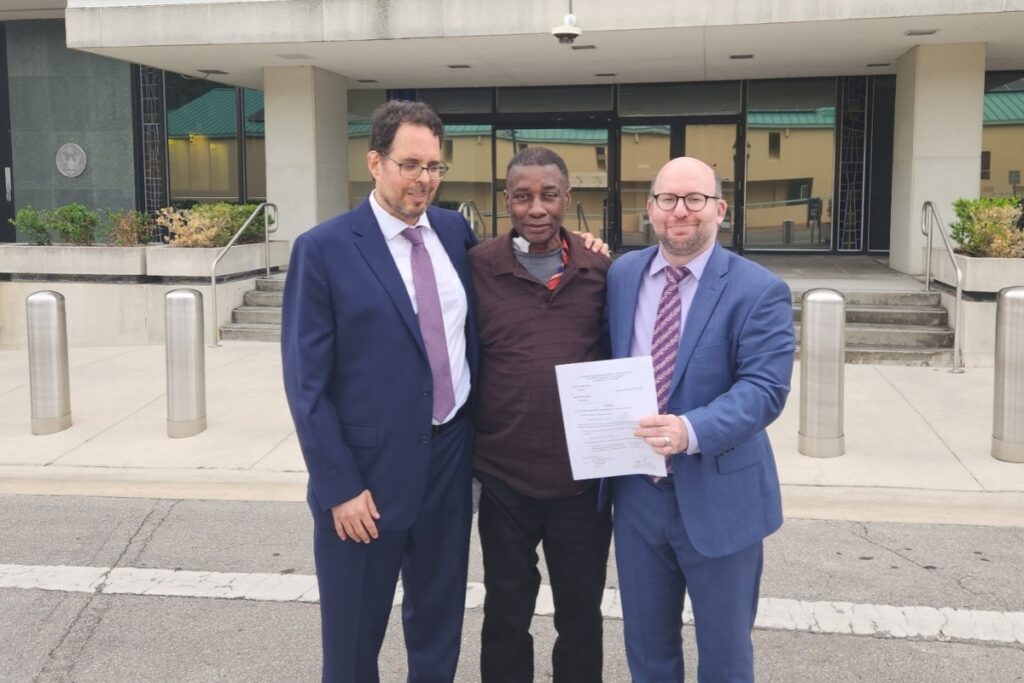
- A federal jury ruled that Levy County Sheriff's corporal Chase Gregory violated Terry Dukes Sr.'s Fourth Amendment rights during a 2019 unlawful home entry and arrest.
- The jury awarded Dukes $59,916 for economic loss and suffering, while the case led to scrutiny of LCSO practices and previous related lawsuits.
A federal jury decided Thursday that a Levy County Sheriff’s Office (LCSO) corporal violated the Fourth Amendment rights of Terry Dukes Sr. after deputies entered his home in Bronson, tased and arrested him in 2019.
The verdict confirms what Dukes, 66, said the night he was arrested: officers had no legal right to enter his home.
According to the complaint filed with the United States District Court for the Northern District of Florida, Dukes sat outside his home with a taser probe stuck in his bare chest and told officers he would sue them for the violation.
“You just simply cannot go into someone’s house as a law enforcement officer if all you have is someone opening the back door [and] you can’t even tell who it is or what they’re doing,” James Slater, attorney for Dukes, said in an interview.
The lawsuit began with seven counts against three responding officers, along with Levy County Sheriff Bobby McCallum for failing to train officers and allowing a policy of unlawful searches and seizures. But the case ended with a single count of unlawful entry in violation of the Fourth Amendment against LCSO Corporal Chase Gregory.
McCallum, named president of the Florida Sheriff’s Association in 2021, signed off on an internal investigation after the incident that said officers acted correctly.
In a statement to Mainstreet, McCallum thanked the jury for its service that allows the judicial process to protect citizens. But he also stood by his officer’s actions.
“Despite the verdict, I stand firm on my belief that my deputy made the best decision under the circumstances he faced, and his actions were reasonable and done in good faith,” McCallum said. “This deputy has many years of professional service coupled with hundreds of hours of advanced training. He only had seconds to make a decision, in his efforts to apprehend a violent felon. We regret the plaintiff had this unfortunate interaction with our Agency. However, my men and women will continue to protect our citizens from dangerous felons and enforce the law.”
The jury awarded $59,916 to Dukes for past loss of income and earning potential, past physical pain and mental suffering, and future physical pain and mental suffering. Slater said the plaintiff requested $200,000 for just the economic damages, but he said the jury did its job and respected the monetary award it decided was appropriate.
Slater said Dukes never deviated from his original statement of facts, keeping the story nearly verbatim all seven years. Meanwhile, he said Gregory changed his story over time and included new facts at trial.
Pointing out the shifting story made an impact on the jury, Slater said.
The incident occurred in the early morning of May 15, 2019. LCSO received a call of a possible battery of a pregnant woman, and a responding officer put out an alert for Terry Dukes Jr., the then 31-year-old son of Dukes Sr.
Gregory and two other officers responded to the home of Dukes Sr. because his son often stayed there.
LCSO was very familiar with Dukes Jr., responding to 21 investigations into him over the previous two years. In fact, officers had arrived at that same home the previous month in response to an investigation.
It was around 5:15 a.m., and Dukes Sr. was in bed. He’s hard of hearing and didn’t have hearing aids at the time because he couldn’t afford them, the complaint said.
Officers announced their presence at the front door, but Dukes Sr. said he didn’t hear them. Then officers pointed flashlights through the bedroom window, waking him up. The complaint said Dukes Jr. would also flash a light into the bedroom so that his father would come unlock the door for him if he arrived at night.
Thinking his son was outside, Dukes Sr. didn’t bother getting dressed. He walked naked to the back door and opened it before turning around and heading back to his room. Gregory was out back and saw the door open. Without announcing he was law enforcement or saying he was entering, Gregory entered the back door, the complaint said.
According to Gregory’s post-incident report, “The door was opened slightly by an unknown individual from inside, whom [Gregory] did not see. This person immediately turned and retreated back inside the home.”
The other two officers followed, and the complaint said Gregory followed the retreating Dukes Sr. to his bedroom, where he planned to get ready for work, before commanding him to get on the ground.
“Prior to hearing Gregory’s order to get on the floor, Plaintiff had not heard any other orders from any of the officers,” the complaint said. “Plaintiff was unaware of the deputies’ entrance into his home, he believed he had cracked the back door open for his son.”
Dukes Sr. told officers that he was the father, not Dukes Jr. Further, the complaint said that Gregory knew the entire time that Duke Sr. was not the man they were looking for, since he had met him twice before, once at that house and once at his workplace.
Despite this, the complaint stated the officers kept Dukes Sr. on the ground while he asked to put his pants on. Dukes Sr. reached toward the door where his pants were while telling officers he was putting on his pants, but Gregory fired his taser without warning.
The complaint said that Dukes Sr. also had a gun in the room but made clear that the gun was on the bed and in the opposite direction of where Dukes Sr. moved.
In its investigative report, LCSO said opening the door counted as consent for the officers to enter the home, but the complaint argued that Gregory admitted he erred during a recorded, post-incident report the next day, saying, “And my thought process was and looking back now I probably shouldn’t have done that.”
Both sides agreed that Gregory lacked a warrant to enter the house. The officers also had no probable cause and exigent circumstances that would allow entry. That means a law enforcement officer would need consent from the occupant to enter the house, and the entire case centered on consent to enter the door.
According to Slater, Gregory’s initial report said the door opened and he walked in, but his internal investigation cites him saying he saw a hand in a gap and a figure walking away. But at trial, Slater said the story changed, with Gregory claiming someone first pulled the curtain aside and looked through the window.
It’s an important distinction. Slater said someone looking through the window could possibly see the officers in the dark, and then opening the door would be more of an invitation.
But Slater questioned why someone looking through the door before opening it would be absent from the initial reports. Without body cameras, the evidence came down to testimony.
“The jury, with the verdict in Terry’s favor, ultimately didn’t believe [Gregory] and his new facts,” Slater said.
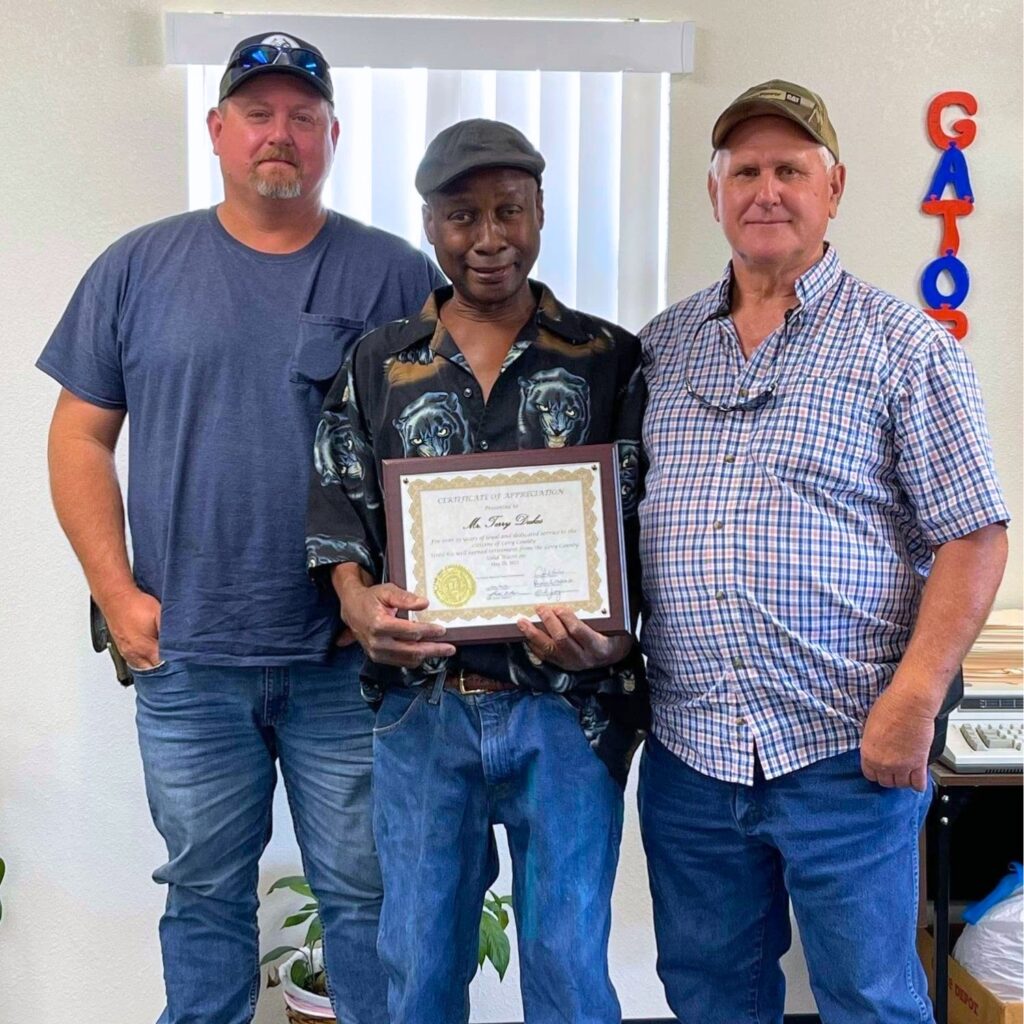
Dukes Sr. experienced mental and physical anguish after the incident, the complaint said. The taser exacerbated a shoulder injury, and the entire ordeal caused him to retire early. He retired in 2021 from the Levy County Solid Waste Department after 25 years, earning a certificate of appreciation for his work.
Slater said former incidents of Fourth Amendment violations raised questions about the LCSO. He said the case against McCallum would be incredibly difficult to prove, but he pointed to a previous lawsuit against Gregory for Fourth Amendment violation that began in 2022 and was settled the next year.
“I’m concerned about the way that that sheriff’s office operates,” Slater said. “If something like this they could find is by the book, I would have some questions about the sheriff’s fitness to run the [Florida Sheriff’s Association].”
Suggested Articles
No related articles found.
The maxim “a man’s home is his castle” isn’t just an old saying—it is the literal philosophical foundation of the Fourth Amendment. This story is a textbook example of what happens when law enforcement treats that “castle” not as a sanctuary requiring the highest level of legal protection, but as an open door they can walk through on a hunch.
The jury’s verdict in favor of Terry Dukes Sr. draws a sharp line between legitimate police work and an unconstitutional invasion.
The Levy County Sheriff’s Office (LCSO) initially argued that simply cracking open a back door constitutes “consent” for an officer to cross the threshold. Legally and logically, that is a massive leap.
Opening a door to see who is there—or, in this case, thinking it was a son who needed to be let in—is not an invitation to enter. True legal consent must be unequivocal, specific, and freely given. Walking into a dark home at 5:15 a.m. without an invitation, a warrant, or exigent circumstances (like hearing screams for help inside) turns an officer into a trespasser the moment they step over the threshold.
In a trial where there is no body camera footage, a jury relies entirely on who they find more credible.
Dukes Sr. kept his story verbatim for seven years. His actions made sense for a hard-of-hearing man who believed he was cracking the door for his son.
Corporal Gregory’s story evolved. Moving from “the door opened and I walked in” to suddenly remembering at trial that someone peered through a curtain is a classic red flag for a jury.
When an officer modifies their narrative to retroactively fit the legal criteria for “implied invitation,” it severely damages their credibility. The jury clearly saw this as an attempt to justify an afterthought.
The level of force used here is incredibly jarring. Dukes Sr. was:
In his own home.
Naked and clearly not the 31-year-old suspect they were looking for (an identity the officer already knew from previous encounters).
Merely trying to reach for his pants.
Tasing an unclad, hard-of-hearing homeowner in his own bedroom because he reached for clothes is a severe failure of situational awareness and de-escalation. It highlights a dangerous “comply or suffer” mentality that ignores the context of the situation—that the homeowner didn’t even know why armed men were in his bedroom.
Perhaps the most concerning part of the story isn’t the individual mistake made by Corporal Gregory in the heat of the moment, but the institutional response that followed.
Sheriff Bobby McCallum signed off on an internal investigation stating the officers “acted correctly.” When leadership rubber-stamps clear constitutional violations as “by the book,” it fosters a culture where officers believe boundaries don’t apply to them. It forces citizens to spend seven years in court just to get an acknowledgment of a wrong that should have been corrected on day two.
The jury’s $59,916 award might have been lower than the economic damages requested, but its real value is the verdict itself. It stands as a blunt reminder to the LCSO that a citizen’s front (or back) door is a sacred boundary. Law enforcement cannot bypass the Constitution just because they are familiar with a suspect’s family.
Excellent analysis sir, due to the egregious use of excessive force, the judgement should have been higher. For pretending to believe the coverup style internal ”investigation” and not having body cams on the armed civil rights violators. The sheriff deserves punishment as well.
Weird……I think if I was on the jury, in a courtroom, I would understand it. If I was a Levy county deputy sheriff, in the dark at 5:30 AM, and did not know that Dukes Sr was deaf, I would not understand it.
Baloney. The Constitution is clear on searches. Law enforcement cadets from coast to coast are being taught how to violate individual rights as a rule. It falls to each department to hammer into each deputy or officer that instead of pushing the limits, restraint should be be the order of the day. The concept of “officer safety” as a means of justifying an otherwise illegal search is rampant and “probable cause” is a joke that can turn even a routine traffic stop into a felony if the citizen does not know how to correctly invoke the fifth amendment.
Today’s law enforcement personnel are of the opinion that they own a home and everything in it upon arrival and can do anything they want, from conducting an illegal search to killing the owner.
Citizens should be very aware that law enforcement works for the prosecutors office and as such, is not a friend, but rather an adversary who receives promotions and raises based on arrests. Americans have always been taught that law enforcement is on our side, but the “Officer Friendly” of yesterday is long gone, replaced by men and women who look upon citizens as the “them” in us against them.
Police and Sheriff’s departments go to great public relations lengths to keep the “Officer Friendly” illusion alive in order to lull the public into trusting them, but once they arrive at your doorstep, they are ruthless. They will bend or ignore every rule, law or court decision they have to in order to get an arrest.
If law enforcement shows up at your door, never open the door. There is no obligation on the part of the citizen to even indicate you are home. If you do decide to engage, leave the door closed and talk through it or crack a window and speak to them that way. An officer wil try to get a foot or hand into the space between the door and jam as instructed in the academy. Closing the door on the hand or foot constitutes assault on a police officer and creates a felony.
None of this is to suggest that we disrespect law enforcement. They have a difficult job to perform, make no mistake. It’s just that where forty years ago citizens and law enforcement were a team, the concept is gone now, Also, not all officers are heavy-handed. There are a few that treat citizens and the Constitution with respect.
Unfortunately, not nearly enough.
You don’t have to have a high IQ to become a law enforcement officer.if you had a high IQ the department would never higher you because an individual with a high IQ would ask questions.lower IQ applicant can be easily programmed to adhere to Qualified immunity of not doing anything wrong.its always an action of policy not law!no matter what some law enforcement actions are wrong, the officers are always justified in their wrong doing.