


Two Alachua County schools are developing hands-on science, technology, engineering and mathematics (STEM) programs that could give students the opportunity to communicate with satellites orbiting Earth and, potentially, astronauts aboard the International Space Station (ISS).
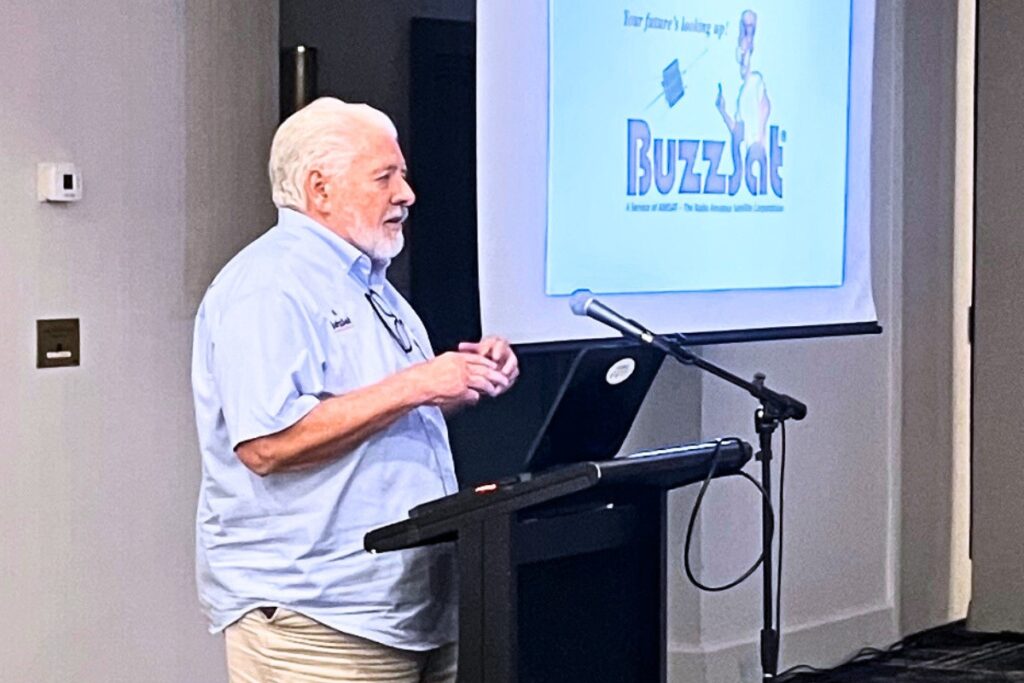
At the 44th annual conference of the Radio Amateur Satellite Corporation (AMSAT), held in Jacksonville, local educator Gordon Gibby presented the schools’ efforts on Oct. 9, according to a North Florida Amateur Radio Club (NFARC) press release. Students at Gainesville Christian Community School (GCCS) and The Rock School are learning the technical skills needed to build satellite-tracking systems and establish radio communications with spacecraft.
AMSAT is a nonprofit, volunteer organization dedicated to advancing amateur radio satellite technology and education. Its resources and activities help make satellite communications a practical learning opportunity for students.
Gainesville Christian Community School Expands Technology Curriculum
At GCCS, mathematics teacher John Seppala is teaching a class of 16 students, primarily at the middle-school level, using a textbook developed by the school that covers a broad range of practical technologies.
The curriculum explores systems and skills used to maintain a home and vehicle, including electricity, electronics, 3D printing, small engines, plumbing, amateur radio and computers.
Seppala is preparing to take the multiple-choice examination required to obtain his Federal Communications Commission (FCC) amateur radio license. Many of his students are expected to pursue licenses as well, potentially allowing them to participate in radio communications experiments and satellite operations.
The Rock School Students Build Satellite-Tracking Station
At The Rock School, 10 high school students have formed an Amateur Radio Satellite Club. Organized into six overlapping teams, the students are developing a robotic antenna-control system and radio station designed to track and communicate with low-Earth-orbit satellites and the ISS.
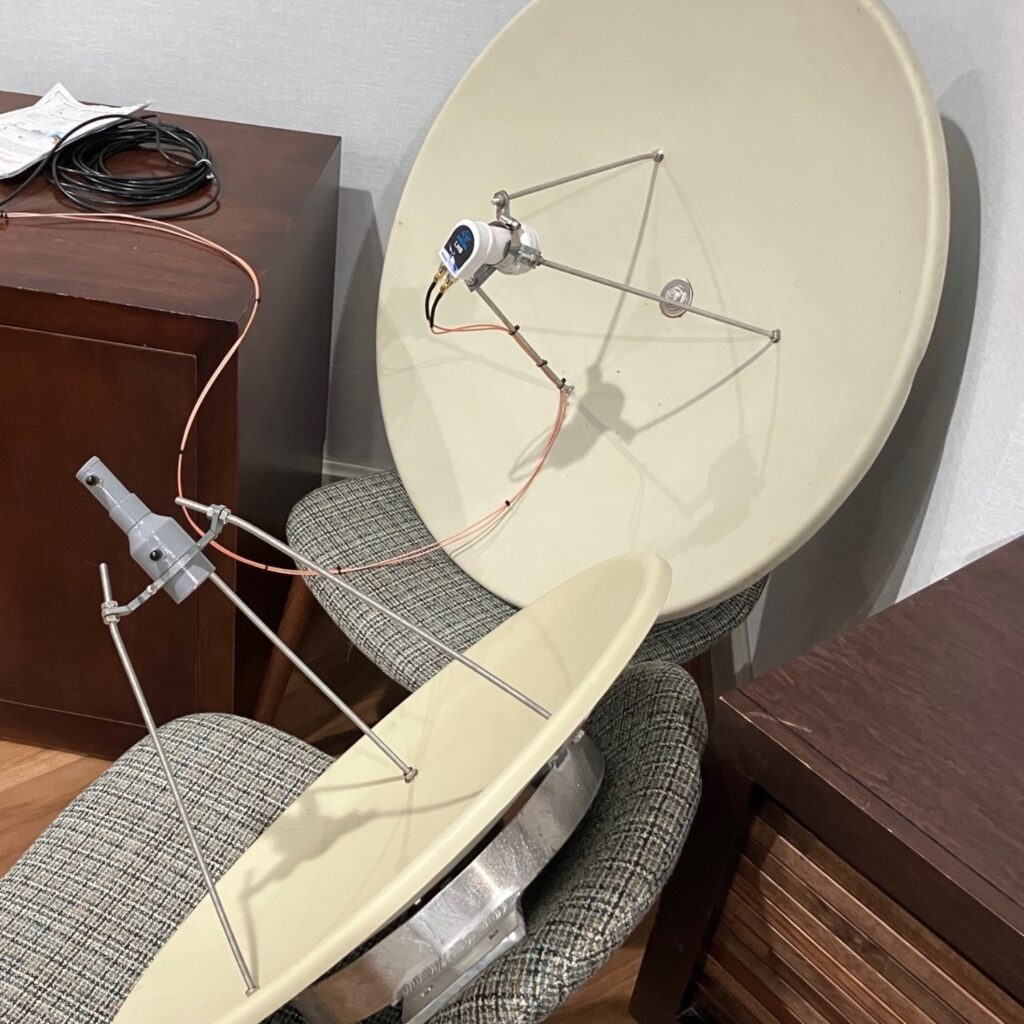
The project combines electronics, mechanical engineering, computer programming and fabrication. Students are assembling a robotic control board, learning to solder electronic components and preparing to use a 3D printer to manufacture gears for the antenna’s elevation and rotation mechanism.
Future steps include building the antenna support system with aluminum masts, U-bolts and high-gain antennas. Students are also studying independently for the FCC examinations required to obtain amateur radio licenses.
“This is exciting!” said Lacy Basford, the school’s academic adviser, in the release.
Rather than purchasing a commercial antenna-rotator controller, students plan to build their own system using an Arduino Nano microcomputer and a custom-designed printed circuit board. They will adapt open-source software written by a U.S. amateur radio operator, manufacture mechanical components and assemble the system themselves.
The project will bring together mathematics, electronics, software and mechanical design, allowing students to see how those disciplines work together in a functioning system.
Potential Opportunity to Communicate With Astronauts
Gibby hopes both schools will eventually be ready to apply to host a scheduled radio contact through Amateur Radio on the International Space Station (ARISS), an international educational initiative that connects students with astronauts through amateur radio.
If selected, students could have the opportunity to ask questions of crew members aboard the ISS through a radio link. The process requires an educational proposal, technical preparation and formal selection, and both schools are in the early stages of developing their programs.
Preparing for a potential contact involves more than learning to operate a radio. Students must understand orbital motion, radio-wave propagation, antenna direction, electronics and the challenges of maintaining a reliable communications link with a fast-moving spacecraft.
Students Learn to Track Satellites and Account for Doppler Shift
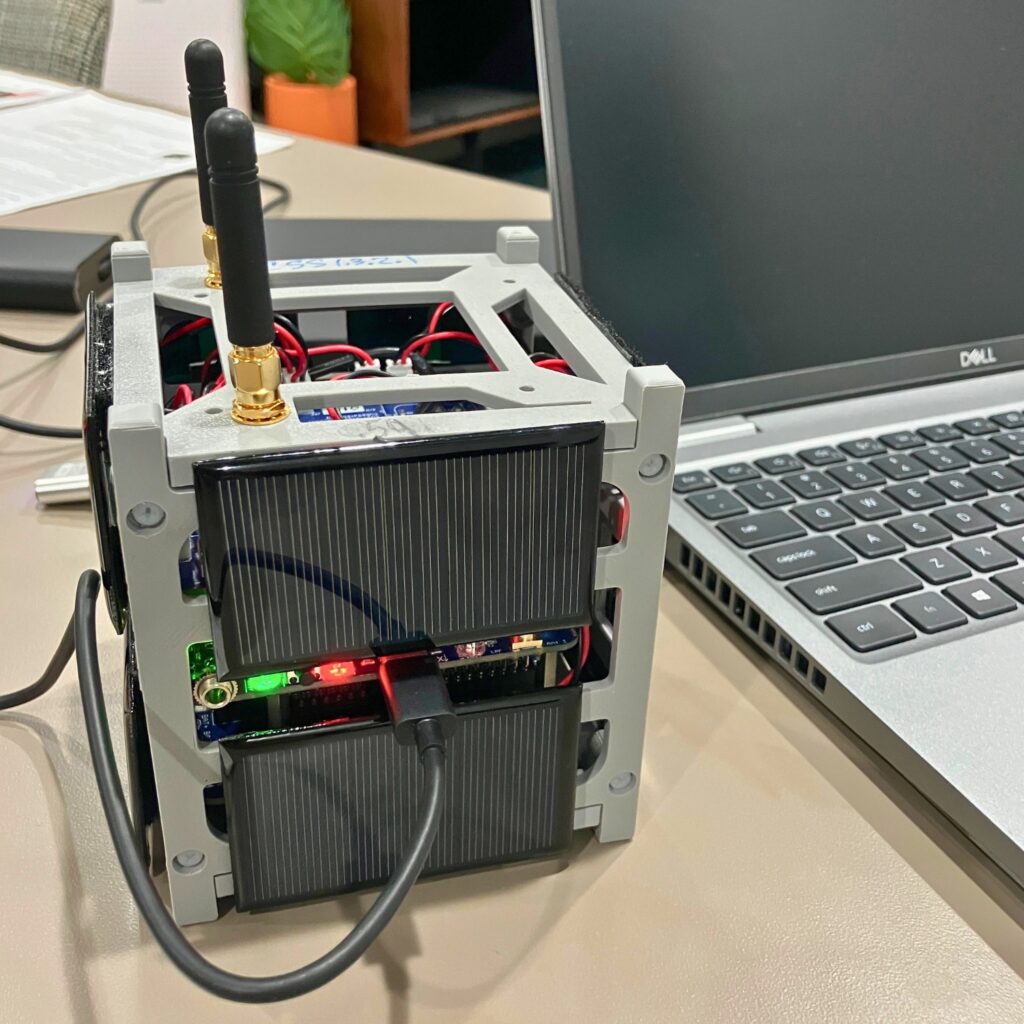
At the Jacksonville conference, participants demonstrated a life-sized, operational simulator of small amateur radio satellites. The simulator replicates aspects of a satellite radio system, including the Doppler shift that changes a signal’s apparent frequency as a satellite approaches and moves away from a ground station.
The equipment can simulate several types of amateur radio satellites, including those that handle digital data, repeat voice transmissions and relay Morse code.
The simulator could help students learn to recognize and compensate for Doppler shifts while tracking satellites overhead, maintaining communications as their apparent signal frequencies change. The experience connects classroom physics to a practical engineering challenge in satellite communications.
Looking Beyond the International Space Station
The conference also featured a presentation by Frank Bauer, an engineer and geologist who serves as ARISS executive director. Bauer discussed the organization’s work supporting educational radio contacts with the ISS and its engagement with the future of human spaceflight.
Communications with future space stations and, eventually, lunar facilities offer a longer-term source of inspiration for students learning radio technology. AMSAT Vice President Frank Karnauskas also discussed educational materials developed by AMSAT for young people.
For students in Alachua County, the immediate goals are to build a functioning satellite-tracking station, earn amateur radio licenses and develop the technical and educational foundation needed to pursue an ARISS contact.
Resources Available for Other Schools
According to the release, Gibby said the projects could serve as models for other schools interested in incorporating practical engineering and space communications into their STEM programs.
With volunteer support, open-source software, affordable microcomputers and student-built components, schools can offer meaningful technical experiences without relying entirely on expensive commercial systems.
Resources for schools interested in amateur radio satellite communications and ARISS educational opportunities are available through the local Amateur Radio Emergency Service website at https://www.nf4rc.club/ariss-satellite-resources/.