


- The Florida State Board of Education approved turnaround plans for Williams and Rawlings elementary schools after consecutive low grades in 2025 and 2026.
- Alachua County Public Schools reduced class sizes and enhanced leadership to improve support and learning outcomes at Williams and Rawlings.
- The board adopted new AI guidelines for schools, requiring transparent policies and parental notification by July 1, 2027, to regulate educational technology use.
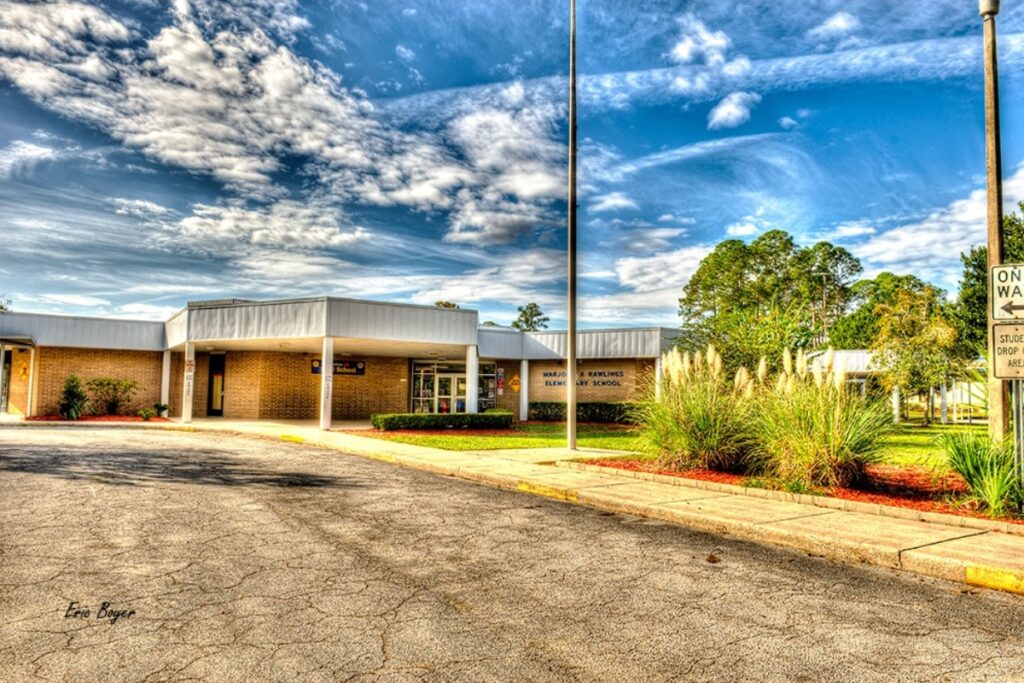
At a Wednesday meeting, the Florida State Board of Education approved district-managed turnaround option plans for Joseph Williams and Marjorie Kinnan Rawlings elementary schools and adopted new rules on artificial intelligence (AI) and educational technology use in school districts, charter school boards and state college system institutions.
Williams and Rawlings turnaround plans
Williams Elementary received consecutive D grades for both 2025 and 2026. This came after the school had improved its grade to a B in 2024.
Rawlings, meanwhile, went from a C in 2025 to an F in 2026.
“Each year, districts that have schools that receive their second consecutive school grade of D or a first school grade of F are required to present a turnaround option plan to the State Board of Education on how they will improve the school,” Dr. Peggy Aune, vice chancellor for Strategic Improvement for the Florida Department of Education (FDOE), said while addressing the board.
Aune noted that Rawlings “is currently the only district elementary school in Florida with a grade of F.”
Alachua County Public Schools (ACPS) interim Superintendent Kamela Patton attended the board meeting at Polk State College in Winter Haven and provided details on the district’s plan to support both schools.
Patton said ACPS has “strengthened the leadership” at both Williams and Rawlings by assigning principals who understand how to lead turnaround schools. She also said the district has decreased the class sizes at both schools.
“We’ve reduced their class size so that teachers have the opportunity to build not only [a] deeper understanding of each student’s needs, but also so we can intervene very quickly,” Patton said.
At both schools, Patton said ACPS needs to make sure the “high-performing students will continue to perform and show their learning gains.” She noted that students with disabilities (SWD) are the “lowest performing subgroup” not just at Rawlings and Williams, but also in the district.
Patton said the district has contracted with the University of Florida to develop modules for teachers and school leaders when it comes to serving SWD and those with autism spectrum disorder (ASD).
“These modules will provide sustainability for us,” she said.
Patton said ACPS plans to offer supplements to the teachers at Rawlings and Williams who take and obtain Florida’s new Resiliency Educator Endorsement.
The endorsement is based on Florida’s 11 resiliency characteristics (perseverance, grit, gratitude, responsibility, responsible decision-making, critical thinking and problem solving, self-awareness and self-management, mentorship, citizenship, honesty and empathy). It’s one of 14 endorsements that educators in the state can add to their teaching certification, according to a July press release from the Governor’s Press Office.
Patton also touched on other support measures, including attendance. She said both Rawlings and Williams funded an attendance officer through their Unified School Improvement Grant (UniSIG) allocations.
According to Aune, the funds through UniSIG, as well as the Educational Enrichment Allocation (EEA), are intended “to support implementation of school improvement initiatives.”
To improve attendance at both schools, Patton said the district has decided to bus students who live within two miles of Rawlings and Williams “to ensure extra support and convenient transportation.” ACPS is technically only required to provide bus transportation to students who live two miles or more from their school.
Other ways the district is hoping to improve attendance at the schools is by providing students with alarm clocks.
“Often we have heard that the kids are not up in time because the parents don’t wake them up,” Patton said. “So, we’re finding out who needs an alarm clock. Due to UniSIG funds, we can actually buy them alarm clocks.”
Patton said they understand the significance of the grades at Rawlings and Williams.
“We’re approaching this with urgency,” she told the board. “I hope you feel that and read that and see that.”
The board approved the turnaround option plans for Williams and Rawlings unanimously.
Board adopts new AI guidelines for K-12 schools and colleges
Also, during the meeting, the board approved new rules regarding artificial intelligence (AI) and educational technology usage in Florida’s school districts, charter school boards and state college system institutions.
According to an FDOE press release, districts, charter school boards and Florida College System institutions must approve “transparent policies governing AI and other educational technologies.”
“At minimum, those policies must notify parents when an AI instructional tool is approved -including the name of the tool, the courses involved, and how the students will interact with it; give the parents the choice to opt their child into using the AI instructional tool or to receive a non-AI alternative; subject tools used in VPK through grade 5 to additional review for age and developmental appropriateness; prohibit AI designed to meet a student’s social or emotional needs, simulate companionship or an emotional relationship, or use anthropomorphic design to pull students into interaction with a machine; prohibit undisclosed behavior monitoring, social scoring, and/or psychological profiling; prohibit vendors from selling student data or using it to train agentic models; and set clear expectations for academic integrity and compel reporting if an AI agent compromises the integrity of district data systems,” the release said.
Schools in Florida must implement the new guidelines by July 1, 2027.
In addition to the approval of the new policies, Florida Education Commissioner Henry Mack directed the FDOE to update the state’s K-12 Computer Science student standards to make sure students understand the appropriate use of educational technology while protecting critical thinking.
Mack also directed the department to revise the Florida Digital Classrooms Plan to strengthen how educational technology is evaluated and used in schools across the state. Drawing on the U.S. Department of Education’s Aug. 20 Dear Colleague Letter on the responsible use of educational technology, districts will be required to:
- Distinguish between policies addressing recreational technology use and those governing instructional technology.
- Evaluate educational technology based on demonstrated learning outcomes and instructional value, not screen time.
- Demonstrate how evidence of effectiveness drives procurement and renewal decisions.
- Review the implementation of educational technology against student performance.
- Identify the professional learning teachers receive so technology supports instruction instead of crowding it out.
Nick Anschultz is a Report for America corps member and writes about education for Mainstreet Daily News. This position is supported by local donations through the Community Catalyst for Local Journalism Fund at the Community Foundation of North Central Florida.