



- The Alachua City Commission deferred voting on a 228-acre Farmlands Commercial land-use change to June 8 due to improper signage by the applicant.
- The proposed land-use change would allow 203 residential units and switch zoning to moderate-density residential, community commercial, and commercial.
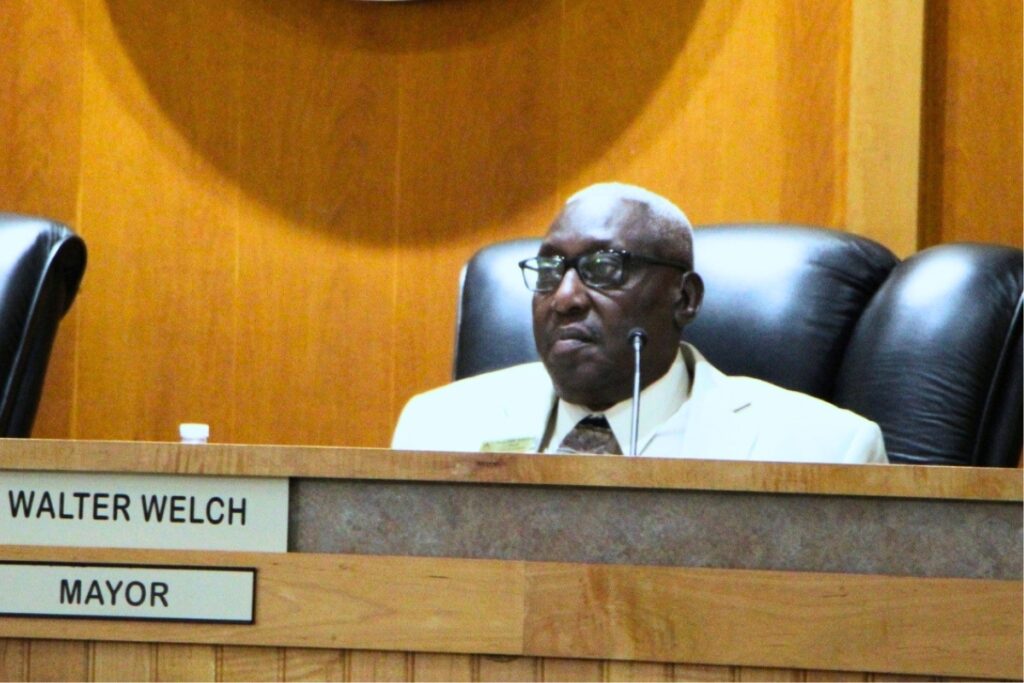
- Residents raised concerns about a neighborhood meeting for the Hathcock Community Center amid disagreements between the public and Mayor Walter Welch during the session.
The Alachua City Commission deferred voting on a 228-acre land-use change for the Farmlands Commercial development until its June 8 meeting after the applicant failed to properly post signs advertising the changes set for a Monday hearing.
The deferral came after much discussion about how to make sure the city holds development applicants accountable for delaying the hearing and approval process.
According to the application, Farmlands Commercial is located west of Santa Fe High School, around 16650 NW US Hwy 441. The property is owned by JTFA LLC and represented by Clay Sweger of EDA Consultants and Gerry Dedenbach of NV5.
The proposed land use change—approved by the Planning and Zoning Board last month, 3-1, with Board Member Danielle Judd in dissent—would take the land from low-density residential, moderate-density residential and community commercial to moderate-density residential, community commercial and commercial.
Rumors of a Walmart coming to the property have been circulating on Facebook and surfaced at Monday’s meeting, although the applicant has not disclosed specific details about what they will build, as they are not obligated to. The change would allow 203 residential units on the site.
The applicant failed to sign the affidavit that would guarantee signage advertising that the proposed land-use change was properly posted, according to staff. A notice of deferral dated April 22 from Principal Planner Carson Crockett to Sweger and Dedenbach said the applicant has until May 21 to post new signs on the property.
Attendees on Monday raised concerns about not being able to show up for the next hearing if delayed again, especially if it gets pushed closer to the Fourth of July holiday. Applicants are allotted one continuance, which the commission discussed, counting the deferral as one since the advertising fault fell on Farmlands Commercial.
Commissioner Jackson Youmas said developers should show up prepared, no different than someone needing to show up to the DMV with all the right documentation.
City Attorney Scott Walker advised that counting the deferral as the continuance would be presumptive, as further investigation into why the signs were not appropriately displayed hadn’t been conducted.
Commissioner Jacob Fletcher made the motion to defer the hearing for Farmlands Commercial and also directed City Manager Rodolfo Valladares to find out and present at the June 8 meeting why it wasn’t properly noticed.
“We’ve got to get away from excusing certain behaviors that are not advantageous to the city and the citizens of Alachua because, again, we’re the ones that keep having to deal with the fallout after these things happen,” Youmas said.
Following the city of Alachua’s announcement that it had received the FSAWWA Region XI Best Tasting Drinking Water Award for the first time in 18 years, residents also raised concerns Monday about a neighborhood meeting for building a new Hathcock Community Center.
Alachua kick-started plans over a year ago to either renovate or build the center anew. The city closed the center, which is also a voting precinct, in February before the April election after staff said the outdated building posed safety concerns.
A recent neighborhood meeting intended to garner community input on three proposed design plans for a new center, all of which the City Commission had weighed in on over the past year. However, a few residents and Fletcher attended the workshop and said only one design was presented at the meeting.
Fletcher asked Valladares which site plan had been approved for the project and if it would come back before the commission following a vote from the Planning and Zoning Board. Valladares said the plan incorporated all of the commission’s goals and objectives and that final plans would be submitted to the commission.
While Fletcher continued asking Valladares and the city attorney questions about the project, Mayor Walter Welch cut him off to say it was time to move on.
“I am in charge of this meeting. I want y’all to understand that,” Welch said after pushback from the audience who wanted to settle the topic of the neighborhood meeting. “If it is confusing, I’m going to cease it.”
An audience member said “no,” to which Welch replied, “deal with it.”
Resident Tamara Robbins started to say during public comment that she took offense to Welch shaming the public, when Welch cut in again to say, “you will not disrespect me in this court.”
Welch continued interrupting Robbins before she asked whether his actions were constitutional violations of her speech. A staff member warned Welch that he was talking a lot during Robbins’ time, which he gave back to her so she could finish speaking.
Editor’s note: This story was underwritten by a grant from the Rural Reporting Initiative at the Community Foundation of North Central Florida.
Suggested Articles
No related articles found.
The Alachua City Commission voted to delay action on the 228-acre Farmlands Commercial land-use change not because the project failed, not because the need isn’t there, but because of a signage technicality.
Let’s be honest: that’s not leadership, that’s hesitation.
This proposal widely expected to attract a major anchor like Walmart represents exactly the kind of investment cities compete for. Jobs. Tax revenue. Infrastructure improvements. Convenient access to affordable goods. These aren’t abstract benefits they directly impact working families in Alachua every single day.
Right now, residents are driving to other towns to spend their money. That means Alachua is exporting its tax base while complaining about budget constraints. It makes no sense. A development like this keeps those dollars local, strengthens the city’s financial footing, and reduces the need for constant tax increases or service cuts down the line.
Opponents will raise familiar concerns traffic, growth, “changing the character” of the area. Those issues deserve discussion, but they shouldn’t be used as a blanket excuse to stall progress. Every growing community faces these questions. The difference is whether leaders manage growth—or avoid it.
And that’s the real issue here.
Deferring this vote over a fixable procedural error sends the wrong message: that Alachua is difficult to work with, slow to act, and unwilling to seize opportunity. That kind of reputation doesn’t just delay one project. it discourages future investment altogether.
On June 8, the Commission has a chance to correct course. This is about more than one development. It’s about whether Alachua is serious about economic growth, or content to fall behind while neighboring communities move forward.
The choice shouldn’t be this hard.
Approve the project. Keep the dollars here. Give residents the access, jobs, and economic strength they deserve.
This reads like AI Julie Smith copy and paste. Walmart reduces the wealth of an area over the long term. Ask your bot about that.
How does a Walmart keep dollars local? It’s a global company. If anything it will take money away from small businesses that rely on local spending.
And the City will give Walmart financial breaks. Do residents get a break on their bill? No.
The people attacking Walmart always leave out one important fact: many families in small towns like Alachua are already driving 20 to 30 minutes out of town just to buy affordable groceries, household items, school supplies, medicine, and basic necessities. That means local residents are already spending their money somewhere else. The dollars are already leaving town every day unless you shop at Publix Supermarket but most families can’t afford too.