


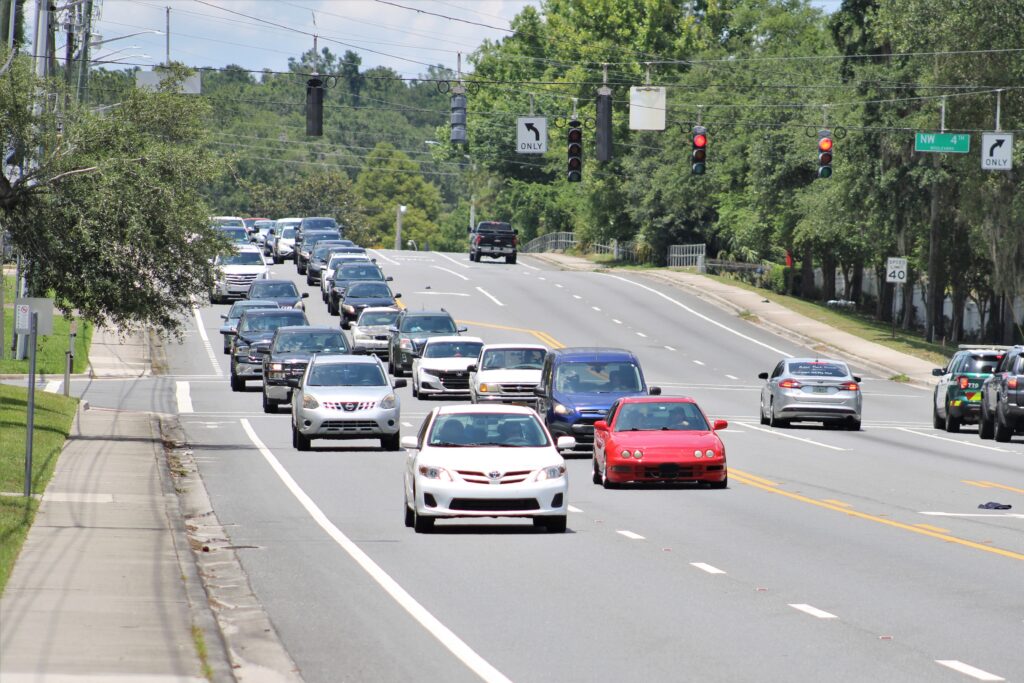
- Alachua County currently spends about $26 million annually on roads, but it needs at least $41.6 million to maintain the current average pavement condition index of 60 out of 100.
- The county has added pothole crews and is considering a work release program to address road maintenance amid public scrutiny.
- The majority of county roads, especially residential ones, remain unaddressed in current plans, with a $408 million backlog from 2022 and continued network degradation expected.
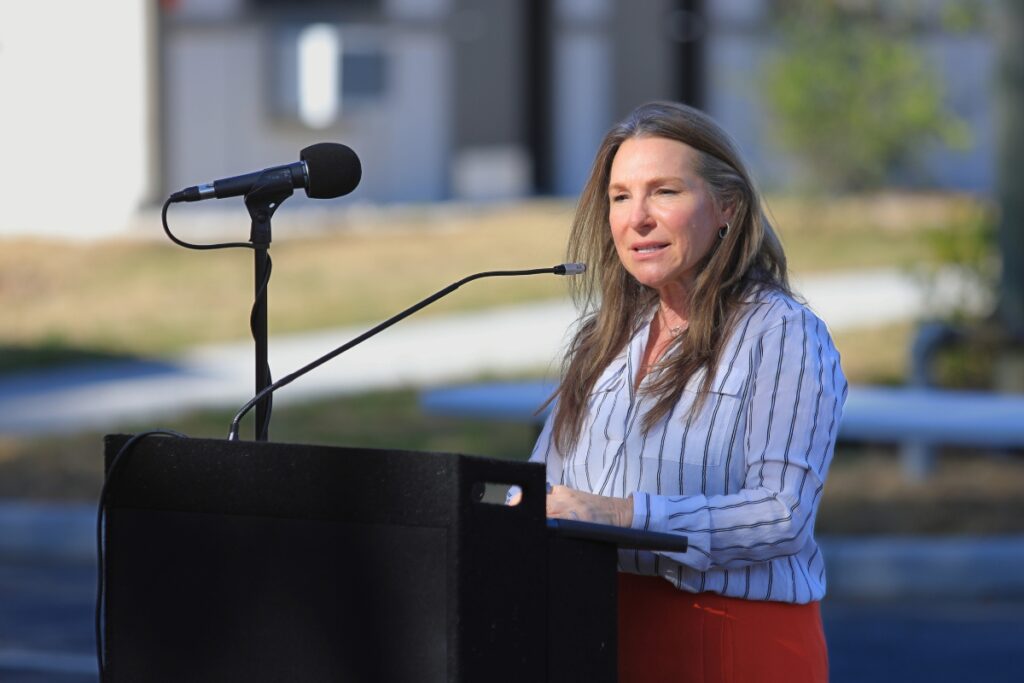
Public Works Director Ramon Gavarrete updated the Alachua County Board of County Commissioners (BOCC) Thursday on the condition of some 700 miles of roadway and efforts to expand pothole crews amid a surge in public feedback.
The presentation, adapted from 2021 when the county launched its 10-year roadway plan, contained the same overarching fact: Alachua County’s average roadway quality will continue to deteriorate even as spending reaches $26 million annually.
“On the average, it’s around $25-$26 million a year that you’re investing in your roadways right now,” Gavarrete said. “So that’s part of the challenge that we have today. We’re not catching up. We’re still losing ground.”
A special meeting of the commission resulted in a motion to hire more public works staff and use a combination of in-house resources and contracted services to implement an enhanced pavement maintenance program.
But several factors are stacked against the county’s response.
Rate of deterioration
First, the county roadways continue to deteriorate and a quick clip.
A county study from 2020 said the county’s pavement condition index (PCI) sat at around 60 out of 100 for the entire road network. Gavarrete said then and reiterated on Thursday that the 60 PCI is still failing in his eyes as an engineer.
But to keep the PCI from falling lower from 2022 through 2032, Gavarrete at the time told the BOCC—comprised of the same five commissioners as now—that public works would need to fund $31.5 million in roadway projects annually.
Now, the county calculates the cost to keep a 60 PCI at $41.6 million annually because of post COVID-19 pandemic increases in structural materials and labor — $15 million more than currently allocated.
Gavarrete displayed a PCI graph (shown below) at Thursday’s special meeting that shows pavement diminishes over the course of 10 to 15 years from 100 PCI to around 80 PCI before degrading quickly from around a 75 PCI to a 35 PCI in just a few years.
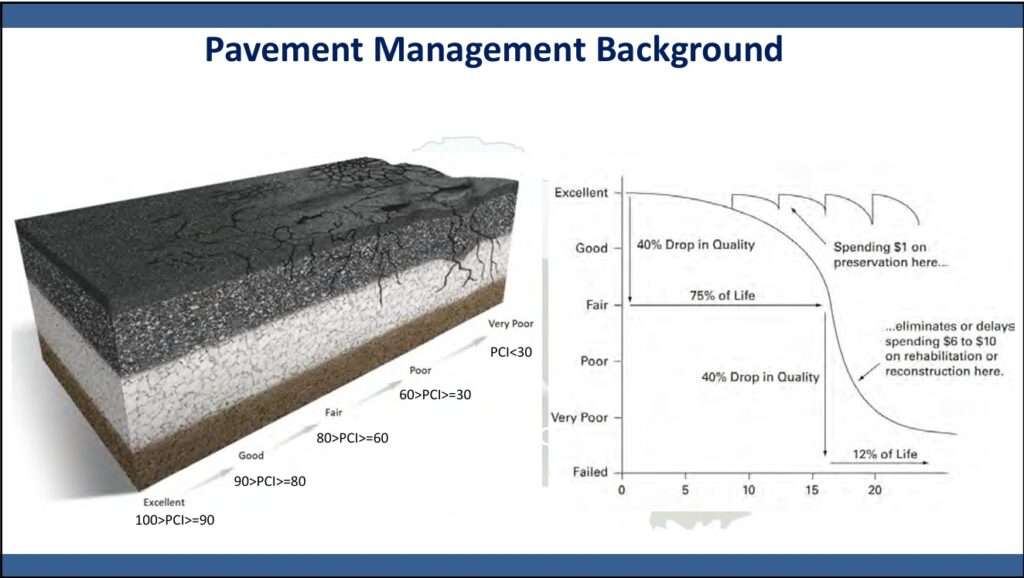
The majority of Alachua County roadways already sit on that cliff and are degrading quickly.
“When the roads get to this downward curve, the only way you can stop it is with a milling and resurfacing project,” Gavarrete said.
The public has noticed the decline. Road complaints have been standard for years but reached a fever recently on social media, with dedicated pages starting that chronicle the state of the roads.
Alachua County Road Watch, a Facebook page, started posting in July and has amassed more than 2,000 followers.
Gavarrete said the county received over 500 emails on Wednesday alone for roadway maintenance issues, including duplications. Chair Ken Cornell said about 50% of his emails deal with roads.
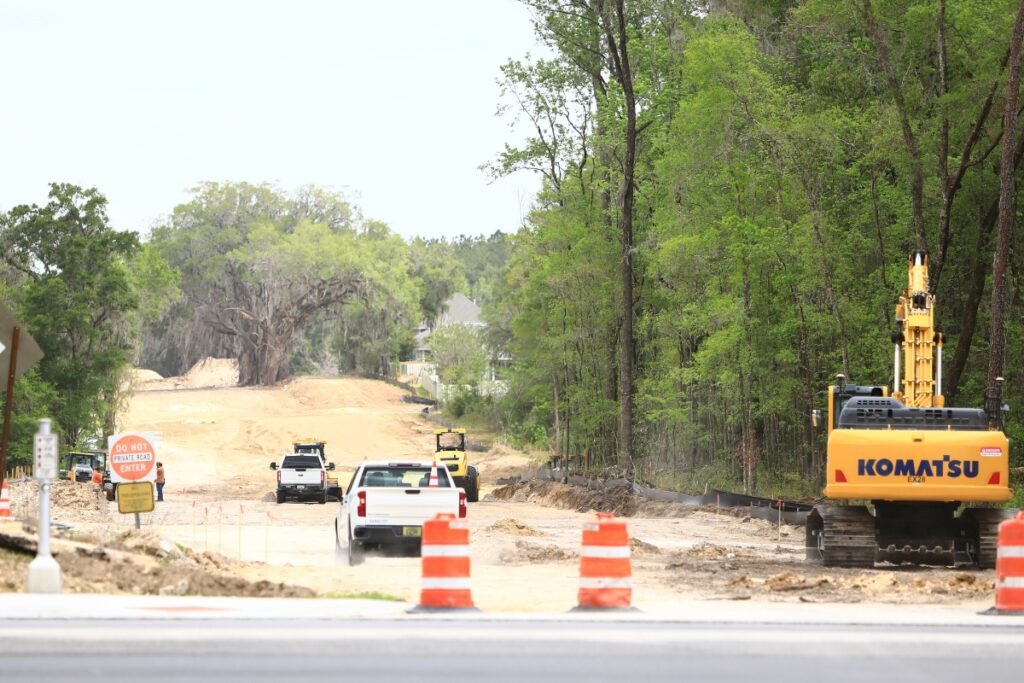
The county recently moved SE 15th Street further up the project list. But for roads still waiting for a full milling and resurfacing project, the county must continue to play whack-a-mole with potholes.
“We’re planning to fix [SE 15th Street] next year, but we have all these potholes,” Cornell said. “We’ve got to maintain it until we can fix it.”
On a list of roads not currently planned for a full milling and resurfacing, the county has filled more than 300 potholes along SW 170th Street (SW County Road 241, NW CR 2054, NE CR 234 and NW CR 235A.
The county launched a dedicated email for road issues (rbmaintenance@alachuacounty.gov), and starting soon, public works will reallocate a staff member to answer phone calls so that someone can work fully on the emails.
Lag time between funding and implementation
Second, additional funding still requires time to hire new personnel or contractors.
Alachua County added two new pothole crews to work the backlog of maintenance requests, giving four total crews. But Gavarrette said money for an additional crew would take at least six months to kick in.
He said the county is already trying to hire more workers for positions left empty when employees were shifted to roadway maintenance. He said the combination of depleted morale and hot conditions makes it a tough job.
“I actually told my staff today, ‘Don’t look at Facebook,’ because they’re getting depressed,” Gavarrete said.
He added that the work crews had a safety meeting on Wednesday after one employee was taken to urgent care because of heat. If the heat index is 105 degrees for Gainesville, Gavarrete said standing on the asphalt adds another 10 degrees and pouring hot asphalt adds 20 degrees.
Commissioner Mary Alford asked if the BOCC could show its appreciation for those workers. Gavarrete said the staff would probably say money is the best way but added that public recognition also goes a long way.
Gavarrete also said he’s not ready to say whether or not the contracting industry would be able to handle the increased projects if the county allocated more funding to the roadway projects. He said a couple of companies were not included in the ongoing agreements because of contract issues, despite clarification from the county.
Commissioners Alford, Anna Prizzia and Marihelen Wheeler supported trying to revive the work crews from the jail in some manner. They said the project could include training for re-entry so that the participants had ready jobs when released.
Prizzia made clear that she wouldn’t support the project garnishing wages or only paying 50% wages.
“I’m not in favor of this being like a cost-saving opportunity for us to reduce the cost of labor,” Prizzia said. “But I am interested in the idea of us utilizing the opportunity of these individuals having a chance to get training and then be a conduit to good paying jobs and to force development in the future. So that I’m totally open to.”
On the worker front, Gavarrete said he would begin rotating the pothole crews in four-week rotations to prevent burnout.
He also highlighted that these are the county’s same staff that divert to hurricane cleanup. If a storm comes through, he said, the pothole and strip paving crews could be out of operation for weeks to deal with the aftermath.
Years of backlog on a massive network
Third, the sheer scale of Alachua County’s roadway network and maintenance backlog means roads continue to degrade.
Most roadways, especially residential, are not included in the county’s current 10-year pavement management projects, which includes around 180 miles of roadways costing $271 million.
The major and minor collector roads not included in the current list of projects would total $174 million in renovations. The road segments range from a 15 PCI to several 93 PCI sections. But all of them will continue to degrade as the county keeps tackling its current 10-year slate of roads.
Alachua County funded its roadways at less than $6 million annually until 2022 when it proposed and voters passed an expanded full-cent infrastructure surtax.
The county had a 2022 backlog of $408 million. That year, Gavarrete said Alachua County did little to no road maintenance from the early 2000s through 2016 when he joined county staff.
Commissioner Chuck Chestnut cut to the chase after learning a 20-year backlog might be even longer. He said the problem started with previous commissions not spending on roads.
“We’re going to have to do another referendum, maybe two or three more referendums, to even catch up—if we catch up. But the way it looks now, I don’t think we’re going to catch up,” Chestnut said.
Gavarrete said he’s made recent changes in how the pothole crews operate that could help, including instructing crews to fill all potholes along the roadway instead of just the ones that garnered the maintenance request. Plus, the crews will remove water, pack dirt and then add asphalt to ensure the material binds and stays long term.
“When it comes to managing potholes today, we’re no longer just dumping material in a hole and hoping that it sticks,” Gavarrete said.
Alford asked about rim damage to vehicles and how risk management was moving forward. County Manager Michele Lieberman said the county was monitoring those claims but that the topic was not something to discuss at the meeting.
“I do know that there’s been a number of tire rim damage [claims] that’s been referred to risk management,” Alford said. “Another question that I’ve had is: what are we paying to risk management?”
Moving forward
The BOCC voted to move forward with staff’s recommendations and directed the manager to look into a work release type program.
Cornell asked if a new pothole crew would actually help. Gavarrete said he would not refuse more workers.
“If the board wants to fund two more crews, we can,” he said.
“Would it help in the long term,” Cornell questioned.
“It will help in the long term,” Gavarrete said. “However, here’s the other side of the coin. You have vacancies.”
Those vacancies, from making the new crews, will take months to fill followed by longer for a new pothole crew.
Prizzia said she’d rather wait to see how doubling the pothole crews impacts the backlog before adding another crew now. She said she’d rather see more stripping and resurfacing than pothole repair. But that would take outside contractors.
Lieberman recommended allowing staff to review a possible work release program and at the same time evaluate the effectiveness of the new pothole crews at easing the backlog. She said both could be brought back at the same time.
Cornell asked if the projects would return by November, and staff said they could do it by the end of the year, wanting to wait until December to allow the newest BOCC member to join, since Wheeler is stepping down.
Assistant County Manager Tommy Crosby said he’d already started working with Gavarrete to move money around to start the projects that need to get started. Where money prevented projects from getting off the ground in years past, he said that won’t be the issue moving forward with the BOCC direction.
“We’re prepared to leverage anything we can leverage as quickly as we can leverage to get things done,” Crosby said.
The county has pushed to improve roadways in the past few years, adding equipment to double pothole repair and launching a map showing upcoming projects.
Even so, Gavarrete has said for years that the roadway network will remain the same or degrade over the foreseeable future despite the millions in new funding. It was the message he told the Alachua Chamber of Commerce in 2023 and the cities of Hawthorne and Newberry in 2022 heading toward the expanded infrastructure surtax vote.
In 2023, commissioners asked Gavarrete if the progress with the new infrastructure surtax in the first 10 years would be enough to convince voters to renew for another decade. He said the citizens would at least notice the projects that are done, like NW 23rd Avenue by Santa Fe College.
The commissioners’ question will remain vital because the county will either need to pass another surtax or find tens of millions elsewhere to actually improve the average roadway network PCI.
Along with pointing to future surtaxes, Chestnut also pointed back to previous failed referendums during his tenue.
“I’ve been here 14 years and we’ve been trying to address this issue,” Chestnut said. “And I’ll never forget we did the tax referendum just for roads two times and it failed. And then they said, ‘what you all need to do: find it in your budget and do it that way.’ That’s what the citizens said. And so it makes me frustrated when people are complaining; they knew the roads were bad.”
Suggested Articles
No related articles found.
How much money does Alachua County get from the state from the collected gas tax?
Oooooo…Wendy. The gas tax is a sacred cow for the BOCC. It is forbidden to even ask a question such as yours!
How about this…
What if the county braintrust were to suspend gay pride, trans pride, black pride and everyone other “pride” celebration long enough to funnel the tax dollars being used to support very specific citizens into fixing the roads that all of us citizens use?
I would add white pride, conservative pride and christian pride celebrations to that list as well, but go figure…the county doesn’t support them, so there aren’t any.
$408 MILLION ROAD BACKLOG AND TAXPAYERS ARE SUPPOSED TO ACCEPT THIS?
Alachua County’s own engineers warned in 2021 that roughly $41.5 million a year was needed to stop the pavement decline. The county’s road network was already rated only 60 out of 100, with a $408 million backlog. Yet government continues expanding while our basic infrastructure deteriorates.
County Manager Michele Lieberman says Alachua County is financially strong.
Then why are taxpayers still driving on crumbling roads? This isn’t about asking for another tax. It’s about priorities, accountability and management.
If the county can find money to expand government, it can find money to protect the roads our families drive on every day.
If county leadership can’t manage the basics, taxpayers have every right to demand a change in leadership.
Enough excuses. Fix the roads.
Taxpayers are driving on crumbling roads because prior to 2022 they twice voted down 1 cent sales tax increases to cover road repairs. That allowed the back log to get out of hand, exactly where it is now. You get what you vote for!
No Charles, you’re speaking out of context. The Multi-Modal Transportation Mitigation program (MMTM) the county implemented in 2011 is the root cause for the no vote and the current condition of county roads. In 2022 the tax got bundled with WSPP and was able to pass.
Taxpayers are driving on crumbling roads because the county government has systematically failed to budget for its basic responsibilities to maintain the roads in its jurisdiction for decades. Even today we have a commission that would rather fund free phone calls for jail inmates and money losing trash recycling than repair roads.
Why would I vote in favor of any tax increase for road repairs? Shouldn’t what I pay in property taxes, and what I pay in gas taxes, help to pay for road repairs?
Baloney! Our taxes are used to fund extremely partisan and narrowly focused programs for select citizens. A perfect example is buying swamp land in the name of “conservation”. The property comes off the tax roles and not one citizen gets to use the land.
BTW…what ever happened to the millions of tax dollars that went into the CHOICES program?
Maybe spending all those millions of infrastructure tax dollars on expanding those fire stations wasn’t such a good idea.
In a county that continues to waste money on pet projects and land grabs, they STILL blame previous commissions instead of…wait for it….FIXING THE ROADS!!!! Slash bloated salaries, stop buying land, shelf pork projects, and FIX. THE. ROADS!!!
An expanded tax and the road degradation continues at an accelerated pace.
The road conditions are exactly what’s to be expected when Commissioners choose their virtue signaling projects over necessary infrastructure.
sounds like you know this well. Can you expound on why we are so far behind in road taxes? I am trying to learn. Did you vote for the increased road taxes with me each time?
Look at the priorities: $20 million for three homeless hotels, $1.5 million for a City of Newberry roundabout, $2 million for in-facing AI cameras, and millions more for GPS tracking systems to micromanage blue-collar employees. The county also spent approximately $53,300 on the whistleblower investigation involving its Animal Resources Department, while taxpayers continue watching the transfer station repeatedly catch fire, costing millions over the past 12 months.
Meanwhile, our roads are crumbling and the backlog keeps growing.
Please change the leadership. Leading by example matters. Talk is cheap. These are real taxpayer dollars and real spending decisions.
This isn’t about whether every dollar can legally be moved to roads. It’s about priorities, judgment and accountability.
If county leadership can’t manage the basics while spending millions on these other priorities, taxpayers have every right to demand a change in leadership.
Enough excuses. Enough misplaced priorities. Enough talk. Focus on essential programs core services only.
Shocking: people that think men can become women aren’t good at balancing budgets.
We have high taxes in Alachua County, something has to give, rework the budget and prioritize the roads, please.
I am trying to learn this. Seems like in the 1980s, the state gave the county a bunch of roads at the ends of their natural life and they were never really maintained. Seems like in the 2000s the County tried to raise money for roads a couple times and the citizens turned them down.
So, we have bad roads. Isn’t this why starting in the ’90s everyone nationwide started buying SUVs – poor quality local roads? Seems like normal stuff. Anyone who moved here knew this stuff, and long term locals always have known.
Can someone expound on why so many people complain???
Just read that the city hired an artist to decorate the metal fence at the police station for $70,000. As previously mentioned, they’ve spent millions on “homeless hotels, wall murals, etc. Not fixing roads is a safety issue.
Wrong.
The State turned over roads to individual counties from Escambia to Monroe. These These counties planned and funded the needed repairs.
Alachua County kicked the can down the road. Now they (the Commissioners) are going to face the heat from their constituents… as they should.
This ludicrous fake talking point should be retired.
What about the penny gas tax that was passed back in 1995? Lots of money from the tax over the years. Where’s that money. We all understand the growth. That’s another problem with development which approved by the commission. What say you.
Basic problem: the electorate votes for social engineering leftest candidates rather than demanding candidates who have competence and executive management skill and ability, you get what you value,
The county would rather spend 4 miillion on homeless services