


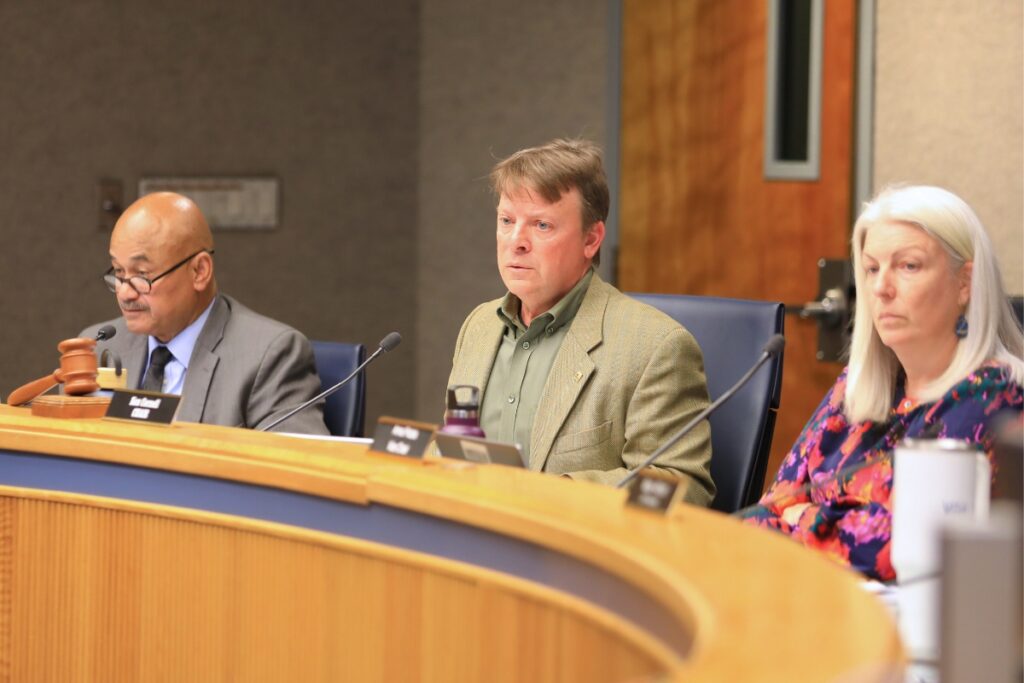
- Peak Literacy presented on its efforts following a grant while commissioners expressed frustration that the reading gap persisted in schools.
- Gainesville and Alachua County officials highlighted the impacts of closing schools and asked the school board to delay a final vote.
The Gainesville City Commission and Alachua County Board of County Commissioners tackled education during a joint Monday meeting, pushing for improved literacy while questioning the school district’s new rezoning plans.
County Commissioner Ken Cornell said the two were linked, and he asked twice that the Alachua County Public School (ACPS) district slow down its plan for a final rezoning vote this week.
“What I hope that comes out of today is that you hear us ask to just slow down a little bit, not stop the process but continue to listen and take input,” Cornell said.
The literacy programs came first, with the Center for Nonprofit Excellence and Peak Literacy outlining its plans to provide wraparound reading services for students falling behind.
The Board of County Commissioners (BOCC) gave funding to address the reading gap coming out of schools along with historic gaps in adults who never learned to read. For Peak Literacy, the $200,000 in funding means expanding a program that founder Leah Galione said works.
“None of this would matter if the model didn’t produce results, but it does,” Galione said. “We’re seeing measurable literacy gains across the students we serve, both in short term progress and in longer term growth.”
The presentation from Peak Literacy showed an expected boost of half a grade to a student’s reading grade by participating, but the actual data, Galione said, was a 1.2 grade level increase by participating.
But the program primarily focuses on remedial work with students already falling behind. Commissioner Anna Prizzia said she felt as if the literacy coalition was still dancing around the edges of the problem. She said the city and county’s efforts missed a core piece: the actual instruction in classrooms and ensuring it was effective.
“I understand we can’t necessarily spend our money on the school district, but we can spend it on all the ways that we wrap around that school district so that they can do the thing that they clearly haven’t been able to do for decades, which is teach our kids to read,” Prizzia said.
City Commissioner Desmon Duncan-Walker said the word “crisis” came to mind when looking at literacy. In a crisis it’s all hands on deck, she said.
Duncan-Walker related the initiative with the city’s VisionZero goal, no pedestrian or bicyclist deaths, and gun violence crisis. She asked what the goal is for literacy and how to get every school-aged child ready.
From outside the school district, Galione said it depended on the funding but that she has a model that works.
“Tell us what you need,” Duncan-Walker cut in.
“I need $500,000,” Galione replied instantly. “This year, for $430,000, I could expand to 425 students. With $500,000 I can probably do at least 600 students.”
She noted that Peak Literacy, a nonprofit, operated with only two full-time staff members until five months ago.
“We’re ready to take on the task and build something sustainable that is going to change this county. I will make you look really good,” Galione said.
No motion was scheduled for the item, which lasted around two hours and was listed as informational. But it teed up the discussion on school board rezoning, which lasted just over two hours.
Kim Neal, ACPS’ director of full-time enrollment, presented the joint boards an overview of the ACPS plan and how it changed from its inception to keep both Duval Early Learning Academy and Majorie Rawlings Elementary open. The School Board of Alachua County (SBAC) is scheduled for a final vote on Thursday following a regular meeting on Tuesday.
During Neal’s presentation, she fielded some pointed questions.
When she said the school district would save $91 million in future infrastructure spending by closing four schools listed in the original plan, Cornell jumped in to ask how much the district would spend to renovate the remaining schools to accommodate more students.
Neal deferred to Patton who said that number has yet to be given to SBAC, but it would be presented at Tuesday meeting and then the other elected officials would also know.
“I understand that, and I appreciate that,” Cornell replied to Patton. “You’re actually helping make my argument to delay the decision because one of the things that’s important is not only that you share those with your board, but you share those with all of the electeds and with the community.”
“And they will be,” Patton said.
“But not today,” Cornell countered.
“They’ll be there tomorrow,” she responded.
Cornell also asked for more numbers concerning declining enrollment.
Neal presented that the number of students using vouchers increased from 1,000 to 5,500 over the past four years. The number of homeschoolers now sits at 2,100 kids. Cornell asked for historical data to know how the homeschool number has risen, and the ACPS staff said they could send it.
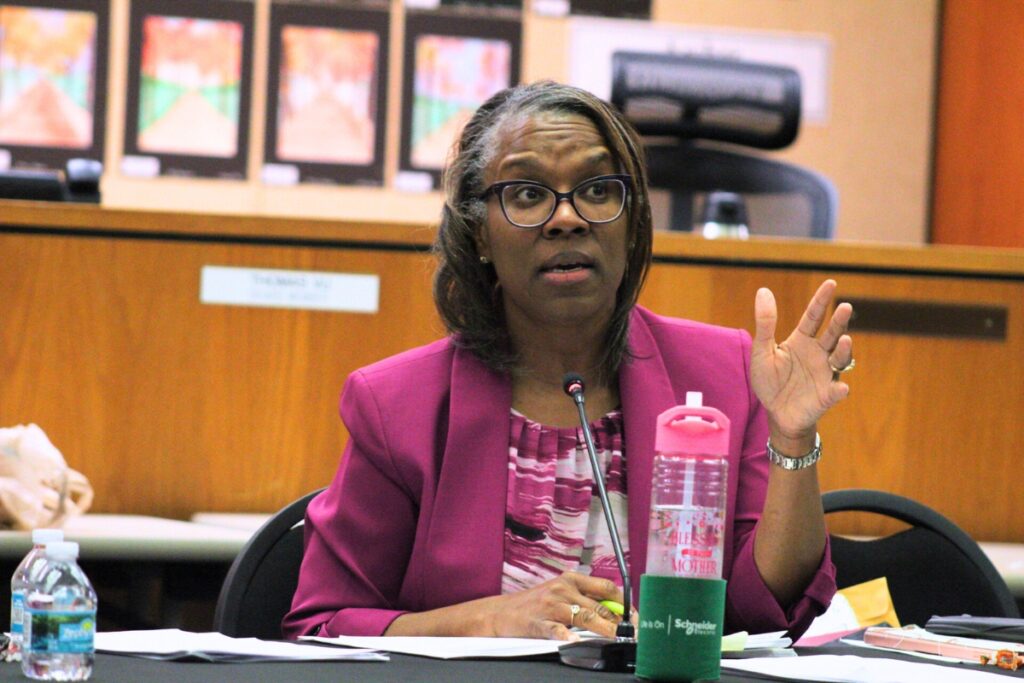
At the end of the presentation, ACPS Board member Tina Certain spoke before leaving for a Children’s Trust of Alachua County meeting, where she was needed to have a quorum because Cornell was at the joint meeting.
Certain asked the commissioners to have some grace with the school district staff during what she anticipated would be a questioning session. She said she felt like the district staff were “going to get beat up.”
“I’m getting the impression that you guys are treating us like we need to get you guys’ approval before we can move forward, and I don’t think that’s fair to us given that the school board is elected just like you guys are and our duties and responsibilities for operating public schools are outlined in the state constitution,” Certain said. “So, give us a little grace and our superintendent and staff a little grace.”
The discussion primarily centered on the closing schools. Commissioners thanked the staff for taking Duval and Rawlings off the list, but Mayor Harvey Ward and Commissioner Casey Willits also emphasized the importance of Stephen Foster Elementary.
Ward and County Commissioner Anna Prizzia said the school board needs a plan for the unused schools. Ward said it’ll be at least seven years before anything happens if the ACPS track record holds.
Prizzia said the district needs to consult with the city and county about what the community could use on the sites before selling to the highest bidder.
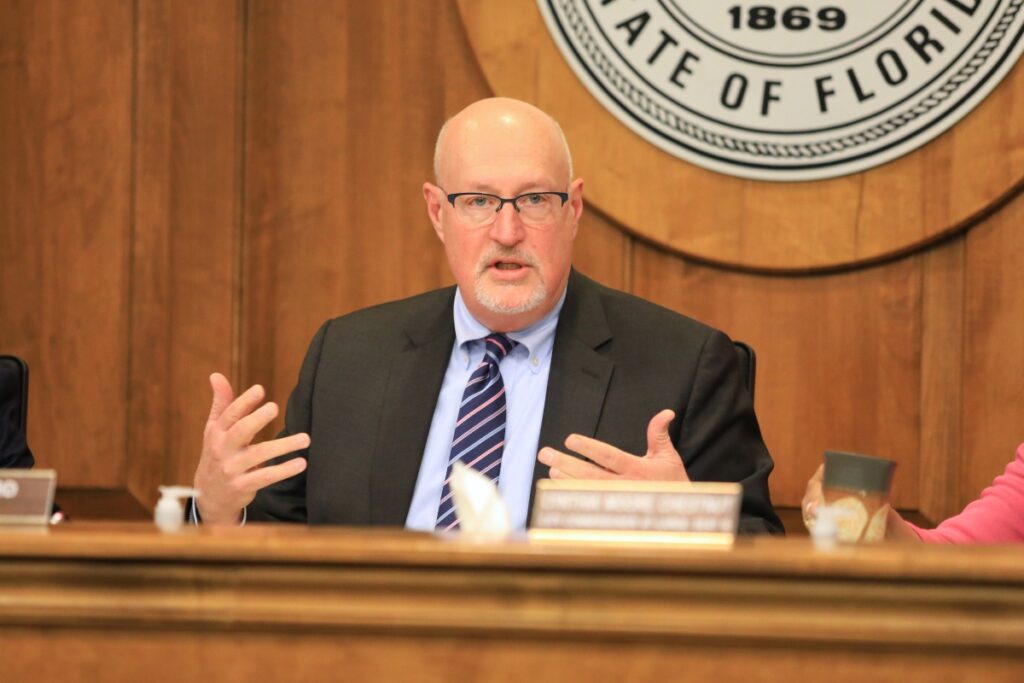
Ward said the school district’s messaging on the closing schools, while perhaps unintentional, was to just deal with it. He said closed schools have ramifications for other civic institutions and their long-term planning. The rezoning plan had happened on too short a timeline, he said.
Cornell also returned to school vouchers. He said closing schools could increase the number of students who leave the public school district for home schools, charter schools or private schools.
He asked how many students the district anticipated losing because of the closures.
“We’re not planning on losing any,” Patton replied.
She said the goal in closing would be to combine resources and offer more programs that students are seeking. She and Neal said the K-8 schools have been well received in other school districts.
Patton added that the school district didn’t forget to look at growth rates in Newberry, High Springs and Alachua. She said the schools that remain open will have capacity and be able to expand. Closing schools and saving tens of millions over the next five to 10 years will also allow the district to open a new state-of-the-art school when population growth hits the right thresholds.
Literacy came up as well with Cornell asking how many students at Stephen Foster and other proposed schools could read at grade level. Patton said the district can provide the information if needed.
“I guess the point that I’m trying to make is that we’re spending countless dollars and resources on literacy, and literacy, for me, should be the top pillar of this whole discussion about redistricting,” Cornell said. “Without really knowing that for each of the schools and knowing how we may lose kids by going through with this, I want us to just take more time and make sure that we have a plan for those families and those parents and those kids.”
Prizzia made a motion that directed county staff to provide any growth management information and support the school district’s needs in their decision-making process. The motion passed 3-1 with Commissioner Mary Alford in dissent.
The school district will have a tight timeline to actually use that staff resources without delaying the planned final rezoning vote on Thursday.
Editor’s Note: The story was updated to reflect that the Center for Nonprofit Excellence presented instead of the Community Foundation of North Central Florida, of which the center was a part until July 2025. And a quote by Leah Galione was corrected.
Suggested Articles
No related articles found.
“Prizzia made a motion that directed county staff to provide any growth management information and support the school district’s needs in their decision-making process. The motion passed unanimously.”
The motion passed 3-1, not unanimously.
Seems like the BOCC is getting way out of its lane here. While they certainly have a legitimate interest in rezoning, they should been fully participating in the process from day one, not raising major objections at the last minute. If the BOCC wants to develop their own plan that addresses ALL of the issues, then put it on the table quickly. Any rezoning plan must be adopted soon to allow ample time to implement it for next year (school starts in about 4 months).
At the School Board’s community presentations about the proposed plan options, one stunning fact stood out. There are about 6,200 EMPTY school “desks” across the district’s elementary, middle and high schools. That is the equivalent of about 4 empty elementary schools, 1.5 empty middle schools, and 0.5 (one half) of a high school! Population growth is going down in Alachua County. Home schooling, vouchers, and charter schools are on the rise – meaning increasing numbers of children are leaving the public school system. It doesn’t seem in the near or far future we will be filling those empty public school desks. Even if there was a plan to make enrollment at all the schools in the district equivalent, there would still be those 6,200 EMPTY desks – and probably more each year. Public school resources are scarce and precious. Why spend them on EMPTY desks and partially utilized buildings? Fully enrolled and utilized schools across the district could be the ideal investment of our county’s public education dollars, particularly for children who are currently enrolled in under-utilized schools. Change is very difficult, especially for families impacted directly. The School Board has avoided re-zoning for 40 years. Perhaps if there had been a plan for incremental zoning adjustments to accommodate population shifts every 5-10 years, this would not be so painful now. The School Board’s consultant did an excellent job of presenting these facts – way better than I can in a short comment. Main St Daily News should publish the slides the consultant used to present the justifications for their recommendations.
The Alachua County Board of County Commissioners should stay in its lane and let the School Board of Alachua County do the job voters elected them to do. The Alachua County Public Schools system is governed by its own board for a reason education policy, school zoning, and classroom instruction fall under their authority, not the county commission’s.
If literacy is truly a crisis, outside political commentary won’t solve it. Accountability belongs with the school board and the voters who elect them.
And let’s be honest: the Alachua County Commission wouldn’t tolerate the School Board telling them how to run animal control, roads, or any other county service. So why are county commissioners trying to tell educators how to run schools? Commissioners should stay in their lane and focus on county responsibilities like roads, infrastructure, and animal control and let the School Board handle education.
Is there video of the meeting online?
It is found here from the city of Gainesville website.
https://pub-cityofgainesville.escribemeetings.com/Players/ISIStandAlonePlayer.aspx?Id=f4e70231-7ea4-4de8-92f1-30f54e1ebaa8