



- Gainesville Regional Utilities approved a budget with no electric or gas base rate hikes but increased water and wastewater rates by 2% and 1.75%.
- GRU’s Main Street Water Reclamation Facility finished a $50 million renovation funded partly by a $22.5 million grant, enhancing water and wastewater infrastructure.
- GRU directors remain divided on stormwater and garbage billing, with some supporting continuation and others preferring transfer to the county tax collector for precise assessments.
The Gainesville Regional Utilities (GRU) Authority approved its budget for the next fiscal year on Wednesday, with no base rate increases for electric and gas but water and wastewater rates of 2% and 1.75%, respectively.
Overall, GRU estimates that the new water and wastewater rates will generate an additional $1.5 million in revenue compared to the current rates. The new fiscal year begins Oct. 1.
It’ll be the third year in a row with no electric base rate increases as the utility continues to navigate the complete transition from operating under the management of the Gainesville City Commission to the new GRU Authority.
Though electric bills can still shift and rise due to natural gas costs and the fuel adjustment. See Navigating electric bills: GRU’s fuel adjustment explained amid public debate.
GRU projections show total revenues will hit $438 million across all systems (gas, telecommunications, water, wastewater and electric). That’s roughly the same as the current and previous fiscal years at $438 million and $432 million.
The electric system provides the bulk of the revenue ($297 million) and requires the bulk of the expenses ($189 million in operations and maintenance compared to $76 million for the other systems combined).
Operations and maintenance are GRU’s largest expense, and debt service comes in second place. The utility plans to pay $128 million toward interest and principal on debts. GRU’s current debt load is around $1.7 billion.
The budget includes a $8.5 million transfer to Gainesville’s general fund—the same as the current fiscal year. GRU will also plan to place $35 million into its utility improvement fund from next year’s revenues.
GRU Authority Director Jack Jacobs clarified with General Manager/CEO Ed Bielarski that upgrades to the water and wastewater systems caused the rate increases. Bielarski said yes, and the meeting highlighted one nearly finished project on the wastewater side.
GRU’s Main Street Water Reclamation Facility underwent a $50 million renovation to build new headworks, master lift station, electric building and odor control system.
The new infrastructure is already in use, and the project will officially end on June 30. The utility earned a $22.5 million grant for the project. The project started in 2024, and Mainstreet provided a full breakdown of the project at the time.
Debbie Daugherty, GRU’s water/wastewater officer, said those improvements also benefit the water side.
Earlier this week, GRU received a renewal and upgrade of its consumptive use permit from the St. Johns Water Management District. The new permit will be valid for 30 years and allow the utility to draw an additional 4.6 million gallons from the Floridan aquifer every day to a total of 34.6 million gallons.
Daugherty said the water management district looks at how GRU recharges the aquifer to approve the water increase. She cited recharge projects like Sweetwater Wetlands Park, where the Main Street Water Reclamation Facility discharges, and direct pumping of up to 10 million gallons a day of treated wastewater into the aquifer at the Kanapaha Water Reclamation Facility.
“All those projects are part of the commitment we make to the water management district to keep this permit,” Daugherty said. “We’re very excited to have a 30-year permit. That’s a first for us.”
Stormwater and garbage billing
At the start of the meeting, GRU Authority Chair Eric Lawson asked if the directors wanted to revisit stormwater and garbage billing, noting he’d gotten a lot of calls on the issue.
At the May meeting, a split GRU Authority failed to take a vote renewing a contract with the city government. Through the contract, GRU has billed utility customers for the city’s stormwater and garbage fees.
Over a year ago, the GRU Authority said it wanted to stop offering the service for Gainesville, lowering utility bills and preventing confusion on who the fees came from. But negotiations with the city resulted in a proposed contract that would increase the revenue GRU earned from providing the service.
The GRU Authority signaled its approval to keep negotiating, but gridlocked when the final agreement returned last month.
Without the agreement, the city of Gainesville has reluctantly turned to the county tax collector but said it thought the move would hurt residents and asked the authority directors to reconsider.
The directors commented on the issue, but each remained unmoved.
Director Robert Skinner sided with Lawson and said the utility should continue the stormwater and garbage payments. He said the utility could offer a one-year extension at least in order to ease the shift for major landlords.
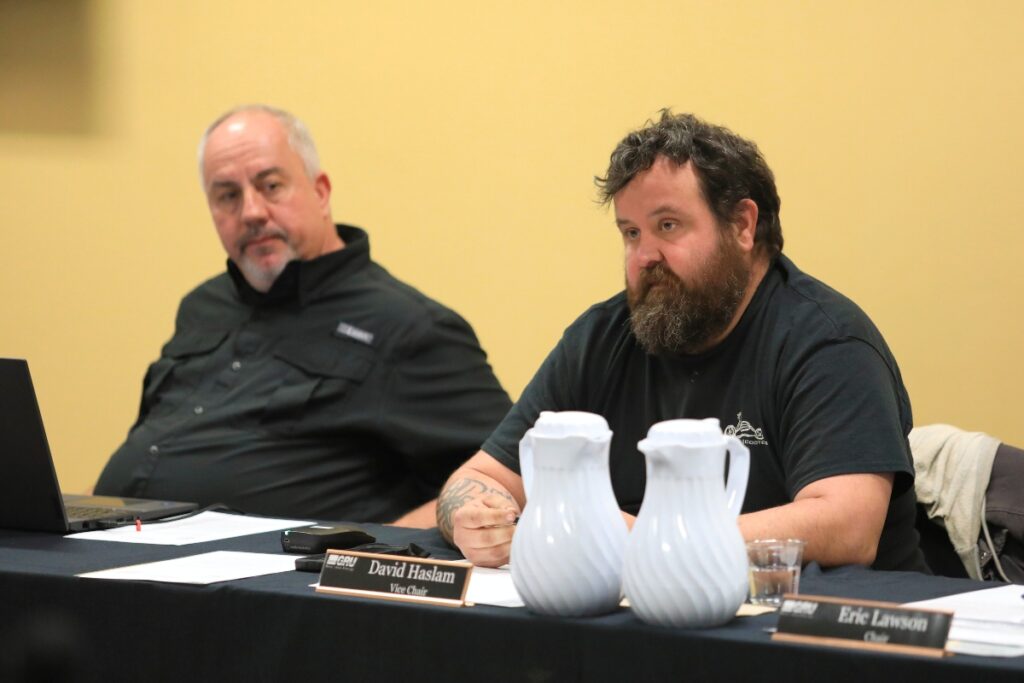
Director David Haslam said the tax collector can perform the service better than GRU. He said the tax collector’s assessment would analyze each property, even ones without utility meters that currently get skipped, and ensure proper payments per parcel.
A presentation to the Gainesville City Commission showed that the stormwater assessment for apartments, condos and mobile home parks would shift methodology. Instead of a per-unit cost, it would be based on the amount of impermeable square feet.
Gainesville staff said the change would cause increases in stormwater payments for some complexes and decreases for others.
Jacobs agreed with Haslam that the switch would allow more precise billing. An apartment complex with retention ponds could see a large decrease in payment, he said. He disagreed with a one-year extension, saying the authority had kicked the can down the road for over a year.
Jacobs also touched on the many calls received since the last meeting. He said the previous meeting had been properly noticed and the issue had been coming for a long time. He said people had the opportunity to show up and speak before a decision was made, or not made in this particular case.
Editor’s note: This story updated the water and wastewater rate changes from 1.75% and 1%.
Suggested Articles
No related articles found.
There cannot be, absolutely cannot be, any person who actually thinks this collection of DeSantis lovers actually benefit the community. No accountability whatsoever. Absolutely a joke.
Pretty SUPID for them not to continue billing waste for the City. GRU actually MAKES MONEY on this. What are these 2 thinking??? Do they have functioning brains??? We need a 5th member to break this deadlock. Eric needs to get the Governor moving on this.