



- Half of Americans over 65 are at risk of malnutrition despite regular meals due to insufficient nutrient intake or health challenges.
- Protein intake is especially low in women over 70, affecting their muscle mass and bone health, which raises risk for chronic diseases.
- UF/IFAS leads a Food is Medicine initiative involving 200 faculty to improve nutrition and health through cross-campus research and community efforts.
Most of us will have plenty to eat when we celebrate Thanksgiving tomorrow, and we may even overeat. It’s not a day when we are necessarily thinking about healthy eating and getting the right nutrition; rather, we stuff ourselves with food until we literally and figuratively can’t take another bite.
But as we give thanks, perhaps we should take a moment to reflect on all the reasons to eat right and consider the concept that Food is Medicine (FiM), especially if we are older adults. FiM means that eating the right food and getting good nutrition is more than a one-day event like Thanksgiving, but a lifestyle approach to eating to counter malnutrition as we age.
“Malnutrition is a problem. The gravity of the problem, though, is hard to define, because we use so many different techniques and measurements actually to identify if one is malnourished,” said Jeanette Andrade, an associate professor of food science and human nutrition at the University of Florida’s Institute of Food and Agricultural Sciences (UF/IFAS). “What normally happens, especially in women, is we will say, oh, they’re malnourished, but their weight is higher. And once they go through menopause and hormonal shifts, you will gain a little bit more fat mass, but that doesn’t mean you aren’t malnourished because you might not be consuming the nutrients that you need.”
Half of all older adults over the age of 65 are at risk for malnutrition, according to the Nutrition and Aging Resource Center of the Administration for Community Living (ACL). Biology is a factor, as nutritional needs and eating habits often change.
Reduced appetite, changes in taste or digestion, medication side effects, mobility challenges, and trouble chewing or swallowing can make it tougher to eat right. Those with limited income and/or no transportation often lack access to healthy foods, especially older adults stuck at home.
Even people who are overweight can be malnourished despite eating regular meals if the food they consume doesn’t provide them with the nutrients their body needs.
“Some recommendations are out there,” Andrade said. “So, we have the dietary guidelines, and then we also have the recommended daily allowances or the dietary reference intakes for specific nutrients. But on the whole, it’s really hard to know, like, is my meal enough, right? And I think that’s part of the issue, that we don’t have better recommendations on how much?”
Laura K. Guyer, an associate professor emerita in the UF College of Medicine, agrees and says malnutrition can lead to other problems.
“You see chronic diseases because of the changes in your body composition. So, as you have more fat mass, you see diabetes developing more often in older people,” she said. “You also find osteoporosis and osteopenia (weakening of the bones). Your health isn’t always a matter of just what you’re eating, but it’s a matter of your activity also.”
Guyer, founder and executive director of Partnerships4Health LLC, is a leader of the Safety Net Collaborative in Alachua County that connects healthcare and social service providers. She worries about food deserts, geographic areas lacking stores where residents can buy healthy, fresh foods.
“The problem here is the fact that we don’t have access to healthy food in Gainesville on the east side of Main Street. There’s no grocery store. So where do people purchase healthy food to be able to maintain a healthy body weight and a healthy self?” Guyer asked.
Alachua County’s food insecurity rate is higher than the state average, according to Florida Health Charts, a state government data source. In 2023, the most recent year with available figures, the county rate was 15.2%, compared with 14.4% statewide. One in eight seniors is food insecure.
So how do you define the right kind of food for an older person? UF/IFAS nutritional sciences professor Wendy Dahl said it’s complicated.
“There are some nutrients that older adults require higher levels of, and they might not be meeting those levels, but there’s also the concept of diet quality,” she said. “So, it goes beyond the nutrients to the quality of the food in terms of eating fruits and vegetables and other healthful foods”
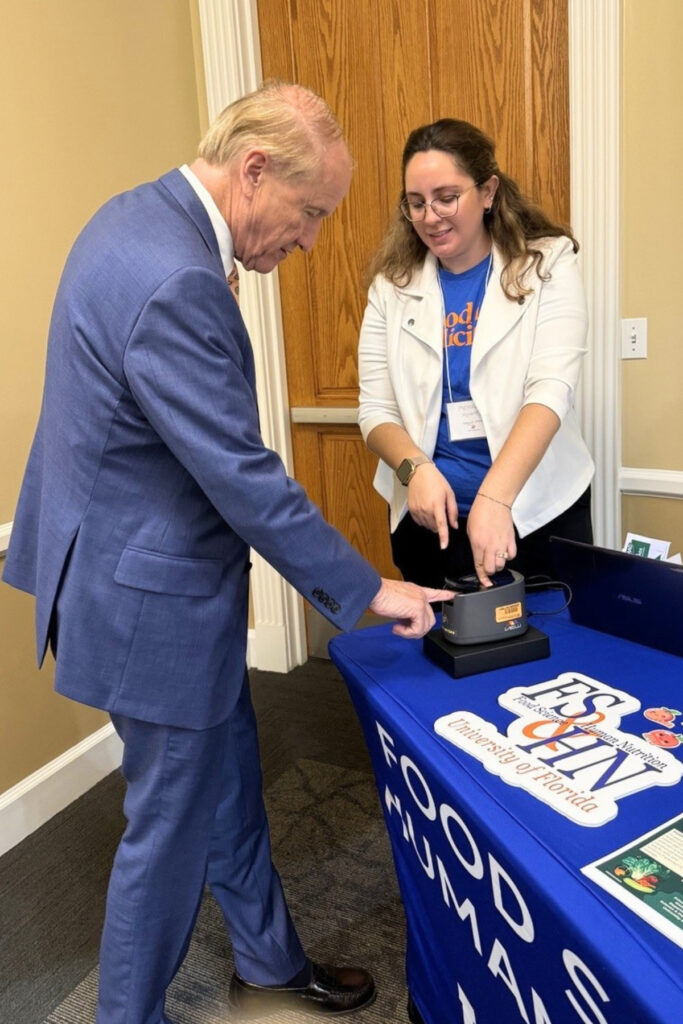
Dahl also uses a veggie meter, a portable, non-invasive optical device that measures skin carotenoids to estimate how many fruits and vegetables a person eats.
Dahl notes some challenges, like protein, which she says is trending now, meaning that some people, especially younger people, might be getting too much protein.
“But if we look at the actual intake data, women over 70 tend not to consume enough protein to support their muscles and retain muscle mass while also supporting bone,” she said. “So that is a high-risk group there. We encourage women over 70 to take a look at their protein intake, because they might need a bit more.”
And many women are. When a friend suffered a case of food poisoning during a recent trip to Spain, she obsessed over the protein she was missing. Another friend is in remission from cancer and doing great. And she says protein is helping her out a lot. So much so that when I visited her recently, she offered me a protein drink as she put out breakfast fixings for us, to give me an extra bit of protein.
The National Council on Aging calls protein a “nutritional superstar” that helps us stay strong and mobile. And as we get older, that’s what we want.
How did protein become such a big deal?
“It’s just one fad after another,” Dahl said. “That’s what happens with nutrition…remember, there was the low-fat fad; there are all sorts of fads. But it’s out of control right now, because they’re putting protein in things, and those foods aren’t necessarily high-quality foods.
Dahl says there are formulas to determine how much protein an individual needs based on their weight, but that it is better if the protein comes from real food rather than supplements.
“We don’t need to be putting protein into Special K,” she said, while nothing there is “a role for protein powders for people who are struggling with intake of real food.”
Malnutrition in older adults has serious implications. Nationwide, nearly 14 million older adults are prone to food insecurity and worry about where their next meal will come from. In Florida, the number is nearly 700,000, according to 2024 data from Feeding America.
Meals on Wheels is an organization that delivers hot meals and more to homebound older adults says on its webpage that it’s not just about somebody being hungry at a specific moment, but whether they have regular and reliable access to food.
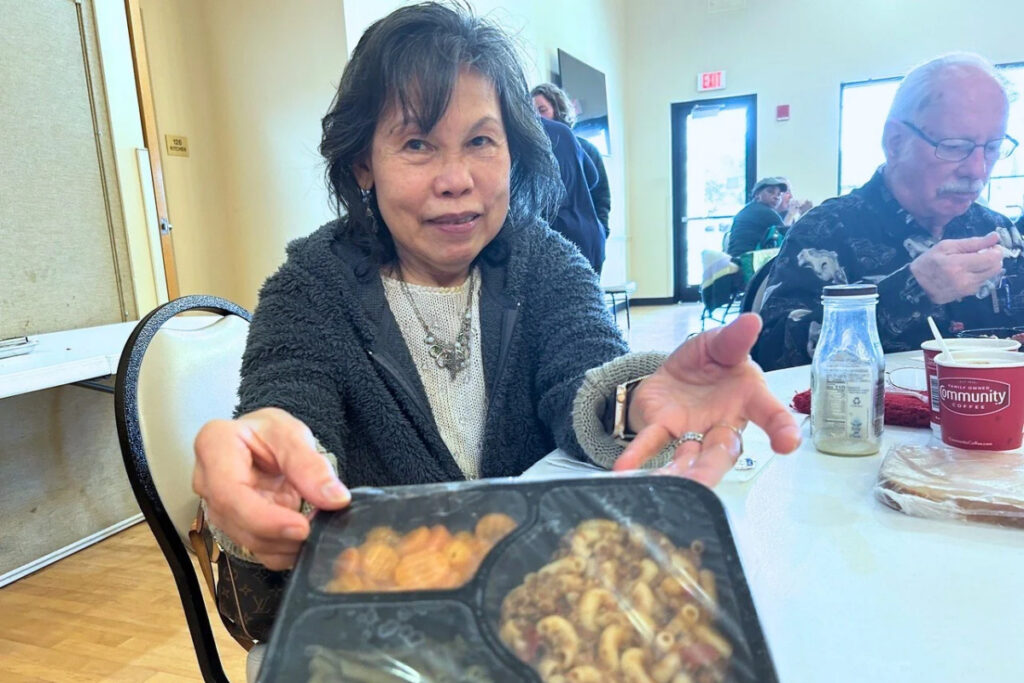
In Gainesville, Elder Care manages the Meals on Wheels program as well as providing free, congregate lunches at the Senior Recreation Center Monday through Friday. Meals are also available at locations in Archer, High Springs, Waldo and Newberry on certain days. The meals served must meet nutritional standards and are created to meet a third of nutrition needs.
Returning to the Food Is Medicine (FiM) concept, UF/IFAS is leading a cross-campus FiM initiative that involves 200 faculty members. They held their first summit in October.
“The Food is Medicine Initiative represents the very best of what a land-grant university can achieve: connecting research, education, healthcare and community engagement to solve real-world problems,” said Rob Gilbert, UF/IFAS dean for research and executive director of academic affairs. “By combining strengths in agriculture and medicine, UF is helping build a future where food becomes a powerful tool for global health.”
Editor’s note: This is the latest story in Mainstreet’s award-winning Aging Matters series. It was independently reported by Ronnie Lovler and underwritten by the University of Florida’s Institute on Aging.