


- UF Health's Mobile Stroke Treatment Unit has responded to over 3,100 calls and admitted more than 1,500 patients in three years across Florida.
- The MSTU administers clot-busting medication within the golden hour to 33% of stroke patients, greatly surpassing the national average of 1.4%.
- Patients treated by the MSTU have a 30% higher chance of going home directly and experience a 45% lower stroke mortality rate than traditional EMS patients.
In July 2023, the UF Health Mobile Stroke Treatment Unit (MSTU) responded to its first emergency call. Since then, the number of calls to the unit—and the lives it has helped save—has continued to grow as the MSTU marks three years in operation.
MSTU Program Director Nicolle Davis said UF Health’s three mobile stroke units—in Gainesville, Jacksonville and The Villages—are the only ones in Florida. Like UF Health’s mobile cancer connector, which celebrates two years of service this month, the MSTU works to close gaps in care caused by barriers such as distance from health care and lack of education.
“We’re really changing the paradigm of stroke systems of care,” Davis said.
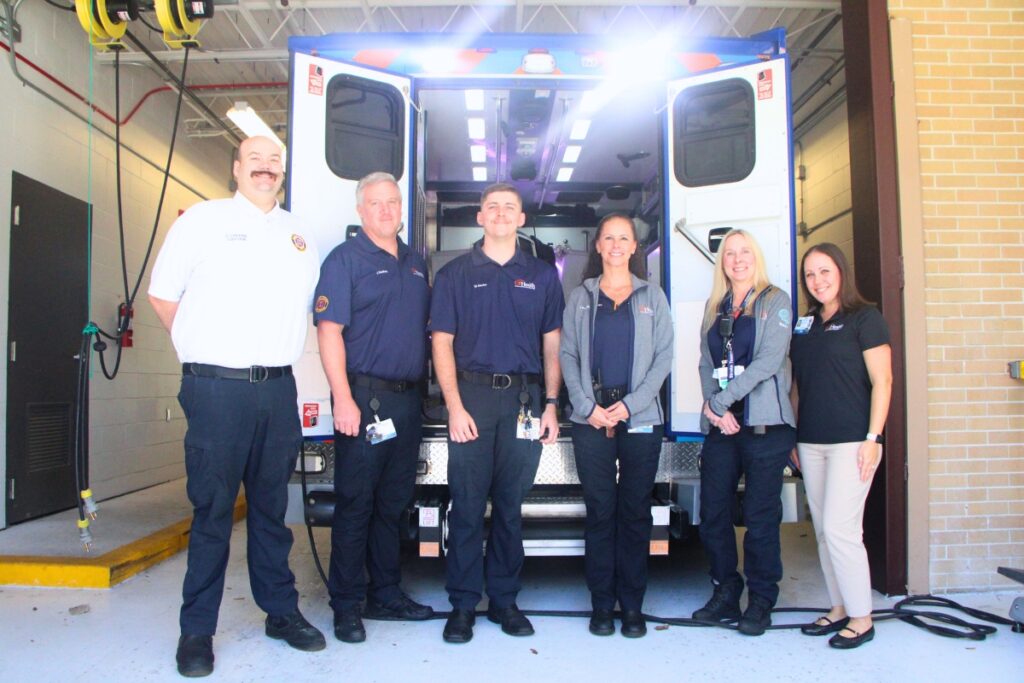
In partnership with Alachua County Fire Rescue (ACFR), UF Health’s Gainesville MSTU staffs six paramedics and two EMTs alternating shifts with the fire department and the unit, as well as a stroke-trained registered nurse and a CT technologist from the hospital.
The crew wears both ACFR and UF Health logos, as half come from the hospital and half from the Alachua County Critical Care Division.
Davis said the MSTU is dispatched three to four times a day during its 8 a.m. to 8 p.m. shift, when most strokes occur, and responds to about 500 calls per month.
The unit has been dispatched more than 3,100 times in Alachua County, admitted more than 1,500 patients and provided more than 350 acute critical interventions—treatments beyond what a traditional ambulance can offer.
By making stroke treatment convenient on wheels, Davis said the MSTU has been requested over 400 times for rural rendezvous in the 14 contiguous counties around Alachua County.
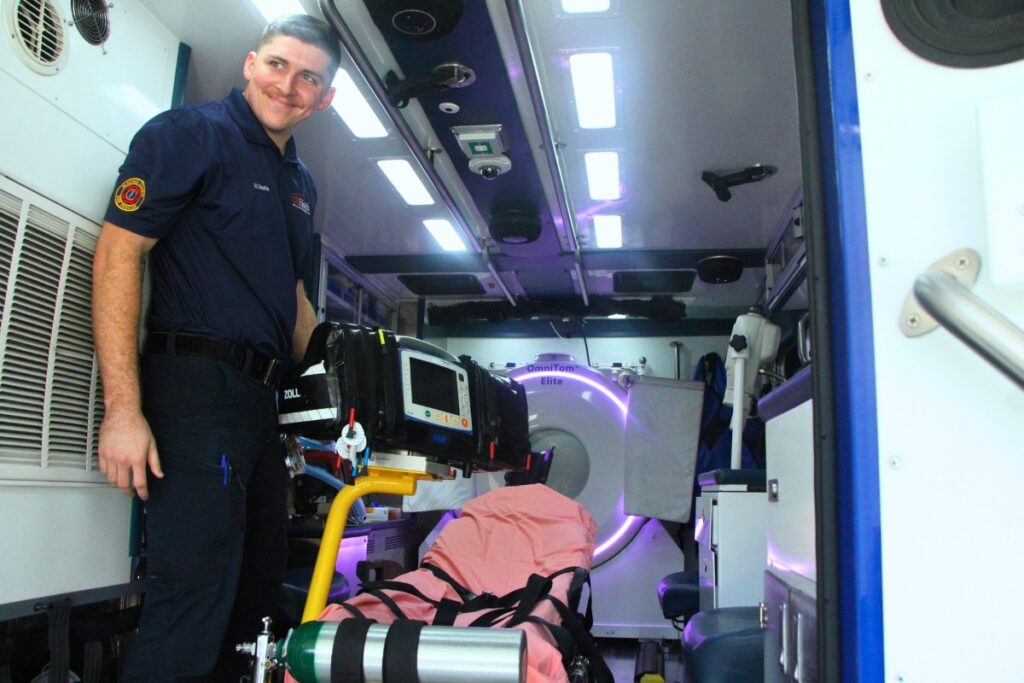
It takes about 13 minutes for the MSTU to respond to a call and administer medication to stop an oncoming stroke.
The “golden hour” in stroke is the time from symptom onset to treatment with medication. Davis said about 1.4% of patients nationally get the clot-busting medicine within the golden hour, and about 10% get it within 90 minutes of stroke symptoms starting with mobile stroke. UF Health’s MSTU is able to get about 33% in the golden hour and about 70% within 90 minutes.
Davis said patients treated on the unit have a 30% greater chance of being discharged directly home compared with patients taken to the hospital by traditional EMS.
On average, MSTU patients spend two fewer days in the hospital, and the overall stroke mortality rate is 45% lower.
Davis said “time is brain” when it comes to strokes, and the team is working to reduce response times even further.
“Our fastest, six minutes,” she said. “You can’t go to Starbucks and get a coffee in six minutes, and we just read your stroke.”
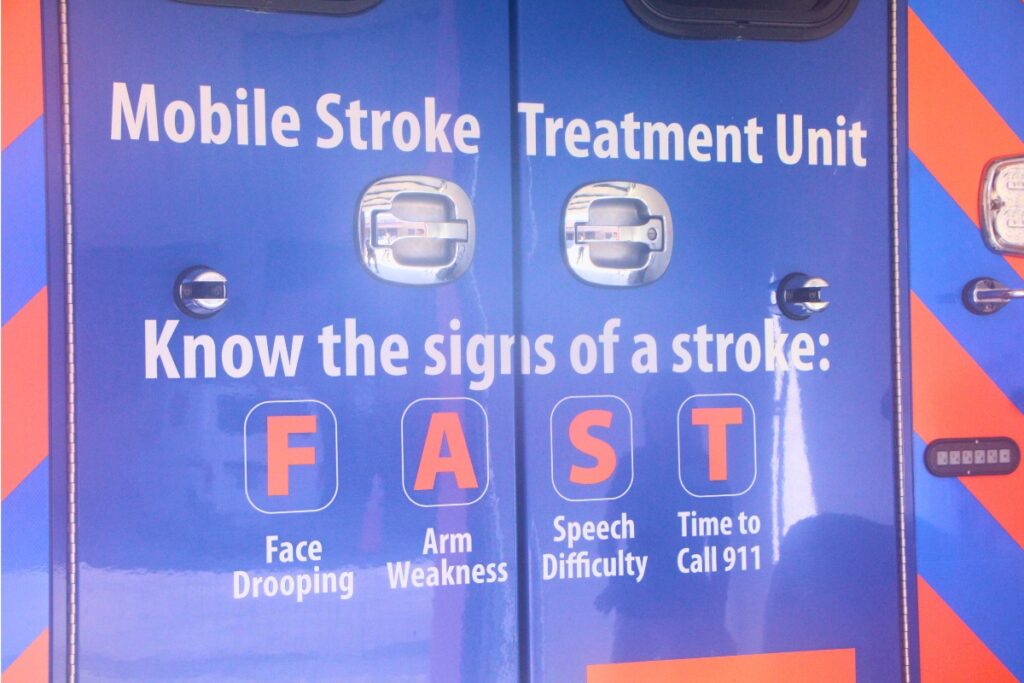
ACFR Captain David Lykens said another important mission of the MSTU is to educate people about the signs and symptoms of a stroke. This looks like having the “F.A.S.T.” acronym wrapped on the MSTU (Face drooping, Arm weakness, Speech difficulty, Time to call 9-1-1).
Davis said hosting community outreach events is another outlet. She said UF Health puts on about 100 each year for stroke education and to help familiarize people with the MSTU.
“Stroke is treatable,” Davis said. “It’s not 1985 anymore, when they didn’t have treatment, they didn’t have surgery, they didn’t have a pathway of care. The key is to recognize the symptoms and to get healthcare to you as soon as possible.”