


- The International Classification of Diseases added chronic pain as a standalone disease in 2020, recognizing it can exist independently of other conditions.
- Exercise, healthy diet, and social engagement help manage chronic pain and potentially slow brain aging in affected individuals.
Getting older can be painful. That’s when illnesses like arthritis, osteoporosis, neuropathy or nerve damage, fibromyalgia and other ailments associated with aging can make themselves felt.
These are the diseases that can cause chronic pain, or pain that persists or recurs for more than three months. And a lot of us have it. The Centers for Disease Control reports that 60 million adults in the United States, or nearly one out of every four people, live with chronic pain.
But chronic pain is no longer seen as something simply tied to a specific illness or condition; it is now seen as a stand-alone disorder meriting study on its own.
“Pain research is very young, because for a long time we just thought it was a symptom of other things, and if we controlled that other disease, then the pain would go away,” said Larissa Strath, an assistant professor in the College of Medicine in the Department of Health Outcomes and Biomedical Informatics. But that really didn’t explain why there were a lot of people walking around with pain, seemingly for no reason,”
So, in 2020, after about a decade of earlier studies, the International Classification of Diseases codes that doctors use were modified to add chronic pain as a disease.
“It can be related to other things, but it can also exist as a disease by itself,” Strath said.
For example, many older people suffer from chronic back pain, but MRIs or other imaging done on the person don’t necessarily detect a reason for the pain.
“They don’t have anything that shows up on imaging, but it doesn’t mean that they don’t have pain,” Strath said.
Roger Fillingim, director of the University of Florida’s Pain Research & Intervention Center of Excellence, said the way scientists are looking at pain is changing.
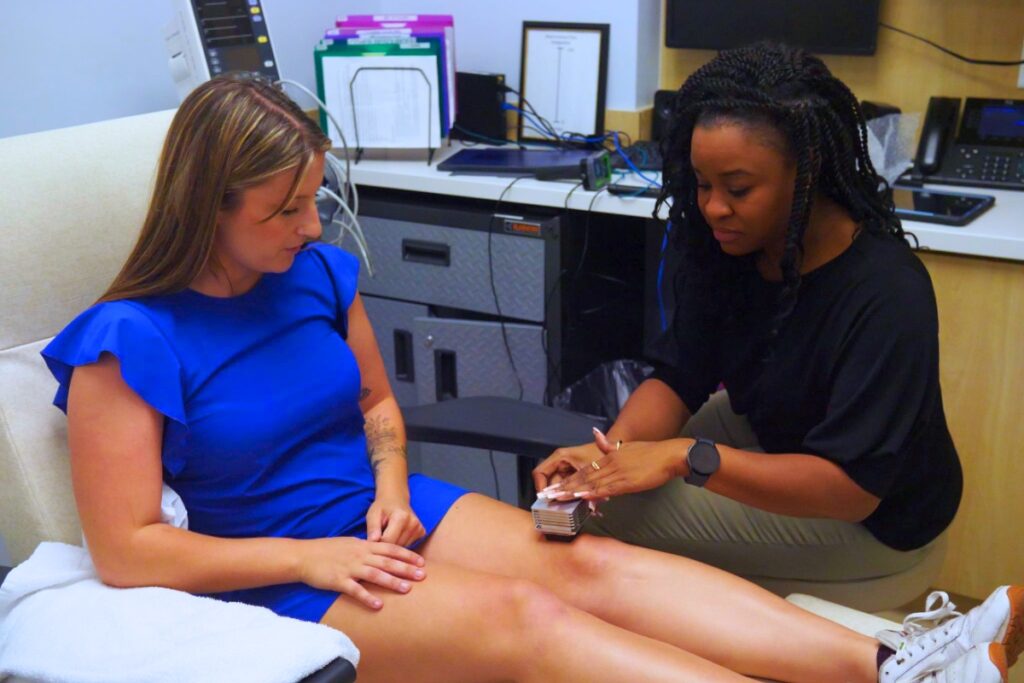
“We have historically focused on the peripheral causes of pain, the tissue damage or the injury or the disease process, and pain was really a secondary consideration,” Fillingim said. “Pain was what brought people to the doctor, but the goal was to diagnose the underlying problem, fix that problem, and then the pain would go away. But we have found time and time again that the pain didn’t go away,” he said.
What scientists are learning more about now regarding chronic pain is the role of the brain in registering it.

“The biggest driver that pain can be its own disease is the increasing information about how the brain changes when we have chronic pain,” Fillingim said. “There appears to be some neurodegeneration. There appear to be changes in connections or communications between brain regions, … and that can be completely independent of whatever injury might have started the pain.”
Knee pain and lower back pain are the leading causes of pain and disability in older adults, according to Fillingim,
Yenisel Cruz-Almeida, associate director of the University of Florida’s Pain Research & Intervention Center of Excellence, studies how pain and aging interact.
“Normal aging is associated with some changes in the body and functioning,” Cruz-Almeida said. “But pain seems to add a burden above and beyond normal age-related changes. Injuries will normally have pain associated with them. The problem is after the time the injury is supposed to heal, when there is still lingering pain.”
For many people suffering from chronic pain, the distress comes and goes. But when it comes, it can hit really hard.
Experts agree across the board that exercise, a healthy diet, and social engagement are all key to dealing with chronic pain, as well as simply living a better life. These efforts also help those afflicted deal better with the pain when it strikes and keep their brains from aging as much.
“More positive people actually tended to have younger brains, even if they had chronic pain,” according to Cruz-Almeida. “ So, it’s a complicated relationship. We also see that people who exercised but also used non-pharmacological approaches to deal with their pain had (seemingly) younger brains. So again, we don’t quite know what their relationship is, and this is why research is complicated.”
But how do people deal with their pain? For many, the best that they can.
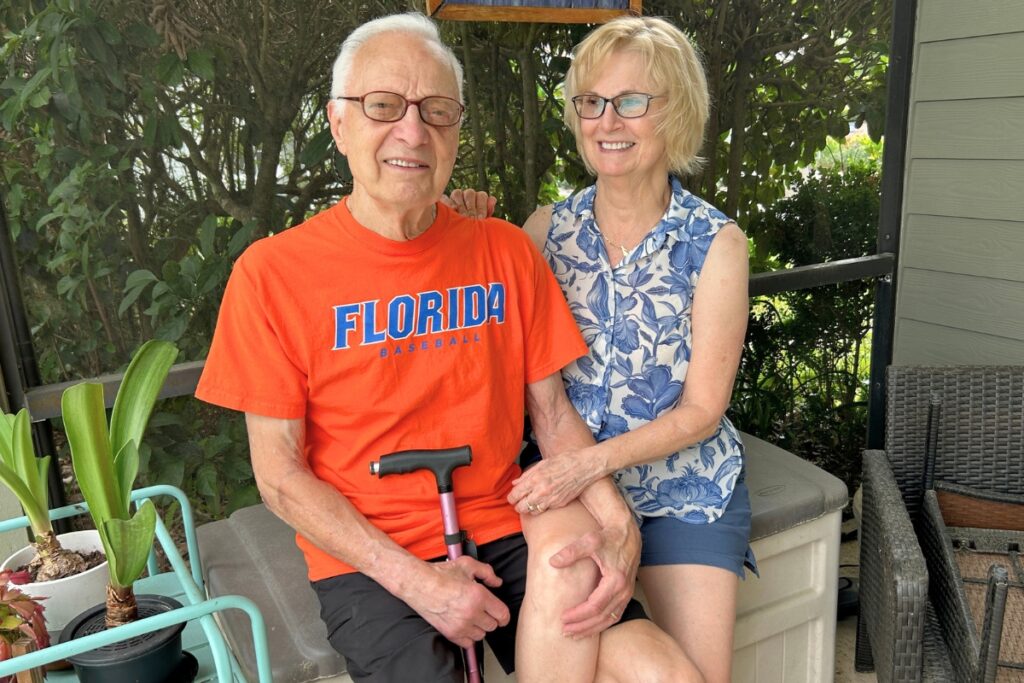
Lee Schwartz, 88, has been suffering from chronic pain for years and these days frequently walks with the assistance of a cane. He and his wife, Ann~Marie Magné, 77, are a busy couple who lead an active life, although Magné admits perhaps not as active as before.
“No more vacations in Europe, unless they cart us around,” Magné jokes. But she’s not joking when she says how much it hurts here to see her husband hurting. “It breaks my heart because I remember this guy being so active and doing so much,” Magné said.
But Schwartz works to stay active and engaged.
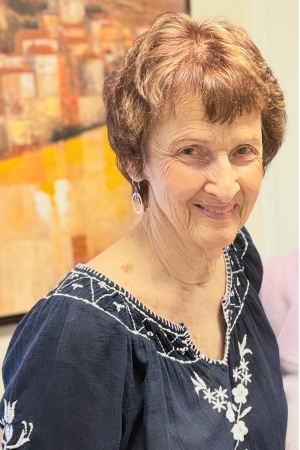
“I have pain, but what am I going to do except push through it? Sit around and feel sorry for myself?” Schwartz said.
Vera Rabino has been suffering from chronic pain for about 25 years.
“Over time, this all adds up in your body and causes you discomfort, but you know, by the time you reach 87, you’re too old for surgery, so you’re in pain, and you get injections. Sometimes they take, sometimes they don’t,” she said.
Rabino is still able to drive, although she is using a cane or a walker to get around. And she makes sure she gets up and stands every hour for at least 10 minutes.
“I also use alternative medicine as another pain management tool- I go to a chiropractor, an acupuncturist, and a masseuse every week,” she said.
Jaime Menzer, an equestrian in her 70s, is still reeling from the effects of shingles, which caused nerve damage in her nasal passages. In her effort to make the best of something that really isn’t great, she jokes that “even the facial recognition” on her phone did not recognize her.
She has good days and bad days, but on the bad days, she says, “relief comes by lying down and having an ice pack on my face.”
But although chronic pain is more frequently associated with older adults, it can attack those who are much younger.

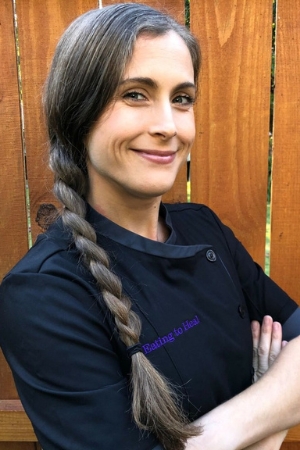
Sara Howard, 36, a personal chef who focuses on the preparation of nutrient-dense foods, has endured chronic pain for the last 16 years following a car accident that revealed she had a congenital neural tube defect and genetic mutations.
“I like to call it a dance more than a battle, because I think the mental perspective is really important,” Howard said. “I like to say that I’m dancing with pain because sometimes we’re dancing together and we’re working together, we’re on the same page. Sometimes I do not know the dance, and it’s not graceful, but at the same time, I’ve got to keep dancing. That’s how it is.”
There are resources to help people in their pain journeys. The U.S. Pain Foundation is a non-profit organization dedicated to serving those who live with conditions that cause chronic pain, as well as their caregivers and providers. They also have a peer support group program where people can attend online meetings.
Pain Foundation Mental Health Director Rachel Zentner says the peer groups are state-based, national, daily, and specialized populations. They are led by volunteers, who themselves suffer from chronic pain. One group that just formed is the “golden group,” which is specifically for older adults dealing with chronic pain. Participants can sign up for one or multiple peer support groups. There is no limit.
“It’s all about learning new things and how we can stay current with different opportunities,” Zentner said. “I think the hardest part for many people is the daily grind of living with chronic pain. Having something that’s out of the ordinary in your month or week to learn something new, hear something new, or to connect differently, is s a real bright spot for our participants,” she said.
People can enroll in a support group by visiting the Pain Connection or Pain Foundation websites at https://painconnection.org or https://uspainfoundation.org.
Editor’s note: This is the latest story in Mainstreet’s award-winning Aging Matters series. It was independently reported by Ronnie Lovler and underwritten by the University of Florida’s Institute on Aging.
Suggested Articles
No related articles found.