


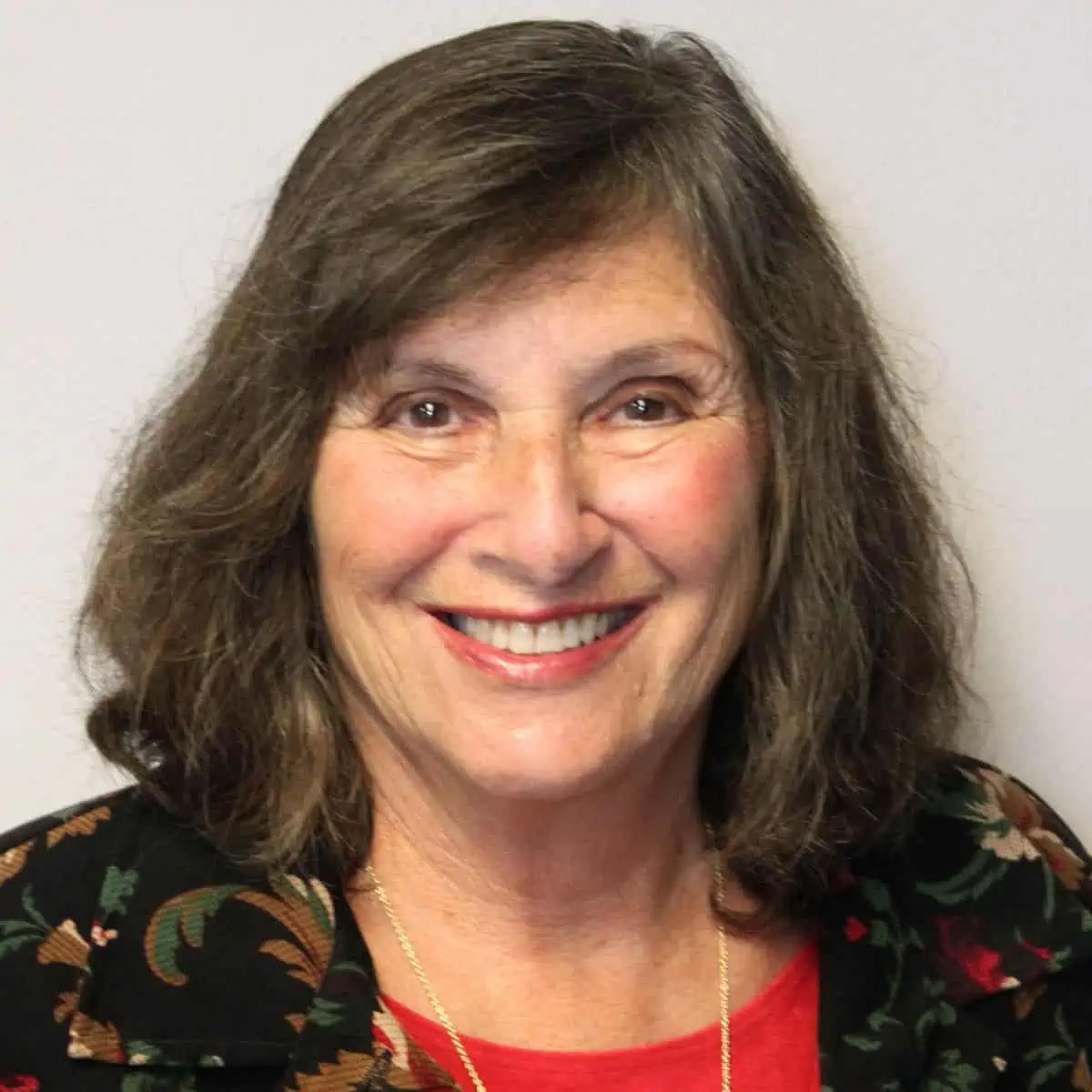

Ellen Siegel, 77, used to work as a park ranger in the Everglades and was accustomed to spending a lot of time outdoors, even in the summer heat. It never fazed her.
But now, she has experienced heat emergencies, like one last year at an outdoor music festival when she nearly passed out because of the heat, and the friend she was with sought out the EMTs.
“I was apparently at the beginning stages of heat exhaustion,” Siegel said. “It was sobering. I really thought I was prepared to deal with the heat, but as I’ve gotten older and put on blood pressure medication, I’ve learned that I’m not who I used to be.
“The sensation that I had when I felt unwell was that my blood was boiling inside my body. That’s the only way I can describe it. And I felt lightheaded and a little bit dizzy…. So now I’m super sensitive to heat, and the heat index, and I’ve been tracking and calibrating what I can take and what I cannot.”
As an older adult, Siegel is not alone in feeling the effects of heat. As I write this story, it is 96 degrees Fahrenheit outside, but it “feels like 105.” That’s the heat index talking. And what is the heat index?
The National Weather Service reminds us that “it’s not the heat, it’s the humidity.” The heat index, also known as the apparent temperature, is what the temperature feels like to the human body when relative humidity is combined with air temperature
Overexposure to high temperatures, especially in combination with high humidity as we experience in Florida, can impact everyone but is especially dangerous for those over 65.
And it is something to worry about. Older adults are especially susceptible because of challenges regulating body temperature, chronic conditions and medications. Heat waves can trigger deaths from heart attacks, Alzheimer’s disease complications, pneumonia and COPD, according to the experts.

“Heat stroke is basically a failure of our internal thermostat to regulate our temperature, and our temperature can shoot up really fast,” said Windy Purtlebaugh, a nurse practitioner with UF Health Neurology. “So, you start getting symptoms such as confusion, headache, and normal sweat functions like perspiration that usually is used to cool us down fail. You can progress onto nausea, vomiting, loss of consciousness, even seizures. Your body goes into shock.”
And for seniors, not sweating can be life-threatening, according to Orlando Laitano, an assistant professor in the Department of Applied Physiology and Kinesiology in UF’s College of Health & Human Performance.
“When you look at the physiology of aging, as we age, we tend to sweat less, and the production of sweat is less efficient. So, your ability to cool your body when you’re exposed to high heat is not as effective as it used to be when you were younger,” Laitano said. “There are also changes in your blood circulation. Now, in Florida more specifically, when you have high humidity, the sweat that you’re producing is unable to evaporate. So, what that means ultimately is that your body is unable to cool off efficiently.”
The Centers for Disease Control Heat and Health tracker shows that Florida had more than 31,000 heat-related emergency room visits between 2018 and 2022, the most in the country. Some 27 percent of heat-related deaths (2010-2020) involved adults over age 65.
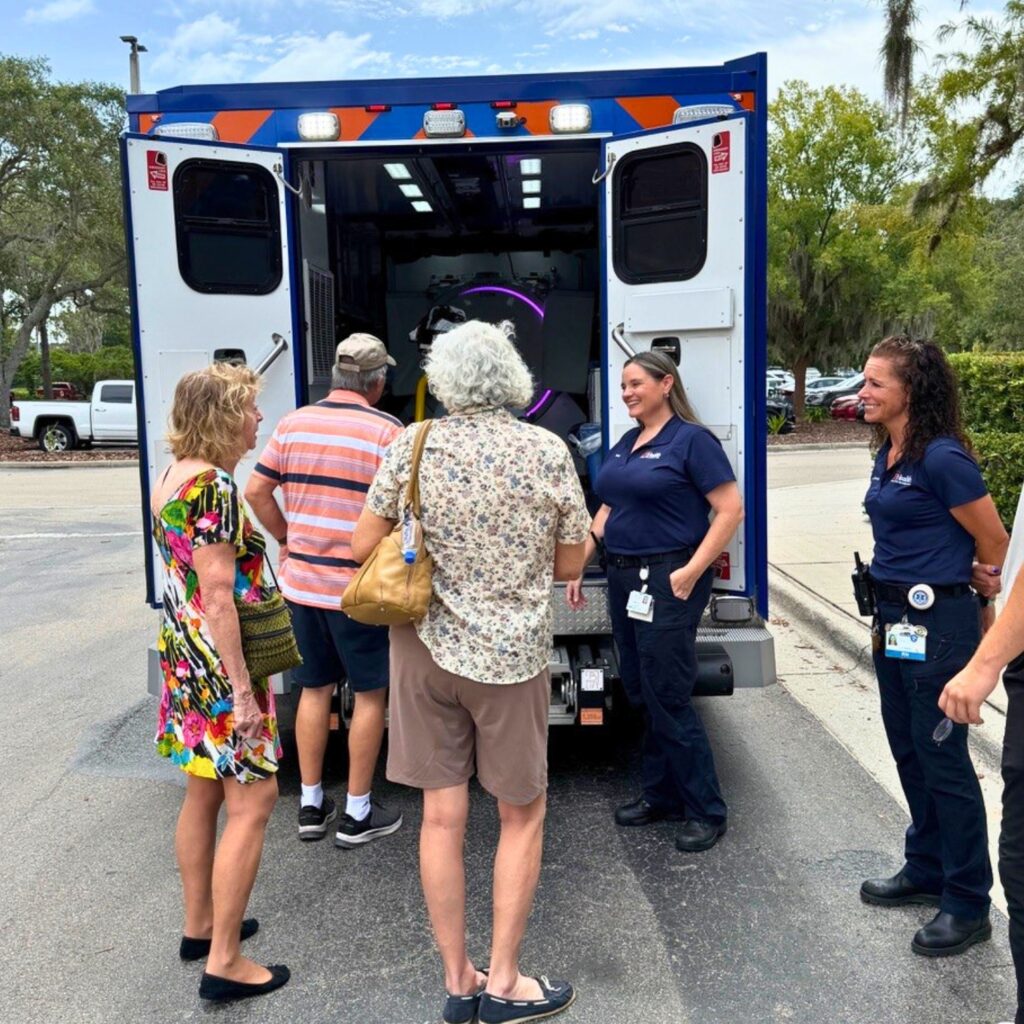
Capt. Alvin Jones, assistant emergency manager for the city of Gainesville with Gainesville Fire Rescue, says during the summer months the team is called out regularly to heat-related emergencies.
“Every day we respond to someone who is in some kind of heat crisis or heat emergency. The first thing we can do is try to get them into some shade, try to get them cooled down as fast as possible,” Jones said. “If that doesn’t help, we get them to the hospital.”

Like everyone else we talked with, Jones emphasizes the importance of staying hydrated, especially for older adults
“Hydration helps to keep the body cool. If you don’t have enough fluids in your body, it causes the body to overheat. And when you get overheated externally, you start overheating on the inside as well,” Jones said.
But one of the problems befalling older adults is an inability to determine when they are dehydrated; in other words, there are fewer internal signals indicating thirst.
“Usually, adults rely on (a feeling of) thirst to seek water and maintain hydration. But as we age, we lose this feeling. So, it’s very easy for an elderly individual to be dehydrated in 24 hours,” Laitano said.
So, he suggests keeping a hydration schedule using apps or other tools to remind you to drink water.
At the CLEO Institute, a South Florida nonprofit, nonpartisan organization focused on climate education, advocacy and engagement, the team is well aware of problems that may be triggered by climate change, like the heat domes and heat waves that have impacted us.
“I think it’s very important to talk about heat and understand the dangers of being exposed to heat and solutions or actions one can take to reduce their risk from heat exposure,” said Joanne Pérodin, vice president of programs at the CLEO Institute.
She also underscored the importance of social intervention or social networks, especially when it comes to older adults.
“If you have a neighbor who’s a senior, if you have a relative who’s a senior, check on them, because many heat-related illnesses can lead to death. And sometimes those preventable deaths happen because no one realizes that someone got ill from the heat,” Pérodin said.

Anyone who doubts the deadly impact of a heat wave only needs to take a look at France, where the national health agency just reported more than 5,700 excess deaths during its recent and historic summer heat, the highest number of fatalities recorded in 20 years.
In three days between June 25 and June 27, more than half of the “unprecedented” deaths occurred, with people over the age of 75 accounting for about two-thirds of that total.
A recent study of 73 million older Americans by the Harvard T.H. Chan School of Public Health found that more people are dying because of heat-related incidents each year, especially in Black and low-income communities.
According to the study, heat waves provoked nine extra deaths per 10,000 people each year, or 17,600 extra deaths in the contiguous United States during the 2000-2018 study period. The research was conducted by analyzing Medicare records.
The study suggests that climate change-triggered heat waves present a growing threat to public health, especially in high-poverty neighborhoods, which may have less green space.
Editor’s note: This is the latest story in Mainstreet’s award-winning Aging Matters series. It was independently reported by Ronnie Lovler and underwritten by the University of Florida’s Institute on Aging.

Suggested Articles
No related articles found.
what does poverty have to do with heat? What is green space?