

- The University of Florida's PeCAN program screens older adults preoperatively to identify cognitive impairments and reduce post-surgical complications.
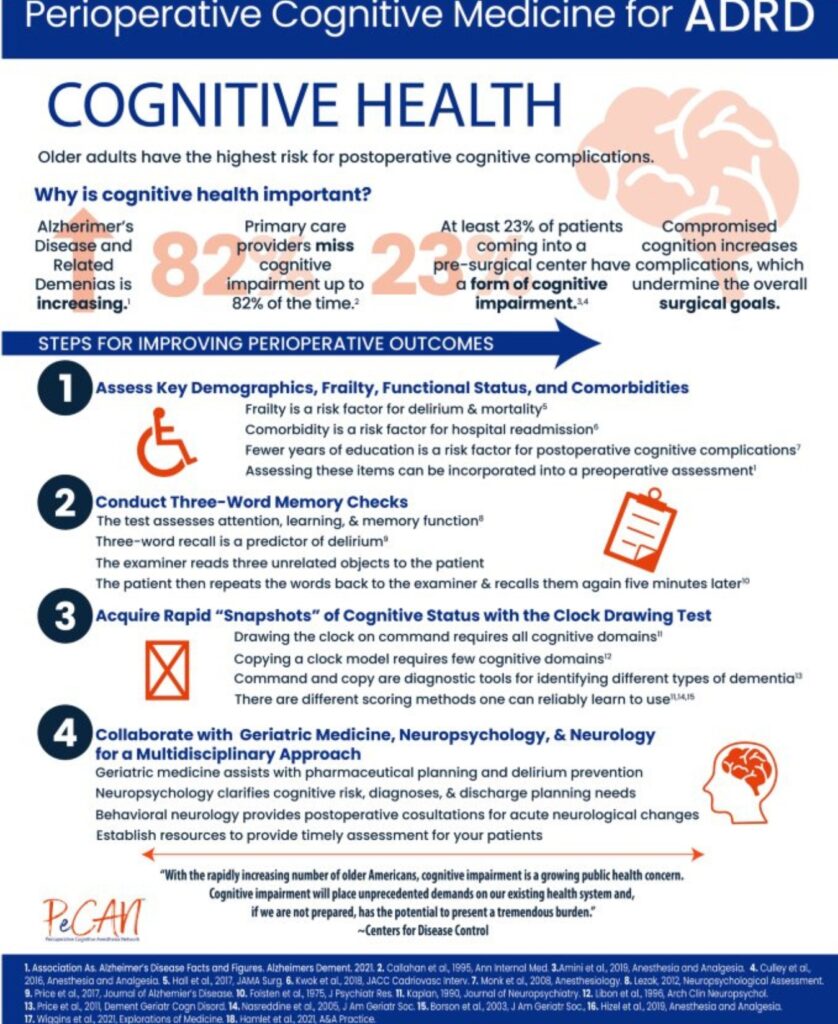
- About 23% of patients over 65 screened by PeCAN showed cognitive issues, but only 2% had documented impairment in their medical charts.
- Delirium after surgery is linked to anesthesia sensitivity, brain stress, and factors like frailty, anxiety, and lower education levels in older adults.
The likelihood of undergoing a surgical procedure increases as we age; perhaps it’s elective or semi-elective, like a joint replacement. Or it could be an emergency or planned operation for a heart condition or cancer.
Always, however, anesthesia is part of the process. And for older adults, the necessary exposure to anesthesia and its potential after-effects can be a concern.
That’s why Catherine Price, founder and director of the University of Florida Perioperative Cognitive Anesthesia Network (PeCAN) and a board-certified clinical neuropsychologist, considers pre-operative brain screening so critical.
“We say that an atypical cardiogram usually results in a referral to a cardiologist,” said Price, who has a joint appointment in the UF College of Public Health and Health Professions and the Department of Anesthesiology in the UF College of Medicine. “And so, for us, if the cognitive screener is atypical, that is the flag that the person needs to follow up with a clinician. And so that’s what we do here. We follow up.”
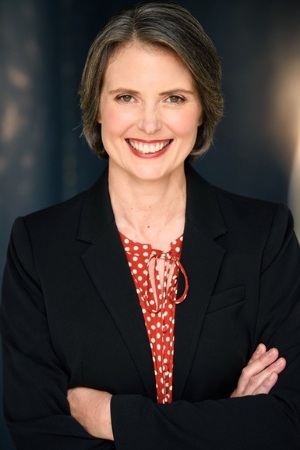
Star Bradbury, an expert on aging with nearly three decades of experience in the field, could have used those insights for her stepfather when he had major surgery 20 years ago.
Yet despite her already extensive experience in the aging field, even she was caught by surprise when her late stepfather, whom she described as a sweet and gentle man, became delirious following surgery.
“He was coming out of the anesthesia, and he was so confused. He was convinced that he was back in World War II and the Nazis were trying to kill him,” said Bradbury, an Aging Life Care Specialist, CEO of Senior Living Strategies, and author of the book “Successfully Navigating Your Parents’ Senior Years.”
“It was horrible. He was so violent that they had to tie him down and basically restrain him, because he was flailing and trying to hit the staff. It was as he was coming out of the anesthesia, immediately after the surgery,” she said. “It took several days before he was back to being himself.”
But that’s not always the case for older adults who experience delirium after a major surgery, especially if they were experiencing dementia or cognitive impairment before surgery.
Price’s PeCAN, the first of its kind, only came into being in 2017, but “we’ve been trying for many, many years before that,” Price said. “PeCAN started because research showed us that the brain was changing before and after surgery. And it also started because I had wonderful colleagues in the Department of Anesthesia who were concerned about that.”
On its website, PeCAN defines itself as “an interdisciplinary enterprise at UF Health Shands Hospital where anesthesiologists, neuropsychologists, geriatric medicine specialists, surgeons, and nurses plan patient care prior to surgery” and is “designed to address the needs of older adults at risk for poor postoperative outcomes.”
Research over the years and observations of people who were older, but who did not do well after surgery linked some of the problems to anesthesia.
“The biggest thing we found is that as we get older, our brains just get more sensitive to anesthesia and surgery,” Price said. “But it’s not just the anesthesia. It’s the surgical stress, and brains and bodies just react differently. Some brains act a certain way, and for some individuals, that results in confusion or memory problems. So, we’ve learned what those risk factors are.”
These include cognitive impairment, physical frailty, anxiety, and surprisingly, lower levels of education.
“People who have fewer years of education may have less cognitive reserves… they have different neuroplasticity. And so, they may be more vulnerable to insults or stressors.” Price said.
For Price and her colleagues, a preliminary brain screening before surgery to determine cognitive impairment as an indicator of the possibility of post-surgical complications should be an essential part of the pre-operative process.
This could include the standard test of a clock drawing, where the patient is asked to draw the face of a clock and set the time to 11:10. In a recent talk, Price explained how much could be learned from that two-minute test.
“What we’re moving toward is trying to have this more commonplace accepted of cognition, you know, appreciating cognition and brain health around the time of surgery. Brain health is really important,” Price said,
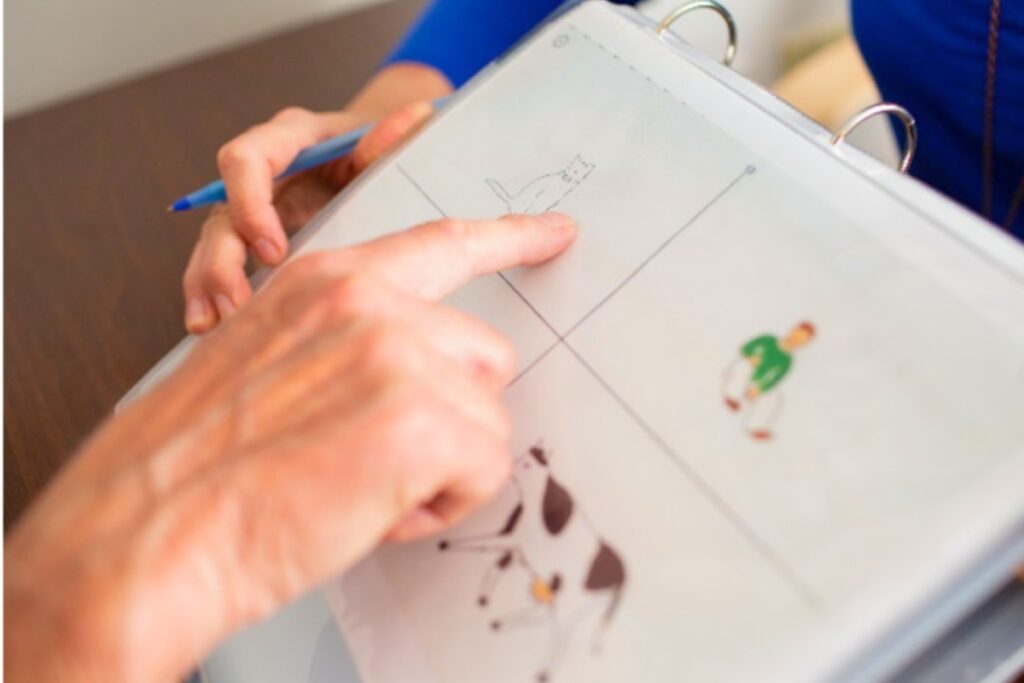
Price said that at Shands, every patient over the age of 65 who has an in-person appointment with an anesthesiologist before surgery will get an initial cognitive screening that could include the clock drawing, a word game, and a test of grip strength.
“The cognitive screener is like a snapshot. And that picture’s wonderful. It gives us an idea of impairment. Or severity, but it doesn’t tell us why. And someone could perform poorly on that because they’re tired or they’re irritable that day, right? So, it has a very high sensitivity, but it’s not specific. And we are more specific.
10 Ways to Take Care of Your Brain Before Surgery
From the UF Perioperative Cognitive and Anesthesia Network
- Take the right medications
- Active Brain Engagement (Reading, puzzles, etc.)
- Passive Brain Engagement (Massage music, etc.)
- Stop Smoking
- Adequate Sleep and Nutrition
- Stay Hydrated
- Dental Hygiene
- Physical Movement
- Social Engagement (Call Family, See Friends)
- Deep Breathing
Contact information: 352-594-6051
Those who get referred to PeCAN or, on their own, seek an appointment before surgery, get a more intensive examination that can determine potential cognitive issues or identify problems that may be ongoing, that could affect surgical outcomes, Price said.
PeCAN makes recommendations to the patient to help them prepare for the surgical procedure, and to the surgical team to sidestep post-surgical problems.
“Both of us will see patients preoperatively, but there was no postoperative clinic until I came,” said Dr. Ben Chapin, a physician who is part of the PeCAN team and also an assistant professor in the Department of Anesthesiology. “Some patients come in, we do an assessment, we say, hey, it looks like based on their testing, maybe this person has Alzheimer’s disease or dementia, and then they go into surgery,
If they have delirium and they really get confused, they’ve got a decline after surgery, then it’s really important to see them in that follow-up clinic to say, hey, what actually happened,” Chapin said.
So why does anesthesia impact the older brain?
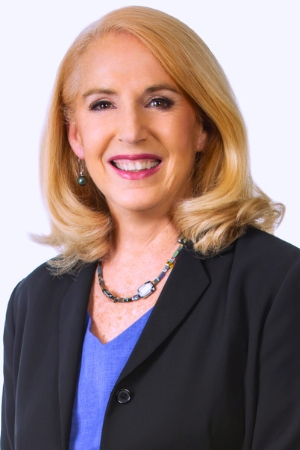
“For anesthesia to function, it must affect brain chemistry to affect your level of alertness and arousal and create an unconsciousness to create amnesia, so people don’t remember the surgery,” Chapin said. “Now, will that be long-term? Will that cause problems with the brain and the brain structure down the line? That’s an open question of research.”
Price and her colleagues reported on two years of PeCAN patient data in a recent article published in the journal Anesthesia and Analgesia. Thousands of patients over age 65 were screened; 23% had issues with their cognitive performance, yet only 2% of the patients had notes about cognitive impairment in their medical charts.
“Now that’s a major problem. Because anesthesiologists and surgeons, if it’s not in the chart, they won’t know. They do not know if their patient has a vulnerable brain, and that is a concern,” Price said.
Research shows that 30% to 40% of delirium episodes are preventable, including post-surgical delirium.
“One of the biggest advances in perioperative medicine has been recognizing that we should evaluate the brain before surgery just as carefully as we evaluate the heart and lungs,” said Michael Okun, Director of the Norman Fixel Institute for Neurological Diseases at UF Health and the medical advisor for the Parkinson’s Foundation. “Cate Price’s PeCAN program helps identify patients at higher risk, allowing the care team to personalize anesthesia, prevent complications, and improve recovery for countless individuals.”
Research data shows there has been a 20% increase in the number of people suffering from Alzheimer’s disease in Florida since 2020, and that one in five people have undiagnosed dementia.
“People living with Parkinson’s and Alzheimer’s diseases have a higher risk of postoperative delirium, particularly if they have cognitive impairment, advanced age, infection, medication interruptions, or major surgery. Early recognition of risk and proactive planning can substantially reduce complications and improve outcomes,” Okun said.
Ethics or neuroethics, which looks at how to apply advances in neuroscience while protecting a person’s autonomy, dignity, and quality of life, plays an important role at PeCAN.
“PeCAN embodies neuroethics by identifying patients who may be especially vulnerable before surgery, ensuring they receive individualized counseling, informed decision-making, and perioperative care that respects both their cognitive health and their personal goals. The patient is the sun and care orbits around them,” Okun said.
Editor’s note: This is the latest story in Mainstreet’s award-winning Aging Matters series. It was independently reported by Ronnie Lovler and underwritten by the University of Florida’s Institute on Aging.