



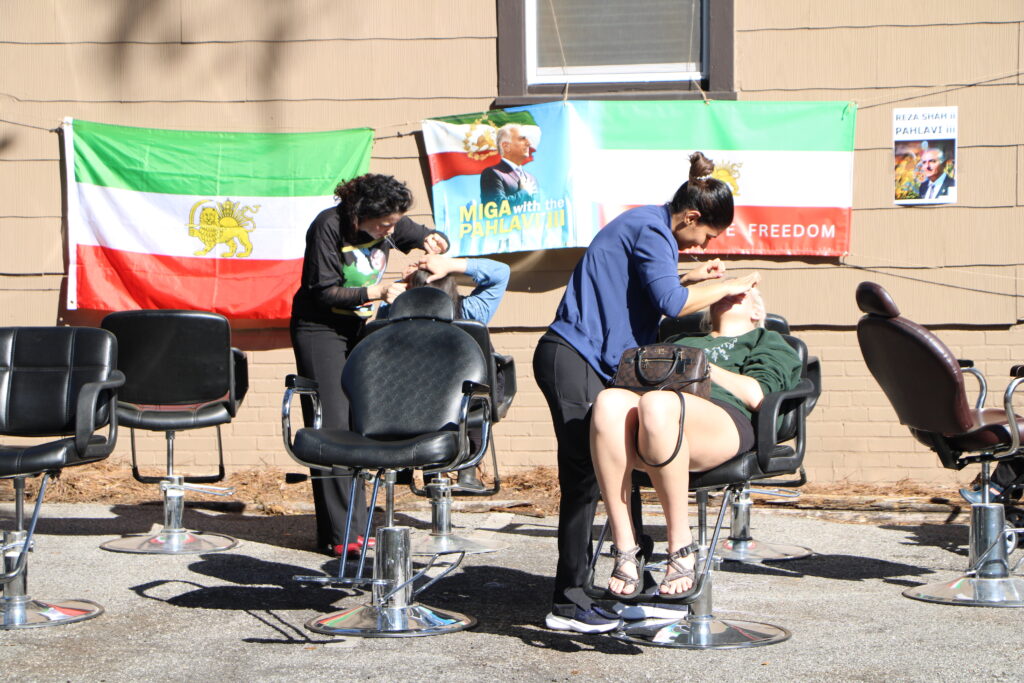
- Ziba Ahmadi and Mondana Behjati, Iranian Americans in Florida, support Operation Epic Fury to overthrow Iran's Islamic regime.
- The Iranian government cut communications for over 50 days after the US launched attacks on Iran on Feb. 28, isolating families.
- Most Americans oppose US military action in Iran, with 61% disapproving and $25 billion cost plus 14 US deaths in the conflict so far.
- Ziba Ahmadi and Mondana Behjati use rallies, social media, and their businesses in Florida to educate and unify support for Iranian freedom.
Fleeting relief fell over Gainesville resident Ziba Ahmadi last week as she picked up the phone to hear her mother speaking on the other end in Iran.
The communication broke over 50 days of silence between the 47-year-old eyebrow threader and her family since the U.S. launched Operation Epic Fury against the Middle Eastern nation on Feb. 28.
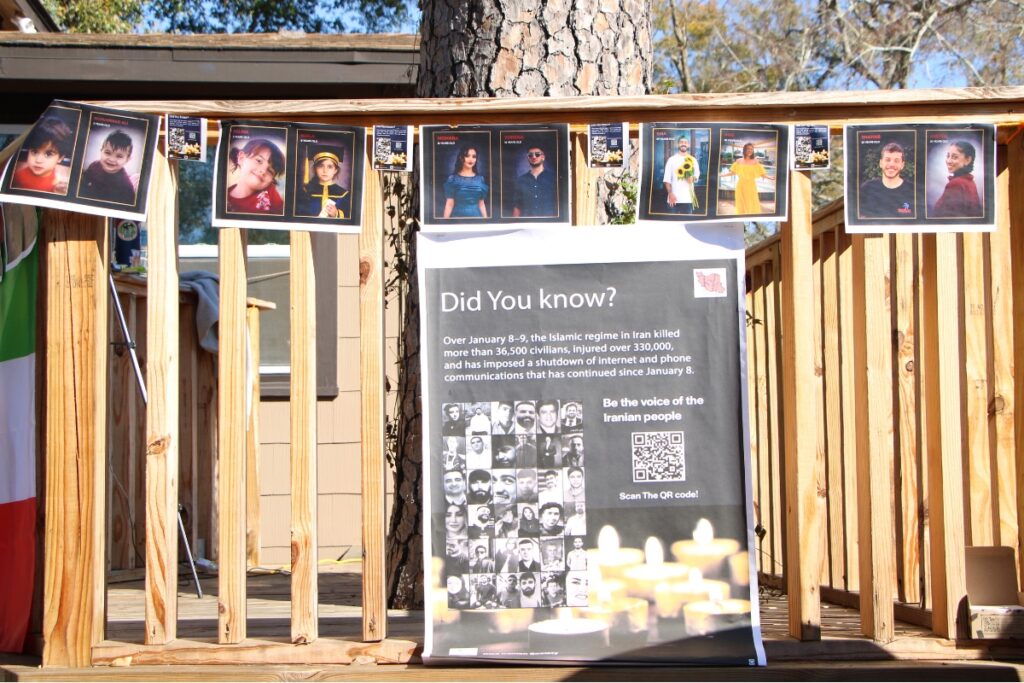
Shortly after the attack—and months after the Islamic Republic of Iran murdered an estimated 30,000 unarmed protestors—the Iranian government shut down the nation’s internet and cell service, leaving Ahmadi and others holding onto hope of hearing from loved ones, while also assuming their death.
“I cannot talk to you about the details,” said Ahmadi’s mother, with a scared voice breaking up as the regime recorded and listened to her call. “Just know we are okay now. Don’t be worried about us.”
About 70 miles northeast of Ahmadi in Jacksonville, Iranian American realtor Mondana Behjati, 53, also felt temporary reprieve in April as a few messages started trickling in from Iran.
A friend of hers said she’s more terrified when she doesn’t hear bombs because it feels like Iranians are being abandoned. Behjati also discovered her cousin’s aunt was still alive after Israeli military forces struck her apartment complex to kill Commodore Alireza Tangsiri, the Iranian naval commander who initiated the Strait of Hormuz blockade.
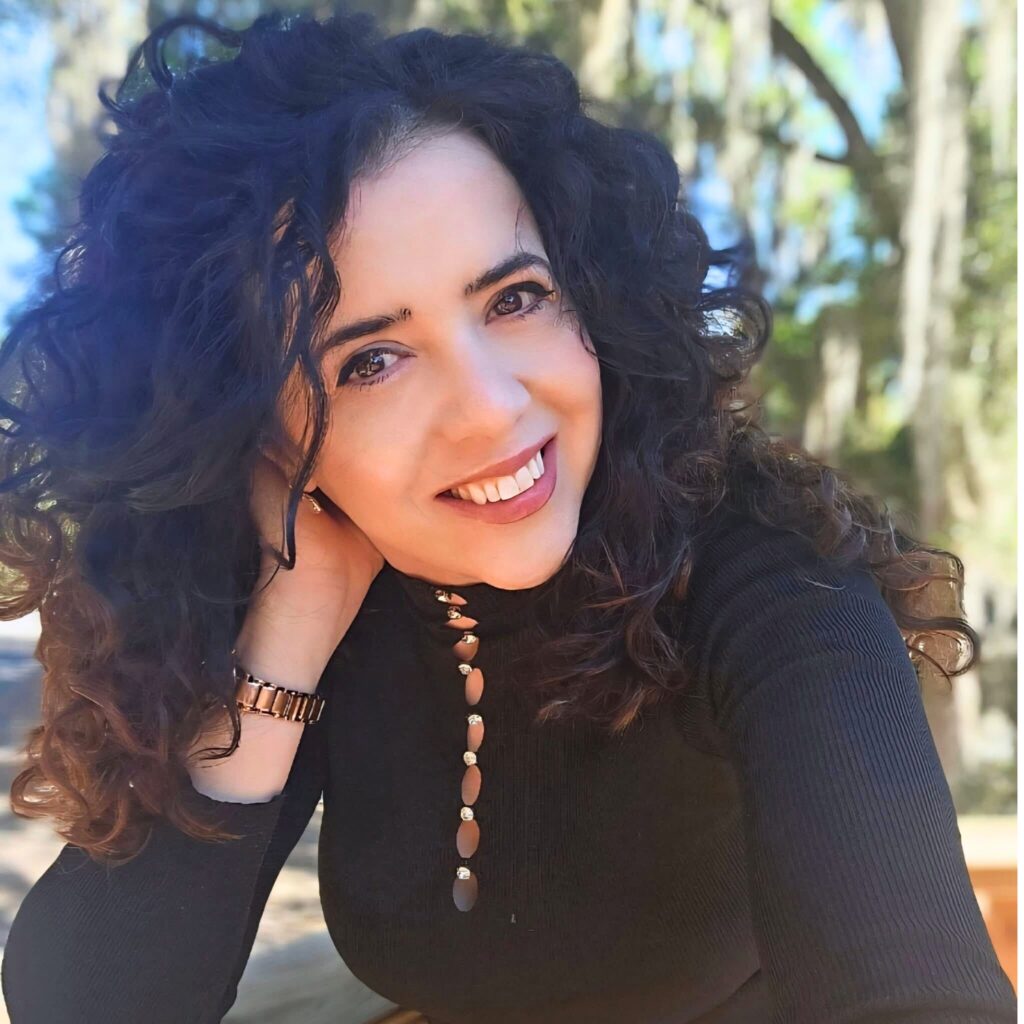
“He said that we couldn’t talk for a whole day because they were so scared of this impact,” Behjati said. “But the funny part was, nothing happened to any of them except [Tangsiri]. It hit that one room that the guy was in and everyone else was okay, and they were still living in that apartment.”
But the worry continues for Ahmadi and Behjati, who know firsthand the burdens of growing up under Iran’s Islamic regime, and they believe conflicts will last until a new government is installed, perhaps by the end of the war, an effort they support despite growing polarization and unpopularity.
With seemingly no way to directly help Iran while in Florida, Ahmadi and Behjati aim to use their experiences to educate and unite support of Iranian freedom through rallies, social media and their businesses, no matter the cost.
“Right now, we are at a rare moment where the interests of Iranian people and the West actually align. If we miss this opportunity, the threat will only grow stronger in the years ahead,” Behjati said.
“They killed these people, we saw the videos,” said Ahmadi of the January protesters. “My family is going to be one of them, the way those mothers, sisters, brothers, fathers were crying and looking for their kids. I’m going to be one of them. But if the result is my country is free, it’s okay. It’s okay. But let the country be free.”
Then and now
Lightning cracks and rain pours from dark gray clouds over the drought-dried ground as an afternoon storm passes through Gainesville during Mainstreet’s interview with Ahmadi.
She sits inside her eyebrow threading salon on 13th Street in front of a decorated wall of awards and world records for her business, listening to the storm through the open door as her seven cats scurry in and out of the rain, some landing in her lap.
Ahmadi starts the interview by pulling up photos on her phone from years before the Islamic Republic of Iran’s regime took over the country in 1979, pointing out colorful suits, short dresses and women smiling with exposed hair styled in feathered shags.
Ahmadi was born in 1978, just a few months before the Shah Mohammad Reza Pahlavi’s monarchy was overthrown the next year during the Islamic Revolution.
Since then, Ahmadi remembers an unhappy childhood and teenage years when new laws targeted women, like forcing them to cover their hair and bodies, while controlling even the nail polish on their nails. She witnessed her sister reap the punishments of disobedience.
“My sister was one of them who this regime, or Basij, they took her over and they tortured her with a whip. They did it to the horse, they did it to my sister on her back. I have a picture,” Ahmadi said. “Because why? She had nail polish on her leg. It was the worst.”
The year 2020 was the last time Ahmadi travelled to Iran since immigrating to the U.S. in 2009 for the Santa Fe College nursing program.
Ahmadi visited Iran after the death of her sister, whose boyfriend killed her because she wanted to leave the country with her daughter. Iran’s regime forbids women from travelling without a husband’s or a man’s permission.
Behjati was interviewed by Mainstreet over the phone. The mom of three carved out the time from her trip to Connecticut, visiting her daughter at school, believing every chance to speak about the regime’s realities could help bring freedom to Iran.
Having moved to the U.S. from Iran in 1993, Behjati said she’s an American and views the war as an American. Even if Iran were ruled by a new regime, she wouldn’t go back because her home is here. But she’s never forgotten the first 20 years of her life growing up under the Islamic regime—eight of which were during war—and longs to see it change for others.
First, there were the “little things.”
Headaches by 10:30 a.m. became a daily occurrence for a stressed and terrified Behjati, before the regime forced her to chant, “Death to America” and “Death to Israel.” She said she adapted to lies and learned to live a double life, oscillating between how her family performed on the outside and what they really valued on the inside.
Behjati saw that her Persian culture and expression were erased as the new government spoke only Arabic, disregarded traditional festivals and outlawed accessories like white socks, perfume and makeup. She and her friends revengefully licked their fingernails to make them shiny.
The regime’s laws extended to men as well. Behjati’s 87-year-old father now only wears white pants, even if they stain more easily and age makes it more difficult to change.
“I showed him these darker, blue-colored pants. It looked nice, but he said, ‘I hate dark clothes. Please, don’t make me wear these. It’s terrifying.’ To this age, he doesn’t want to wear brown, black, navy, anything dark,” she said.

Then, there are “huge things,” like erratic executions and imprisonment.
Behjati said her 18-year-old brother was arrested and taken to Evin Prison for walking with a female classmate at an international event in Tehran. The detainment was brief, aiming to intimidate him and warn that if he wanted a future, including university, he had to follow their rules.
When her brother was 29, he was detained again just before his wedding during a protest.
“When he didn’t come home, our family had no idea where he was and searched everywhere,” Behjati said. “After a long process, lawyers, connections and significant financial pressure, he was released, but deeply traumatized.”
She said many others who were detained at that time were not as fortunate, and that families of the protesters killed in January had to pay for each bullet used in the killings if they wanted to retrieve their loved one’s body.
“I know exactly how terrifying a war is,” Behjati said. “But what’s even more terrifying is surviving it and still living under the same regime that rules through fear, killing unarmed protesters, torturing political prisoners and committing horrific human rights abuses.”
Voices for the voiceless
Ahmadi and Behjati crossed paths for the first time this year at a rally supporting Operation Epic Fury, which they see as the only solution to overthrowing Iran’s current regime and returning peace not only to the Middle East but the entire world.
However, most of the U.S. does not agree with the women.
According to a March report from the Pew Research Center, 61% of Americans disagree with President Donald Trump’s handling of the Iran conflict, with 59% believing military force was the wrong approach to start with.
Only 12% of Democrats support the war—which has killed 14 U.S. servicemembers, thousands in the Middle East, and cost Americans around $25 billion—as opposed to 71% of Republicans.
But Bahjati continues learning how to navigate her first political effort as she goes, getting an X account specifically for raising awareness about the war. She even diverted from her historically Democratic voting record to elect Trump, with the possibility of war in Iran, and organizes rallies in the Tampa Bay area.
“[This regime] hates America. They hate Israel. They’re shouting it, and they actually do mean it,” she said. “I don’t know why people ignore this.”
For Ahmadi, the last few months have not been her first time speaking up for a cause.
Even before Operation Epic Fury, she used her Ziba de Beaute salon and various world record successes to support different groups, including Ukrainians after Russia’s 2022 invasion and Jewish people after the October 7, 2023, attacks in Israel.
Now speaking for her own people, she helps organize rallies, emails government officials and boldly decorates her salon with tri-colored green, white and red Iranian flags reading “Women, Life, Freedom” and images of the former Shah’s son Reza Pahlavi that say “MIGA with Pahlavi III,” a movement meaning “Make Iran Great Again.”
But she does all of this knowing that she’s lost business in Gainesville because of it and that she could lose her life if she ever went back to Iran.
“Our heart is over there, our body is here,” Ahmadi said. “But what can we do? A lot of Iranians go on the street, they protest loudly. Each one of us are the voice of those people inside. So we don’t know what we can do. We are hoping, we are praying, we are emailing.”
Peace
What would it look like? Ahmadi and Behjati said most Iranians believe that instating Reza Pahlavi would be the first step. Pahlavi is the son of the former Shah and has lived in exile in Washington, D.C., for nearly 50 years.
Last month, Trump announced there’d been a regime change in Iran. He said one regime had been decimated and destroyed, with the next mostly dead and the third being dealt with.
With the Islamic Republic’s core government still intact, Behjati found the claims vague and concerning.
“I mean, genuinely, I have questions. From what we can see, the same institutions are operating, and worst of all, the people are being executed daily,” she said. “We are just hoping that what he says sometimes is not exactly what he means. So we are just really holding our breath on this.”
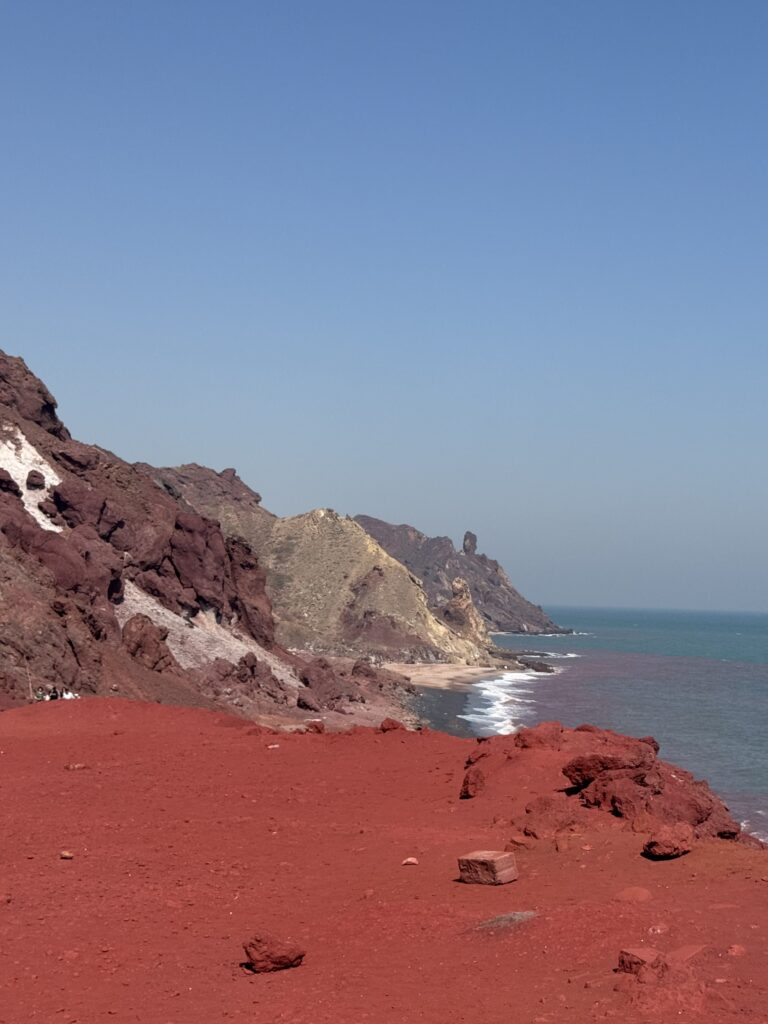
Behjati also said Iran’s physical beauty is like no other place and she knows it’s no less at risk of destruction than its people.
When she recently visited the Strait of Hormuz for the first time, she bottled up some of the silver and clay sand to bring home for her kids to touch. She hopes it wasn’t the last time.
“It’s breathtaking looking at it and I’m worried about every inch of that soil being destroyed,” she said. “But if this is a reason, if this is a way to [freedom], we can rebuild it. We can tell this story later. But right now, we have to get rid of this cancer.”
Suggested Articles
No related articles found.
There are many Americans that are supporting this unfortunate crises. Blood and money have flowed in an attempt to bring freedom to the brave and culturally significant Iranians in their quest for freedom. America is also in a crisis at home. There are events and killings that we could never have imagined taking place here just a few years ago. The world is in flux but the quest for freedom will never die or give up what has been so dearly secured for 250 years here. I hope and pray that America continues to be that light on the hill for the many that yearn for freedom around the world. If not us, then who? Pray for the beautiful country of Iran and the USA.
The stated cost of $25 Billion has no citation as to source. That figure seems very small considering the very high cost of conducting an air war thousands of miles away, using missiles and rockets that run into the hundreds of millions for each one.
If the reporter took the US government at their word about how much this cost, she should say so.
And if she did, she should look for a new profession.
Still, a lovely fluff piece.