



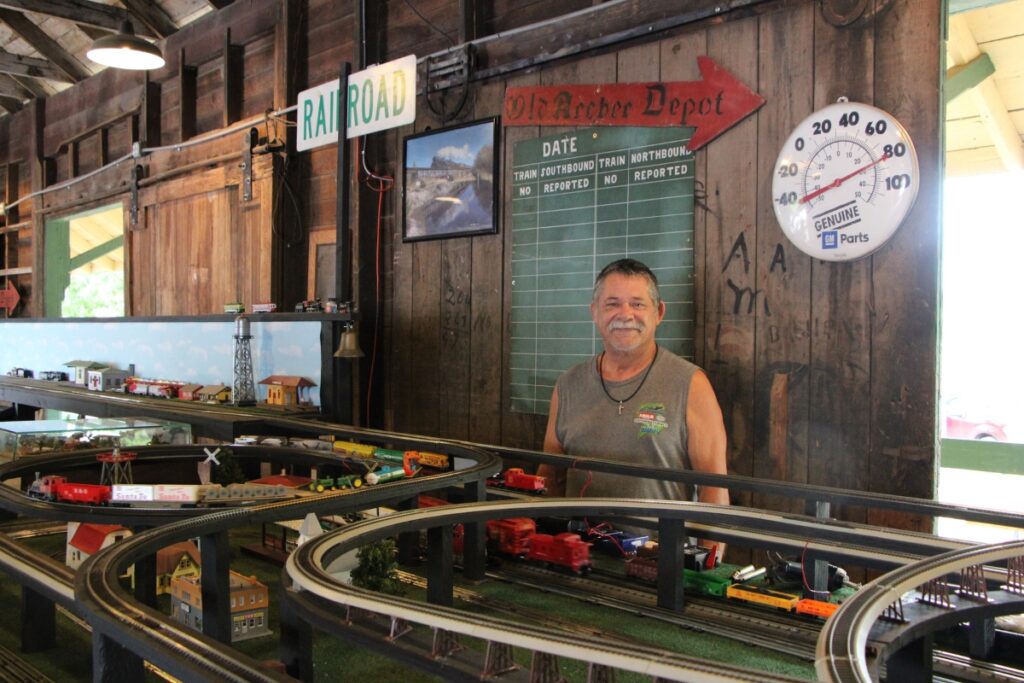
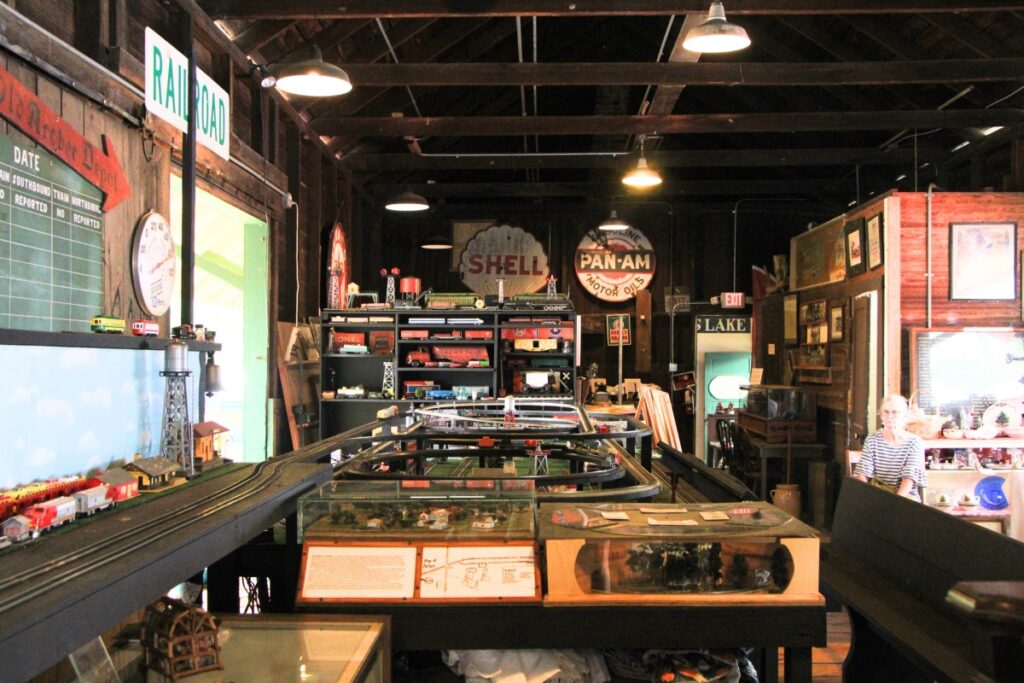
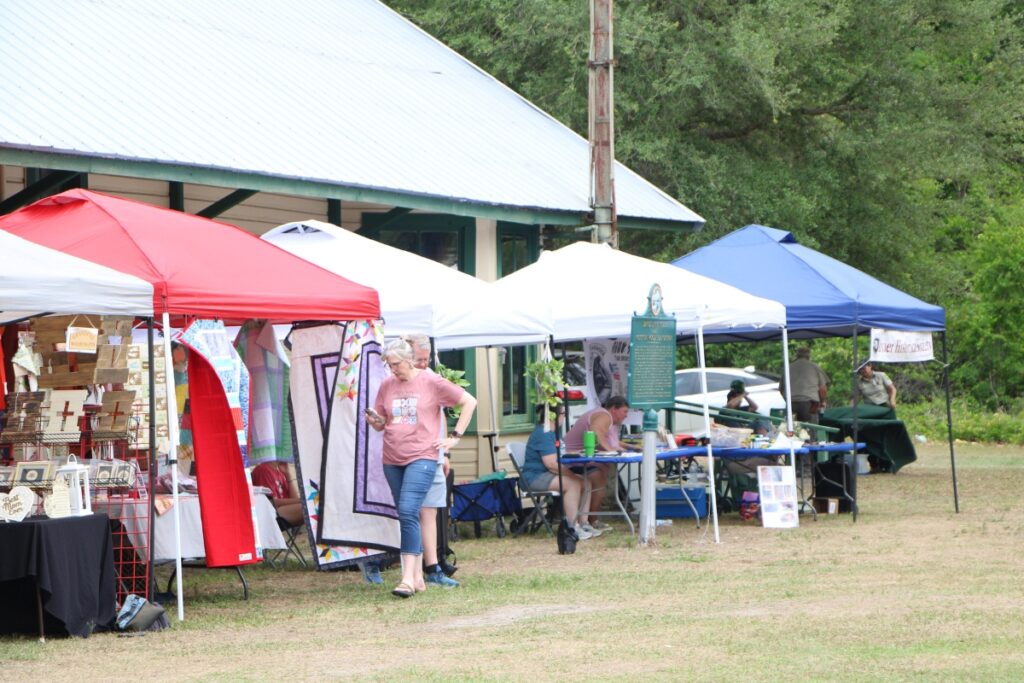
Choo chooing whistles and metal wheels screeching on “model” tracks sounded from the old Archer train depot on Saturday as the community celebrated its inaugural Train Day.
The Archer Historical Society hosted the event to raise money for preserving the depot. The building once saw train and train coming along tracks no longer there, including a one-way route to Cedar Key with the Florida Railroad. It now serves as the Archer Community Museum.
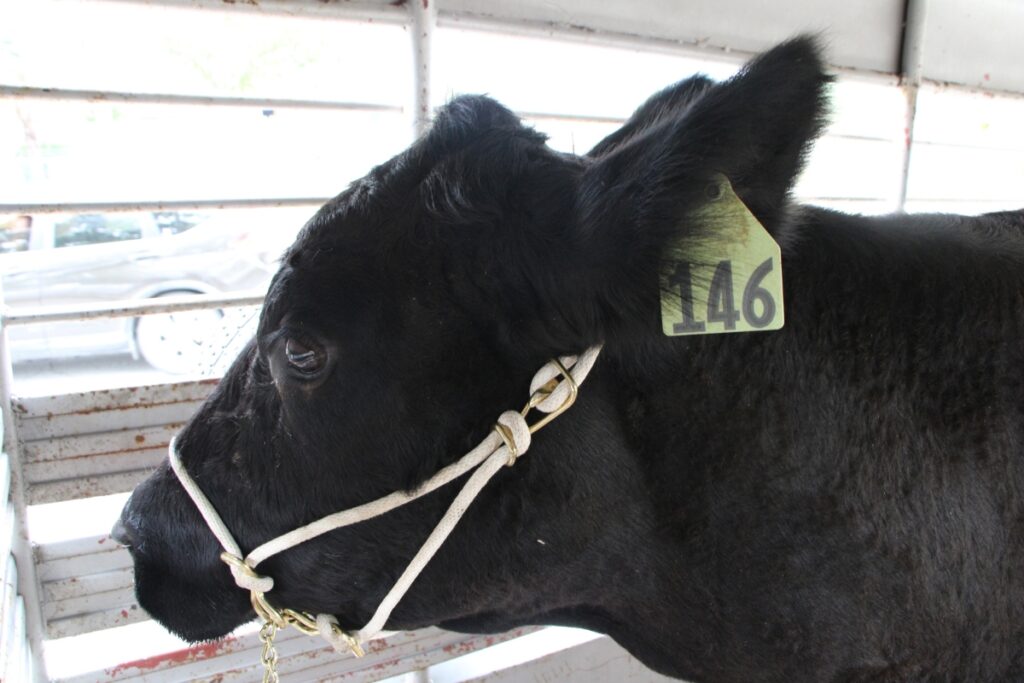
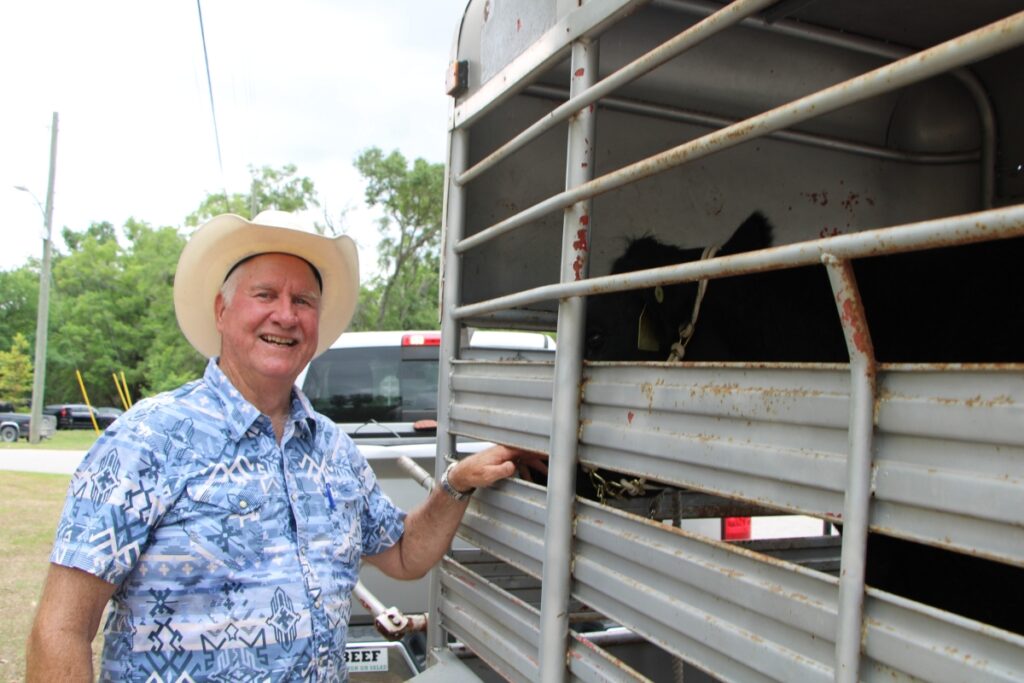
Around 150 people attended Saturday’s event at the museum, which featured historical displays, barrel train rides, farmers market vendors, live music, karaoke, encounters with Archer’s award-winning cow “Queenie” and a model train bringing the Florida Railroad to life.
Local historian Jonny Nelson followed up the festivities with a talk at the Archer Library titled, “When Archer had lots of trains,” detailing the city’s role in Florida’s railways and how they came to be.
“The Archer Historical Society plans to make [the depot] a focal point for the town’s history—when it will once again ring with laughter and see a variety of styles pass through its portals,” said Nelson’s wife, Andrea. “And that was today with all the laughter. It’s not operational, but it’s beautiful.”
From 1859 to 1932, Archer’s train depot was a hub along the Florida Railroad’s route, which ran a line of tracks east to west across the state from Fernandina Beach to Cedar Key. Archer’s foundry and abundance of phosphate resources were popular commodities to transport to coastal ports.
David Levy Eulee, a local plantation owner, namesake of Levy County and the first Jewish senator in the United States, built the railroad. It was one of the only built by slaves, according to Nelson, with Eulee using around 300 of his own slaves and renting slaves from neighboring plantations to complete the project.
Archer native Ann Green is the president of the Archer Historical Society. She said at the Train Day that her great-great-grandfather was in the meetings with Eulee when the city was named Archer and when Eulee started planning the railroad.
After running two sets of tracks for decades, Archer now only runs a north to south route. Sharing the city’s history through events like train day and preserving the depot building will help carry on Archer’s railroad legacy for generations to come, Green said. Although, she added that the legacy and stories of all who created the railroads can never be erased even without the museum.
“If this building blew away tomorrow, we still have the memories and history of those people,” Green said. “Some of us know the history, and we have a qualified passion.”
Suggested Articles
No related articles found.
Lillian, You did an outstanding task of publishing our Train Day event. I hope you will come again. There is lot of history in Archer and that is a well kept secret.