

To solve cases, Crime Stoppers of North Central Florida uses more sophisticated technology than a wanted poster and reward. But the modern system of anonymous, digital tips relies on a lot of the same elements: a financial reward and someone with information to share.
Each month, Crime Stoppers of North Central Florida (CSNCF) receives 60 to100 tips about active investigations or cold cases. These are vetted and sent to the corresponding law enforcement agency in Alachua, Gilchrist or Levy counties.
Bennett Latimer, vice chair for CSNCF, said the information chain (from tipster to call center to the local Crime Stoppers and then to local law enforcement) can result in an arrest in less than 20 minutes. That’s primarily for simple cases like a fugitive with an active arrest warrant—all law enforcement needs is a location to move in and verify.
No matter the case or speed, Crime Stoppers exists to facilitate and boost the flow of information between citizens and law enforcement. New members and recent changes aim to better accomplish that mission, all while maintaining anonymity.
“If everybody in the county knew that they could just pick up their phone and submit a tip without any fear of their name being put out there as the tipster, I feel like we could change a lot of crime in the county,” Latimer said.
In May, CSNCF rebranded from Alachua County Crime Stoppers. The group already covered two other counties, so the switch made sense. The maximum reward for a successful tip (one that leads to an arrest) was also changed from $1,000 to $5,000.
Latimer said $1,000 isn’t what it used to be when the group started in 1982, especially if you’re sticking your neck out.
The rewards and types of cases have expanded over time. Now, community members can send information on animal abuse, shoplifting, drugs or battery. The online tipline has a list of the different crimes. Tips can also be called in or submitted using the P3 Tips app.
CSNCF paid out that $5,000 maximum reward within the first month of the increase for a tip leading to the arrest of Henri Prichon Hart for a Mother’s Day stabbing death.
“It gives those people an opportunity to not be seen talking to law enforcement, and potentially, get rewarded for their courage,” Latimer said.
The group also sorts through a lot of bogus tips and conspiracies to find credible information, but effective tips move quickly to law enforcement.
Latimer said the tips get sent to multiple volunteers to ensure someone is always ready to send it along. It’s a lot of work, but he said it’s a dedicated board.
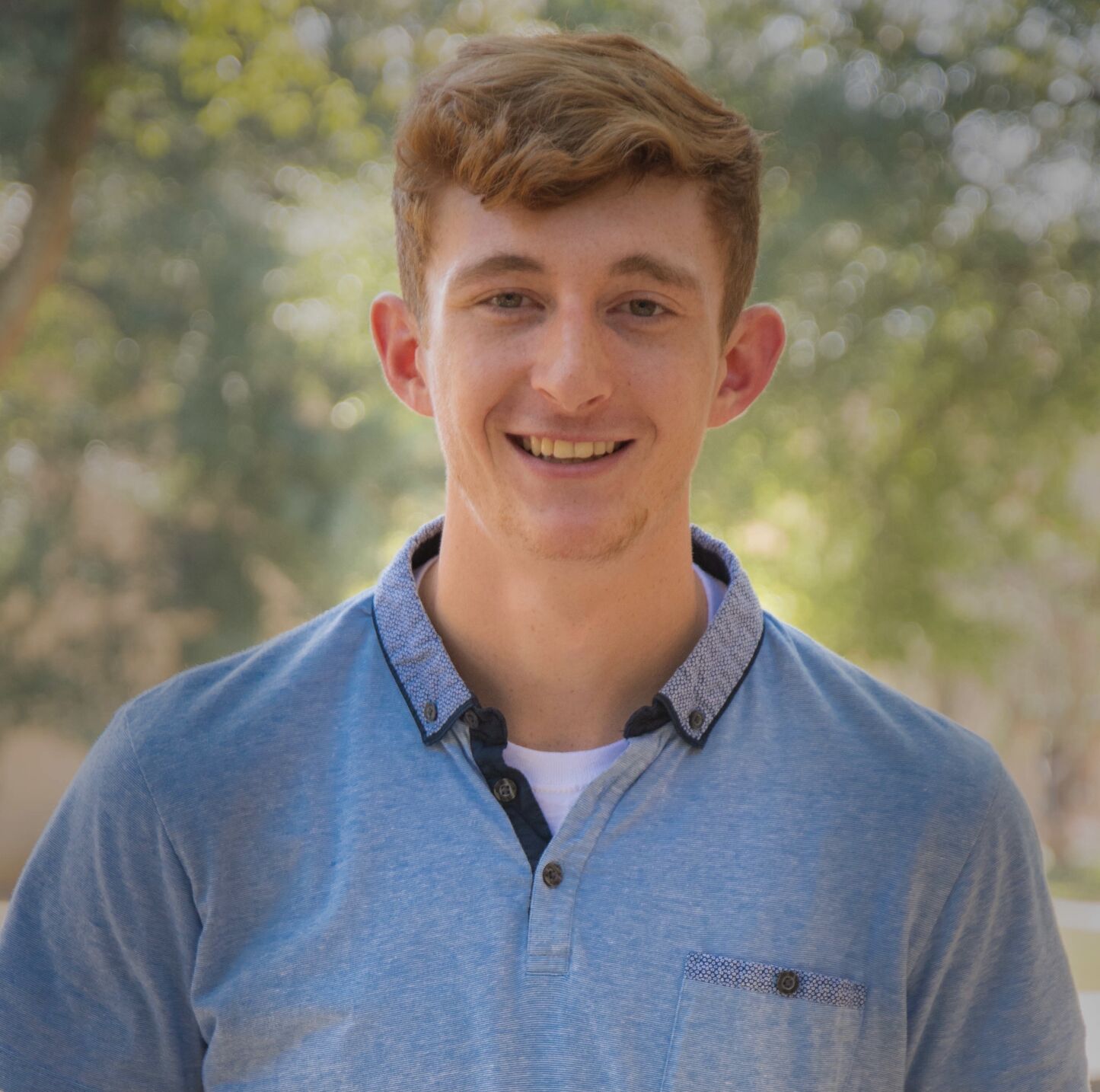
Latimer joined the board about three years ago. He got pulled in by Ward Scott, a local, conservative radio show host who died in 2024. Other new members have joined, along with a dedicated core who’ve volunteered for decades.
He said there’s probably a dozen regular volunteers, but CSNCF needs to double that amount to effectively attend community events, shake hands and inform people about the group.
“Everybody on the board cares so much about the cause that if they have to bow out, they’re at least trying to find us some more bodies to help keep the cause moving,” Latimer said.
He implemented official emails for the board members, digitized records and opened access to official designs and documents. He said the members had been gatekeeping by accident with the electronic systems.
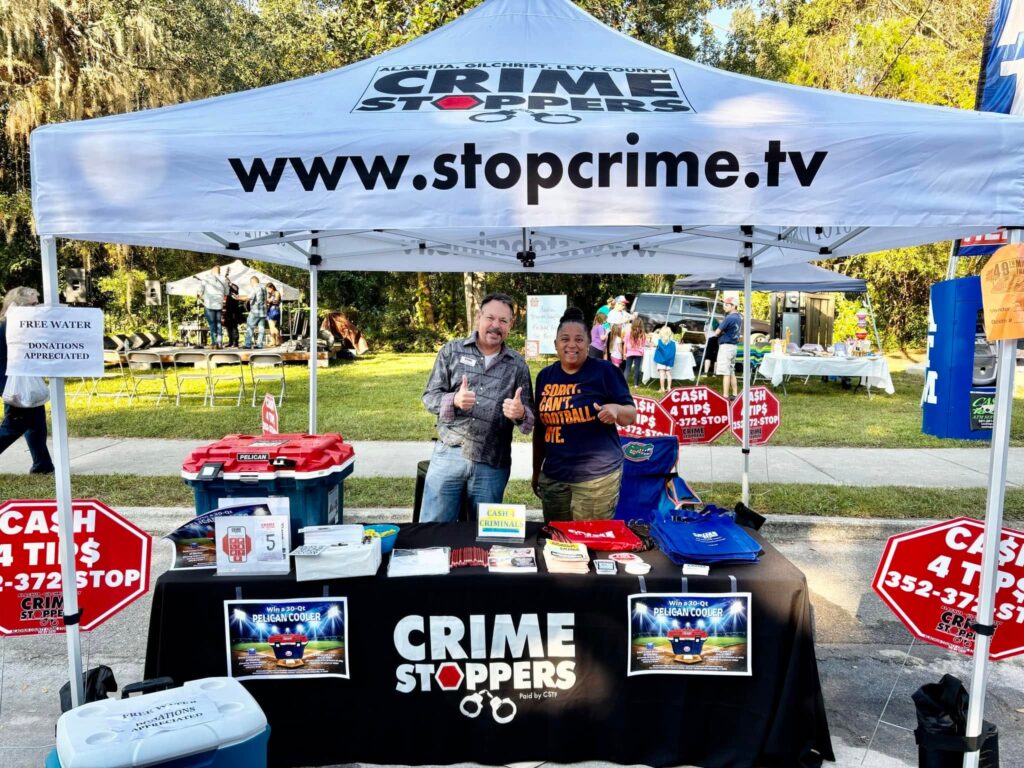
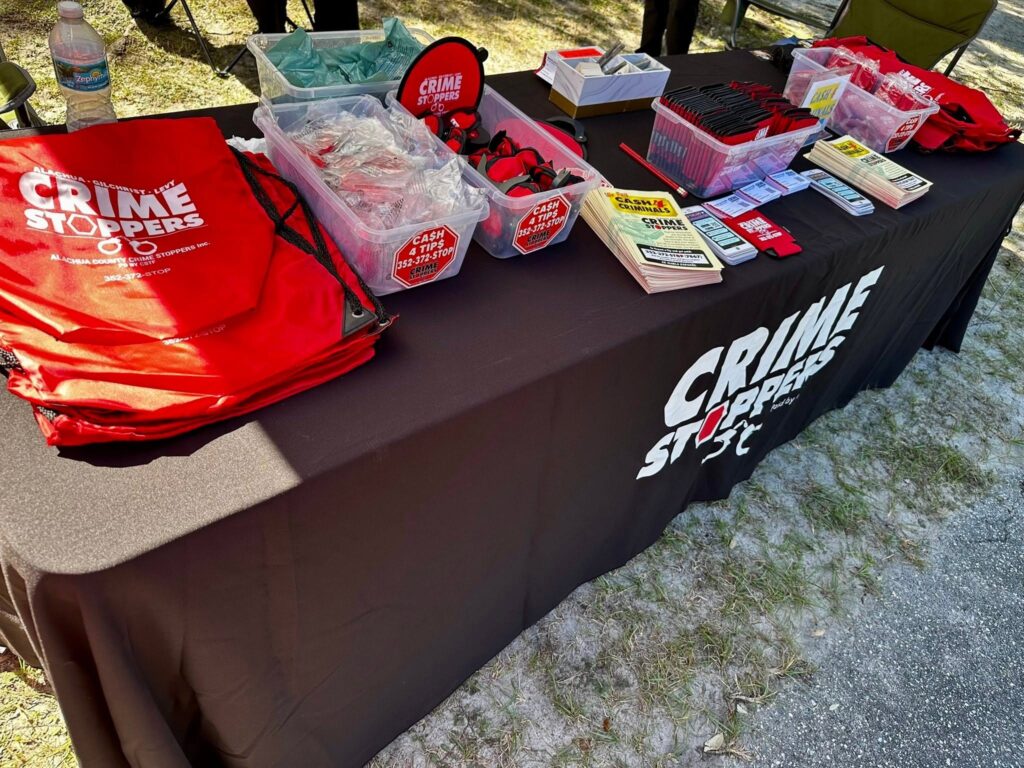
The recent rebrand was a big effort for the board this year, getting new merchandise, a pop-up tent and other details in line. Part of the volunteer work is ensuring they meet state regulations, including putting state funding information on the new branding, and keeping track of budgetary items.
Each state is different, but Latimer said Florida puts its support behind the local Crime Stoppers groups. Financing comes from the Crime Stoppers Trust Fund, and every pen, drawstring bag and koozie says so with “PD by CSTF.”
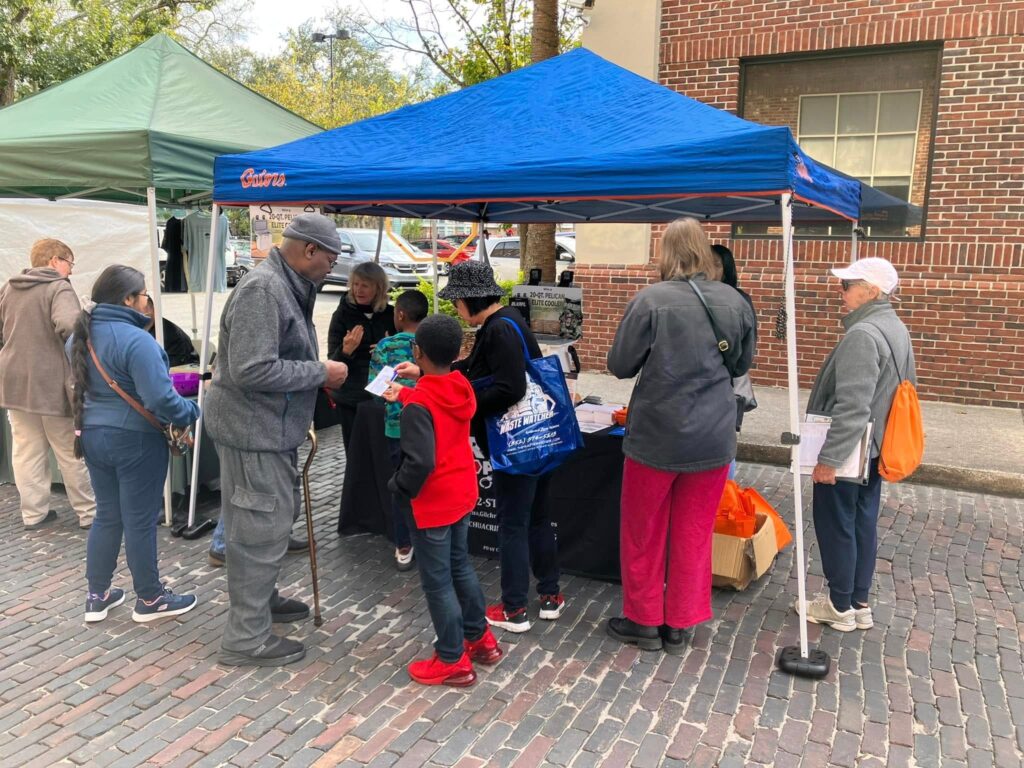
The group tables all year at community events and pushes out information on social media. But it’s not always easy to market the tipline to the residents with the right information.
“The communities that we need to reach are sometimes the hardest ones to market into because there are some neighborhoods in Alachua County that have a lot of violence, have a lot of crime, and violent crime, and so for us to market into those communities, it’s hard,” Latimer said.
People can also be quite skeptical that anything in today’s information age can stay anonymous. But Latimer explains that the call center for all Crime Stoppers in the United States is located in Canada. Even if the government wanted to find the name of a tipster, international subpoena law gets in the way.
If someone already distrusts law enforcement, he said they’ll equally distrust a group helping law enforcement like CSNCF. But Crime Stoppers must, and does, provide the anonymity, or it can’t actually stop crime.
“It’s the purpose for our organization,” Latimer said. “Without the anonymity, then it could just be straight through law enforcement.”