



- Alachua County reported $6.8 million lost to scams in 2025, with losses projected to rise to $8.6 million in 2026.
- Artificial intelligence helps scammers create convincing photos and audio, increasing scam credibility but not hindering investigations.
- Over 50% of scam victims in 2026 are aged 60 and older, as they are more vulnerable to phone and online scams.
The Alachua County Sheriff’s Office (ASCO) is warning residents that scams continue to prey on locals, resulting in $6.8 million of lost money in 2025 and a projected increase to $8.6 million by the end of 2026.
By comparison, all non-fraud property crimes (theft, burglary, robbery, criminal mischief and items stolen from vehicles) reached $2.8 million of lost dollar value in 2025 but are projected to fall just short of $1 million this year.
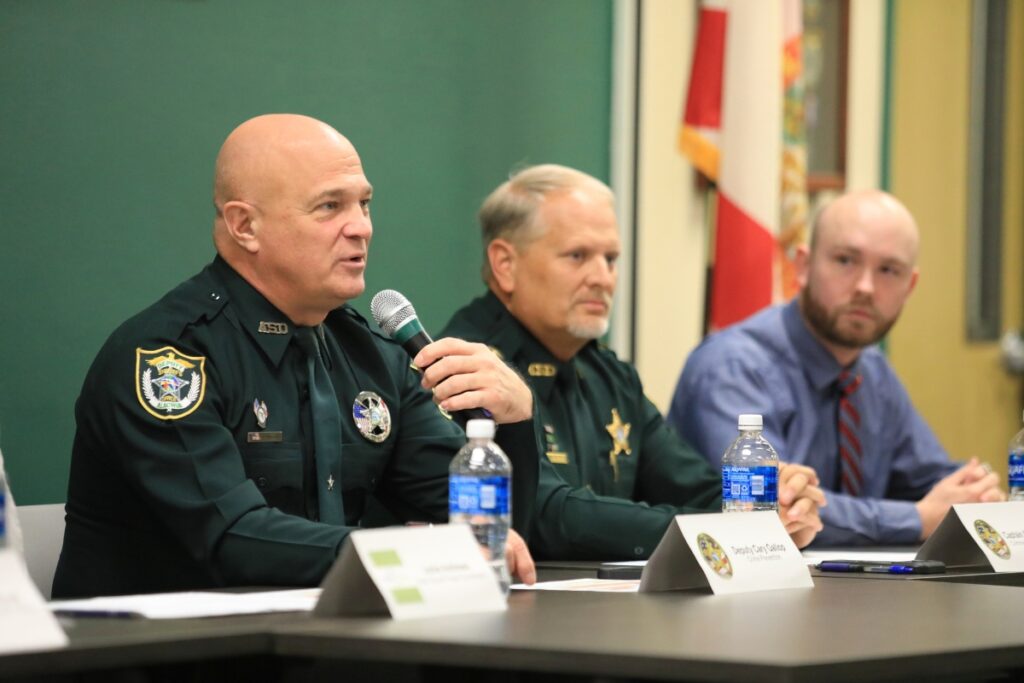
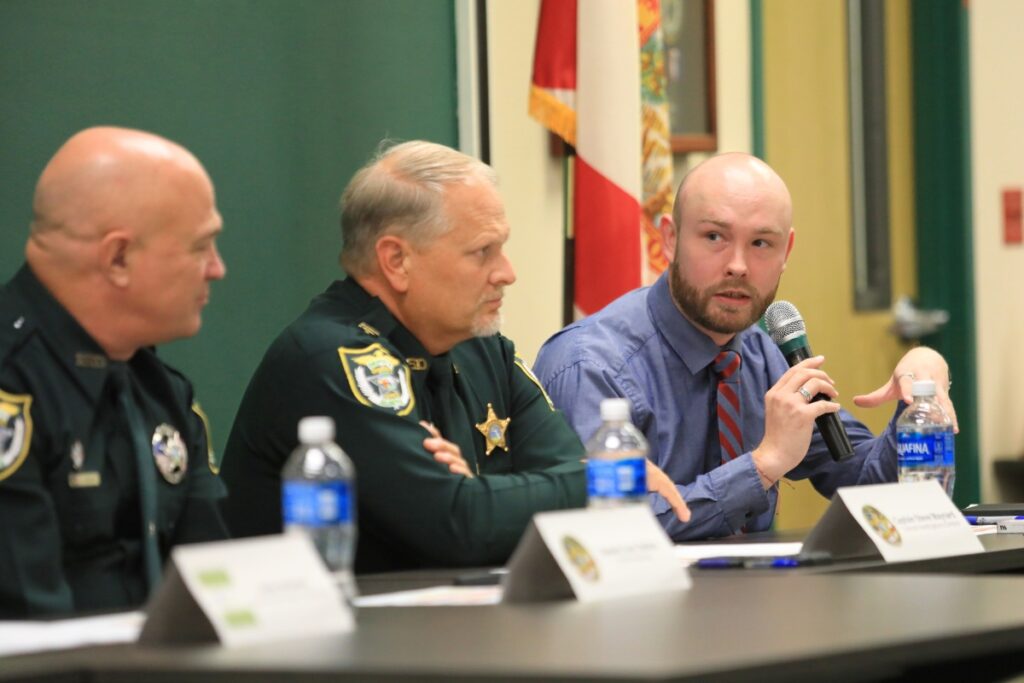
ACSO Det. Travis Parsons, at Tuesday’s Scam Prevention Press Conference, said artificial intelligence has aided criminals in creating more convincing scams, with generated photos boosting credibility. In some places, scammers have used AI to manipulate audio found on social media or voicemails to mimic someone’s speech.
Parsons said law enforcement also uses AI, but the biggest impact has been making victims fall prey. For now, the new technology hasn’t made it harder to investigate and pursue the criminals, he said.
ACSO had 93 scam investigations started in 2025 and estimates 136 cases will be filed for 2026.
Parsons said that as law enforcement becomes more familiar with the common scams targeting citizens, detectives can better investigate and close cases. He said the percentage of solved cases has increased, but scammers continue to vary their tactics as well.
The number one factor to determine the case outcome, Parsons said, is up to the victim and their family: reporting the scam immediately.
“The sooner that it gets reported, the better chance we have to investigate it, the better chance we have to hold the right person responsible, and if you have suffered loss, the sooner we can get the right resources to you in order to care for you after this traumatic event and after this process,” Parsons said.
The ACSO numbers include only cases handled by the sheriff’s personnel. The Gainesville Police Department also tackles a large volume of scam investigations. Earlier this year, the department announced the sentencing of a scam courier who helped defraud a Gainesville man of $200,000 in gold that was never recovered.
Many scams and elderly fraud cases go unreported to law enforcement, greatly boosting the probable impact on locals.
At a Tuesday press conference, Alachua County Sheriff Chad Scott said scammers succeed by isolating victims, and again, when crimes go unreported.
“Every report we receive helps us connect the dots, identify trends, build stronger cases, and ultimately puts us in a better position to stop these criminals from victimizing someone else,” he said.
The elderly bear the largest brunt of these scams—with those 60 years and older making up just over 50% of ACSO’s 2026 numbers and a much larger percentage in 2025.
ACSO and Elder Options staff gave reasons for the disproportionate elderly impact, including simply having more free time. Phone scams remain common, and Deputy Cary Gallop said elderly people often have extra time and perhaps sit around hoping for a phone call.
He said generational differences around answering an unknown number and not wanting to be rude add to the problem. Lastly, once on the phone, scammers try to force urgency and immediacy to get money and prevent victims from having time to think.
But emails and texts are also frequent grounds for scams.
Gallop said a lot of personal information is available publicly, so a scammer could know details about you and your life that lend authenticity. He said it’s always beneficial to hang up, find the ACSO non-emergency number and dial to ask if you’re being scammed.
Even ACSO phone numbers, badge numbers and names are being spoofed. For any phone call, including from a seeming official organization (law enforcement, courts, tolls), people need to slow down and take the time to think—even and especially if the person you’re speaking with is urging speed.
The FBI reports that scammers impersonating government entities stole $413 million in 2025 from residents 60 years and older.
Scott put it bluntly: “We will not call you if we’re looking for you.”
Deputies show up with a knock on the door if an arrest warrant has actually been issued. Law enforcement doesn’t accept cash, gold, gift cards or cryptocurrency to absolve the subpoena, warrant or jury duty violation.
Here’s a list of scam prevention resources. Consider taking a minute to copy and send to a loved one or friend.
- Elder Options (https://agingresources.org/)—The Florida designated area agency on aging, Aging & Disability Resource Center, and helpline (1-800-262-2243). Providing local advocacy and resource coordination. Serving Alachua, Bradford, Citrus, Columbia, Dixie, Gilchrist, Hamilton, Hernando, Lafayette, Lake, Levy, Marion, Putnam, Sumter, Suwannee and Union counties.
- Alachua County Sheriff’s Office (https://acso.us/)—Scam investigations and prevention for residents in unincorporated Alachua County. Call if you think you’re being scammed (352) 955-1818 option 5).
- Gainesville Police Department (https://police.gainesvillefl.gov/Home)—Scam investigation through Financial and Organized Crimes. Dispatch Non-Emergency (352-955-1818) and GPD Front Desk (352-393-7500).
- Federal Trade Commission (https://www.ftc.gov/)—Consumer alerts that detail various scams and a newsletter to stay abreast of changes.
- Internet Crime Complaint Center (https://www.ic3.gov/Home/Index)—Report any complaints if you’ve been contacted by a potential scam and access fraud brochures, reports and alerts.
- AARP (https://www.aarp.org/money/scams-fraud/)—Blogs about common scams and how to protect yourself.
Suggested Articles
No related articles found.