



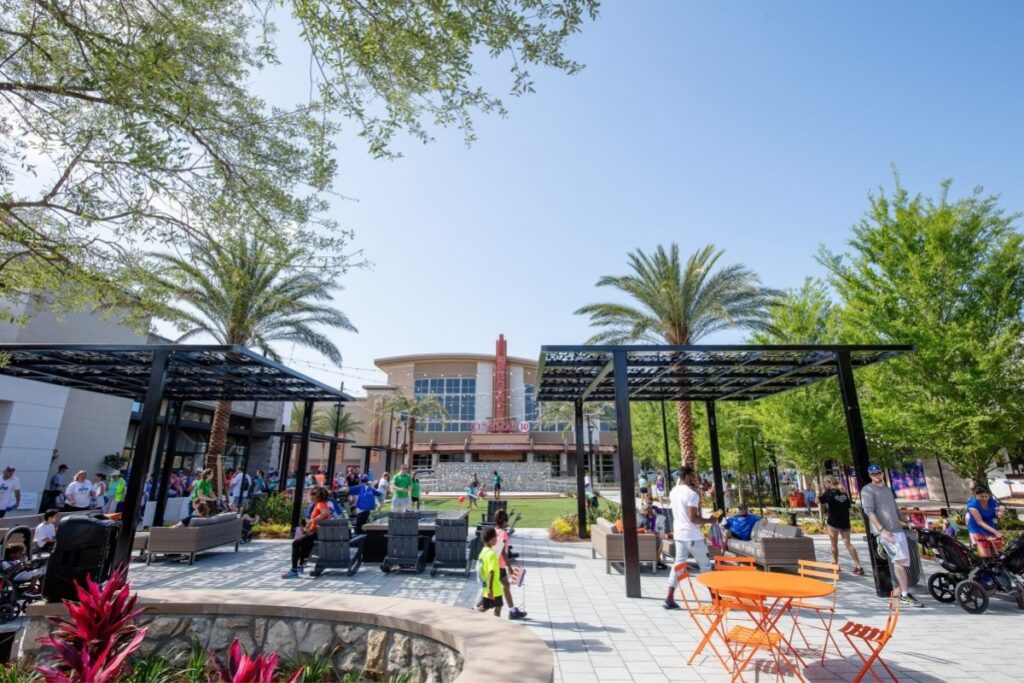
- Celebration Pointe's bankruptcy plan depends on primary investor Patricia Shively contributing over $50 million to pay creditors and avoid Chapter 7 liquidation.
- The bankruptcy involving three Celebration Pointe entities has lasted over 26 months due to complex ownership, multiple creditors and ongoing lawsuits.
- A hearing on July 14 will review the third bankruptcy plan amid disputes, with risks of uncoordinated liquidation affecting the community and property values.
Entities managing Celebration Pointe filed a third version of a liquidation plan in late June as it tries to get nine major creditors, plus multiple parties with other claims, in agreement and avoid an unstructured Chapter 7 liquidation, which the plan says would likely be the next step if parties fail to agree on the current proposal.
But the entire plan rests on Patricia Shively, the primary investor in Celebration Pointe, contributing more than $50 million to pay off creditors in the following years. Shively has already invested more than $100 million into the development over the past 10 years and sued Celebration Pointe entities and her own financial advisor in 2025 for allegedly scamming her into the deal.
Scott Shuker, bankruptcy attorney for the Celebration Pointe companies, said in the bankruptcy filing that four creditors have agreed in principle to the plan. In a June 30 submission to the bankruptcy court, he said he believes the Florida Department of Transportation (FDOT) and Bank of America will also agree to the plan.
But in a Tuesday letter, an attorney for FDOT filed arguments against the disclosure statements attached to the plan. The attorney noted that negotiations were still underway and the pleading was filed in case those talks stall.
“The Debtors have filed a pleading that clearly has been heavily negotiated and has substantial disclosures that are not found in prior pleadings,” the FDOT attorney said.
A non-evidentiary hearing is scheduled for July 14 to discuss the bankruptcy plan, which emphasizes the impacts if forced into a Chapter 7 bankruptcy. Shuker said the result could be an uncoordinated liquidation with potential to hurt the community and drop property values around Celebration Pointe, a retail and residential development.
The bankruptcy proceedings have now stretched more than 26 months. Shuker told Mainstreet in 2024 that he anticipated the proceedings to last only nine months, but the Celebration Pointe finances included interlocking ownership, multiple creditors and several lawsuits.
The three entities that have filed for bankruptcy are Celebration Pointe Holdings LLC, Celebration Pointe Holdings II LLC and SHD-Celebration Pointe LLC.
Alachua County hired outside law firm Marks Gray to track the bankruptcy because the case was “far from routine,” and the firm remains under contract with the county more than two years later. The three Celebration Pointe entities that filed for bankruptcy owed approximately $780,000 in taxes.
Plus, Alachua County built its sports and events center on the site in partnership with Celebration Pointe, leaving questions about having the infrastructure to coordinate large events.
The retail and residential development was managed and operated by Viking Companies and owner Svein Dyrkolbotn, who filed for personal bankruptcy in October.
The case was further complicated when Shively sued Dyrkolbotn, Viking Companies and her personal financial advisor for fraud, claiming she had been an “easy mark.” Besides investing $100 million of her own funds, Shively also served as a personal guarantee against another $300 million used to build Celebration Pointe.
That lawsuit remains active but without much action. A final mediation deadline to reach an agreement is set for Nov. 30. The last action for the case was in December when the attorney for Viking Companies withdrew from the case due to “irreconcilable differences.”
Since the bankruptcy began, a chief restructuring officer has been installed to manage the proceedings, and Shuker references the change by stating that the three bankrupt Celebration Pointe entities are not taking direction from or acting on behalf of Dyrkolbotn.
Shuker adds that the entities also aren’t taking direction from Shively, but she’ll play a $50 million-part in the bankruptcy plan if it’s to succeed.
If approved, the bankruptcy plan would have Shively produce a minimum of $8.5 million at the effective date to be paid toward the different creditors. Shively would then continue to pay more than $50 million over time.
Shuker highlights that these “Shively Settlements” aren’t under the jurisdiction of the bankruptcy court. The settlements would be outside agreements with the creditors, but he said the bankruptcy plan would be insolvent without the settlements, resulting in the Chapter 7 liquidation.
The court asked the bankrupt Celebration Pointe entities in early June why the case should not be dismissed and forced to liquidate. That prompted the third bankruptcy plan to take over from the second plan.
“The Court was understandably frustrated by Debtors’ lack of progress toward confirmation, and the Plan was contradictory and confusing,” Shuker said.
The July 14 hearing might show if the third plan is any less confusing or if a liquidation might come.
Suggested Articles
No related articles found.
Charles Ponzi would be proud of this one.
Modern Florida real estate fraud has evolved from selling swampland to engineering complex, high-debt failures like the Celebration Pointe bankruptcy, which involves hundreds of millions in debt and alleged financial advisor malfeasance. The situation exemplifies a “modern Florida grift” where interlocking shell companies and bankruptcy filings shield developers while forcing investors to pour more money into failing projects.
Maybe it should be renamed Liquidation Pointe.
What a spectacular scam!
MSNews should dig into approval process of CP at the start. Read the meeting minutes. Why did the County approve such a big commercial development right next to Butler Plaza’s approved expansion? Was it envy or bitterness for the City taking county property tax revenues when BP annexed itself? Then why not approve Springhill mega project up on 39th Ave at I-75, it’s further away?
If Mrs. Shively doesn’t have the 50 mil, or doesn’t care, then fine. New owners can collect the rents.
How does all this mess affect the current tenants at Celebration Pointe? Is there any danger of, say, Spurrier’s closing down due to bankruptcy of Celebration Pointe? I hope not.
Celebration Pointe is far from perfect (and could’ve been better), but it’s a nice destination on the Archer Road corridor. The retail tenants are curious choices for such a center. I would’ve preferred to see some of those upscale Butler North stores like REI, Sephora, and Anthropologie located at Celebration Pointe. The Nike store and whatever that other store across from it that sells flip flops and Yeti cups just don’t quite fit in to the vision of what Celebration Pointe could’ve been.
Better yet, imagine how cool CP would be if it was primarily dining and entertainment? What if Blue Gill had relocated there? Ford’s Garage? And that Irish Pub that’s been promised to Bulter North for years? The parking garage at CP would be full all the time and it would be a huge destination for locals and folks passing through on I-75. It’s a shame that the leadership of CP is such a disaster. Spurrier’s and Regal Cinema are the only two things holding it together. Lose one or both of these and I can see CP becoming something boring like a medical park.
This development was doomed from the beginning: difficult to get into and get out of, and tenants that no one really needs to do business with. I do feel bad for Mrs. Shively. That’s a lot of money to lose.