

Editor’s note: This is the third of three questionnaires that Mainstreet will publish, giving local challengers for Florida Legislature seats the chance to tell constituents how they would have voted had they attended the 2026 session.
The first and second questionnaires include candidates for Florida House District 22 and Florida House District 21. Mainstreet will also publish a set of Meet the Candidates questionnaires following the qualifying period.
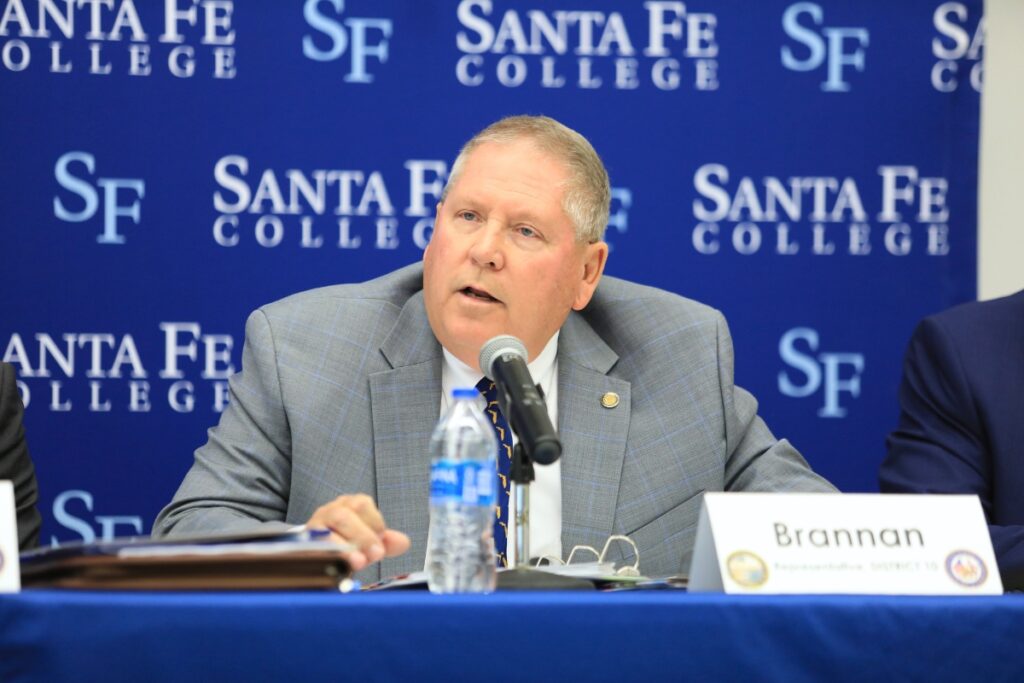
State Rep. Chuck Brannan hit his term limit after easily winning reelection in 2024 with 74% of the vote. Brannan was the first Union County resident sent to the Florida Legislature in 50 years.
“I always had in the back of my mind that I wanted to be in the Legislature,” Brannan told his peers in a farewell. “So the stars sort of lined up. My predecessor was terming out, as I am now, and I started knocking on doors in 2017 for an open seat.”
District 10 includes Baker, Bradford, Columbia and Union counties, along with the northern part of Alachua County, including the cities of High Springs, Alachua and Waldo.
Now, three candidates are lined up to earn those voters’ trust.
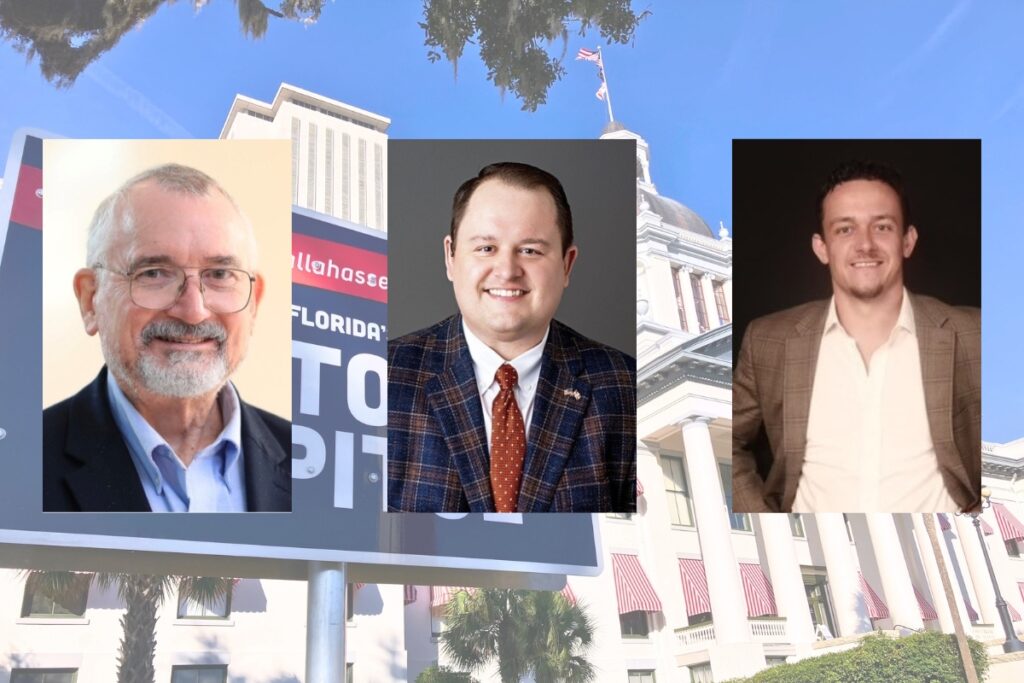
Republican candidates Marshall Rawson and Chase Brannan, son of the incumbent, both launched campaigns in January 2025.
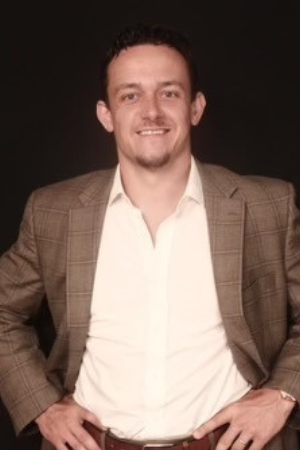
Rawson lives in Bradford County and operates Free State Growers, a North Florida agricultural business. He graduated from UF’s Levin College of Law in 2022 and has served as aide to former Republican U.S. Congressman Paul Broun and legal assistant to Florida Secretary of State Cord Byrd.
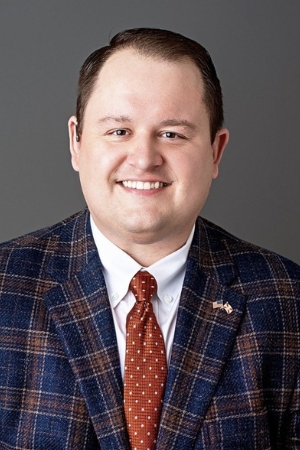
Brannan lives in Baker County and earned a bachelor’s degree from UF for Agricultural Education and Communication. He’s a real estate business owner and served as director of intergovernmental affairs under former Florida CFO Jimmy Patronis.
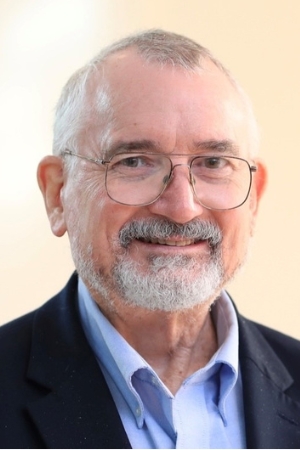
Joseph Thornton also started his campaign last year and lives in Alachua County. He’s an American Solidarity Party candidate and a partially retired psychiatrist.
Thornton worked as associate chief of staff for mental health at the North Florida VA and medical executive director at both Union Correctional Institution and the North Florida Evaluation and Treatment Center.
The candidates were all given the following questions. The answers are printed verbatim.
- Why would you or wouldn’t you support HB 1451 and the GRU Authority preemption?
- What bills passed that you wish had failed?
- What bills do you wish you could have co-sponsored?
- How do you view the current relationship between the House and Senate given two years without passing a budget during the normal session?
- What considerations would guide you through the upcoming special session on property tax reform?
- What are your thoughts on HB 991 (proof of citizenship to vote) and would you vote for it?
Why would you or wouldn’t you support HB 1451 and the GRU Authority preemption?
Brannan: I would support HB 1451 because ratepayers deserve accountability. When a utility serves families inside and outside city limits, all customers should not be stuck paying for local mismanagement, rising costs, or political dysfunction. Local control matters, but it is not a shield for bad decisions. My test is simple: does it protect the public, improve transparency, and respect the people paying the bills? If the answer is yes, I support it. Government should defend taxpayers and ratepayers first. Florida works best when public bodies live within their means, tell the truth about their finances, and remember they serve the people, not themselves. If a local system is failing the people it serves, the state has a responsibility to step in, restore accountability, and keep the focus on reliable service and responsible stewardship.
Rawson: I would have voted “yes” on HB1451.
All rate payers, not just those who live within Gainesville City limits, should have been represented and should have had a voting voice when it comes to the GRU governing body.
This preemption gives representation for all of those using GRU services. Moreover, it should cut down on waste/ mismanagement, therefore lowering the cost to consumers.
Thornton: As a candidate for Florida House District 10, I believe strongly in local control, transparency, and accountability. HB 1451 and the GRU Authority preemption raise concerns because they shift decision making away from the people most directly affected. Gainesville residents have repeatedly expressed their desire for a say in how their utilities are governed. When the state overrides that voice, it sets a precedent that any local government could face similar intervention.
This session continued a broader pattern of preemption — including bills like HB 27 (state-imposed term limits) and HB 39 (RV park assessments) — that reduce local authority in ways that directly affect rural counties. HB 1451 fits into that trend.
I would support reforms that strengthen accountability and financial transparency, but I would not support preemption that removes local authority without demonstrating a compelling and unavoidable need.
What bills passed that you wish had failed?
Brannan: I would not have voted for HB 399. Florida needs controlled, slowed, and responsible growth. I am always wary of Bills that preempt local control. The best decisions are usually made closest to the people affected, while still balancing infrastructure, water resources, rural character, and private property rights.
Rawson: HB 691 Regarding Agriculture Enclaves. In short, this will literally pave the way for more of Florida’s Agricultural lands to be paved over. We must defend our domestic food security, Florida greenspace, our cultural heritage and by extension our economy that receives $137 Billion Dollars annually from Florida Agriculture.
Thornton: I am concerned about bills that further erode home rule, impose unfunded mandates on rural counties, or reduce transparency in government operations. For example, HB 39 limits local tax discretion, and HB 27 imposes structural changes on local boards. These measures weaken the ability of District 10 communities to govern themselves.
What bills do you wish you could have co-sponsored?
Brannan: I would have gladly co-sponsored SB 250, Rural Communities, because it supports infrastructure, economic development, and fiscally constrained counties. I also would have supported SB 386, Farm Equipment, because farmers need timely repairs when equipment under warranty fails.
Rawson: While work and my own campaign has taken the bulk of my attention this year, here are a list of bills that I would have likely cosponsored:
HB 339 – Miller (Advertisement of Harmful Vaccines)
HB 433 – Alvarez/Johnson (DACS)
HB133 – Sirois (Minimum Age for Firearm Purchase)
HB 6029 – Sirois (Risk Protection Orders)
HB 441 – Kendall (Conservation Lands)
HB 455 – Black (Protection of Historic Monuments and Memorials)
and much of Berny Jacques bills
Thornton: I would have cosponsored bills strengthening springs protection, rural mental health services, and prescription drug transparency such as HB 697. I believe in protecting human dignity and fiscal responsibility, so I support reforms ensuring fairness in death penalty cases, legislation addressing AI’s impact on jobs, and oversight accountability to protect detainees from abuse.
How do you view the current relationship between the House and Senate given two years without passing a budget during the normal session?
Brannan: The relationship looks strained, and the result is the budget not being completed during regular session. Healthy debate is part of the process, but two straight years without finishing a budget on time is not a good practice. The House and Senate can disagree on spending and policy, but they still have a constitutional duty to govern. Florida has been blessed with stronger fiscal footing than many states. Floridians expect disciplined, conservative governance. That means honest negotiations and responsible budgeting that finish the people’s business during regular session and provide certainty and stability. I am encouraged that the House budget proposal came in below the Senate’s offer. If they meet in the middle, a lower final budget will be better for Florida’s taxpayers.
Rawson: I think the balance of power is a good thing. The only thing that I would change is that our State Senate, like the U.S. Senate, should be apportioned based on geography rather than population – unfortunately, bad US Supreme Court precedent from the Warren Court eroded these principles. Our U.S. Founders were wise when they drafted the New Jersey Virginia Compromise that gave both high population centers and rural communities equal representation.
Thornton: The inability of the House and Senate to pass a budget during the normal session for two consecutive years reflects a breakdown in coordination and shared responsibility. Floridians expect their elected officials to negotiate differences, not allow them to stall essential functions of government. A budget is the most important policy document the Legislature produces; it determines, whether counties can plan, schools can hire, and agencies can operate.
This year’s delays were especially challenging given major policy changes affecting local governments — including SB 1366/HB 145, which increases local liability exposure, and housing and land use preemptions that require counties to adjust quickly. When the chambers cannot reach an agreement during the regular session, it forces rushed decisions in special sessions and reduces transparency for the public.
As a representative, I would work to strengthen communication between chambers and ensure the budget process remains predictable and respectful of rural communities.
What are your thoughts on HB 991, proof of citizenship to vote, and would you vote for it?
Brannan: Yes, I would vote for HB 991. Only American citizens should vote in American elections. That is a basic standard, and Florida voters deserve confidence that our elections are secure, lawful, and worthy of public trust. Protecting the integrity of the ballot is common sense. At the same time, the state should implement any new requirement clearly, fairly, and efficiently so eligible voters are not trapped in confusion or unnecessary bureaucracy. We should be able to verify citizenship, maintain accurate voter rolls, and keep the process transparent without creating needless obstacles for lawful voters. Florida should lead on election integrity and public confidence, and I believe HB 991 moves in that direction.
Rawson: I would have supported the bill. Counties should not be able to circumvent immigration law and election integrity. A uniform system puts every citizen’s vote from every county on an even playing field.
Thornton: Election integrity is essential, but so is fair access for every eligible voter. HB 991 requires proof of citizenship in ways that may unintentionally burden lawful voters — especially seniors, rural residents, low-income individuals, and those without passports. Most Floridians are already verified through existing state systems when they obtain a driver’s license or state ID. Adding additional federal documentation requirements risks creating barriers without clear evidence that they are needed.
This session also saw election-related changes, such as HB 27, which alters local governance structures, and adjustments to mail ballot and registration procedures. These shifts make it even more important that new requirements be narrowly tailored and evidence based.
I would not support HB 991 in its current form. I would support bipartisan efforts to strengthen election security while ensuring that every eligible Floridian can cast a ballot without unnecessary obstacles.
What would guide you through the upcoming special session on property tax reform?
Brannan: My philosophy is simple: keeping our state clean and our fiscal house in order. Florida taxpayers deserve real property tax relief, not talking points or political slogans. Families, homeowners, farmers, and small businesses are being squeezed, and they need meaningful relief that lets them keep more of their hard-earned money.
This issue is personal to me because I am a homeowner and have served in state government on behalf of taxpayers. During my time at the Florida Department of Financial Services as Director of Intergovernmental Affairs, we worked to be responsible with public dollars and find savings for all Floridians. That experience taught me tax reform must be done the right way.
We cannot cut first and leave communities scrambling to cover law enforcement, fire rescue, roads, and schools, especially in rural Florida. We need relief that protects taxpayers, preserves essential services, and keeps Florida affordable, competitive, and financially strong. Immediate tax relief for the fall ballot is a must.
Rawson: I stand with our governor and property owners when it comes to property tax reform –unfortunately, not all of Tallahassee does. County government should not be in the process of forcing longtime homeowners out of their home because property appraisers reassess the values of those homes at a greater amount. This increase in assessed home value and, by extension, increased property taxes is a result of 1700+ people moving to the state of Florida every day. The issue of unsustainable immigration into the state of must be addressed. Floridians should not have to pay for this, nor should they be forced out of their homes in order to do so.
Thornton: Property tax reform must begin with a clear understanding of how changes will affect rural counties, homeowners, and local services. District 10 counties rely heavily on property taxes to fund law enforcement, EMS, schools, and infrastructure. Any reform that reduces local revenue without providing replacement funding risks weakening essential services.
This year’s legislation — including SB 1366/HB 145, which increases local liability exposure, and HB 39, which affects local tax authority — has already tightened county budgets. These pressures must be considered when evaluating any new property tax structure.
My first consideration will be protecting homeowners, especially seniors on fixed incomes and working families facing rising insurance and housing costs. Relief should be targeted, sustainable, and designed to prevent unintended consequences such as shifting the burden onto renters or small businesses.
Second, I will evaluate how proposals affect local government autonomy. Counties must retain the flexibility to meet their own needs. Third, I will look for reforms that promote fairness and predictability. Property owners deserve stability, and counties deserve a revenue structure that allows long-term planning.
Finally, I will prioritize transparency, so the public understands who benefits, who pays, and how essential services will be sustained.
Suggested Articles
No related articles found.