

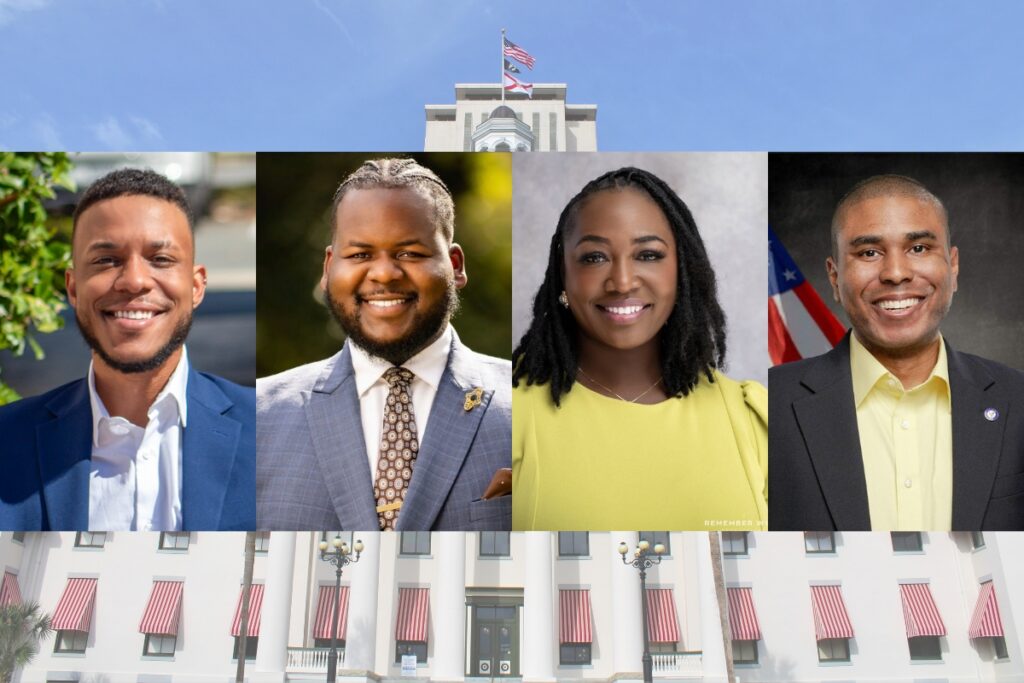
- Five Democratic candidates, including Malik Moore and Xavier Monroe, are competing for Florida House District 21 after Rep. Yvonne Hinson announced her retirement in 2026.
- All candidates oppose HB 1451's GRU Authority preemption, criticizing state override of local voter decisions and lack of transparency.
- Candidates criticized recent bills that restrict voting access and local control while supporting legislation on voting rights, healthcare, and environmental protections.
- They all expressed concern over the Florida Legislature's failure to pass timely budgets for two years, emphasizing the negative impact on public services and governance.
Editor’s note: This is the first of three questionnaires that Mainstreet will publish, giving local challengers for Florida Legislature seats the chance to tell constituents how they would have voted had they attended the 2026 session.
The second and third questionnaires include Florida House District 20 candidates and Florida House District 10 candidates. Mainstreet will also publish a set of Meet the Candidates questionnaires following the qualifying period.
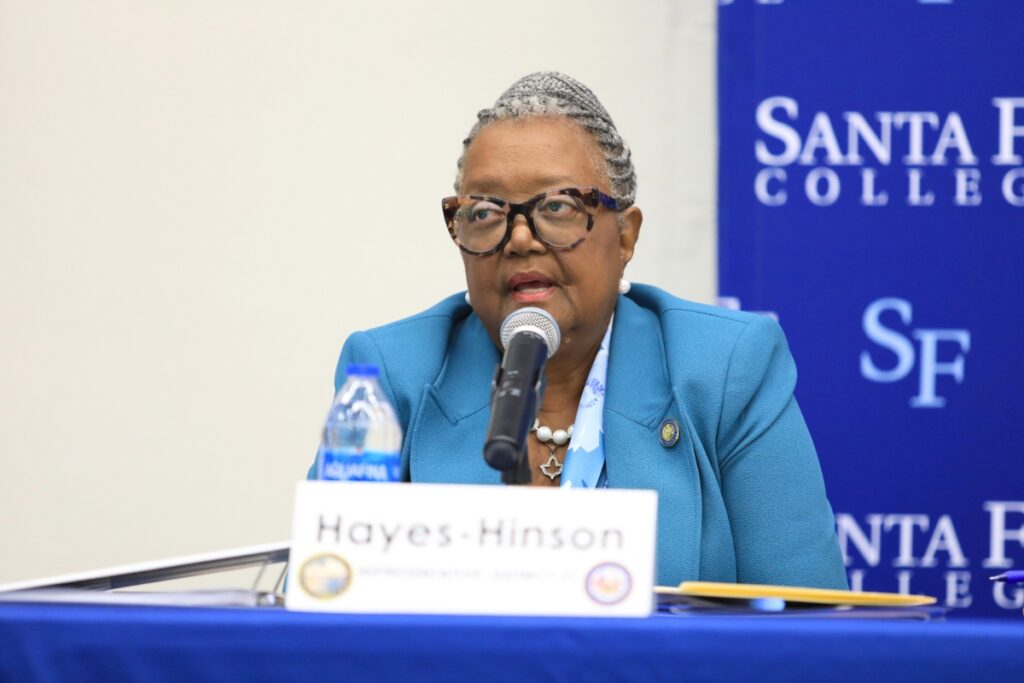
A crowded field of five Democratic Party candidates will vie for the Florida House District 21 seat in August, with the winner potentially replacing current state Rep. Yvonne Hayes Hinson.
So far, no Republican Party candidates have filed to run. Hinson represents one of the few blue districts in the Florida House—and the only one that is currently part of the Alachua County Legislative Delegation and Marion County Legislative Delegation.
Hinson announced in September that she would step down and not seek re-election. Her district comprises Southeast Alachua County and Northwest Marion County, and she was first elected in 2020.
In her announcement, Hinson endorsed former aide Malik Moore. He’s from Gainesville and has served in political campaigns since he was 17. In 2022, he served as chief of staff to State Rep. Dianne Hart, and he now works at Cox Communications.
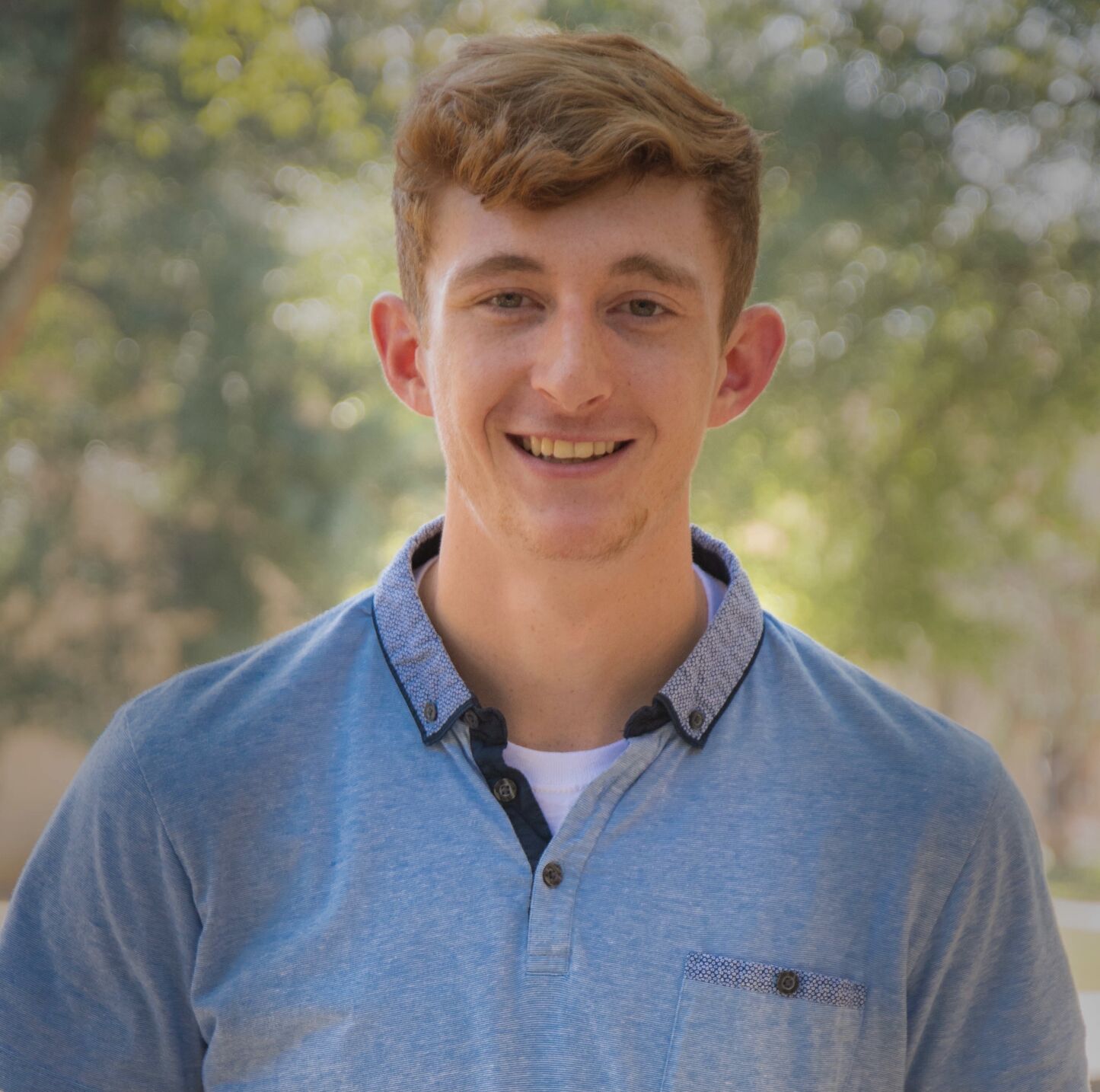
Xavier Monroe also joined the race in the fall. He’s an Eastside High School graduate who recently obtained his doctorate from Stanford University and works as a Science and Technology Policy Fellow at the National Science Foundation, focused on emerging technologies.
Monroe also has served on the Alachua County Library District Board of Trustees and as president of the Alachua County NAACP Youth Council.
In February, Antione Fields and Jacquelyn Randall launched campaigns.
Fields, out of Marion County, has worked in the Florida Legislature as a legislative assistant. He then led digital strategy at MissionWired before joining Common Cause, a national, nonpartisan nonprofit working to defend voting rights and limit big money’s influence on elections.
Randall serves as the current mayor of Hawthorne, where her mother and grandfather also held terms on the city commission. She’s worked as a respiratory therapist and now program director and college professor.
In late March, Sylvain Doré joined the slate of candidates. He previously ran in 2024 and lost against state Sen. Stan McClain. Doré is a brain doctor and former professor of anesthesiology and neuroscience at UF.
The candidates were all given the following questions. The answers are printed verbatim.
- Why would you or wouldn’t you support HB 1451 and the GRU Authority preemption?
- What bills passed that you wish had failed?
- What bills do you wish you could have co-sponsored?
- How do you view the current relationship between the House and Senate, given two years without passing a budget during the normal session?
- What considerations would guide you through the upcoming special session on property tax reform?
- What are your thoughts on HB 991 (proof of citizenship to vote) and would you vote for it?
Why would you or wouldn’t you support HB 1451 and the GRU Authority preemption?
Fields: I would have strongly opposed HB 1451. Gainesville voters made this decision twice, and Tallahassee overrode them anyway. For a party that loves to preach small government and local control, Republicans threw all of that out the window the second voters made a choice they did not like.
GRU is a city-owned public utility in a state dominated by giant investor-owned monopolies like FPL and Duke. That matters. A public utility is supposed to answer to the people it serves. Gainesville has also been one of the few cities in Florida willing to seriously lead on clean energy and climate resilience. If state leaders refuse to act on rising costs and the climate crisis, they could at least get out of the way of cities willing to lead.
The way this was done matters too. It was tacked onto a broader bill late in the process with limited scrutiny or transparency. Local democracy and home rule should not be collateral damage in Tallahassee power plays.
Monroe: I would not support HB 1451. Legislators from outside our area inserting preemption language into a bill with no debate, no public testimony and a committee hearing that lasted fewer than five minutes is fundamentally wrong. That kind of backroom dealing and lack of transparency is exactly what erodes public trust in government. I respect the will of Gainesville’s voters, as well as the ratepayers who live outside city limits. A public hearing in the community, open to all GRU ratepayers, should have been organized before this language was ever considered or added. I do support the goals of some of the underlying provisions of HB 1451: lowering the allowable surcharge on customers outside city limits and mandating annual customer meetings are genuine wins for consumers. But the way the preemption language was forced through, without any meaningful public input, undermines these positive reforms. Good, honest policy demands a transparent process, and Floridians deserve better.
Moore: I oppose HB 1451 and the continued state preemption of the Gainesville Regional Utilities (GRU) Authority because it overrides the clear will of Gainesville voters. In March 2026, the Legislature passed HB 1451, expanding state oversight of municipal utilities and effectively blocking Gainesville residents from restoring local control of their utility. More than 75% of voters supported abolishing the state-appointed GRU Authority, choosing instead to return oversight to elected city leaders who are directly accountable to the community.
This bill dismisses that democratic decision and places authority back in the hands of a board appointed by the governor, where residents have no direct say. Utilities are a local issue and should be governed locally. When decisions are made by officials elected by Gainesville residents, those leaders can be held accountable at the ballot box. I stand with the people of Gainesville and will fight to ensure their vote and their right to local self-governance is respected.
Randall: I support transparency and protecting ratepayers, so I would be open to provisions in HB 1451 that improve oversight of utility governance and prevent unfair charges for customers. However, I would not support the GRU Authority preemption language.
As a mayor, I believe strongly in home rule. Communities understand their needs better than the state does. If there are concerns about utility rates, debt, or governance, those issues should be addressed through transparency and responsible leadership, not by stripping local communities of their authority.
Protecting customers is important, but so is respecting the will of voters. We can do both without taking power away from local communities.
What bills passed that you wish had failed?
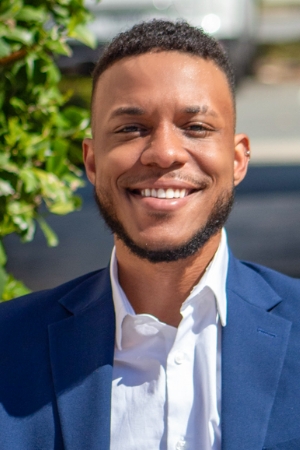
Fields: SB 1632 opens the door to labeling advocacy groups the Governor doesn’t like as terrorist organizations and tramples our First Amendment rights. HB 1001 keeps the culture-war obsession going by banning local DEI efforts. Republicans also spent time renaming the Palm Beach airport after Donald Trump while families are drowning in housing, insurance and healthcare costs. It’s shameful.
Monroe: The provision in HB 991 banning student IDs at the polls is designed to make voting harder for young people. Student IDs are photo identification; requiring them to prove who they are should not be made more restrictive for otherwise eligible voters. Additionally, renaming Palm Beach International Airport after a sitting president is political pandering, not serious governance. Legislators wasting time on these harmful or frivolous acts is why I am running. We should be working to make life more affordable for all our families; To give people access to healthcare, help our children succeed by expanding educational opportunity, defend our democracy, protect our natural resources and grow our local economy.
Moore: I wish HB 399, HB 1451, HB 991, and HB 1001 (replaced by SB 1134) had failed. These bills represent Tallahassee overreach. They undermine local control, prioritize developers over residents, and restrict voting access. Together, they weaken democracy, harm marginalized communities, and silence local voices that should guide decisions about our neighborhoods and our future.
Randall: We saw another legislative session where lawmakers focused on the wrong priorities instead of tackling Florida’s affordability crisis. From preempting local governments to defunding public schools and targeting public sector unions, too much time was spent on political fights rather than lowering costs and solving the real problems families face every day.
What bills do you wish you could have co-sponsored?
Fields: I would have co-sponsored the Florida Voting Rights Act, the Florida Economic Prosperity and Immigration Act, and the Healthy Florida Act. They’re model legislation for how our state can and should lead in protecting the right to vote, enacting immigration reform that centers dignity and economic reality, and guaranteeing universal healthcare coverage to all, regardless of income.
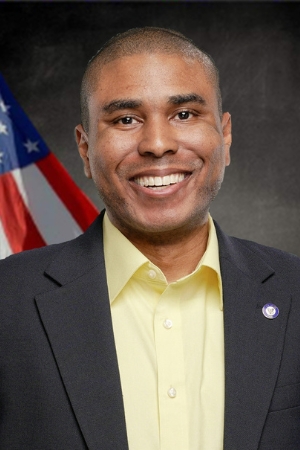
Monroe: I would have proudly co-sponsored SB 484, the bill protecting local water resources from the enormous consumption demands of massive data centers. Florida’s water supply is vital; we must safeguard it for our growing population and our agricultural industry. Responsible growth demands thoughtful planning, and this legislation represents an important step forward.
Moore: I would have co-sponsored HB 319 and HB 675 to support affordability and reduce the financial burden on families. These bills help lower insurance and housing costs, keep rentals affordable for 50 years, and reduce closing costs for first-time homebuyers, helping working families afford essentials like housing, groceries, healthcare and gas.
Randall: I would have strongly supported legislation focused on lowering property insurance costs, expanding access to healthcare in rural communities, and strengthening workforce training through community colleges and technical programs. Those are the kinds of practical policies that directly improve people’s lives and help families stay and thrive in our communities.
How do you view the current relationship between the House and Senate, given two years without passing a budget during the normal session?
Fields: It is a complete failure of Republican leadership. The one thing the Legislature is constitutionally required to do every year is pass a budget, and they have failed to do that on time two years in a row. During an affordability crisis. That is embarrassing.
They always have time for culture-war bills. They always have time for political stunts. But when it comes to the basic job of governing, suddenly, they cannot get it done.
That is not the fiscal responsibility Republicans have promised. Fiscal responsibility means getting the budget done on time so schools, local governments, healthcare providers and working families are not left in limbo.
I worked in the Legislature. I know how much coordination it takes to move appropriations and major policy. This is a priorities problem, plain and simple.
Monroe: The relationship between the House and the Senate is dysfunctional and a disservice to every Floridian. Passing a balanced budget is among the Florida Legislature’s most fundamental responsibilities, yet for two consecutive years, personal animosities and institutional distrust have brought the process to a halt. Special sessions were called to accomplish what should have been completed during the regular session, wasting taxpayer dollars and eroding public confidence in state government. That is unacceptable.
Leadership requires the ability to put the people’s business above personal grievances. I believe in building genuine interpersonal relationships that transcend institutional and political differences. If elected, I would work to establish productive, trust-based relationships with colleagues in both chambers, because effective governance depends on communication, mutual respect, and a shared commitment to serving the people of Florida, not scoring political points.
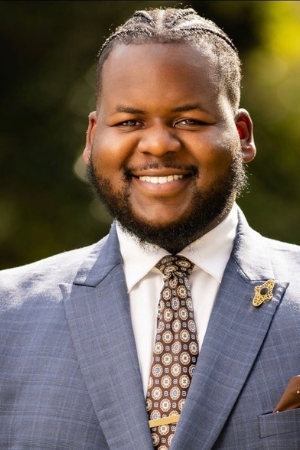
Moore: The relationship between Florida’s two legislative chambers is clearly strained, despite Republicans holding large majorities in both. For the second year in a row, they have struggled to pass a state budget on time, leaving Floridians uncertain about what comes next. Last year, lawmakers narrowly avoided a partial government shutdown by passing a budget at the last minute. This pattern raises serious concerns about stability and leadership.
These ongoing delays come at a real cost to taxpayers. Every additional special session requires thousands in public funds simply because the Florida Legislature cannot reach an agreement. More importantly, these stalemates place critical public services at risk, including court operations, housing programs, and essential infrastructure projects that communities rely on every day.
Floridians deserve stability and responsible governance. The Legislature must put aside internal disagreements and work quickly to pass a budget that prioritizes the needs of the people, not prolonged political gridlock.
Randall: When the Legislature cannot complete the most basic responsibility of government, passing a budget on time, it sends a message to Floridians.
Families and small businesses across our state have to live within deadlines every day. Government should be held to the same standard. When budget negotiations break down, it creates uncertainty for local governments, schools, healthcare providers and infrastructure projects that depend on state funding.
From my experience in local government, I know that progress happens when leaders come to the table willing to collaborate and solve problems, not posture.
The House and Senate don’t have to agree on everything, but they do have to work together in good faith to deliver results. Floridians are dealing with rising insurance premiums, healthcare challenges, and affordability pressures. They deserve a Legislature focused on solutions, not gridlock.
What would guide you through the upcoming special session on property tax reform?
Fields: I would go into that special session focused on whether this actually lowers costs for working families in a real way.
Floridians are getting hit from every direction. Housing costs are up. Insurance costs are out of control. Utility bills are high. Wages have not kept up. People need relief. But I am not interested in fake fixes that sound good for five minutes and then gut funding for schools, fire rescue, roads, storm prep, and basic local services.
Property tax reform cannot become another excuse to weaken local government while pretending families are getting help. If lawmakers want to change the system, they need to come with real numbers, a serious plan, and honesty about the tradeoffs. Local communities should not get stuck paying the price later because politicians wanted a headline today.
As someone who worked in the Legislature, I’ve seen firsthand how the decisions made in Tallahassee hit people back home. I would be guided by whether working-class Floridians can actually feel the difference in their daily lives.
Monroe: The House proposal to eliminate non-school property taxes on homesteaded properties leaves the hardest question unanswered: How do cities, counties, water management districts, and other local entities replace the estimated $14.8 billion in revenue that funds public safety, infrastructure and essential services? There is a difference between tightening your belt and cutting off your arms. Yet for too many House legislators, the answer has been to ignore the question and hope no one notices.
Fortunately, the Senate is taking a more measured approach, studying the actual impact on communities before rushing to a vote. That is the responsible path forward. We absolutely need reform in how properties are assessed, and Florida’s homeowners deserve meaningful relief. But we also need to ensure that when your house is on fire, someone shows up. When you dial 911, someone answers.
Any proposal I would support during the special session must answer three fundamental questions: How is lost revenue replaced? How are essential services protected? And how do we deliver real, sustainable relief to property owners? If a plan cannot answer all three, it is not a serious plan. Common sense needs to be more common in Tallahassee.
Moore: The property tax debate is deeply personal for families in House District 21, many of whom are already struggling with the rising cost of living and simply trying to afford everyday necessities. While Floridians deserve meaningful relief, my concern with current proposals to eliminate property taxes entirely is that doing so could leave local governments without the resources needed to provide essential services such as public safety, road repairs, public works and community programs.
Rather than eliminating property taxes outright, the Legislature should focus on real, targeted relief for working families. Expanding homestead exemptions for first-time homebuyers and seniors would help ease the burden while still protecting the services our communities rely on. We must ensure that first responders, safe roads, and community spaces for our children remain properly funded.
At the same time, affordability must be addressed more broadly. The Legislature should consider policies such as insurance rate caps and housing initiatives that help graduates and young professionals afford to stay in our communities.
Most importantly, local governments must have a seat at the table. Tallahassee should work in partnership with local communities, not strip away their ability to serve residents effectively.
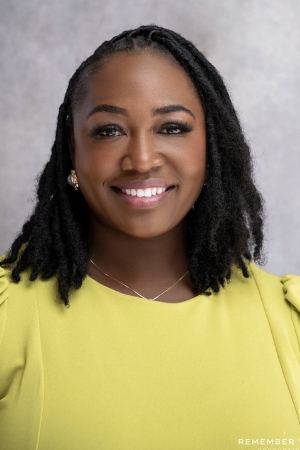
Randall: Florida families deserve real relief from the affordability crisis. But shifting the focus to property taxes without addressing the root causes of rising costs won’t solve the problem.
As mayor, I know property taxes fund critical services like public safety, infrastructure and community programs. Slashing them without a responsible replacement plan risks weakening the very services families rely on.
The real priority should be lowering insurance costs and addressing the broader affordability crisis, not passing policies that create new problems for cities and counties.
What are your thoughts on HB 991 (proof of citizenship to vote) and would you vote for it?
Fields: I would vote no. HB 991 is a modern-day poll tax. And poll taxes were made unconstitutional in 1964 for a reason. When the state puts a cost or a paperwork hurdle between people and the ballot, it is attacking the right to vote.
Most people do not have a passport. A lot of families are trying to afford rent, groceries, and utility bills. They should not have to go out of their way, spend extra money, and jump through more hoops just to exercise a constitutional right, especially to solve a problem that largely does not exist.
Through my work at Common Cause, I have worked directly on voting rights and democracy campaigns across the country. Florida has long been known for secure, smooth elections. And we know that widespread noncitizen voting is largely a myth. This bill solves nothing. It just makes it harder for eligible citizens (especially women, seniors and students) to vote, which is exactly why I oppose it.
Monroe: It is already enshrined in the Florida Constitution that noncitizens cannot vote in our elections. Out of approximately 13 million registered Florida voters, the state’s own exhaustive investigation identified only 198 “likely” noncitizens on the rolls. They had to use the word “likely” because these cases remain unproven and are still under investigation. That amounts to roughly 0.0015% (15 people per million voters) of the electorate, hardly evidence of a crisis.
HB 991 is a solution in search of a problem. Our elections are already safe and secure. What this legislation actually accomplishes is creating additional barriers that make it harder for eligible citizens, particularly young voters and seniors, to exercise their fundamental right to vote. When you strip away the rhetoric, the intent is clear: voter suppression dressed up as election security. I would not vote for HB 991.
Moore: HB 991, often referred to as Florida’s “Anti-Voter Law,” would create new barriers to voting that could disproportionately affect Black voters and other marginalized communities. The bill would eliminate several previously accepted forms of identification and limit what voters can use at the polls to REAL IDs, passports or birth certificates. Many Floridians, particularly low-income residents, seniors, and people of color do not readily have access to these documents, which could exclude thousands from participating in elections.
Measures like this risk undermining the constitutional right to vote by making participation more difficult rather than more accessible. I would not support legislation that restricts voter access. Instead, I would work to expand access to the ballot box and remove unnecessary barriers so every eligible Floridian can participate. Free, fair and accessible elections are the foundation of our democracy and protecting that right must remain a priority.
Randall: Florida already verifies citizenship when someone registers to vote. HB 991 isn’t about solving a real problem; it’s about making it harder for eligible people to vote.
Policies like this create unnecessary barriers for seniors and working families who may not have easy access to documents. Voting is a fundamental right, and we should be expanding access to the ballot, not putting new hurdles in front of law-abiding citizens.
Suggested Articles
No related articles found.
Good, all of them are opposed to the takeover of the city utility. They’re gonna need to keep fighting like hell in Tallahassee to give us a voice in our utility when they get in.