



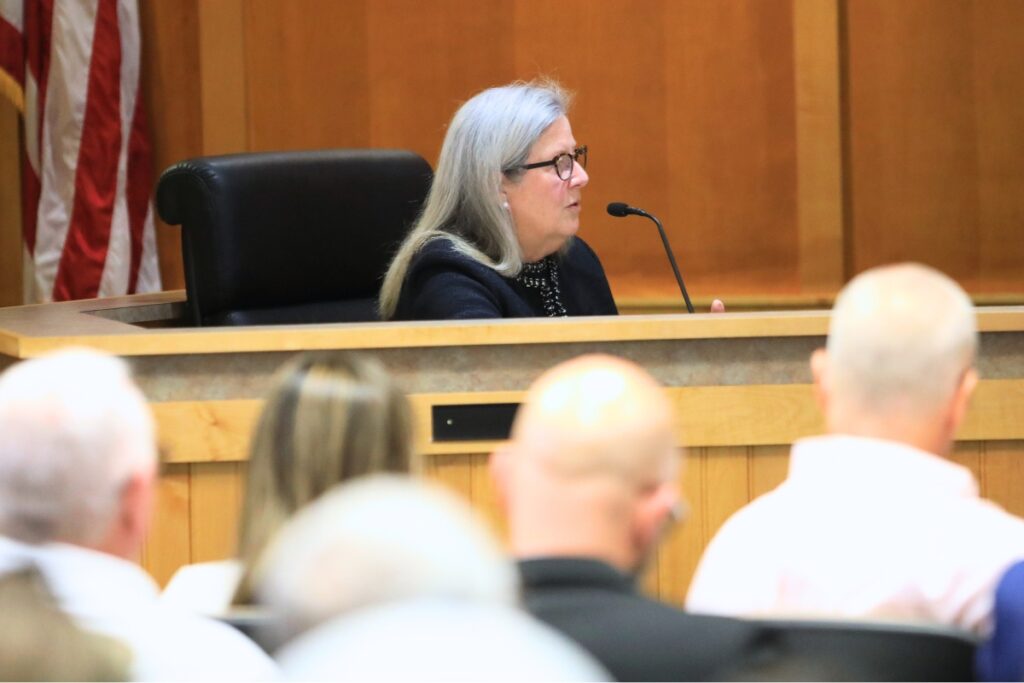
- The Alachua City Commission voted 3-2 on June 22 to approve land use changes for 46 acres of the Farmlands development along US Highway 441.
- Two attorneys sent letters stating the city’s comprehensive plan requires two public hearings for land use amendments, conflicting with staff’s one-hearing approach.
- The July 27 meeting time was moved to noon to address a backlog, but officials and residents expressed concerns about public access.
The city of Alachua is receiving legal pushback on its procedures after tentatively planning for only one land use vote on the Farmlands Commercial development instead of two, as written in its comprehensive plan.
The first, and potentially last, hearing came during the June 22 City Commission meeting. The commission voted 3-2 in favor of land use changes for 46 acres of Farmlands’ over 200 acres of residential and commercial development planned along US Highway 441.
The development has since garnered extra attention after resident and affected party Gary Pappas said city staff confirmed a Walmart would come with it, on top of other planned businesses and 203 homes. Hearings have spanned over the past few months after multiple deferrals in May and June.
The city of Alachua’s land use attorney, Patrice Boyes, said that because the 46-acre amendment is small-scale (less than 50 acres), Florida statute requires only one public hearing to pass the amendment.
Moving forward with Boyes’ interpretation would mean the quasi-judicial hearing for Farmlands’ 182-acre rezoning counterpart could come at the July 27 commission meeting after being deferred.
Tallahassee-based attorney Terrell Arline sent a letter dated July 7 to Mayor Walter Welch on behalf of Our Sana Fe River, Inc., disagreeing with Boyes and said the city cannot proceed without a second land use hearing.
He said that while Florida statute requires a minimum of one public hearing, the city’s comprehensive plan requires two for plan amendments.
“A valid plan amendment is a condition precedent to a valid rezoning,” Arline wrote.
On July 9, the city received another letter from attorney Jeffrey Fitzgerald, who also outlined that the city’s comprehensive plan requires two hearings from the City Commission, not including the Planning and Zoning Board vote.
He said if the city’s requirements are more demanding than state statute, the city takes precedence and should be favored over an “unstated exception.” Florida statute is a precedent floor, not ceiling, he said.
“Curing the defect now is plainly preferable to litigating it,” Fitzgerald wrote. “The amendment was approved on a 3–2 vote, and holding the second hearing the Plan already requires imposes little burden while eliminating a procedural vulnerability that would otherwise attach to both the amendment and every approval that depends on it.”
Both letters were submitted as handouts for the July 9 special meeting, where hearing procedures and the special meeting itself were questioned. The only item on the agenda was adjusting the July 27 meeting time from 6 p.m. to noon, and the commission narrowly voted 3-2 in favor.
Vice Mayor Jennifer Ringersen made the motion but called it a lose-lose situation.
Commissioners Jackson Youmas and Jacob Fletcher dissented because they said they didn’t understand the purpose of the special meeting and didn’t want to move forward without having the city’s legal counsel respond to the outside attorneys and how many land use hearings were needed to happen.
City Attorney Scott Walker called into Thursday’s meeting virtually and said he was still forming an opinion about Arline and Fitzgerald’s letters.
As the city moves forward with the rezoning hearing while two legal opinions condemn the action, public commenter Bryan Buescher said the city was jeopardizing its quasi-judicial approach and laying the groundwork for expensive challenges from the public and the Farmlands applicant.
“I happened to speak with a friend of mine who’s done administrative law only for a couple of decades,” Buescher said. “And I asked her, ‘So, what do you think about this?’ She said, ‘Well, send me the stuff.’ So I did. I sent her the state statute. I sent her your comp plan, right? She got back to me and she said, ‘What are they doing? They’re setting themselves up to fail.’ Good luck.”
Fletcher said he’d emailed City Manager Rodolfo Valladares twice last week for information about why the special meeting had been called, but said he never heard back.
On Thursday, Valladares said the July 27 time needed to be adjusted because the commission faced a backlog of old and new regular agenda items delayed by the Farmlands hearings.
He said new business will include the city’s millage rate, Hathcock Community Center land use and rezoning and committee assignments.
The noon commission meeting on July 27, which could potentially last 12 hours and included a 4:30 p.m. budget workshop slated that same day, will be more efficient than additional special meetings, Valladares said.
Youmas, Fletcher and other residents raised concerns about the public being able to attend without knowing when specific items would come up. Staff confirmed the Farmlands hearing continuation would be at the top of the meeting.
“The desire to rush and inconvenience the public for how this mismanagement of agendas has occurred and has continued to occur is frankly disappointing,” Fletcher said. “Also, on here is the misrepresentation of the city charter and rules to fulfill what seems to be staff desires. That needs to stop. These word games, omitting information and obstructing our ability as commissioners to get information, need to stop.”
Pappas is slated to present as an affected party during the rezoning continuation, as he did for the land use hearing. He wrote an email to the city last week to object that he wasn’t directly notified about the special meeting and its proposal for changing the hearing time.
“I am confident that you all understand that any such time change will likely have a negative impact on the ability of witnesses—as well as the working general public—to attend the meeting,” Pappas wrote. “That seems demonstrably anti-democratic and is disappointing to me.”
Welch commended staff on their work and said the public isn’t the only voice that the commission has to weigh.
“You got to realize, y’all not the only people that we trying to hear,” he said. “I know you’re upset because you say y’all’s voice matters, but other people’s voices matter too. So we’re trying to balance the scale. We’re trying to hear everybody, and we take it into consideration.”
Suggested Articles
No related articles found.
Who is the mayor listening to that doesn’t show up to meetings like the public? The developer? Chuck Clemmons? Elaborate, sir.
Yet another “clown show” at the “Circus of Alachua”.
Why do these proposed development plans never address projected increased demands for water due to more businesses and homes?
Recently our area has experienced severe drought conditions. From where will the water come to support a seemingly endless onslaught of unsustainable growth?
Developers, along with supportive government officials, have us on a path to
a water “crisis”.