



A new study underscores how important it is to treat sleep apnea: Untreated, the disorder is associated with a 69% faster decline in cognitive function over 10 years, according to a team that included researchers from the University of Florida’s College of Medicine and The Johns Hopkins Bloomberg School of Public Health.
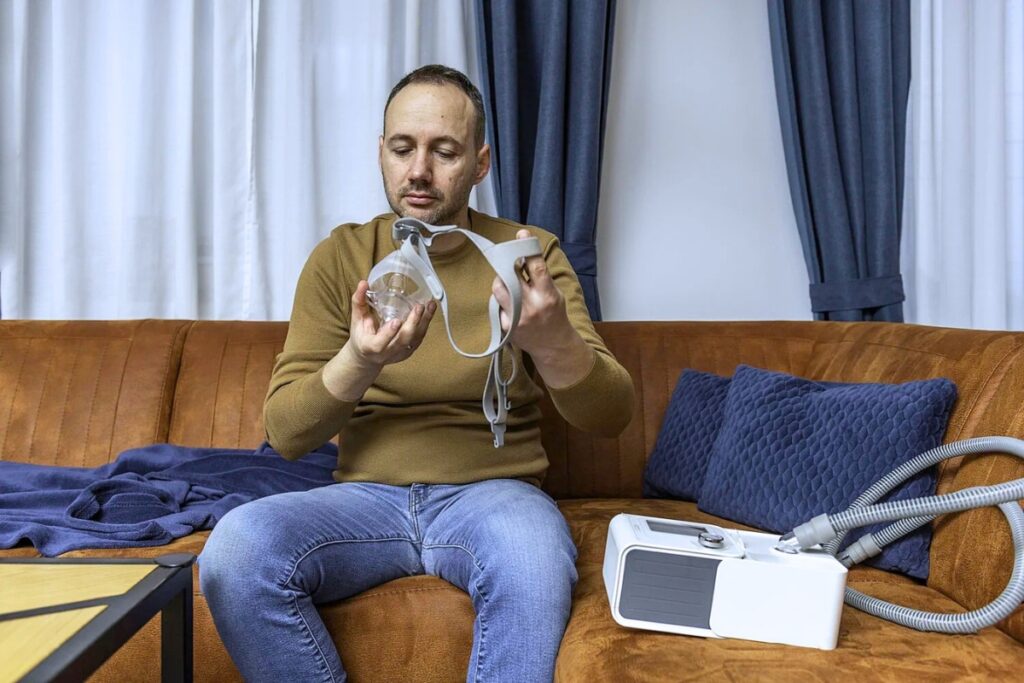
For the uninitiated and well-oxygenated, sleep apnea is a condition that causes people to stop breathing during sleep. Sufferers rarely know they have it until someone notices them struggling to draw a breath mid-snore. Depending on the severity, sleep apnea can be treated with a continuous positive airway pressure machine (CPAP).
“While people with sleep apnea may not all see the short-term benefit of using a CPAP, using it for longer, sustained periods can help offset cognitive decline,” said Dr. Christopher Kaufmann, an assistant professor in the UF Department of Health Outcomes and Biomedical Informatics who led the research.
The researchers used a decade’s worth of data from Medicare claims and annual cognitive assessments to analyze the relationship between sleep apnea and how brain function begins to slide with age.
The study builds on several earlier studies that explored CPAP use and cognitive outcomes, including changes in cognitive performance and dementia onset.
As a rule, your brain does not respond well to being deprived of oxygen.
“We know there are biological factors underlying dementia,” Kaufmann said. “The question is, if we treat something like sleep apnea, can we prevent cognitive decline? Can we even prevent or delay the onset of Alzheimer’s disease?”
There are two types of sleep apnea: obstructive sleep apnea, the most common kind, happens when soft tissues in the throat collapse and block a person’s airway; central sleep apnea occurs when the brain doesn’t send the correct signals to the muscles involved in breathing.
Cognitive decline takes years to develop. Earlier studies that looked at obstructive sleep apnea treatment and cognition were shorter, ending around the six-month mark. This study explores the effects of up to 10 years of treatment.
“In the sleep apnea world, a CPAP is considered the gold standard,” Kaufmann said. “But there’s tremendous variability in terms of accessibility, or in when people are diagnosed, if at all. Increasing access to sleep apnea treatments may have a major impact on cognitive outcomes from a population health perspective.”
Despite moderate success with certain drugs, there is still no true treatment for dementia and accelerated cognitive decline, Kaufmann said. That is prompting some researchers to focus more on risk factors that patients can modify.
Dr. Adam Spira, a professor in the Department of Mental Health at The Johns Hopkins Bloomberg School of Public Health and the study’s senior author, said the study adds to growing evidence for obstructive sleep apnea as a modifiable risk factor for dementia “by demonstrating links between treatment and better maintenance of cognitive heal
Researchers estimate that over 40% of dementia cases worldwide might be attributable to lifestyle factors like sleep problems.
“If we can make sleep apnea treatment more widely available and give patients the tools to adhere to treatment, then we may be able to help slow cognitive decline or prevent the eventual onset of dementia down the road,” Kaufmann said.
Researchers from the University of Maryland and the University of California at San Diego were also involved in the study.
Suggested Articles
No related articles found.