



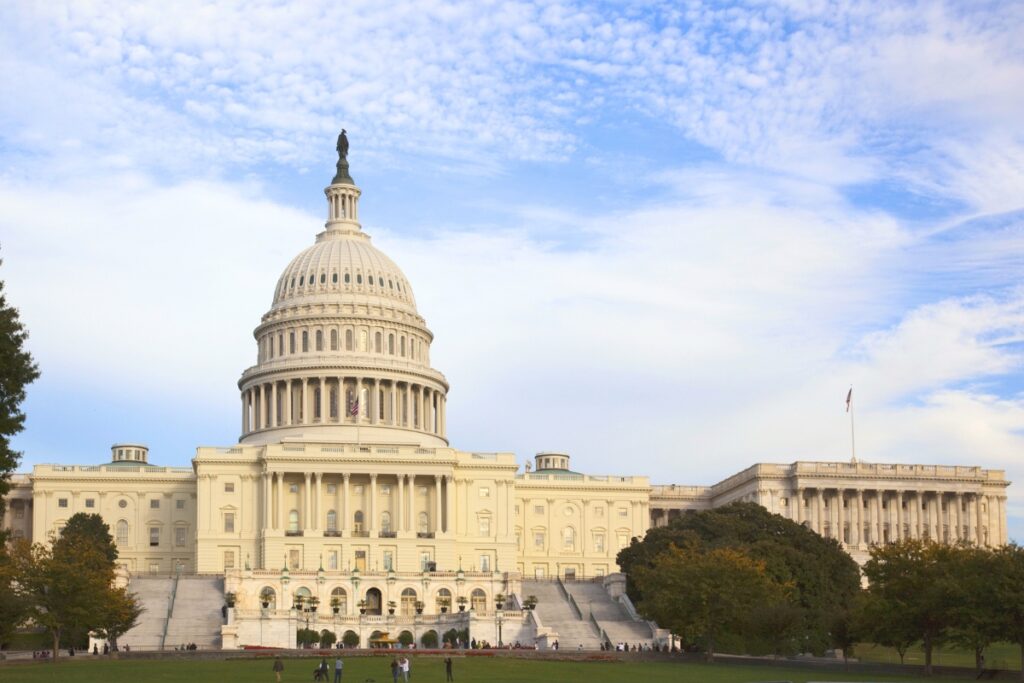
The House of Representatives on Wednesday voted 308-117 to advance a bill that would make daylight saving time permanent. The bill received bipartisan support, with 193 yes votes from Republicans and 114 from Democrats (as well as one yes vote from independent Keven Kiley).
However, the measure’s future in the Senate is unclear. Congress previously passed a measure in 1973 during an energy crisis. That measure placed the country on daylight saving time for a year, beginning in January 1974, but it was repealed the following year after most people disliked the change.
The bill, which advanced on Wednesday, received a new wave of support from Republicans after President Donald Trump repeatedly expressed his desire for its passage. In May, after the measure made it out of committee, he wrote on social media that the bill would save millions in costs incurred by companies and cities switching clocks. Daylight saving time was more popular than standard time, he said.
Rep. Tom McClintock, R-Calif, said he voted for the bill despite preferring a permanent shift to standard time, which prioritizes morning light. A permanent shift would get rid of the annoying back-and-forth between times, he said.
What are opponents of the measure saying? Board-certified sleep clinician Roger Seheult argued that the measure would throw off circadian rhythms that depend on morning light, worsening Americans’ sleep and overall health.
A national Orthodox Jewish organization, Agudath Israel of America, said the bill would force synagogue services and morning prayers to occur later in the day in order to coincide with sunrise. The change would push sunrise after 8 or even 9 a.m. in some parts of the country over the winter, making it nearly impossible for Orthodox Jews to arrive on time for their jobs, the group said.
Do any U.S. states already have permanent daylight saving? A total of 19 states, including Texas, Florida, and Maine, have passed laws allowing them to establish permanent daylight saving time as soon as federal law allows it, according to the National Conference of State Legislatures.
Hawaii and most of Arizona remain on standard time year-round.
This story originally appeared in WORLD. © 2026, reprinted with permission. All rights reserved.

Suggested Articles
No related articles found.