


- The Electrical Training Alliance of Gainesville offers a state-registered, four-year apprenticeship that combines paid on-the-job training with free classroom instruction.
- Apprentices complete over 8,000 hours of work training and 720 hours of classroom instruction, earning wages based on a percentage of the journeyman rate.
- The program, established in 1948, is a collaboration between IBEW Local Union 1205 and NECA, funded mainly by contractors and partially by the state.
A local nonprofit is offering individuals interested in a career as an electrician the opportunity to earn an education and gain work experience without incurring debt.
The Electrical Training Alliance of Gainesville is a state-registered, four-year union electrical apprenticeship program that trains people to become qualified journeyworker electricians through paid on-the-job training and classroom instruction.
“We were established in 1948…when our standards were registered, so we’ve been around a long time,” said Shawn Graves, who serves as the training director for the Electrical Training Alliance of Gainesville.
The program is a collaboration between the International Brotherhood of Electrical Workers (IBEW) Local Union 1205 and the North Florida Chapter of the National Electrical Contractors Association (NECA).
“They [the IBEW Local Union 1205 and NECA] have three members from each side [who] sit on the board of trustees…” Graves said, adding that the board governs how the apprenticeship program is run and which direction it goes in.
Perhaps the most notable part of the program is that tuition is free.
“The apprentices do not have to pay a tuition,” Graves said. “The state does a part of the funding for the training of the apprentices, and then the contractors do the majority of the cost. They pay a certain amount per man-hour toward the program for training as a part of the collective bargaining agreement that the IBEW and NECA have.”
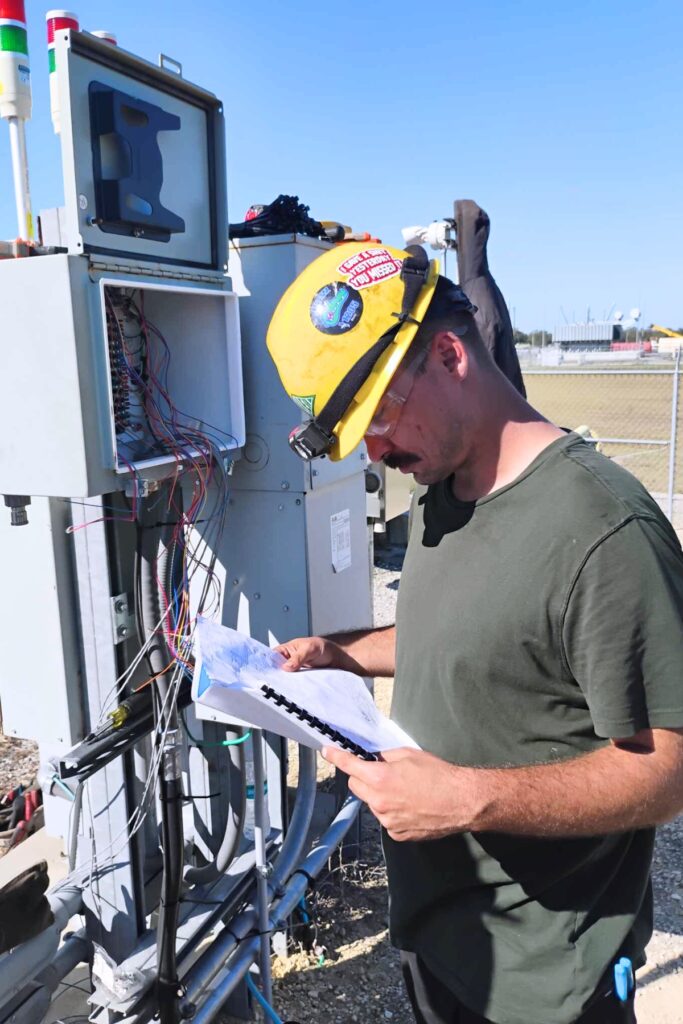
Throughout the program, apprentices go through 8,000-plus hours “of on-the-job training with experienced journeyworkers” and at least 720 hours of “intensive classroom instruction with qualified instructors,” according to the Electrical Training Alliance of Gainesville website.
“By the time you get through all that, you get your classification as a journeyman,” said Trevor Chapman, assistant training director for the Electrical Training Alliance of Gainesville. “You’re ready to go anywhere and know what you’re doing.”
During the program, Chapman said apprentices will work 40 hours a week, plus overtime.
“That’s their full-time job,” he said.
Chapman added that the apprentices also attend night school two nights a week for three hours each night.
“They do not get paid for that,” he said. “They get paid on the job doing apprentice work.”
According to the Electrical Training Alliance of Gainesville website, “Apprentice wages are based upon a percentage of the journeyworkers’ hourly wage rate and advancements are made during the four years of apprenticeship.”
As of June 1, the current hourly pay rate for journeyworkers is $33.50 per hour, according to the website. This includes additional benefits paid for by the contractor, such as family health insurance and National Electrical Benefit Fund (NEBF) retirement benefits.
While there is no tuition cost associated with the program, apprentices do have to pay for other necessities, such as books, boots, tools, etc.
Chapman, who will be taking over Graves’ position in May, said an apprentice will spend $3,000 to $4,000 on just books during the duration of the program. However, he noted that there are resources available to help with the financial hurdles, including CareerSource.
“CareerSource is part of workforce development for the state of Florida,” Chapman said. “They offer scholarships and grants and things like that for people who are wanting to get involved with our apprenticeship.”
To get more people involved, Chapman also said the IBEW Local Union 1205 has offered a program where if an apprentice joins and attends every meeting for 12 meetings in a row, the union will pay for that person’s books for the following year.
“The union dues are about $50 a month, so you’re kind of paying yourself for those books,” he said. “But all the while, if you go [to the meetings], you know what’s going on. You’re learning your rights as a worker. You’re learning what’s going on in our local [union] and on top of all of it, your books are covered.”
The Electrical Training Alliance of Gainesville is part of the broader Electrical Training ALLIANCE (ETA), which is considered “the largest apprenticeship and training organization of its kind in the U.S.,” according to the Electrical Training Alliance of Gainesville website.
Since its creation more than 70 years ago, the ETA has helped train “over 350,000 apprentices to journeyman status through local affiliate programs,” according to its website.
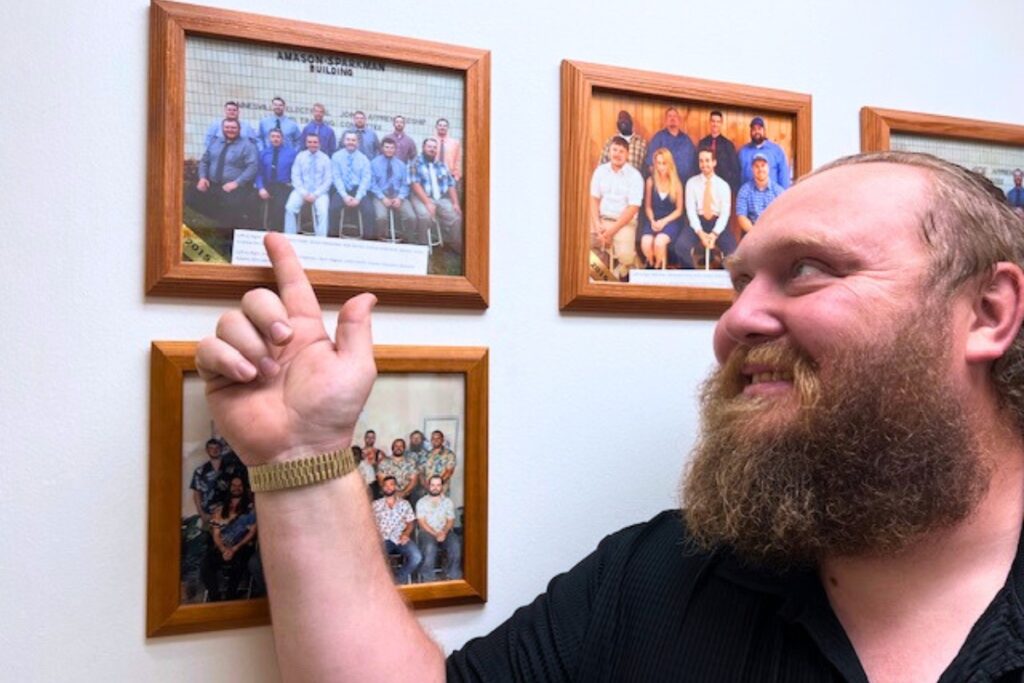
Graves and Chapman said 800 apprentices have graduated from the Gainesville program, including themselves.
“This program works,” said Chapman, who was part of the 2015 graduating class. “But as a product of this program, I can tell you my apprenticeship was not an easy one. It taught me how to be a journeyman wireman. It taught me the skills on how to assess, repair and conduct myself with electrical work, how to travel the country with those skills and make myself utilized by a contractor.”
Graves described the program as like a “brotherhood.”
“That’s one of the great things about…being in a union program is those bonds that you make with your fellow apprentices and fellow journeyman,” he said. “To say it outweighs the pay and benefits is hard, but it’s right up there with it as something that’s got a huge value to it.”
Chapman encourages anyone interested in joining the program to first visit their website for more information, including steps on how to apply. The link to the site can be found here.
“I want people to know [that] this is an option,” he said. “You don’t have to go to college. It’s not the only way to make a good living.”
Nick Anschultz is a Report for America corps member and writes about education for Mainstreet Daily News. This position is supported by local donations through the Community Catalyst for Local Journalism Fund at the Community Foundation of North Central Florida.
Suggested Articles
No related articles found.