

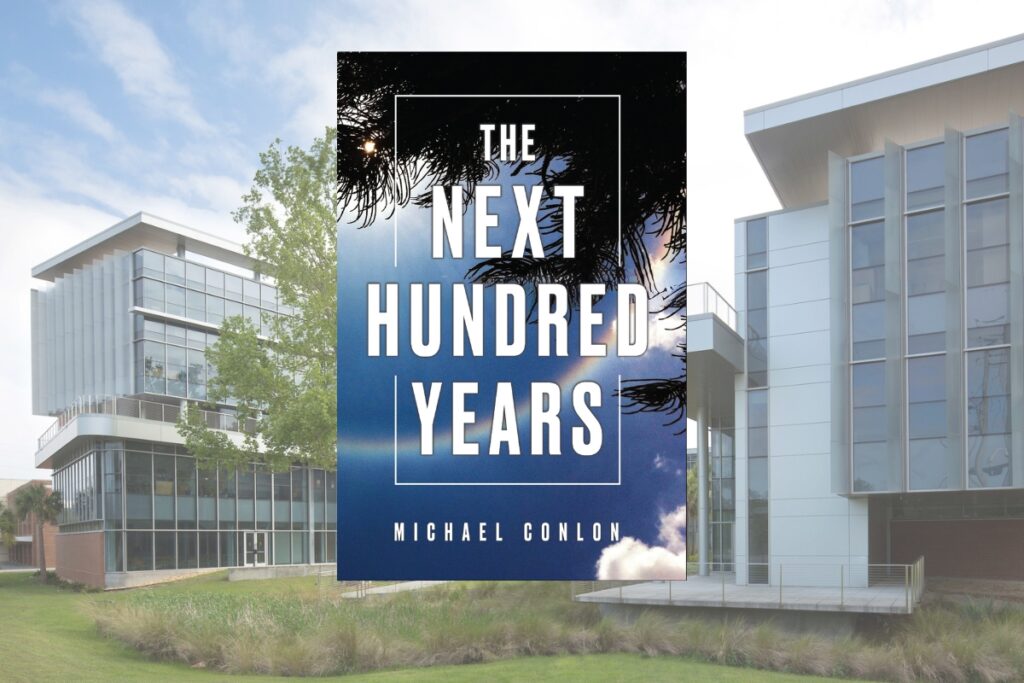
- Michael Conlon, a retired University of Florida statistician, authored a sci-fi book called "The Next Hundred Years," released earlier this year.
- The book features 20 short stories set in different decades but connected by a timeline of future innovations and events.
- He predicts AI and robotics will greatly reduce mental and physical labor, leading to lower retirement ages and more personal time.
Former University of Florida professor Michael Conlon combined science and fiction in “The Next Hundred Years,” his new sci-fi release, but the result isn’t typical Star Wars sci-fi with anti-gravity and aliens.
“I’m trying to have fun with it, but I’m trying to make it as realistic as possible,” Conlon said.
Though traditional sci-fi elements, like colonizing Mars and ray guns, remain in Conlon’s realistic book, released earlier this year, and grounded in his decades of work at UF.
Conlon completed a double major in mathematics and economics at Bucknell University before making his way to Gainesville for graduate school. He stayed at UF working as a statistician and crossed paths with experts in chemistry, physics, agriculture and medicine.
For his work, he’d write papers, presentations and grant applications.
“But all of it was cut and dry, scientific, give them what they want,” Conlon recalled.
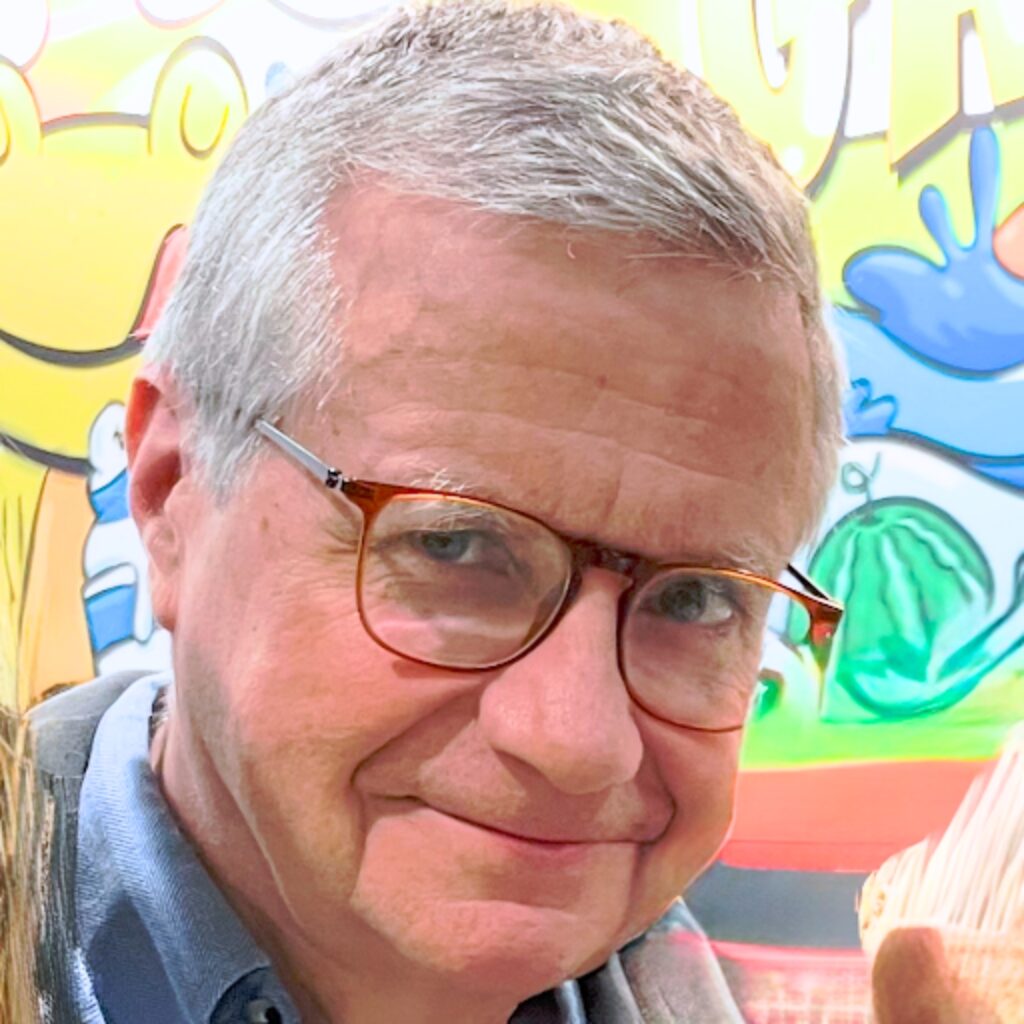
After retirement, he said he could finally let his creativity go and pursue a long-held idea: create a realistic future for the next century.
Conlon started by collecting all his thoughts on a range of ideas. The process took around a year as he created a giant graph with different innovations or concepts (like artificial intelligence, colonizing the moon and global populations) as different rows and columns representing time marching forward.
The book isn’t an exact prediction of what the future holds. Conlon said he’s under no impression that he’s gotten everything correct, but “The Next Hundred Years” is meant as a plausible, coherent look at a possible future.
Using the graph, Conlon can stay consistent across the entire book and its 20 different short stories. Each of the 20 stories touches on a different topic and is set in a different decade. The book repeats each decade twice, but readers will jump from 2095 back to 2045 and then ahead to 2115 in each subsequent story.
Conlon said he also varies storytelling techniques. He starts with what he considers a more avant-garde style in the first story. It’s largely a dialogue between a nameless teacher and student concerning solar energy.
The very next story, though, is more intimate and depicts a named family.
“They talk to each other like a family dinner,” Conlon said. “It’s a very different kind of relationship. So as I was writing the stories, I was experimenting with different forms of the story and different forms of storytelling.”
Conlon joined the Writers Alliance of Gainesville to get feedback on stories. He also shared a few with experts in the field, and he said the response has shown that he succeeded in depicting a realistic future.
Conlon said universities are called ivory towers for a reason. The labs and research centers seem closed off to the outside world. He added that a lot of people have misconceptions on important matters like population growth and food supply.
“The Next Hundred Years” tries to distill the ivory tower knowledge while giving a long-term view on everyday issues that flash by in headlines.
The two biggest influences on everyday lives, Conlon said, will be AI and robotics.
The first will lower the amount of mental labor humans need to do, while the second reduces physical labor.
No longer will you need to call friends to help you move heavy furniture. Conlon said you’ll tell the robot to move these boxes into the garage. And for industries like construction, the impact will be larger than just easier moving days.
Conlon said it’ll be a slow shift, and as AI and robotics reduce human work, the retirement age will gradually drop, allowing people to have more time for creative endeavors and visiting family.
He said his vision of the future is optimistic, but Conlon also explores how people may use technological advances at the expense of others. The very first story, set in 2096, hits on the point of people doing things that should not be done.
“We consider the things that are being done and determine which should not be done,” the teacher says.
Conlon has already decided that one thing that should be done to create another book. It’ll follow the same format but touch on different topics.
He said there are plenty of ideas to explore and consider how they’ll change in the future, like the reunification of Korea.
“The world moves in a very wobbly way,” Conlon said. “There could be a great advance over here, but it hasn’t made its way over there.”
Suggested Articles
No related articles found.