

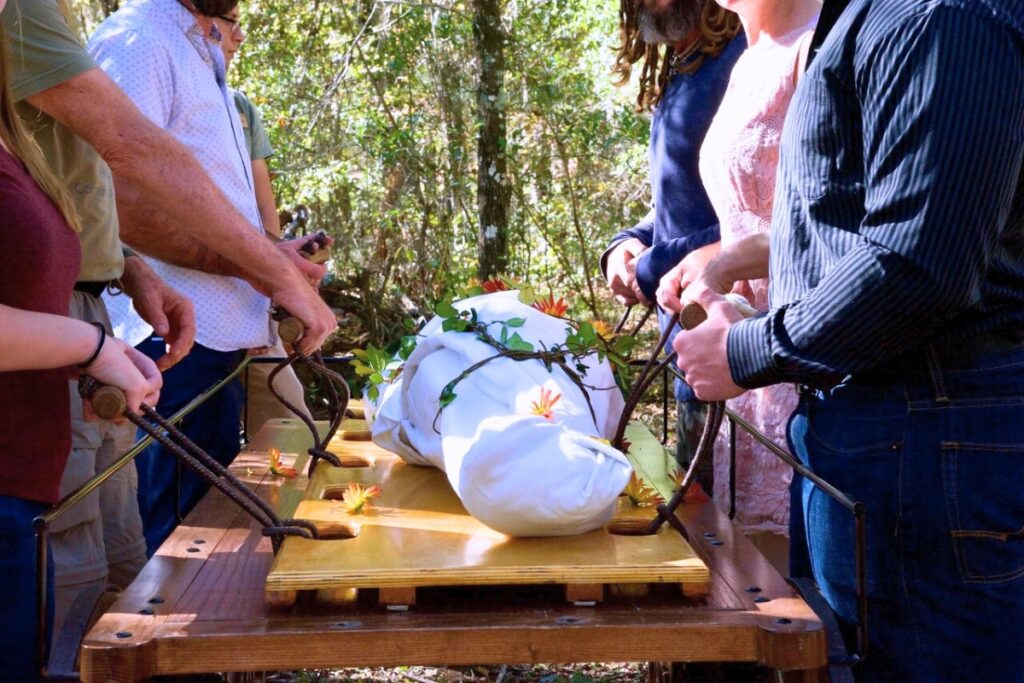
- Natural burials and home funerals emphasize returning to earth's care without embalming, aligning with spiritual and environmental values.
- Final Friends assists families with home funerals in Florida, a legal, cost-saving, and healing alternative that avoids embalming and uses family care.
- Prairie Creek Conservation Cemetery, Florida's first certified conservation cemetery, offers green burials costing $2,000 and hosts about 175 burials annually on 94 acres.
- The deathcare industry in Gainesville is shifting with more cremations, growth in green burials, and emphasis on service by local family-owned funeral businesses.
When Carolyn Kinnard Ziffer died last March at the age of 93, there was no question about how she wanted her family to handle her death – with a home funeral and natural burial in Prairie Creek Conservation Cemetery.
She had made her wishes known to her family years earlier, and when the time came, her family followed through.
“She felt very strongly that it was in line with her spirituality to just return to Mother Earth,” said her granddaughter Abi Fletcher, who oversaw her grandmother’s funeral proceedings. “She felt that she wanted a natural burial, and that she didn’t want her body to be disturbed; she wanted it to be cared for by family.
“She actually developed dementia, but she had organized us long before her dementia got bad, so we were able to fulfill her wishes because of the planning that she did ahead of time,” Fletcher said.
Fletcher and her grandmother reached out to Final Friends, a local organization that helps people with home funerals as a do-it-yourself (DIY) option for the death process. On its web page, Final Friends says they “strive to make this choice of ‘caring for our own dead,’ an easier path for those that find it meaningful and preferable.”
A home funeral and green burial are among the options available as humans transition from life to death. However, at present, traditional funerals and cremations dominate, especially cremations.
The National Funeral Directors Association (NFDA) reports a 63.4% cremation rate and a 31.6% burial rate for 2025. By 2045, the cremation rate is expected to reach 82.3. However, NFDA says more people are interested in exploring green funeral options, which is now at 61.4%.
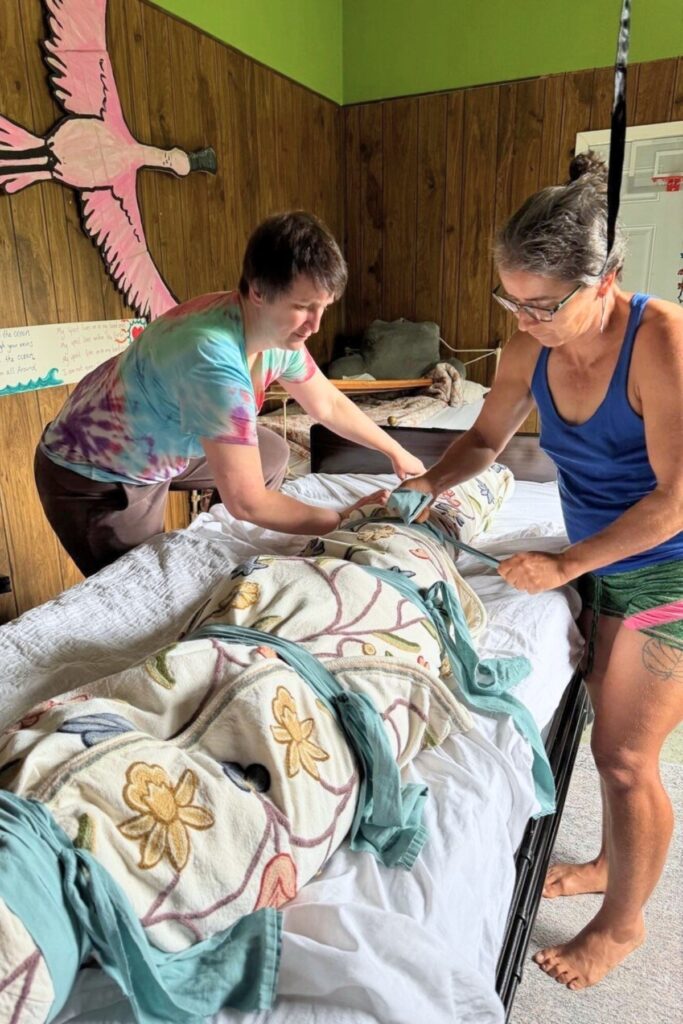
Final Friends director Dennis Shuman started his organization in 2010 after helping with similar services within the Jewish community.
“Most people don’t even know this is an option they have,” Shuman said. “Once you get past the mystique of it all, it’s a nothing thing.”
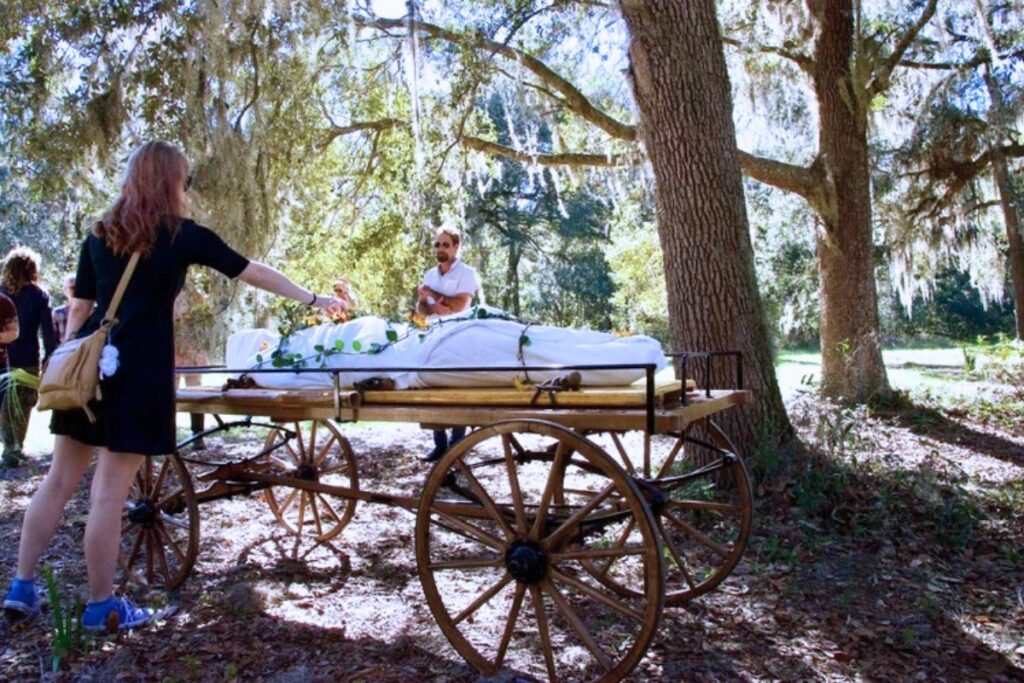
Home funerals are legal in the State of Florida and minimally involve filing proper paperwork, transporting, and chilling (after 24 hours) the body. Embalming is unnecessary.
“In addition to saving a lot of money, it creates closure for the family when they take care of things themselves,” Shuman said. “I’ve seen this over and over again, how the family comes out smiling, even though somebody just died, because it’s such a healing procedure to take care of your own deceased.”
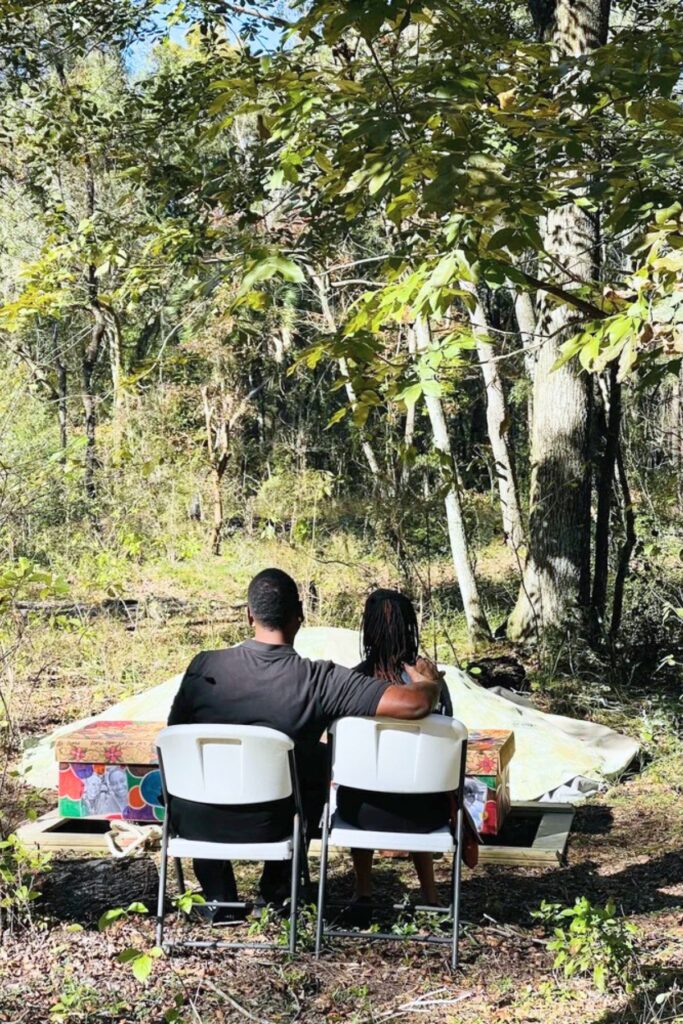
Locally, many of those who opt for a home funeral will also want a green or natural burial at Prairie Creek Conservation Cemetery (PCCC), Florida’s first certified conservation cemetery. PCCC charges $2,000 for a human burial and $950 for human cremated remains burial. As a nonprofit community cemetery, PCCC cannot accept payment before a death occurs.
Emily Hoon, 85, and her husband, Rob Martin, 87, don’t shy away from the thought of death. But they are making plans now as to what they want to be done with their remains when they have passed.
The couple is opting for a home funeral and a green burial because they want to do everything in the most natural way possible.
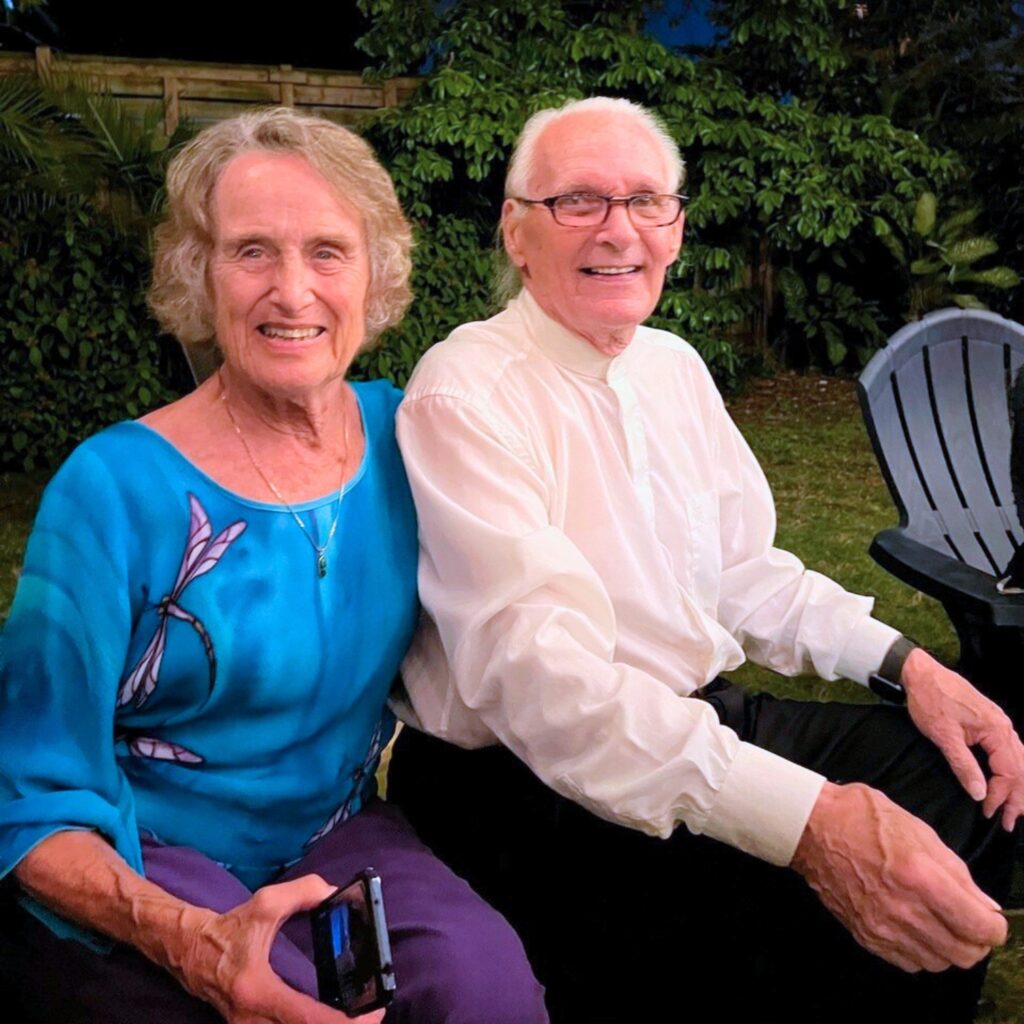
“We decided on Prairie Creek years ago,” Emily said. “We just both want a green burial. We don’t want any embalming, and we don’t want to be cremated because that’s a humongous carbon footprint. We compost stuff, you know, so I like the idea.”
They attended a home funeral for a friend in Hawthorne not long ago and decided that was what they wanted for themselves. Their family is onboard and now they are getting the necessary paperwork ready, so when the time comes, all will be in place.
Shuman even suggested they write their own obituaries.
“Then you get to say what you want said,” Hoon said.
PCCC Executive Director Heather Grove is a believer.
“The most environmentally friendly, ecologically, and responsible method is just simple natural burial without embalming fluid and putting as few resources into the ground as possible,” Grove said. “With natural burial, it’s what we did for thousands of years. Families would take care of their own dead in their own homes. It wasn’t until the Civil War, when soldiers were dying, and we wanted to get them back home to their families in good condition (refrigeration didn’t exist then), that embalming became more popular.
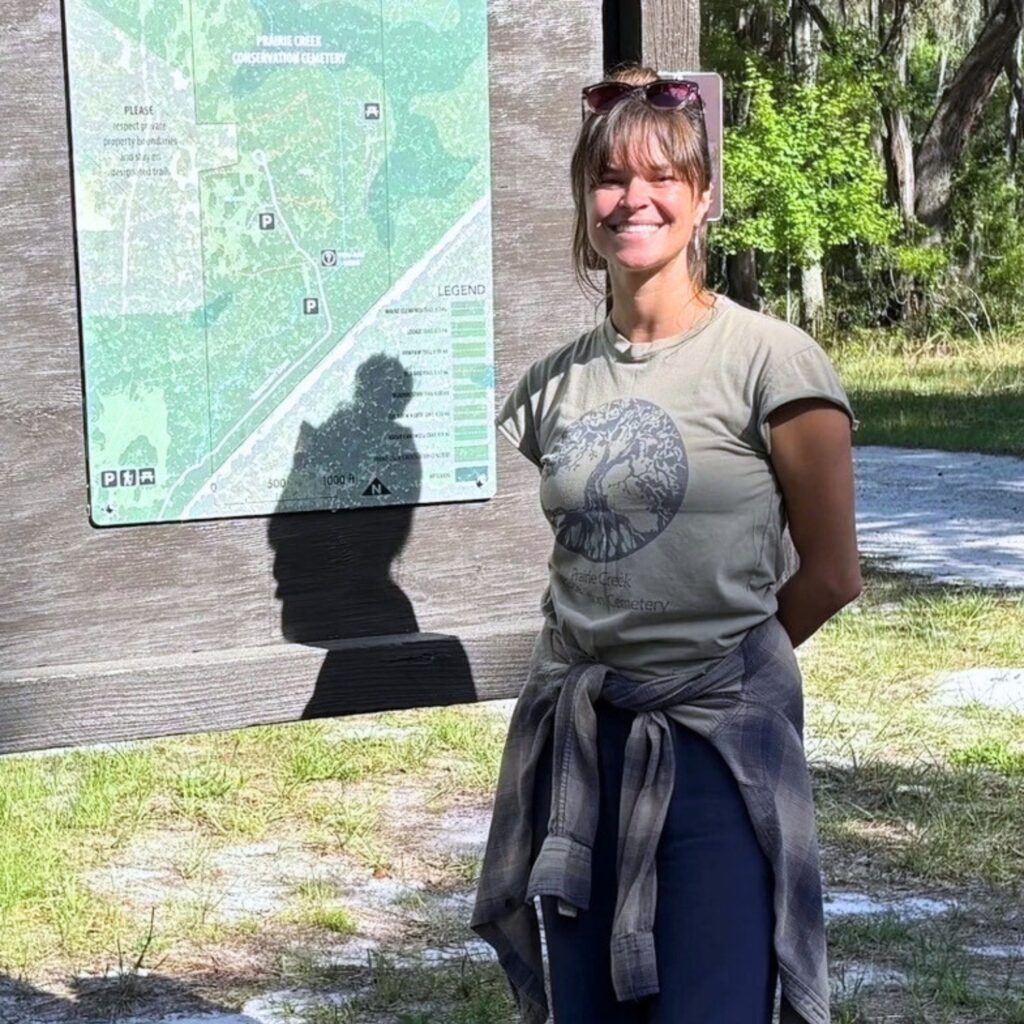
“So, what was meant to help get these soldiers home so their families could take care of them resulted in families losing touch with their dead because now they were being taken into funeral homes, and that became a service you could purchase.”
Prairie Creek was founded in 2007 and became an exempt cemetery in July 2010, with the first burial being that of Dr. Kathy Cantwell, who was laid to rest in the spot she had selected a few weeks earlier.
Today, more than 1,400 people are buried at Prairie Creek, both body burials and cremations, Grant said. Another 1,800 people are signed up for burial there by filling out a burial preference form, which is not legally binding, but helps Prairie Creek gauge capacity and availability.
Grove said Prairie Creek does about 175 burials a year, both bodies and cremated remains. The 94-acre natural burial ground is located within the larger Prairie Creek Preserve. It is one of only a handful of conservation burial grounds in the United States. Everything used in the natural burial process is biodegradable, and habitat restoration activities are an ongoing part of the land management.
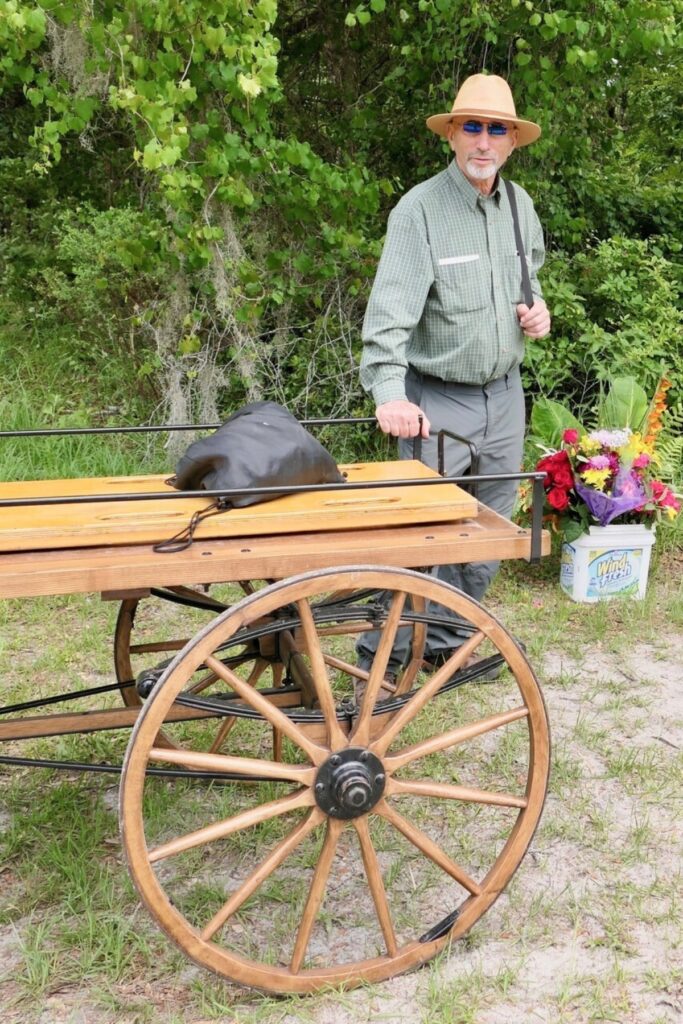
Former banker and self-described amateur historian Don Davis has made it his business to study Alachua County’s death care industry, triggering interest after he gave a presentation at the Matheson History Museum.
“The regular cemetery business has not grown as much, because they have more cremations, and they’re using more niches and more columbaria. But you can see, this has grown,” Davis said. “All of that just interested me to figure out how this industry evolved, what we have today. And what I didn’t know is, in the last 10 or 15 years, there have been significant changes with more cremations and fewer people wanting their traditional burial.”
Davis’s research also reveals that being local and family-owned are important characteristics to underscore for the funeral business. Long active in the Gainesville community are Williams-Thomas, Milam Funeral and Cremation Services and Chestnut Funeral Home.
New to Gainesville is the Family Owned Funeral Group, which now owns Forest Meadows and its cemeteries in Gainesville and Alachua County, as well as other locations in High Springs, Keystone Heights and Starke.
Connor M. Moloney, president and funeral director of Family Owned Funeral Group, says whether one opts for natural or traditional burial or cremation, service counts.
Family Owned has been here just a little over a year, and their emphasis is on service.
“We like to consider this a community center, a place where people can come and be comfortable, because I know there’s a stigma behind the funeral home,” Maloney said. “It’s not the place that people don’t necessarily want to be, but we wanted to create an inviting atmosphere, which we feel we’ve done. My mom and my wife are interior decorators.”
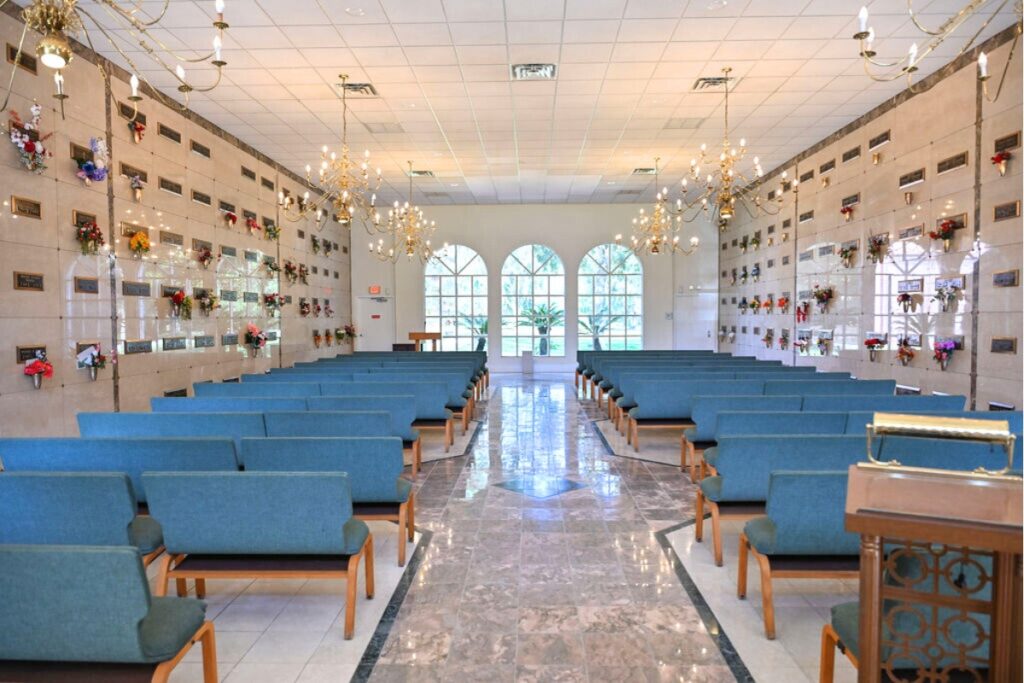
And indeed, both the funeral home itself and the cemetery and tribute center located there exude a sense of peace and tranquility.
The Forest Meadows Cemetery is now part of the family-owned enterprise with a large mausoleum chapel that houses a Tribute Center.
“We felt that, you know, that’s something that we could offer to the community, pay tribute to those who have passed,” Maloney said.
He is also a big believer in ceremony.
“It’s important that people have something because, without a service, there is no closure,” Moloney said. “Having closure is really an important part of the grieving process. Ultimately, seeing the person is the best form of closure, but even if you are opting for a simple cremation, having a memorial service is better than just having a cremation with nothing.”
He also said some families opt to purchase personalized items, like lockets or rings, “to bring something home with them that has a thumb print or a lock of hair or a small portion of cremated remains to remember their loved ones.”
Symbolic of the whole death care industry in Gainesville is “This Wondrous Place,” as the historic Evergreen Cemetery is often called. The city of Gainesville took over the cemetery in 1944 and it is the only municipal cemetery in Gainesville.
Although it is a working cemetery, Evergreen is an outdoor museum with tales to tell of local historic importance. The Evergreen Cemetery Association of Gainesville supports the cemetery’s works to provide cultural enrichment and has put together a cell phone tour of the historic site.
In Gainesville and Alachua County, the deathcare industry has come full circle.
Editor’s note: This is the latest story in Mainstreet’s award-winning Aging Matters series. It was independently reported by Ronnie Lovler and underwritten by the University of Florida’s Institute on Aging.
Suggested Articles
No related articles found.
For more information about having a free home funeral in the State of Florida with the help of Final Friends, please contact us.
352 374-4478
final.friends.org@gmail.com
https://finalfriends.org/
My mom’s cremains are buried at Prairie Creek so she is one of the 1,400 buried there and I was so happy to put money towards land conservation rather than towards a cemetery plot. She passed away at a nursing home in Lakeland but I live in Gainesville so having her buried close by where I can visit in nature (the trails there are really nice as long as there isn’t flooding) is important to me.