


Living longer but living alone. More older adults are aging solo across the United States as the average life span increases.
The Centers for Disease Control and Prevention recently released a report in January that said general life expectancy is now 79 years old, up half a year from 2023.
The Pew Research Center found in 2020 that 27% of adults aged 60 or over live alone. That number is likely now, even higher.
In Alachua County, more than 25% of seniors are solo agers.
According to Florida Health Charts, the number of elderly residents (over 65) has increased by 10,000 in the last seven years. Aging is tough, but loneliness and solitude, which can make the aging process more difficult and less joyful, is a real concern.
“There are lots of reasons,” says Jeff Lee, executive director of ElderCare of Alachua County. “First, if you’re going through the loss of a partner, and you’ve been together 40 or 50 years…there’s an emotional piece of that. But there’s an economic piece because now you’ve got the loss of an income stream.
“So, you’re having to make choices that you may not have ever had to make before. But even those people who have been solo all their lives, as you get older, your social network shrinks.”
The reason is obvious. The people you may have known and counted on before are dying.
Deborah Harris’ grandmother and great-aunt both lived past the age of 105
“After turning 100, they often shared the same observation that all of their friends had passed away,” she said. “My grandmother was an incredibly social woman who thrived on friendships. Even as her friends were gone, she remained engaged with the world by maintaining close family ties with their children and grandchildren, keeping those bonds alive across generations.
“When my grandmother passed at the age of 105, her funeral was attended by people from multiple generations, many of whom had known her since birth. In that moment, I realized that even when friends are gone, we can remain young at heart by connecting and cherishing our relationships, no matter the age.”
Centenarians are in a class by themselves, but across the board, those involved in working with “younger” seniors say staying active and staying engaged is key.
Susan Lake, a licensed clinical social worker, emphasizes the importance of seeking out ways to be mentally stimulated and to be “part of a tribe or a community.” Isolation as we age is not our friend.
“Solitude can be our friend,” Lake said. “We all need times of solitude and reflection. That’s very important as we age, but it’s equally important to have social engagement to have someone you can talk to, so you can feel heard and seen by others.”
Rai Xiao, an associate professor in the Department of Physiology and Aging at the University of Florida’s College of Medicine, says studies show that social isolation has an adverse impact on the aging brain.

“When people (or even animals) are isolated without any positive social interactions…overall mental health will be negatively impacted by social isolation,” Xiao said. “A healthy lifestyle for older people is staying engaged with society, with other people, with your friends, with your relatives. It is also important to think about lifelong learning. That is a positive reinforcement to maintain healthy aging.”
Oak Hammock offers its Institute for Learning in Retirement, open to everyone of retirement age, for a $20 annual fee.
The Alachua County Senior Recreation Center, which falls under the Eldercare umbrella, offers older adults other learning opportunities.
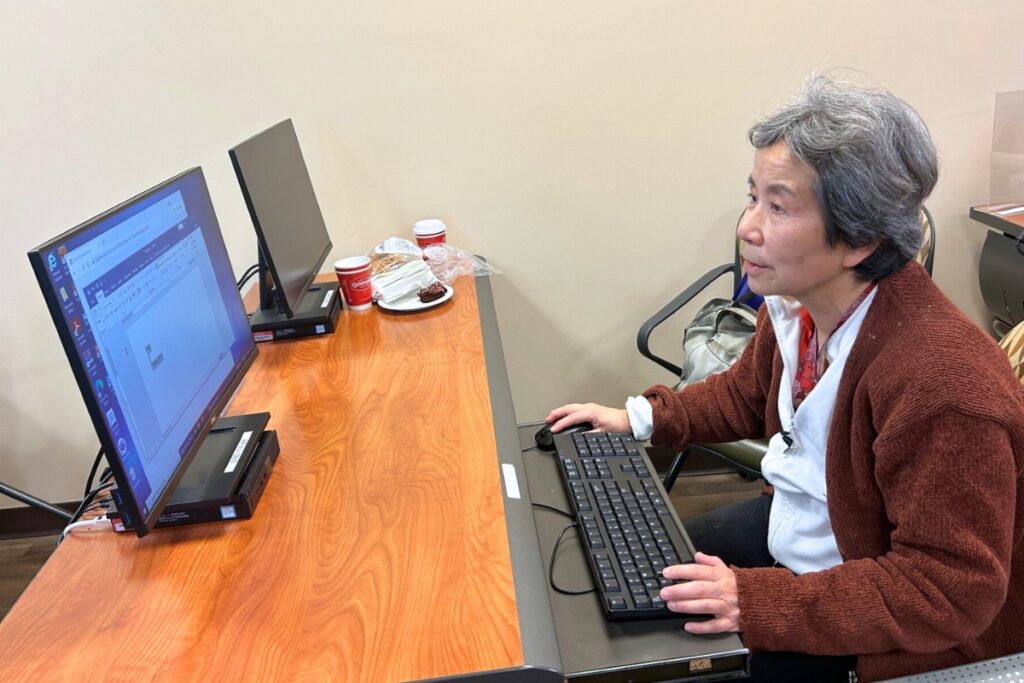
The Senior Center is open Monday to Friday from 8 a.m. to 5 p.m., and most days it is packed. It offers a wide range of activities – everything from computer, exercise, balance, and dance classes to learning how to use henna or engaging in creative writing. The Prime Time Institute sponsors speakers who offer talks on everything from the birds of India to the Daughters of the American Revolution.
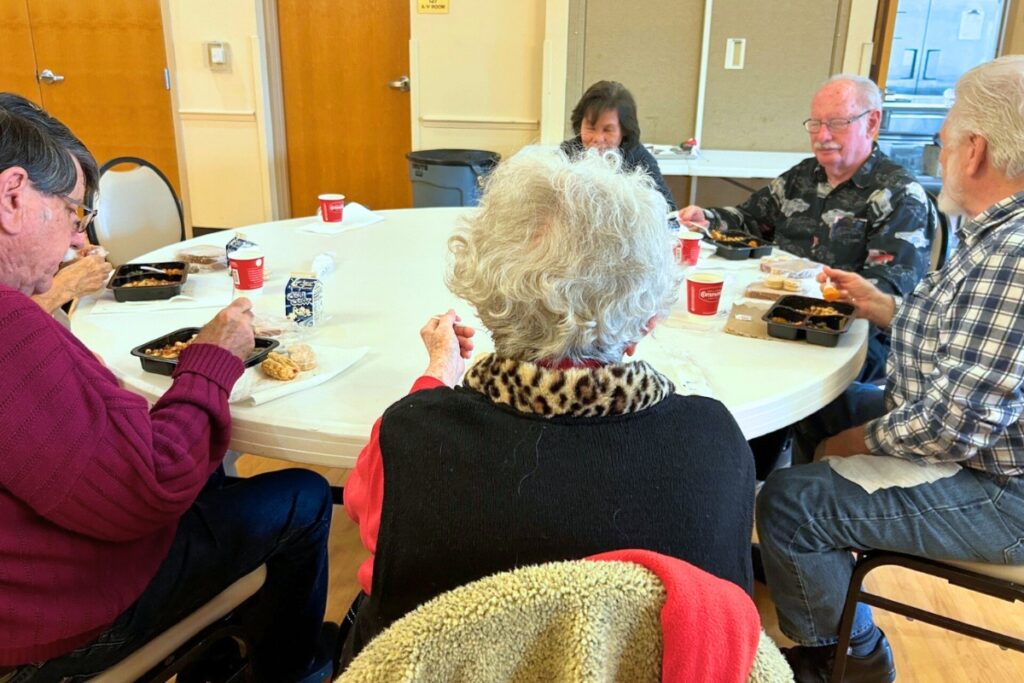
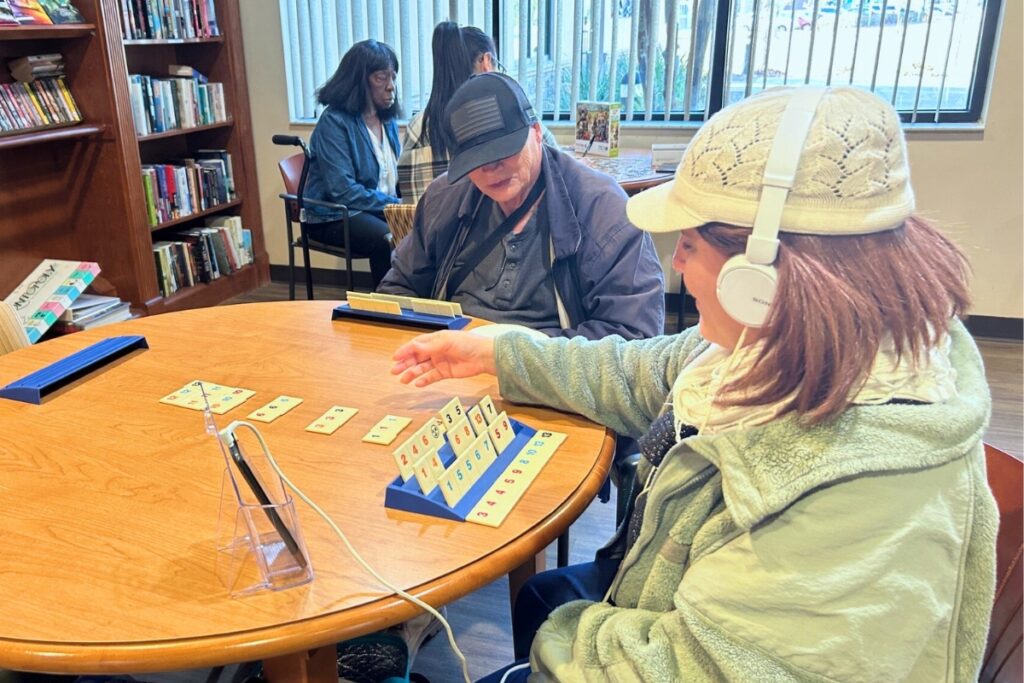
But there’s more than just intellectual stimulation. People can get the proverbial free lunch five days a week and share a meal with new friends at the Senior Center. They can also just hang out and do puzzles together or play cards or mahjong.
Sixty-nine-year-old widow Rong Ran spends nearly every day at the Senior Center. When her husband died, Ran thought she would end up “talking to the walls.”
No longer.
Ran has lunch at the Senior Center every day, takes classes there, and sees her friends there.
“It makes me happy, and I don’t feel so lonely,” she said. “And I’m very interested in learning anything.”
Ran is doing what the experts recommend. She is getting out, she is doing things, she is being social, she is mingling.
So are Millie Taylor, 59, and her husband, Russell, 71, who like to take advantage of the games and puzzles that are available in the lounge area. In other words, they can socialize and have fun.
“We are here mainly for the socialization,” Taylor said. “I didn’t realize how important the Senior Center is until we started coming here. We really enjoy it.”
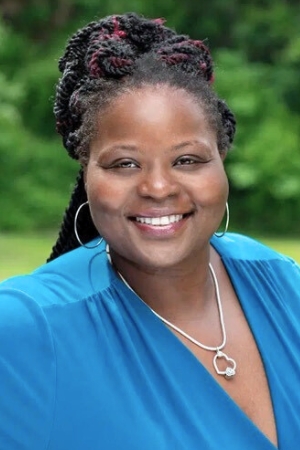
Katina Mustipher, CEO of Elder Options, says her organization offers numerous classes to help aging adults and those who care for them cope and adapt to their changing circumstances, including sessions for caregivers.
But they also draw upon seniors for their volunteer pool, which becomes a win-win situation, since once older adults engage with others, they also find they are doing something for themselves as well, singling out the agency’s SHINE program, which provides Medicare assistance.
“We have people who’ve been volunteering for over 15 years,” Mustipher said. “They’ve developed a bond with some other volunteers, and they become like family with them. So that’s another opportunity for them to develop a network of family and friends or friends who become family.”
She also emphasized the importance of learning.
“I think sometimes seniors become isolated because they think they can no longer learn something,” Mustipher said.
She talked about a conversation she had with an older adult who, at first, told her she didn’t want to learn anymore. But as they talked, Mustipher realized that was not really the case, but that the individual simply did not find the learning choices offered to be appealing.
“So, I think figuring out what you want to do, what you want to learn, that is what’s key,” she said.
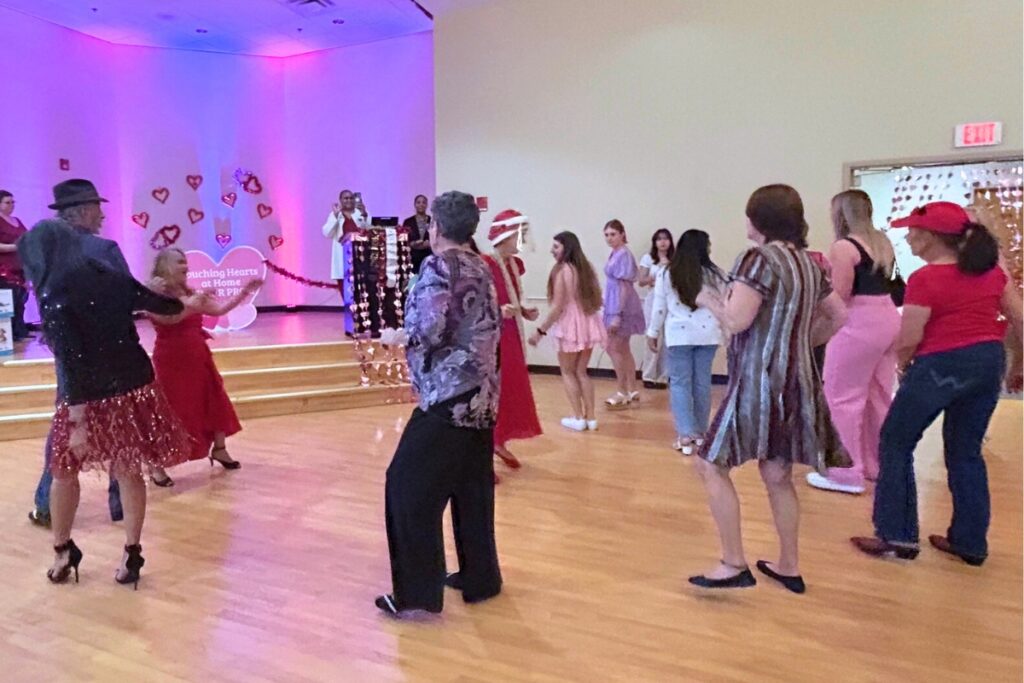
Special events at the Senior Center, such as the annual Valentine’s Day Dance sponsored by Touching Hearts at Home, provide seniors with an opportunity to dress up, dance to the music, socialize, and have a good time. This year’s event was to benefit ElderCare, and particularly the Senior Center.
“It gives our seniors an outlet, a place to be seen, feel heard, and a place where they can actually feel welcome, like they’re not burdening anybody, and they can get the cognitive and social stimulation that they really need,” said Touching Hearts Executive Director Christina M. Ramos.
Providing companionship to those that they care for is key to their services, Ramos said.

“For us, the companionship is about so much more than just a person to talk to or to feel supported,” Ramos said. “We provide all our personal care services in addition to making sure that they’re getting social and cognitive stimulation. And oftentimes, our caregivers will spend more time with our clients than with their own family.”
Margo Cook, whose 86-year-old mother recently passed away from Alzheimer’s, hired a Touching Hearts caregiver who became her mom’s constant companion, giving her and her sister peace of mind.
“She had her person who was giving her 100% attention,” Cook said. “Melissa (her caregiver) would get her out of her room and take her to activities, and even just get her out of the memory care unit. “They’d go for a walk before she had trouble with mobility. We went from a little bit of companionship at the beginning to being there at the very end. Melissa was there when she took her last breath.”
And ultimately, a little bit of sunshine and Vitamin D can go a long way, said Lake. “For those who are still mobile, try to get out each morning and take a walk. Get out in the fresh air. It helps.”
Editor’s note: This is the latest story in Mainstreet’s award-winning Aging Matters series. It was independently reported by Ronnie Lovler and underwritten by the University of Florida’s Institute on Aging.
Suggested Articles
No related articles found.
Very informative article , Ronnie. Well-developed concisely written piece.