



Stacy Johnson loved his job as an MRI technician assistant. He used warmth and humor to ease patients’ anxiety about getting into a scary-sounding machine. He never thought he’d be in that position himself.
In 2023, Johnson — a resident of Gainesville — suddenly had trouble making his left hand into a fist, and his left leg stopped working. After an MRI found two nerves pressed together in his neck, he had surgery to untangle them.
But lingering mobility issues kept him from returning to work, and without insurance, he couldn’t afford physical therapy. Being unable to do things he loved — like mowing the lawn, washing his car and helping family members with physical tasks — had begun to affect his mental health.
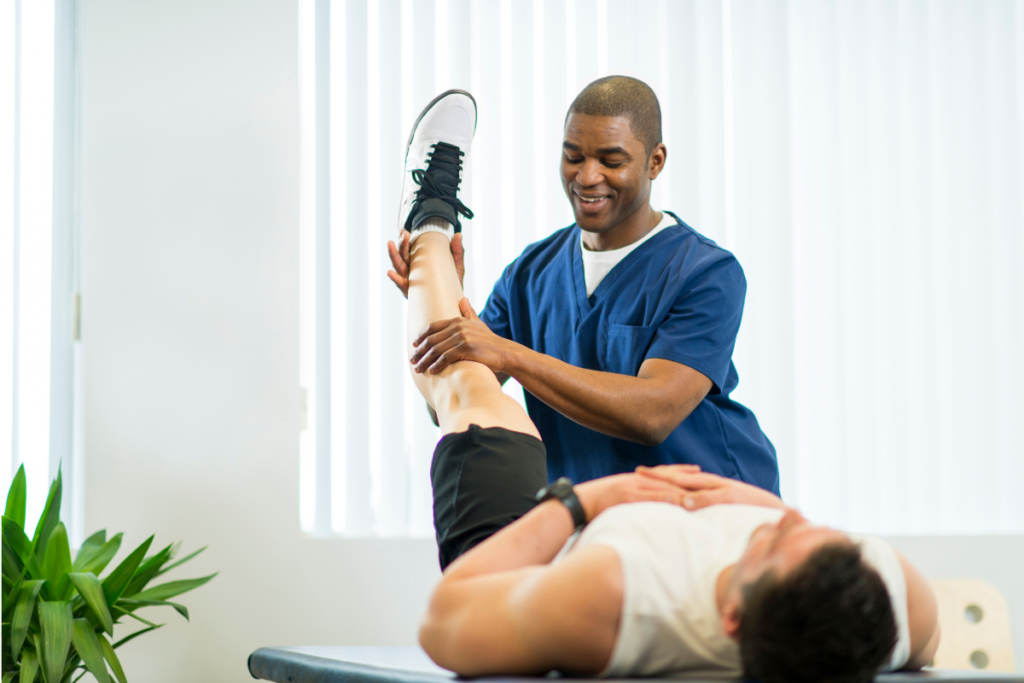
Then, he heard about the Physical Therapy Equal Access Clinic, one of the University of Florida College of Public Health and Health Professions’ three student-led clinics offering care to community members who are uninsured or unable to afford high copayments. Johnson now attends the clinic regularly, receiving physical therapy from doctoral students and helping them grow as health care providers.
“This place is amazing. It’s life-changing,” Johnson said. “It got me back on track mentally because I was going downhill.”
Serving the community
The clinic is part of the interprofessional UF Health Equal Access Clinic Network, established in Spring 2009 by a cohort of Doctor of Physical Therapy students.
Patients receive care from small groups of students who are supervised by faculty and local clinicians. Operations are supported by contributions from UF alumni Rolf and Anne Kuhns, as well as funds raised by students.
The model has evolved over time, from taking walk-ins only to offering telehealth visits during the COVID-19 pandemic, then creating an appointment scheduling system to give students experience with the administrative side of care.
The clinic is open Thursday evenings while UF classes are in session, typically serving eight to 10 patients each night. Cases might include spinal cord injuries, amputations, and balance and gait issues — the whole gamut of diagnoses seen in any outpatient physical therapy clinic, said Kim Dunleavy, Ph.D., P.T., a clinical professor of physical therapy at UF and director of community engagement.
Before patients arrive, small groups of students meet with a faculty member or clinician to review notes for returning patients or go over what to look for during intake, like medications and syndromes that could affect care plans. During appointments, students can confer with supervisors if they get stuck.
That alleviates some anxiety students may feel about potentially making a mistake, said second-year Doctor of Physical Therapy student and clinical director Alexis Tamvakis.
“It’s an environment that’s meant for learning,” Tamvakis said.
Making an impact
Students also learn adaptability in the clinic, Dunleavy said. Patients might be emotionally upset or have goals that differ from a student’s treatment plan, and learning to pivot and communicate is crucial.
“There’s complexity to it,” Dunleavy said. “Those are the learning processes that you can’t get in a classroom, working on your peers.”
Students have voiced appreciation for the opportunity to have an immediate impact on their community and to connect with patients during a vulnerable time.
“A patient is so much more than their pain, their diagnosis or injury,” said second-year Doctor of Physical Therapy student Brooke Dorr. “They’re athletes, they’re grandparents, they’re students, they have jobs and lives. We’re there to help them return to the activities that bring them joy.”
Editor’s note: This is the latest in a series of columns sponsored by the University of Florida.

Suggested Articles
No related articles found.