



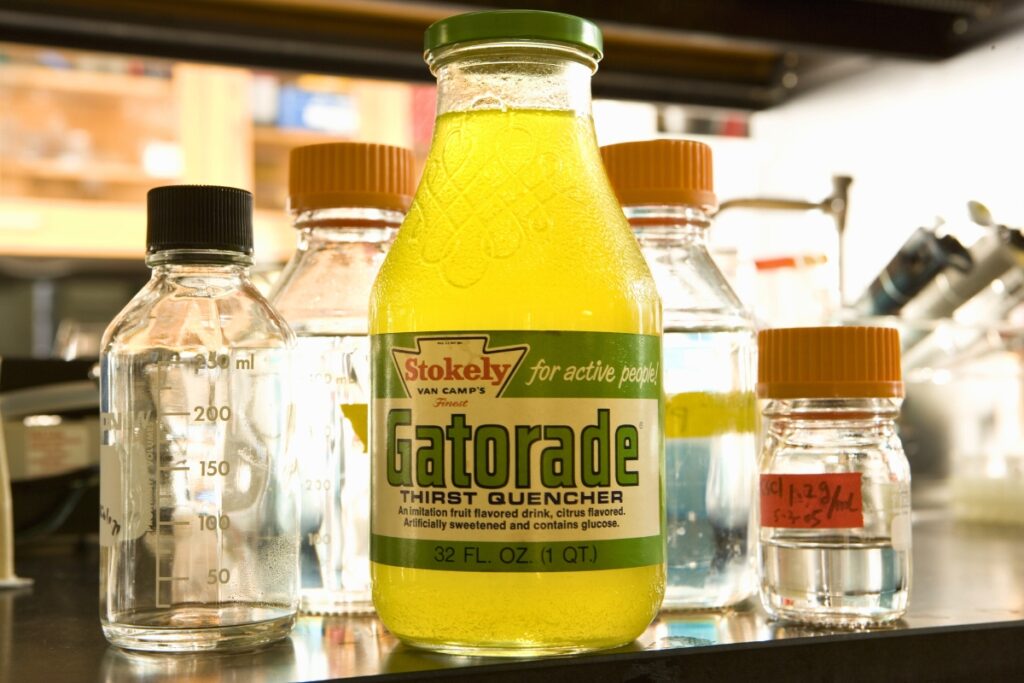
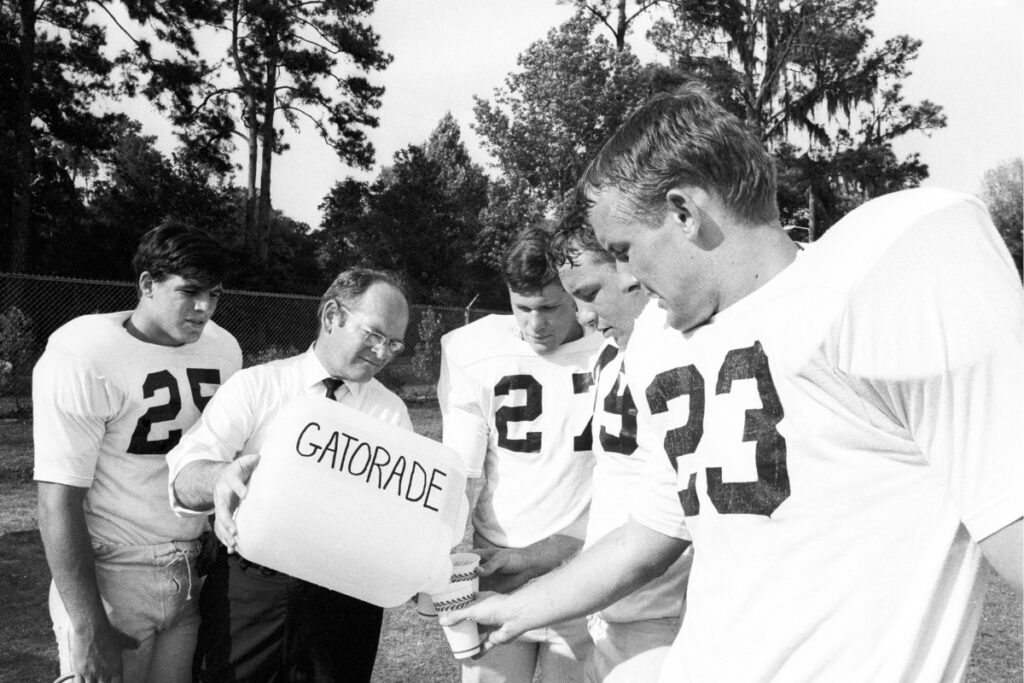
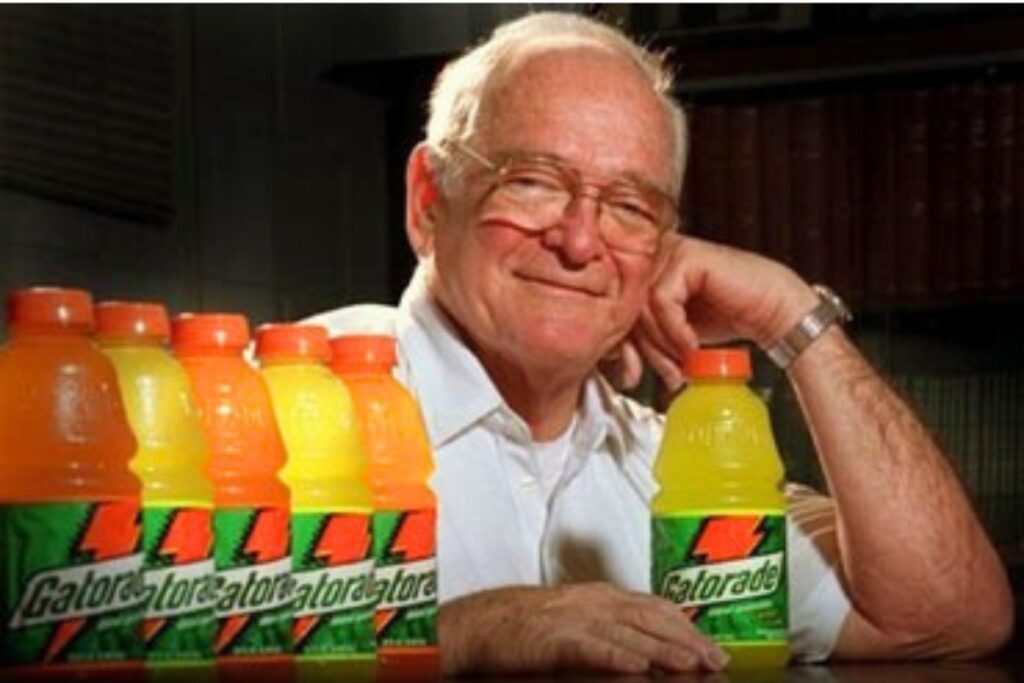
Thursday marked the 60th anniversary of Gatorade, created by Dr. Robert Cade and a team of scientists at the University of Florida in 1965 to help the Gators’ football players overcome dehydration.
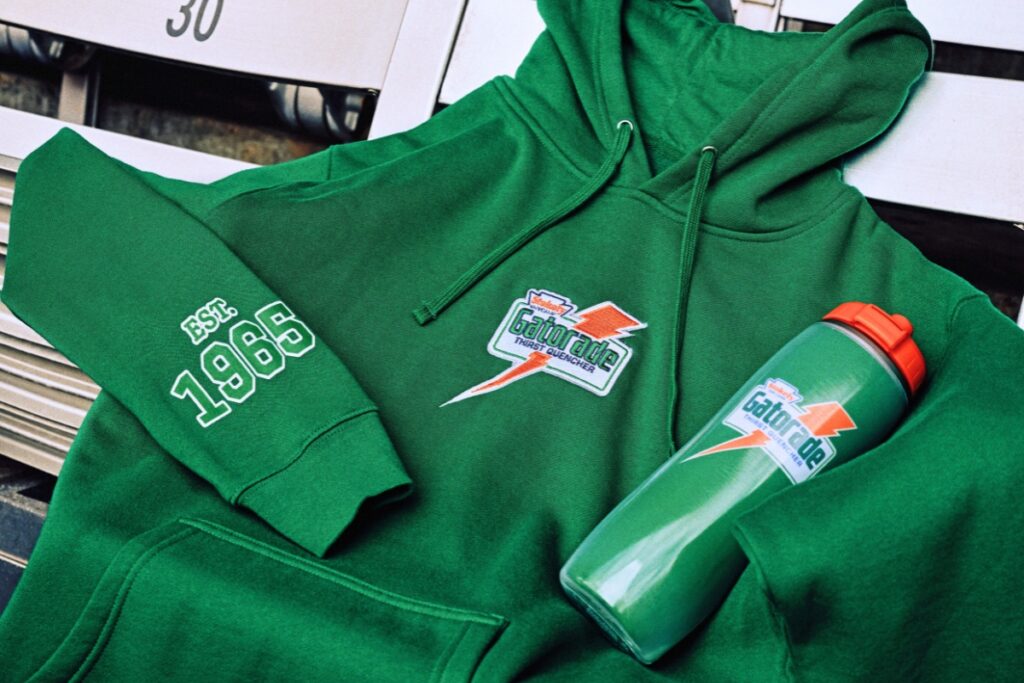
To celebrate, Gatorade is releasing limited-edition retro apparel collaborations with Lafavre and Mitchell & Ness to bring the life of Gatorade’s origin story, along with its 60-year legacy, and will also show up on Saturday when Florida hosts Texas in a primetime football matchup.
The football game will feature throwback Gatorade cans that recreate Cade’s iconic lemonade stand, along with taking over the sidelines with retro equipment. The first 1,000 fans outside Gate 2 of the O’Connell Center will also receive free retro merchandise and samples. The UF Marching Band will deliver a special halftime tribute honoring Gatorade’s history.
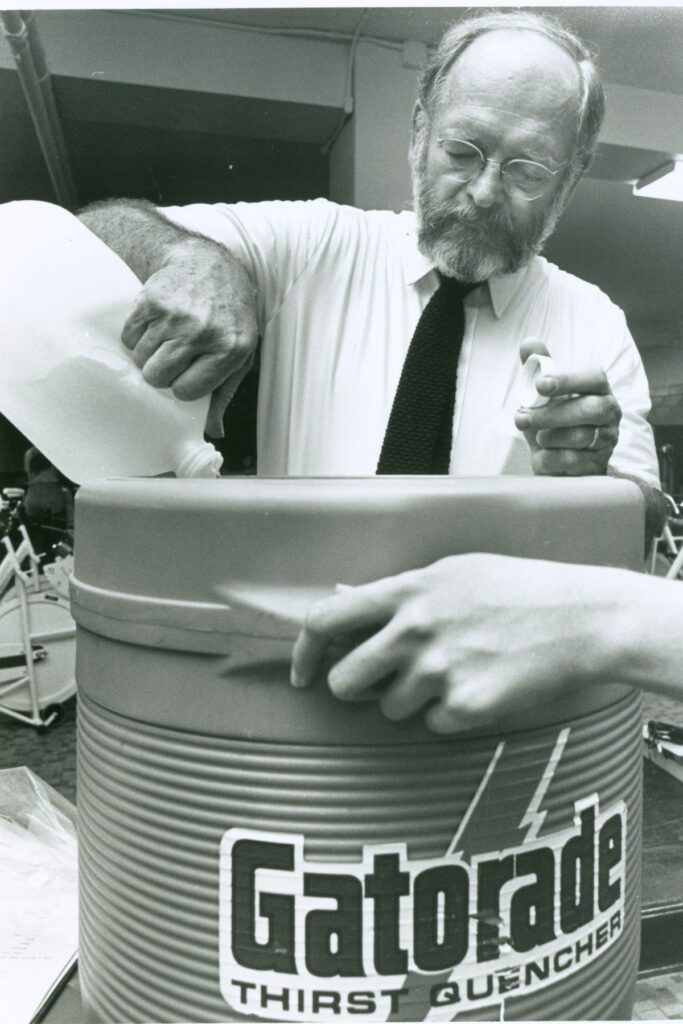
Brand leaders and partners emphasized the significance of the anniversary.
“For 60 years, Gatorade has fueled athletes on the field, while Mitchell & Ness has celebrated their stories off of it,” said Nana Adu-Adjei, vice president of apparel at Mitchell & Ness, in a press release.
Lafavre founder Kasey Faver added, “This capsule celebrates the birthplace of Gatorade and UF’s athletic tradition, reimagined through bold design.”
Phoebe Cade Miles, Cade’s daughter, reflected on her father’s impact.
“The 60th anniversary of Gatorade is a testament to his belief that science can truly change the game,” she said.
Suggested Articles
No related articles found.
Oh, didn’t you know? The sports drink was invented three year prior to 1965 at Florida State University. It was called “Seminole Firewater,” and UF took the formula and called it Gatorade.
At least that’s the myth perpetrated around Tallahassee. According to Google, “(Seminole Firewater) may have existed (but) there is no evidence that it was patented or that its formula was shared with the UF researchers. . . . A representative from the University of Florida reportedly learned about the importance of sodium and potassium for hydration at an FSU athletic conference in 1964, which may have prompted further research at UF.”
(If you want to read an elaborate “proof” of the “Seminole Firewater” claim, read https://www.tomahawknation.com/f/2010/5/26/1488690/why-did-the-fsu-seminoles-let-uf.)