


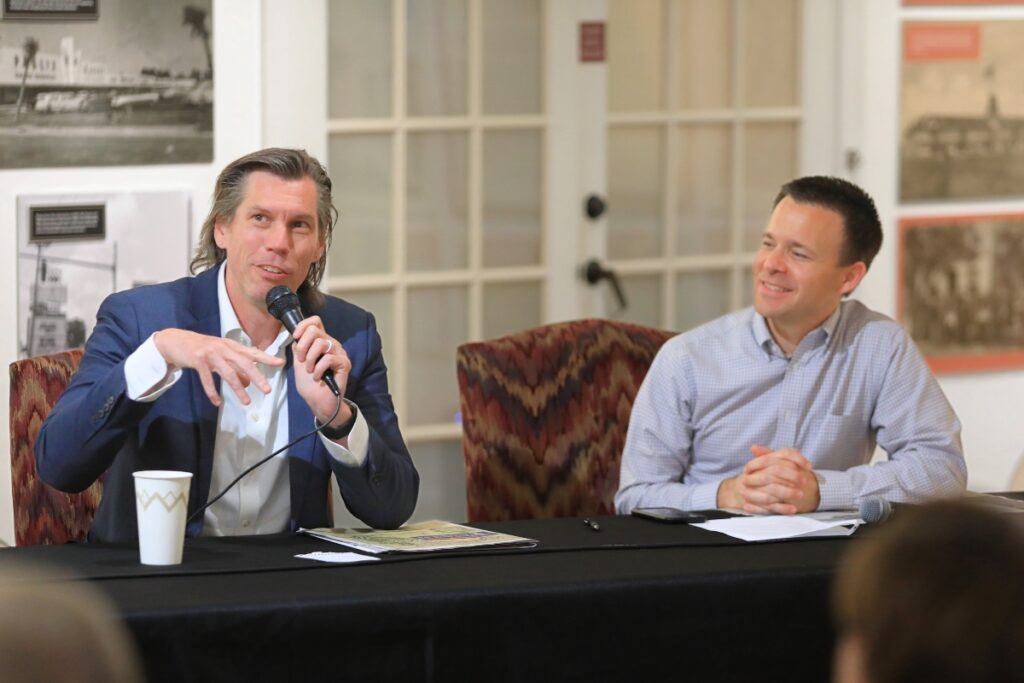
- Mainstreet Daily News hosted a three-member panel with local historians on Tuesday night to discuss Florida's role in the American Revolution.
- Florida remained loyal to Britian during the war, and historians highlighted how at the event, made possible by Florida Humanities and Florida Press Educational Services.
Florida officials declined an invitation to the First Continental Congress in 1774.
West and East Florida, divided by the Apalachicola River, had recently entered British rule after the Seven Years’ War (or French and Indian War) and consequently received an influx of English settlers who had fought for the crown and had no inclination to change loyalties.
In fact, leading Floridians fought against the Revolution in a history lost from the traditional American Revolution narrative.
Thomas Brown, loyal to England, fled to Florida after getting attacked by revolutionists, losing toes after his feet were branded. He led the King’s Ranger, or East Florida Rangers, in raids against the revolutionaries rebelling against the crown as George Washington authorized five different invasions against East Florida throughout the war.
In Gainesville, three panelists told that story on Tuesday night as part of Mainstreet Daily News’ Forgotten Front: Florida During the Revolutionary War event at the Matheson History Museum. The event was made possible by a grant from Florida Humanities in partnership with Florida Press Educational Services.
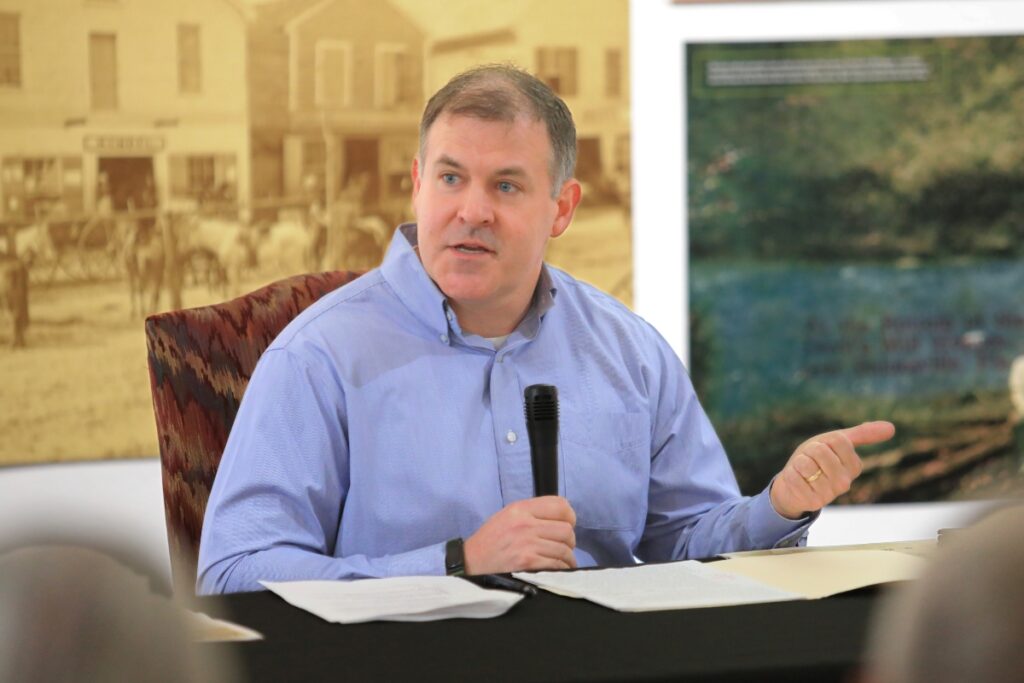
Dr. Jon Rehm, one of the panelists, stole a pen to take notes on a small scrap of paper.
“That was fascinating. I mean, absolutely fascinating, and I know that was simply a brief overview,” Rehm said before talking about how Florida high school curriculum teaches students the Revolutionary War.
Rehm is the K-12 Social Studies Curriculum Specialist for Alachua County Public Schools. He said the Florida portion of America’s independence is untold because even teachers likely never learned it.
Mainstreet’s other two panelists explained why that might be.
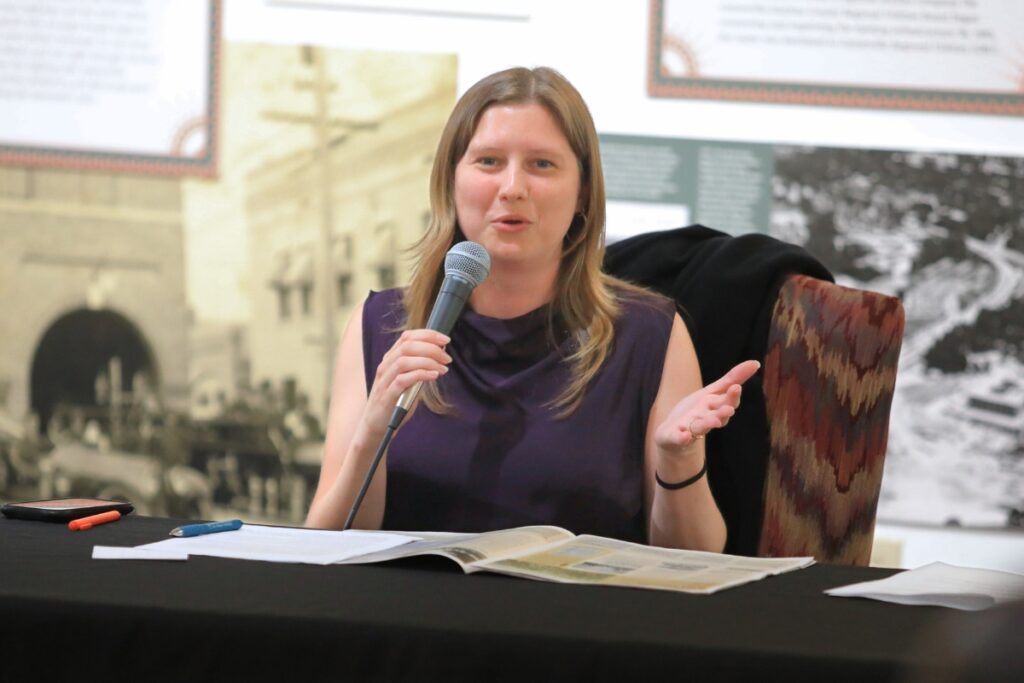
Dr. David Silkenat is the Richard J. Milbauer Chair in Southern History at the University of Florida. Dr. Olivia Barnard is an assistant professor at UF who researches the history of the Gulf South in early America.
Barnard overviewed the history to Florida from French hands to Spanish to British and then Spanish again before becoming a U.S. territory and then the 27th state in 1845.
Silkenat said Florida wasn’t on the periphery of the revolution from the British perspective, especially as the lone loyal colony in the American South.
“Florida is not on the periphery of the American Revolution,” Silkenat said. “If you look at British maps of the New World, Florida is right in the middle. And Florida is what separates the territories in rebellion from the territories [Britain] actually cares about.”
The territories they cared about were the Caribbean holdings—Barbados, Jamaica, Barbuda, Bahamas and so on. Small landmasses making large profits for the British.
Silkenat said Florida’s white settlers at the time viewed the Founding Fathers’ papers and views as radical. As a result, the state became a refugee center for loyalists escaping the war and a jail for British prisoners.
Three signers of the Declaration of Independence were held prisoners in St. Augustine, along with the lieutenant governor of South Carolina and a printer who had dared make copies of the declaration in Charleston.
In the northern colonies, the revolutionaries won the battle of the press, but Florida had no newspaper to carry those ideas and try to change minds.
While British residents resisted the revolutionary fever, Florida and the South proved fertile ground for others, Barnard said.
José Antonio Aponte would lead a large slave rebellion in Cuba. He fought in West Florida during America’s revolution as part of the Free Black Militia. Henri Christophe was at the Siege of Savannah as a boy before returning to Haiti and leading a revolution, culminating with himself as king.
Once Britain lost, Florida returned to Spanish hands and the loyal English residents left for better prospects in the Caribbean, like Brown, or back in England.
Silkenat said the constant switching hands and exodus of loyalists from Florida means no one told the story of how the area was involved in the war. Meanwhile, written records from the Native Americans living here, over half the population at the time, or African Americans in Florida are scarce.
The records and statues of the men important in Florida during the Revolutionary War are in other cities and countries where they moved after losing.
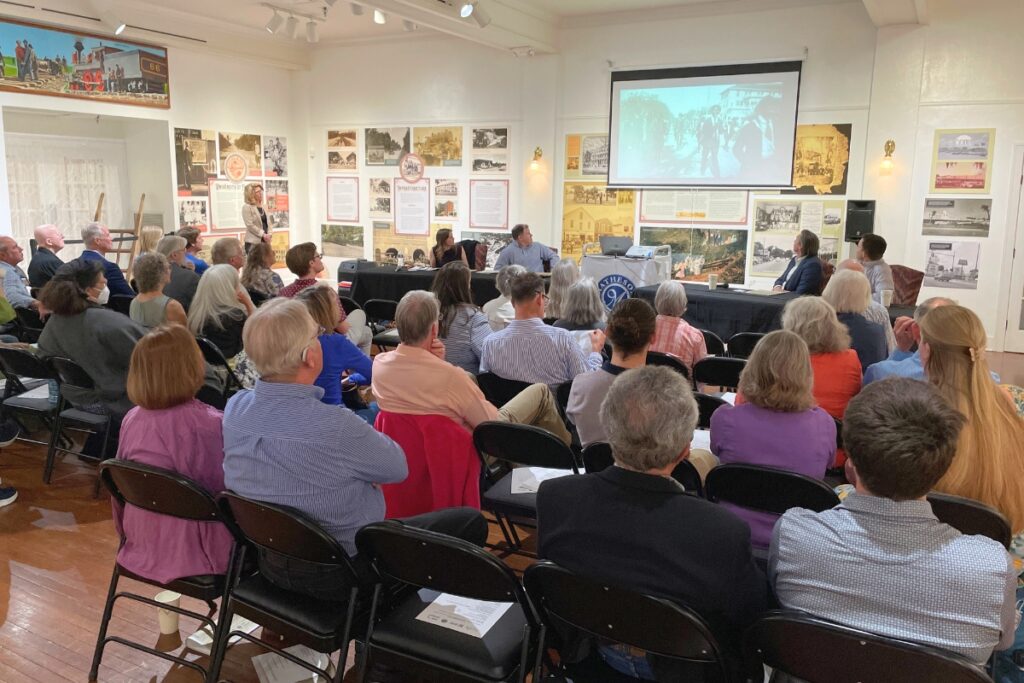
More than 50 people attended the event, which included a time for audience Q&A.
“It was great to see people engaging with this interesting, often-ignored part of the American story,” said moderator J.C. Derrick, publisher of Mainstreet Daily News. “One of the keys to understanding history is seeing it through different perspectives, and the loyalist perspectives of colonial Floridians provide great insight into the founding of our country.”
Mainstreet distributed 3,800 copies of the Forgotten Front special section, created by the Tampa Bay Times, this week in Alachua County schools. To view the 16-page special section, which includes a timeline, maps and more, visit Mainstreet’s website.
Here’s additional resources recommended by the panel:
- Fourteenth Colony: The Forgotten Story of the Gulf South During America’s Revolutionary Era by Mike Bunn
- Black Society in Spanish Florida by Jane Landers
- Liberty’s Exiles: American Loyalists in the Revolutionary World by Maya Jasanoff
- Independence Lost: Lives on the Edge of the American Revolution by Kathleen DuVal
- The American Revolution and the Fate of the World by Richard Bell
- The American Revolution at 250: Twenty-Four Historians Reflect on the Founding edited by Francis Cogliano
Suggested Articles
No related articles found.
It is really great that you participated in this project and I hope Mainstreet Daily News continues to work to bring opportunities for education to our area.