

- Amy Trask opposes HB 1451 and GRU Authority preemption because they erode home rule and undermine local control over utilities in Gainesville.
- Trask criticizes Florida's recent budget deadlock, citing a $1.4 billion gap between House and Senate proposals and calls for reforms that empower local communities.
Editor’s note: This is the second of three questionnaires that Mainstreet will publish, giving local challengers for Florida Legislature seats the chance to tell constituents how they would have voted had they attended the 2026 session.
The first and third questionnaires include Florida House District 21 candidates and Florida House District 10 candidates. Mainstreet will also publish a set of Meet the Candidates questionnaires following the qualifying period.
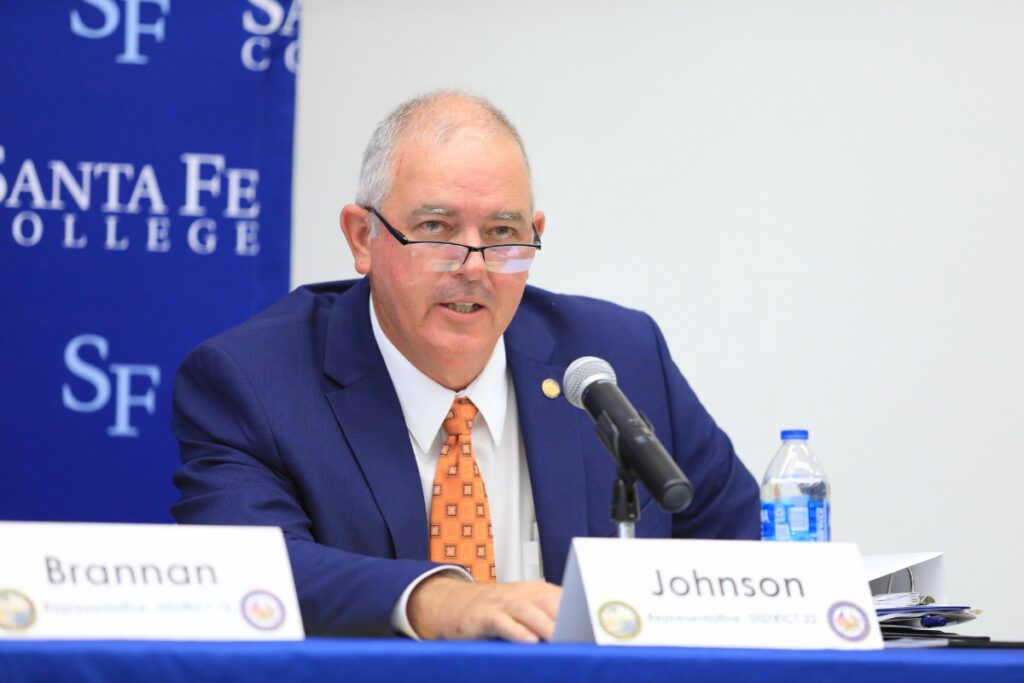
State Rep. Chad Johnson won his first term in 2024 and prepares to defend the District 22 seat for the first time.
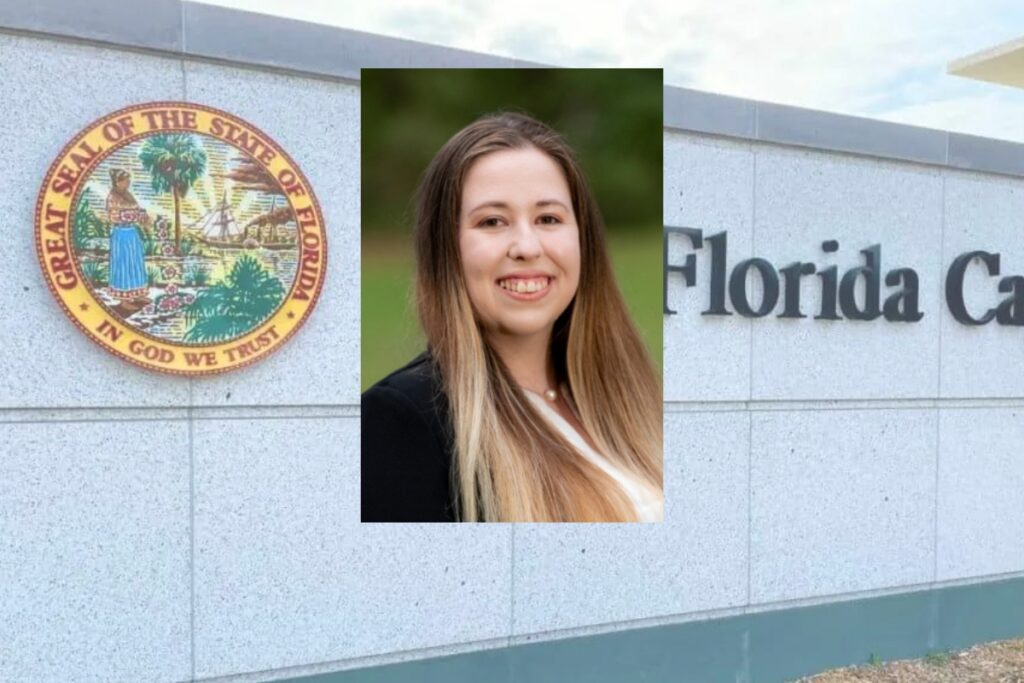
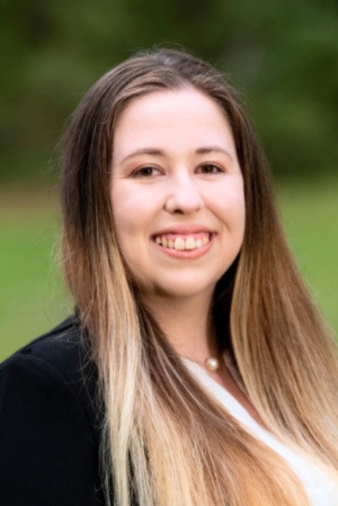
The Chiefland-based representative has one challenger so far. Amy Trask filed her campaign in October.
Trask lives in Gainesville and also ran in 2024 for the District 22 seat. But Trask failed to earn the Democratic Party bid, losing to David Arreola, who eventually lost to Johnson.
The candidate was given the following questions. The answers are printed verbatim.
- Why would you or wouldn’t you support HB 1451 and the GRU Authority preemption?
- What bills passed that you wish had failed?
- What bills do you wish you could have co-sponsored?
- How do you view the current relationship between the House and Senate, given two years without passing a budget during the normal session?
- What considerations would guide you through the upcoming special session on property tax reform?
- What are your thoughts on HB 991 (proof of citizenship to vote) and would you vote for it?
Why would you or wouldn’t you support HB 1451 and the GRU Authority preemption?
Trask: I would not support HB 1451 or the GRU Authority preemption because both measures erode home rule, one of the most fundamental principles of Florida governance. GRU belongs to the people of Gainesville, and its oversight should remain with leaders who are directly elected by, and accountable to, the community they serve. When the state removes that authority and hands it to an appointed board with no electoral accountability, it weakens democratic control, reduces transparency, and limits the community’s ability to shape its own energy future.
The broader concern is the precedent. If the state can preempt local authority over a city-owned utility today, it becomes easier to override local decision-making in other areas tomorrow. The uncertainty undermines long-term planning for every municipality in Florida and chips away at public trust.
Strong utilities and responsible fiscal management matter, and are essential, but they’re best achieved through transparent, collaborative state‑local partnership, not by sidelining home rule.
What bills passed that you wish had failed?
Trask: I’m grateful that many harmful bills were stopped or softened, but measures like HB 991, HB1471, HB 1001, HB 1451, SB 1134, SB 1296, HB 905, and HB 1217 are still disappointing to see passed. Bills that restrict voting, weaken unions, attack home rule, limit reproductive freedom, or marginalize LGBTQ Floridians move us backward.
What bills do you wish you could have co-sponsored?
Trask: I’m proud of the 10 bills I authored this session, including the four that were formally introduced, and I wish I could have sponsored them directly. Beyond those, I would have welcomed the chance to co‑sponsor strong, community‑focused measures like HB 325, SB 386, HB 441, HB 1019, SB 984, HB 753, HB 277, SB 302 and SB 340.
How do you view the current relationship between the House and Senate, given two years without passing a budget during the normal session?
Trask: The relationship between the House and Senate has grown increasingly strained, and two consecutive years without passing a budget during the regular session reflects that tension. Last year, both chambers stood together to assert their independence when the Governor called a politically charged special session, gaveling in and out within just a few minutes, but that unity against executive pressure really hasn’t translated into alignment with each other.
This year, the divide was about priorities: what to cut back or invest in. The House and Senate budgets were roughly $1.4 billion apart, with the House advancing the lower $113.6 billion proposal. The House also pursued a massive property‑tax elimination plan that would end nearly all property taxes except those for schools. Senate leadership argued that the approach was too strict, too soon, and pushed for rural carveouts and a more balanced fiscal approach. The chambers also diverged sharply on environment, education, and housing investments.
These differences aren’t at all unusual in a bicameral system, but when they aren’t worked
through early, they lead to gridlock, rushed special sessions, and uncertainty for communities that rely on predictable state planning. We need to find a way to get it done and to do it better.
What are your thoughts on HB 991 (proof of citizenship to vote) and would you vote for it?
Trask: I wouldn’t support HB 991. Florida already requires proof of citizenship to register, and our supervisors of elections are doing that work every day and have multiple verification tools in place. This bill adds another layer of bureaucracy without solving a real problem, and it risks tripping up the very people who’ve earned their place in our democracy: naturalized citizens, longtime Floridians, seniors, and anyone who doesn’t have original documents at their fingertips.
For me, voting is the purest expression of home rule. It’s how communities choose their own leaders and chart their own future. When the Legislature adds redundant hurdles, it sends a message that participation should be harder, not easier, and that’s a dangerous precedent for any democracy.
We can protect election integrity without discouraging eligible voters. HB 991 doesn’t strike that balance, and I believe Florida is stronger when every lawful voter can participate without unnecessary barriers.
What would guide you through the upcoming special session on property tax reform?
Trask: What will guide me through the upcoming special session on property tax reform is the same thing that guides me through every policy decision: protecting people, strengthening communities, and defending home rule. Property taxes aren’t abstract numbers; they determine whether families can stay in their homes, whether seniors can age in place, and whether local governments can keep firefighters on duty, maintain parks, and fund essential services. Any reform must balance relief with responsibility.
I’ll be looking closely at whether proposals respect local decision‑making. Cities and counties know their budgets, their growth patterns, and their residents’ needs far better than Tallahassee does. When the state imposes one‑size‑fits‑all mandates or revenue caps, it can unintentionally destabilize local services and shift costs onto working families in other ways. I want reforms that empower communities, not strip them of the tools they need to govern effectively.
Any policy seeking to address costs should aim to provide relief that’s real, reforms that are responsible, and a process that keeps local voices at the center.