



- Gainesville plans to finalize and submit its comprehensive ImagineGNV plan to the state by April 2026, allowing for a possible short delay if needed.
- Community feedback was primarily gathered in 2021, with the City Plan Board discussing the plan next week before a January 22 commission review meeting.
Following up on its November meeting, the Gainesville City Commission gave broad feedback on its comprehensive plan, ImagineGNV, ahead of its April 2026 submittal to the state.
The comprehensive plan is a legally binding document that shows how the city plans to grow in the coming decades and informs citizens and developers of that trajectory and guidelines. This comprehensive plan version has been in the works for several years, and city staff have worked to make what is typically a complex planning document accessible to residents.
Commissioners submitted their own feedback in the last month, and staff said they plan to analyze and implement the feedback ahead of the next meeting. The Thursday meeting allowed the commissioners to discuss their feedback with each other.
City Manager Andrew Persons said staff still plans to meet its April deadline, but if the city feels it needs more time, he said Gainesville can send a letter to the state for a delay.
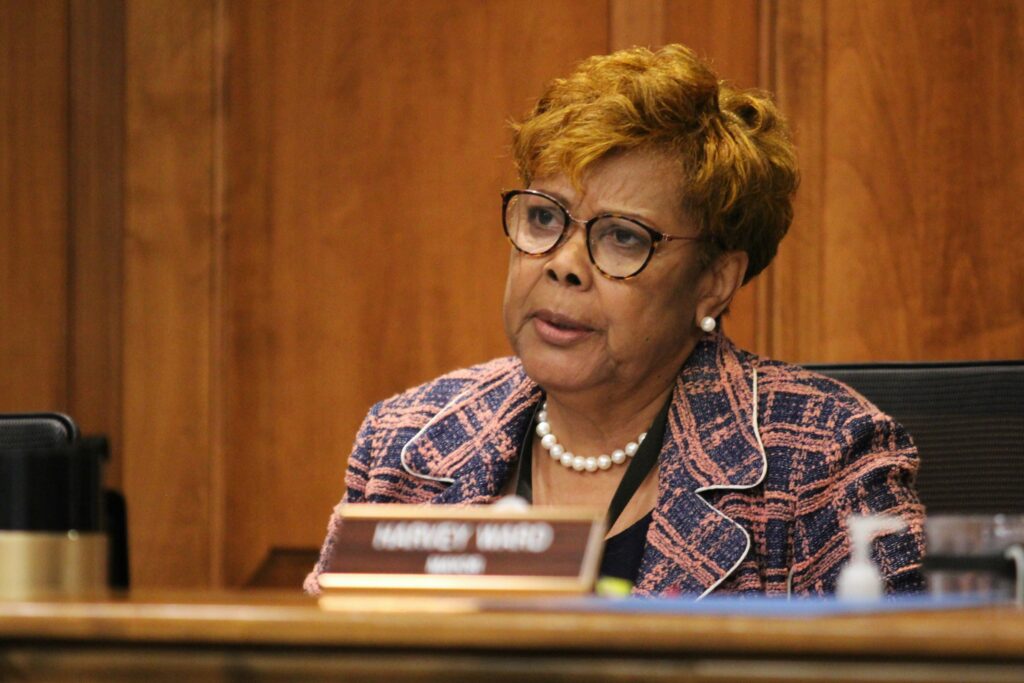
Mayor Harvey Ward and Commissioner Ed Book said they would be alright with a short delay, but the comprehensive plan needs to be submitted next year.
The city held the majority of its community engagement on the issue in 2021, holding community meetings and workshops. However, citizens can still provide feedback.
Forrest Eddleton, director of sustainable development, said a lot of the feedback needs to be submitted at least a week before the city’s January 22 meeting to allow staff to review it.
Commissioner Bryan Eastman brought up the narrative sections of the comprehensive plan, meant to guide laymen through the document. He said the narratives seem to come from different sources, with many of them “hyper-focused” on historic inequities. But these narratives don’t mention other characteristics of the city like tree-lined streets, walkability and historic neighborhoods.
Eddleton said a lot of the narratives come from a consultant’s report from several years ago. He said the language was staff-edited in some sections and updated in others because of the amount of time that has passed since the report.
Commissioner Cynthia Chestnut said the narratives make the document interesting for someone who, like her, isn’t a planner. She said she’d like to see stronger wording concerning low-income residents and how they interact with city programming.
Chestnut also asked about the many key performance indicators listed throughout the document. Once an indicator is reached, would the document require revision, she asked.
Eddleton said many of the indicators will always be goals staff strives toward, where they’ve been achieved for a topic like walkability, would be up to the City Commission and community to say.
But Ward said that despite tweaks that could continually be made to the comprehensive plan, the city needs to send one to the state that will sit on file for the next ten years.
“There is no end in a community like ours, on a commission like ours, to the number of sideroads that we can take with this because it is interesting and it is important,” Ward said.
The City Plan Board will discuss the comprehensive plan next week and then the City Commission will take the issue back up on Jan. 22.
Suggested Articles
No related articles found.
These bought and paid for grifters on the City Commission just do whatever the developers, consultants, and NGOs tell them (like the ICLEI which is directing “Net Zero” policies through their representative, Mayor Ward, since 2020 – LOOK IT UP!).
Reeks of taxpayer boondoggle. P yew