


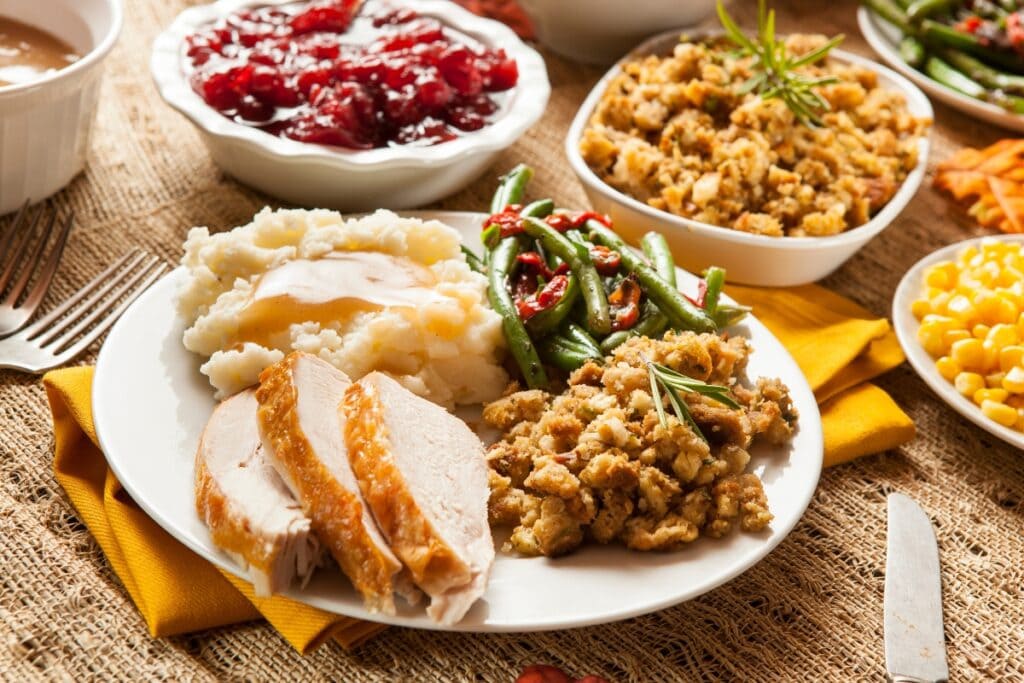
With food costs increasing upwards, it is best to prioritize handling your leftovers wisely to prevent food waste this holiday season.
Here are 14 tips to consider implementing:
1. Start by writing down your holiday menus and creating a shopping list, while keeping track of your budget. Don’t forget to pull out, assess, and include any needed ingredients for all your food and beverage recipes.
2. It makes sense to ask the people you are inviting to respond whether they can make it to the holiday meal you are hosting, since it is a busy time for everyone. Yes-RSVP’s! This way, you can show how much food you will need to plan for and purchase for the projected number of guests that will attend your event. No hostess wants too little or too much food.
3. When people offer, ask them to bring what’s called a “signature dish”— which is really their favorite food they like to make! When several people bring a food item to your gathering, it can be a big help to lower the cost of your whole event. Most people want to contribute something and are excited when someone else asks for their recipe!
4. Create a second set of menus, based on projected leftovers and how you will use them up, and even repurpose them into newer menu choices. Have a plan! Turkey casserole, turkey sandwiches, a green salad with diced ham, ham and bean soup, split pea soup with pieces of leftover ham, or diced ham in scrambled eggs, are among the ways people enjoy utilizing leftover turkey and ham.
5. Think about batch cooking and/or doubling your recipes. Batch cooking is meal preparation strategy where you cook and prepare large quantities of food at once and store it for later use. It can be efficient and reduce stress. Batch cooking can help in budgeting by reducing food waste and allowing you to buy ingredients in bulk.
6. When in the grocery store purchasing items, stick to your shopping list. This is a top priority! I’ve heard so many people recently say that they went to the store for one item and came home with a bag of groceries costing over $100-$200, containing items they did not plan to purchase. (Remember – have your plan and stick to it.)
7. If you have the space, purchase your items in advance in hopes that you may be able to catch some sales or buy-one-get-one-free items. With the economic issues we are facing, saving money is something we are all striving to do.
8. Use one-time disposable aluminum pans. Dollar stores have inexpensive pans of all sizes for purchase. You can send guests home with a pan of leftovers to easily reheat. Some people have the goal of not wanting any leftovers, while others cherish their tasty leftovers. Which are you? Do you like to keep your leftovers or give them away?
9. We have come a long way from the “aluminum-foil-balls” of tightly wrapped leftovers happily taken home, in our hands. LOL!
Use cute holiday themed containers for leftovers, purchased on sale. You can purchase these at dollar stores or other retail stores. People will love to see how festive and cute they are, and it may make the leftover food even more appealing.
Some guests are in the traditional habit of bringing their own empty containers to fill at the end of the gathering. Remember, our goal is to not let good food end up in the trash.
10. Consider freezing leftovers for another delicious meal before the food goes bad.
11. Check expiration dates on spices, extracts and canned goods now. Some spices are sometimes stored in the cabinet for way too long. The end of the year is a good time to assess what you have, rotate items, and toss out what is no longer safe to eat.
12. When serving your holiday meals, use smaller plates. This way, guests won’t overfill large plates with too much food, which potentially can end up in the garbage. Sometimes our eyes are bigger than our appetite. Do your best to avoid plate waste and people not finishing their food. (We can only control so much.) If there is an array of foods, try something unfamiliar and new — you may be surprised how much you like it.
13. With so many Americans striving to lose weight, smaller plates may be a great option! Don’t be that person that forces food on others. Many are struggling these days, so be considerate, and don’t become a diet saboteur. A diet saboteur is someone who isn’t that supportive of your diet plan and may want you to go back to old habits of excess eating and drinking. Dealing with a diet saboteur can be challenging but commit to your healthy lifestyle. Set boundaries with anyone attempting to sabotage your good intentions by politely but firmly saying “no” to any food or beverage you know you shouldn’t be eating. Avoid the flood gates of drama and confrontation in the middle of your beautiful holiday meal. Hopefully, people will be sensible and only serve themselves what they will eat.
14. Label unfamiliar specialty items so guests know what is being served and can distinguish what is in the food or recipe. Many have food allergies, intolerances or food aversions. With a label, people can distinguish the turnips from the carrots and sweet potatoes and not select a plate of food they won’t finish eating.
Speaking of waste, don’t waste time or miss opportunities to engage with your family and friends. Food brings people together. Time is precious, especially the good times. Scrolling on devices can be a huge time waster. Years ago, we didn’t have tablets and cell phones — so we talked, debated, argued constructively, laughed, played board games, and came together as family and friends. Make your time meaningful.
Lastly, reflect on expectations this year. Expect the best in others. It is the people and the company you keep that really matters. Food does bring people and families together, but the actual food is secondary. Whoever is the cook, be grateful. Express your appreciation for the hard work and extra effort they have made in putting on the holiday meal, especially for making it a memorable one.
Hoping your holidays are merry and bright and that you do your proper planning. That will be the key to preventing food waste at your next gathering. Happy Holidays!
Want to read more about food waste? Check out these other blogs in my series.
Commit to reducing food waste – https://blogs.ifas.ufl.edu/browardco/2025/04/02/commit-to-reducing-food-waste/
13 Quick tips to reduce food waste-Just do it! – https://blogs.ifas.ufl.edu/browardco/2024/04/01/13-quick-tips-to-reduce-food-waste-just-do-it/
Reduce food waste: 10 ways to use a rotisserie chicken- https://blogs.ifas.ufl.edu/browardco/2024/03/01/reduce-food-waste-10-ways-to-use-rotisserie-chicken/
Think about reducing food waste today – https://blogs.ifas.ufl.edu/browardco/2023/04/11/think-about-reducing-food-waste-today/
Prevent food waste – https://blogs.ifas.ufl.edu/browardco/2022/03/28/prevent-food-waste/
