



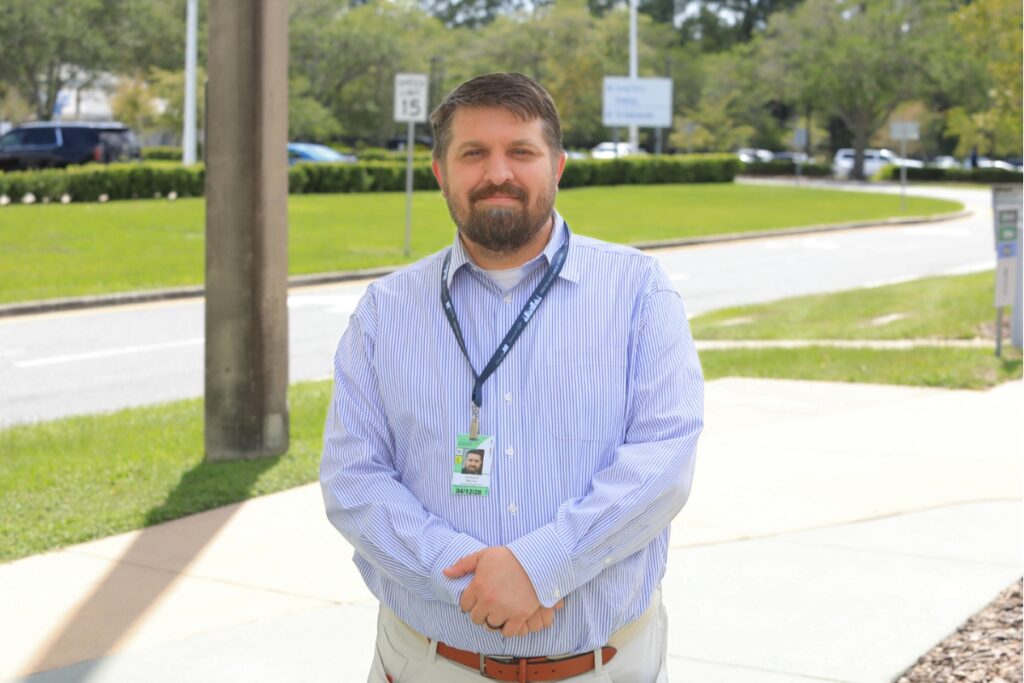
- Paul Mehrlich became CEO of Gainesville Regional Airport in March, succeeding Allan Penksa after over 20 years of service.
- A $12 million project to build a new two-story general aviation terminal will start this fall and last about a year.
- The airport processes about 575,000 commercial passengers annually and serves around 19% of local flyers, with competition from nearby airports.
It’s more than tickets and tarmacs at Gainesville Regional Airport.
The commercial terminal brought 574,725 passengers to and from the city last year, plus private pilots, charters and a significant medical organ transport operation; Nordstrom, Ben E Keith Foods and PFG Customized Distribution each have warehouses at the airport’s industrial park.
Paul Mehrlich now plots the course for the overall facility, hitting his 100th day as CEO on Wednesday.
The Gainesville Alachua County Regional Airport Authority (GACRAA) hired him in March to succeed long-time CEO Allan Penksa, who started with the airport over 20 years ago.
Mehrlich told Mainstreet that many transitions can involve tough circumstances. He said the handoff from Penksa prepped him for success while still requiring a short runway to get up to speed on multiple major projects.
“Coming in, you’re being handed this airport saying, ‘Just don’t break it,’” Mehrlich said.
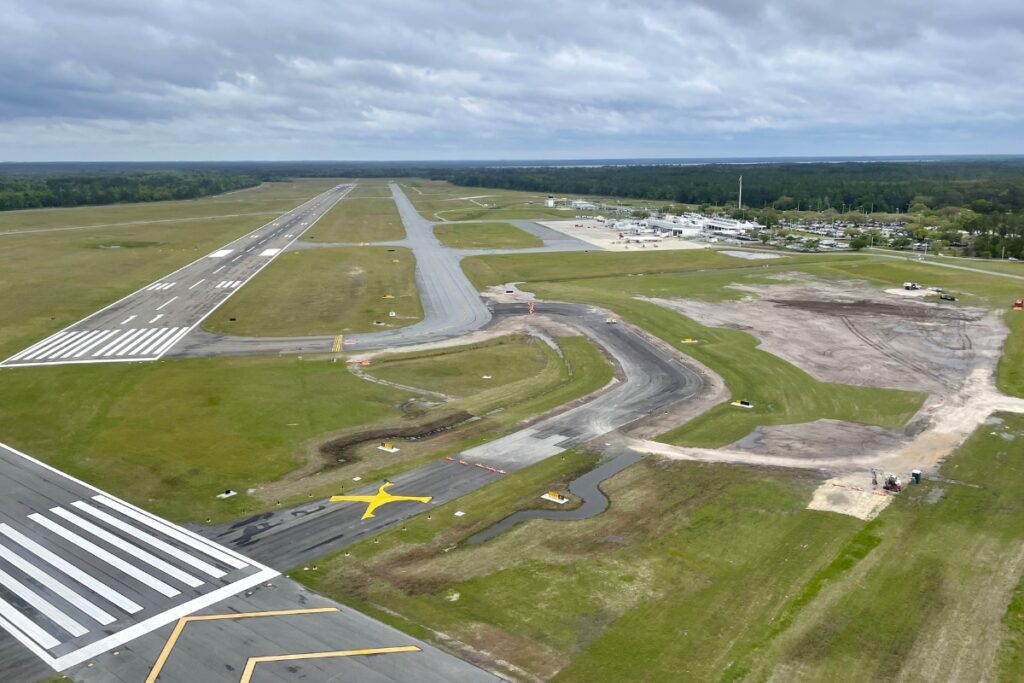
Mehrlich and GACRAA will navigate a runway replacement that requires nightwork in order to keep commercial aircraft flying during the day, construction of a two-story general aviation terminal and a 20-year masterplan that will guide future expansion.
“[The transition] also was a perfectly timed opportunity where we were just starting a new master plan, and [Penksa] allowed me to come in at a time where I’m inheriting an airport that is very healthy and strong, but also then gave me the chance to say, ‘here you can put a little bit of your own touch and vision on it’ as I now have my next 20 years ahead of me, which I really appreciate,” Mehrlich said.
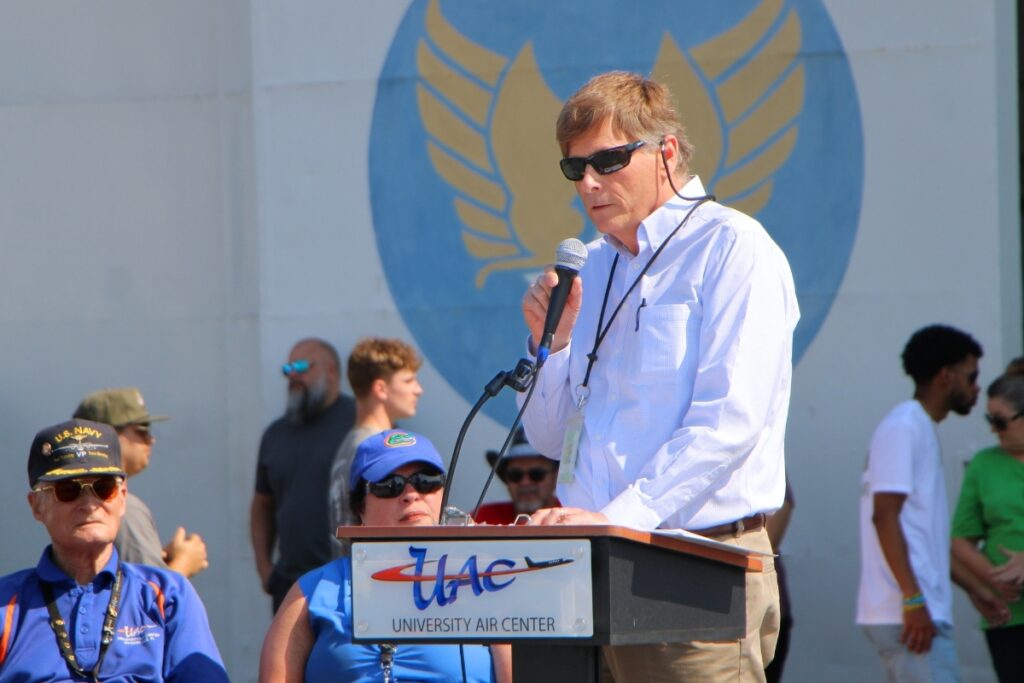
Mehrlich started as a pilot but reached his 250 hours when the federal government doubled the requirement for a commercial license. He joined the U.S. Navy instead, but an injury stalled that flying journey after just four months.
He had worked as a lineman for his airport in Provo, Utah, while in college and returned to the management side after the Navy. From San Diego to Dallas to Texarkana, Arkansas, he moved up to an executive director before the switch to Gainesville.
Like Provo with Brigham Young University, Gainesville is a university town, and Mehrlich said he’s enjoyed seeing the local vibe that comes with the it. He said there seems to be a lot of innovation and pride in the community.
Hitting the local foodie scene, Mehrich said he’s crossed Mac’s Drive Thru and Flatfish GNV off the list along with a lot of other joints in just over three months.
“I always want something unique, and you can tell a lot about a community by their mixture of foods that are available,” he said. “I will tell you that there are some great places in town that I found already, and it is fun.”
Of the three major projects in the forecast, the general aviation terminal comes first.
It’s a $12 million construction that should start this fall and last around a year after breaking ground. The current general aviation terminal started as the commercial terminal in 1955 and serves as the home of University Air Center, the fixed based operator for the airport.
“Many folks that fly in here for commercial development, economic development, site selectors, all that—they’re not going to fly in commercially. They’re going to come in on a private jet, and so then that facility becomes the first impression for them of our community,” Mehrlich said.
He said the airport wants to make the terminal distinct with nods to Paynes Prairie so newcomers know they’ve landed in Gainesville.
The runway renovation will start design next year with funding and construction in future phases.
Dovetailing with the 20-year masterplan, the design phase will anticipate future aircraft sizes and needs to know what level of rehabilitation is required.
The masterplan will look at new aviation technology like quadcopters along with the future of Florida aviation with the aerospace industry to see how Gainesville could partner in that sector. Mehrlich said the plan will also look at the land in and around the airport to see if the airport industrial park might expand.
He said airports must time their infrastructure for new technologies. Invest too early and the technology might not be widely adopted or evolve, resulting in quickly outdated and wasted infrastructure. But too late and the airport gets behind the curve—or loses the chance to attract businesses.
He said the masterplan will look at electric aircraft and quadcopters through that opportunity/risk lens.
For normal commercial aircraft passengers, Mehrlich said the big decisions (which airlines fly in and what cities they fly to) remain outside airport control. But he said the Gainesville Regional Airport can gather, analyze and present data to the airlines to persuade another route or a larger aircraft for a route.
Florida is a tough market, he said, with a lot of competition from over 20 commercial airports and a lot of vacation destinations. Grants are hard to get, and some allow an airline to only endorse one airport per state.
What Mehrlich and his staff of around 40 employees can do is maximize the local airport experience—emphasizing short lines that get passengers from their car to their gate in 15 minutes, parking availability with the new garage, cleanliness and convenience versus a drive through traffic to Orlando or Tampa.
The airport can see how many locals fly from other airports, called leakage. He said Orlando takes around 41% of the passengers from Gainesville, followed by Tampa and then Jacksonville.
The Gainesville Regional Airport keeps about 19% of the locals who fly.
Without a low-cost carrier like JetBlue, Frontier or Allegiant, Mehrlich said it’s hard to tap into the vacation market of residents. Cost is a big factor, he said.
“That’s where I see an opportunity: to recapture some of that [leakage], but we understand that without a low-cost carrier, that market that desires those low-cost carriers, you are not going to capture that until you can have that here,” Mehrlich said.
The CEO position is more than large-scale plans and projections. Mehrlich said you have to switch gears quickly, from a meeting about architecture to a tree that fell on a road during a thunderstorm.
“You have to very quickly be able to say I’m going to go out there and deal with that situation and make sure that all the people along the way can continue to know what they need to do,” he said. “So, I’m blessed that I have a really great team that I can rely on because you can only do so much as one individual.”