


With stroke, every minute counts to prevent death or limit severe disability.
In a study earlier this year, data showed that UF Health’s approach of sending a specially equipped stroke ambulance to meet paramedics at designated “rendezvous points” to take patients from surrounding rural areas significantly improves timely stroke care — on average, by nearly an hour. In stroke care, the “golden hour” starting with symptom onset is a critical window to minimize brain damage.
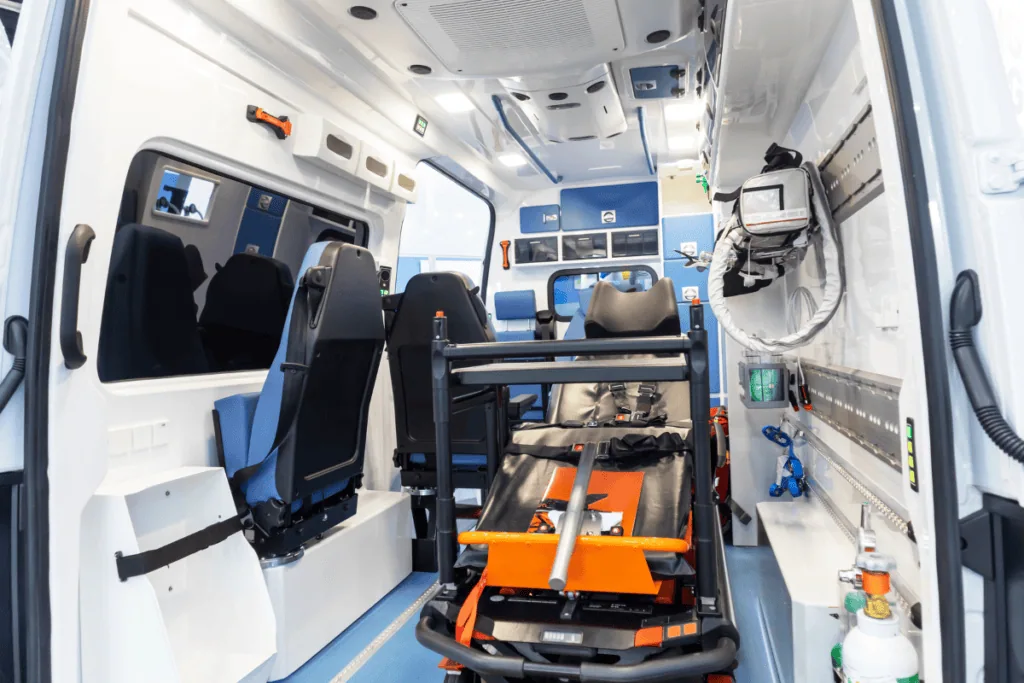
Launched in July 2023, the specialized ambulance — called the Mobile Stroke Treatment Unit, or MSTU — is one of only 16 active programs of its kind nationwide and “brings the hospital to the patient.” In collaboration with Alachua County Fire Rescue, the MSTU carries a stroke-trained registered nurse, a paramedic, an emergency medical technician and a CT technologist, as well as a vascular neurologist either on the truck or through telemedicine.
The unit is equipped with a CT scanner, a basic lab and clot-busting medications so that treatment can start immediately. Traditional EMS must transport a patient to an emergency room to obtain a CT and other critical information before treatment can be initiated, which takes precious time.
According to data, patients transported via MSTU had significantly shorter waits for CT scans, lab results and, when needed, treatment with clot-busting drugs or surgery.
For example, comparing 76 patients from rural counties treated by MSTU rendezvous with 206 others from the same rural counties transported by traditional EMS to the emergency room over the same months, those who needed clot-busting drugs received them an average 56.3 minutes faster. For those who needed surgery to remove a blood clot, it was 38.3 minutes faster.
“Our program brings access to rural communities that don’t have certified stroke centers, expertise in stroke or the ability to provide timely stroke care,” said Anna Khanna, M.D., medical director of the UF Health Shands Comprehensive Stroke Center and a McKnight Brain Institute investigator. “But also, when they transfer their patient to the MSTU, it allows their ambulance to go back into full operation and serve their community.”
The rendezvous program has expanded and covers 11 counties and more than 8,000 square miles in a radius around Gainesville.
“We are the only known mobile stroke program that offers this innovative rural rendezvous process, which provides quicker diagnosis and treatment,” said Nicolle Davis, Ph.D., R.N., director of the UF Health Mobile Stroke Program.
Two more MSTU vehicles have joined the UF Health fleet, at UF Health Jacksonville and UF Health Central Florida.
“Our MSTUs will have more future research endeavors to evaluate the impact of a statewide network and its impact on stroke patient outcomes,” Davis said.
The Mobile Stroke Program is one of the latest endeavors to highlight the continued collaboration between UF Health and Alachua County in pursuing a mutual goal of finding the best ways to serve the community and region.
Editor’s note: This is the latest in a series of columns sponsored by the University of Florida.