


- Alachua County approved negotiations for a $1 million lease on a 12-acre UF property to build a $30 million Animal Resources Shelter.
- The new shelter will be designed and constructed over two years at the former Swine Unit near UF's main campus.
- The county adopted a hybrid model with the Sheriff's Office for animal control, splitting criminal and civil animal complaint responses.
- Concerns exist about the UF site's size, traffic, and university partnership stability, but its central location favors transparency and student involvement.
Alachua County decided to proceed with a $30 million Animal Resources Shelter just south of the University of Florida’s main campus at the former Swine Unit property.
The county also heard an update on how the Alachua County Sheriff’s Office will start responding to animal calls.
The Board of County Commissioners (BOCC) voted 3-1 to enter negotiations for a $1 million lease for the 12-acre property. UF will tear down the existing buildings as the county prepares design plans for the new shelter.
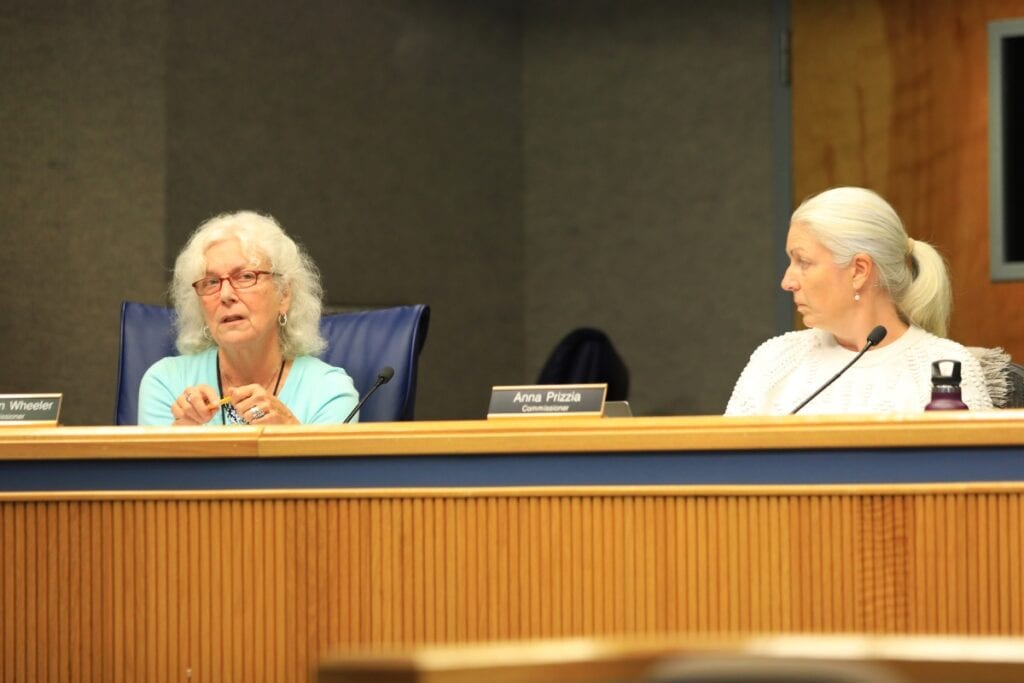
Commissioner Marihelen Wheeler voted in dissent, and Commissioner Chuck Chestnut was absent for the vote.
The county has outgrown its outdated facility, originally built as a kill shelter. Everyone at Tuesday’s meeting agreed that the facility fails to meet the current needs.
But finding a new location has taken time, and many public commenters said the county should keep looking, versus the two options presented Tuesday: the former Swine Unit at UF or the Weseman Tract off Waldo Road north of the airport.
Commissioner Anna Prizzia said the county needs to decide and begin moving forward, with design and construction lasting another two years before the new shelter would open.
“We could keep on shopping, but every day that we keep on shopping, we keep on moving the needle on the shelter that we needed when I started,” Prizzia said. “It was one of the first conversations we had when I got on this commission five and a half years ago.”
The BOCC started looking at the UF site a little more than three years ago.
Wheeler said one of the reasons she is reluctant about the UF property is what she called moving goal posts when dealing with the university. She said it’s taken a long time to get this contract ready and pointed to other projects where UF and the county tried to partner.
“Now we’re looking at a couple of presidents later and a board that’s changing at the vet school,” Wheeler said. “I just don’t know how you guys can put that much confidence in partnering with a group of folks that are still pretty unstable themselves.”
Wheeler also voiced this concern in early 2025. The county has had a draft agreement with UF for two years and said she had concerns with the UF property being so close to Archer Road and its traffic. The site will only be 12 acres, with some wetlands to mitigate, and Wheeler questioned if that was enough land.
Chuck Clemons, vice president for government and community relations, spoke at the beginning of the discussion. He said UF is committed to being a part of the animal shelter through its College of Veterinary Science and added that the university leaves it to the county to decide on the best site.
He said the dean of the College of Veterinary Science announced that she would step down, and he said UF will fill the role and make sure the new dean knows to continue the important relationship.
UF is also searching for deans to lead the College of Arts and the Herbert Wertheim College of Engineering.
Alachua County is also searching for a permanent Animal Resources director, with Gina Peebles serving in the interim, along with her role as assistant county manager.
County Manager Michele Lieberman said UF will be a major part of the county’s animal shelter, no matter where it’s located. Part of the BOCC motion on Tuesday ratified a contract for a partnership with UF’s College of Veterinary Science.
As for the contract for the land, Lieberman said if anyone is responsible for the long timeframe, it would be her. UF had previously asked $3 million for the lease of the property, and Lieberman said she felt the price was a little high and wanted to find a way to add value before bringing it to the BOCC.
She pointed out that the work to make the Weseman Tract a viable option has also taken at least two and a half years.
“The relationship with UF is very important, but it’s going to be very important regardless of if we’re on the Weseman Tract or the UF site,” Lieberman said, saying to evaluate the two options based on the property’s pros and cons.
In 2025, Lieberman referenced a possible shift in direction on the animal shelter toward the Weseman Tract. The UF site remained the first option, though, and she said at the time that the $2 million in savings comes while bearing more of the operational costs.
Prizzia said the UF site has a lot of benefits, and Chair Ken Cornell and Commissioner Mary Alford agreed.
Prizzia said the proximity to UF allows student engagement without needing cars and a 20-minute or more drive. She added that the Swine Unit site is on bus routes and within the Gainesville activity center.
She said the BOCC pushes developers to build on transit lines and within activity centers and the county should do the same.
Alford added that a central location where anyone can stop by at any time increases transparency. She said the reputation of the shelter is hindered by transparency issues. Anyone will be able to see how the shelter by the campus treats intakes, she said.
Alford added that adoption events wouldn’t require transporting animals to an event site. The UF site could host events in the heart of Gainesville.
Cornell agreed. He said anytime the UF partners on a project, the university adds to the value for the community. He said UF being willing to lease land to the county is a big deal and reducing the price to $1 million is also a huge deal.
“I’ve been thinking about it for the last 12 years, and it’s taken too long, too damn long,” Cornell said. “It’s time now to do it right, not for the next couple of years but for the next couple of decades.”
The BOCC was also updated on its 2025 decision to rely on the Alachua County Sheriff’s Office (ACSO) to respond to animal services calls instead of having in-house investigators under the Animal Services.
Peebles said the county and sheriff’s office decided on a hybrid model. ACSO will build an Animal Bureau Division and respond to criminal animal enforcement, like dog bites and fighting, while the county responds to civil complaints, like sick wildlife and animal neglect.
Peebles and Undersheriff Josh Crews said the two entities will hold monthly meetings as they hone the process over the first year. One of the issues will be assigning calls to the right group, but Crews said they’ll be flexible and hand off calls as needed.
Already, Peebles said the sheriff’s office will back up Animal Services, or the county will respond to a call and bring then have the Florida Fish and Wildlife Conservation Commission (FWC) take over.
Under the hybrid system, the county’s three investigators and supervisor would move under ASCO. Peebles said this plan also means no positions will be cut.
The BOCC voted unanimously to approve the memorandum of understanding for the hybrid model with ACSO.