



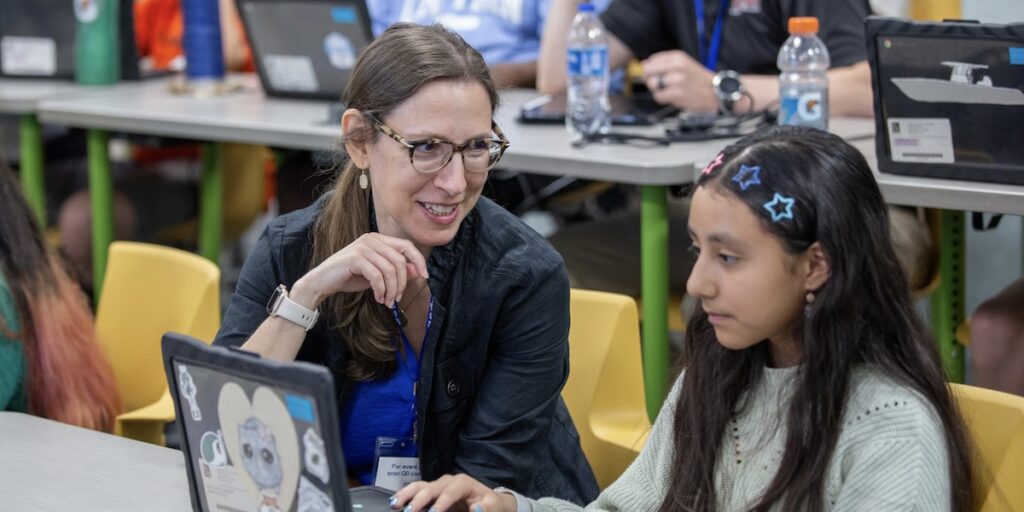
As students across Alachua County return to classrooms, many parents are wondering how new technologies, like artificial intelligence, are shaping the way their children learn. Maya Israel, a University of Florida expert, says AI can be a powerful classroom tool when used thoughtfully, and she’s offering local families guidance on how to make sure it supports, rather than replaces, critical thinking and creativity.
How are K–12 students using AI in classrooms?
There is a wide range of approaches that students are using AI in classrooms. It depends on several factors including district policies, student age and the teacher’s instructional goals. Some districts restrict AI to only teacher use, such as creating custom reading passages for younger students. Others allow older students to use tools to check grammar, create visuals or run science simulations. Even then, skilled teachers frame AI as one tool, not a replacement for student thinking and effort.
Many parents worry that using AI might make students too dependent on technology. How do educators address that concern?
This is a very valid concern. Over-reliance on AI can erode independence and critical thinking, which is why teachers should be intentional in how they use AI for teaching and learning. Educators can address this concern by communicating with parents their policies and approaches to using AI with students. This approach can include providing clear expectations of when AI is used, designing assignments that require critical thinking, personal reflection and reasoning and teaching students the metacognitive skills to self-assess how and when to use AI so that it is used to support learning rather than as a crutch.
How do schools ensure that students still develop original thinking and creativity when using AI for assignments or projects?
In the age of AI, there is the need to be even more intentional designing learning experiences where students engage in creative and critical thinking. One of the best practices that have shown to support this is the use of project-based learning, where students must create, iterate and evaluate ideas based on feedback from their peers and teachers. AI can help students gather ideas or organize research, but the students must ask the questions, synthesize information and produce original ideas. Assessment and rubrics should emphasize skills such as reasoning, process and creativity rather than just focusing on the final product. That way, although AI can play a role in instruction, the goal is to design instructional activities that move beyond what the AI can do.
What guidance should parents give at home?
There are several key messages that parents should give their children about the use of AI. The most important message is that even though AI is powerful, it does not replace their judgement, creativity or empathy. Even though AI can provide fast answers, it is important for students to learn the skills themselves. Another key message is to know the rules about AI in the classroom. Parents should speak with their students about the mental health implications of over-reliance on AI. When students turn to AI-augmented tools for every answer or idea, they can gradually lose confidence in their own problem-solving abilities. Instead, students should learn how to use AI in ways that strengthen their skills and build independence.
Editor’s note: This is the latest in a series of columns sponsored by the University of Florida.
Suggested Articles
No related articles found.