



- The High Springs City Commission voted to keep both the police and fire departments, with a planned fire assessment increase to provide the funding.
- The fire department receives about $1.1 million from the city general fund, and officials said surrendering it to county control could cost more and reduce service quality.
The city of High Springs will keep both its police and fire departments following the City Commission’s votes in favor of each on Thursday.
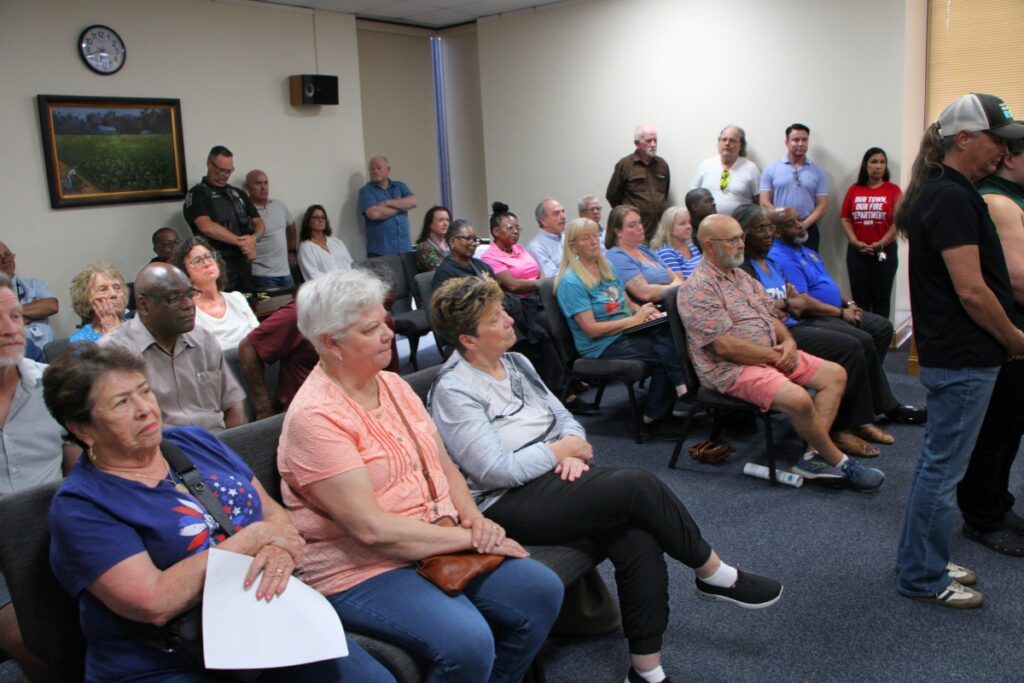
Community members and first responders packed the commission chambers to standing room to witness the outcome of more than a year of debate over whether to keep or dissolve the departments. The city is the only in Alachua County besides Gainesville to fund its own fire and police.
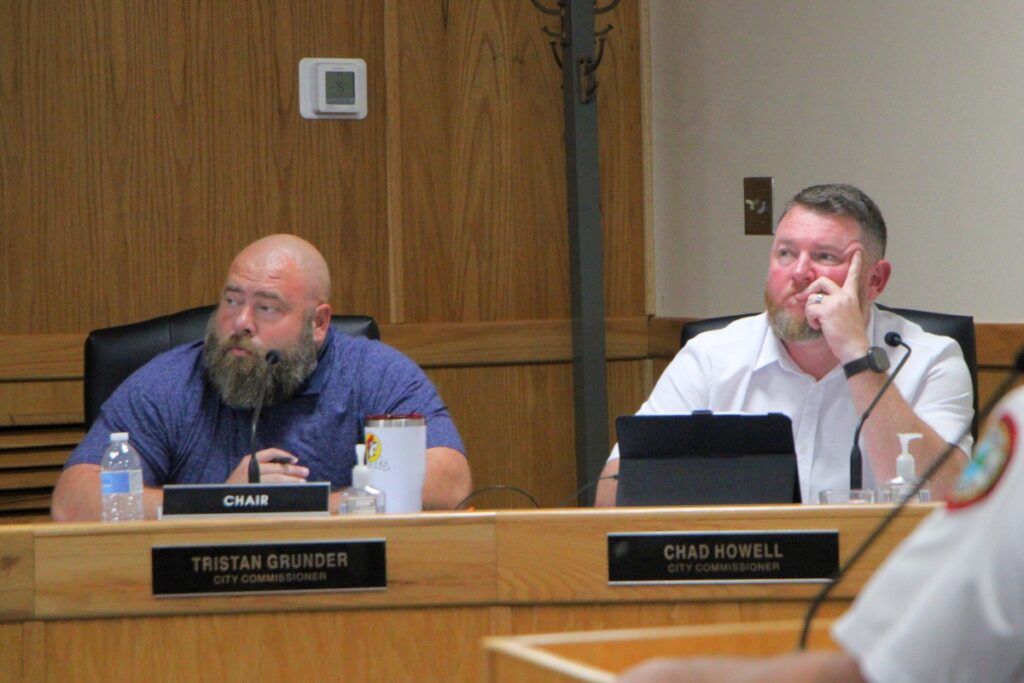
Vice Mayor Wayne Bloodsworth Jr.’s motion to keep High Springs Fire Department (HSFD) funded passed 3-2, with commissioners Tristan Grunder and Chad Howell in dissent, and is contingent on a fire assessment increase.
A separate motion to bring back options for raising the current $250 fire assessment to $335, $360 or $383 and to keep the police department funding at status quo passed unanimously.
HSFD Chief Joseph Peters said he’d been working 24-hour shifts to cover for staffing shortages in the wake of the uncertainty about the department’s future. Commissioner Katherine Weitz added that she discovered those shifts were unpaid overtime that Peters was taking on.
“I was asked to [present data] without using passion, to just present the facts,” said Peters. “And for me, this night is not a night for me to just stay with facts. I have to be a little passionate about my department.”
In support of keeping the fire department—which currently draws around $1.1 million from the city’s general fund—commissioners said surrendering control of fire services to Alachua County Fire Rescue (ACFR) would cost residents more, surrender more than $1.6 million worth of tax-payer funded equipment to the ACFR and decrease the level of service as the city intends to grow.
In considering dissolving the department, the commission discussed how other city operations, like a maxed-out wastewater system, are suffering in the short and long term because they don’t have enough money.
“None of us wants to get rid of this fire department,” Grunder said. “However, what we’re doing is we just keep going, ‘Alright, we’re gonna fund it for one more year with band-aids and hopes and dreams.’ And then next year we have the same conversation about how we’re going to keep you guys around. And that’s BS. That’s not fair.”
Howell also said High Springs needed to be prepared for the state to eliminate property taxes, but Mayor Andrew Miller said they could only cross that bridge if they got there.
When looking at raising fire assessment, Peters said residents should be paying over $500 if previous City Commission administrations had made appropriate increases over time. Last year, the city of Newberry raised its fire assessment to $300, a 50% increase.
Peters presented two options for raising the fire assessment, either of which could cost up to $6,000 to readvertise to property owners. Option one, raise the residential rate to $360 for total net revenue of $1,402,254, lowering the general fund transfer to $673,000. Option two, a $383 assessment to generate $1,488,436 and decrease the general fund transfer to $586,818.
According to ACFR Chief Harold Theus during the Alachua County Board of County Commissioner’s joint meeting with the High Springs City Commission on May 14, ACFR would raise an estimated $1.36 million in High Springs through its fire assessment.
Although the police department requires more of the city’s budget than fire—around $3.4 million—Weitz said the city’s hands are tied because it can’t raise revenue with mechanisms like an MSTU as it can do for fire.
Multiple commissioners and public commentors spoke to perceived division between the police and fire departments that had penetrated the community because of the ongoing discussions of dissolution.
High Springs Police Department Chief Antoine Sheppard said in his 25 years with the city, he hadn’t seen another time as divisive as now. But he encouraged the city to be healthy, with departments making concessions for the others.
“There’s not been greediness on the side of the police department, and I think Chief Peters has done an excellent job of cutting his budget,” Sheppard said. “But the reality is that there was a large gain by a past administration, and so when we make those comparisons, it’s very hard for us to make the same cuts if I didn’t receive the same gains.”